
The parallelism of the Greek text sofían tón sofón — sýnesin tón synetón can be maintained by a number of languages, including English with wisdom of the wise — discernment of the discerning or wisdom of the wise — intelligence of the intelligent, Spanish with sabiduría de sus sabios — entendimiento de sus entendidos, German with Weisheit der Weisen — Verstand der Verständigen, or French with sagesse des sages, intelligence des intelligents. (Source: Roy Ciampa)
Language-specific Insights
Introduction to Hosea (Christian Community Bible)
(The Catholic Christian Community Bible [first English edition 1997, other translations into Indonesian, Chinese, Cebuano, Chavacano, French, Ilonggo, Korean, Quechuan, Spanish, and Tagalog] “for the Christian Communities of the Third World” uses the following introduction.)

Hosea has come down through history as the prophet deceived by his wife whom he never stopped loving, in spite of her infidelities. God, who called him to speak on his behalf to an idolatrous and materialistic people, wanted his prophet to experience the grief and the shame of a betrayed husband. The prophets reveal a God who feels a love so real and so personal for us that it can be expressed in human words. Hosea was about to carry the same cross as God’s: constantly loving and forgiving a fickle and unfaithful wife. Hosea will also shout God’s indignation at Israel because of their sins.
Hosea began to preach around the year 746, that is to say, at the end of the prosperous reign of Jeroboam II, in the northern kingdom of Israel. Right after that would begin the twenty years of decadence which would conclude with the capture of Samaria and the deportation of its inhabitants (721).
Hosea rises to accuse and threaten the people who are unconcerned. He continues to preach while the kingdom is collapsing and predicts the punishment of the people who are irresponsible and unfaithful to the covenant with their God. He understands that God is an educator and does not allow the misfortunes and even the destruction of the nation without his reasons. Through such means, Israel will again become what they once were when the Lord took them by the hand and brought them out of Egypt: they will become a poor and humble people, able to follow their God with faith and love.
The book of Hosea begins with the story of the failure of his married life. From that he draws a lesson for Israel, unfaithful to the Lord (chapters 1-3).
Then in chapters 4–13 we have a mixture of reproaches, threats, invitations to conversion and predictions of the exile. The final passage 14:2-10 offers hope for the future, when the Lord will have taken away all the riches in which Israel had trusted.
Down below are the introductions in the Mandarin Chinese, Tagalog, Cebuano, and Spanish editions.
Translation: Mandarin Chinese
欧瑟亚在历史上是一位为妻子所负的先知,虽然妻子不忠,欧瑟亚却没有因此而不爱她。天主召唤了欧瑟亚,希望他代表天主对一群崇拜偶像、只重物质享受的人民说话,因此要先知经历被妻子背叛的悲哀和耻辱。先知们展示了一位对人类深怀真切亲密爱情的天主,以至于这种爱能以人类的语言来表达。先知受到天主召唤之后,享受到一种特权:那就是在看待和对待事物方面,他与天主的眼光和做法一致。欧瑟亚将和天主背负着同样的十字架:不断地热爱并且原谅一个善变不忠的妻子。由于以色列的罪,欧瑟亚也将对着以色列喊出天主极大的不满和愤怒。
欧瑟亚约从公元前746年开始宣道,也就是在北部的以色列王国,雅洛贝罕二世盛世的末期。紧接着是二十年的衰亡期,最终以撒玛利亚的沦陷以及居民遭放逐结束(公元前721年)。
欧瑟亚起而斥责恐吓那些麻木不仁的人们,当王国不断衰亡之际,他还是不停地布道:他预言对和天主所订的盟约既不负责、又不忠实的人将受到惩罚。他了解天主是位教育家,绝不会毫无理由地让这个民族遭受不幸,甚至毁灭。但是只有这么做,以色列才能回到上主带着他们出离埃及时的样子:他们将会变为穷困谦虚的民族,能够以信心和爱来追随他们的天主。
欧瑟亚书以叙述他婚姻生活失败的故事为开端,他希望以色列从中得到一个教训,因为以色列不忠于雅威(1-3章)。
而后,在4-13章,我们看到了混合着斥责、威胁、要求皈依以及预言流放的经文。最后在14:2-10提出了对未来的希望,在这之前,上主将会带走以色列深信不疑的一切财富。
Translation: Tagalog
Nakilala si Oseas sa kasaysayan bilang propetang niloko ng kanyang asawa na patuloy pa rin niyang minahal sa kabila ng mga kataksilan nito. Tinawag siya ng Diyos para magsalita sa ngalan niya sa isang bayang materyalista at maraming dinidiyos na iba. At nais ng Diyos na maranasan din ng kanyang propeta ang sakit at kahihiyan ng isang asawang kinaliwa. Isang Diyos na nakadarama ng pagmamahal sa tao ang ipinakikilala sa atin ng mga propeta; tunay at personal na pagmamahal kayat naipahahayag sa wika ng tao. Pagkatawag ng Diyos sa propeta, tinanggap niya ang pribilehiyong madama at makita ang mga bagay gaya ng Diyos: kayat papasanin din ni Oseas ang parehong krus ng Diyos -- ang laging mahalin at patawarin ang asawang salawahan at taksil. At sa kabilang dako naman, isisigaw rin ni Oseas ang galit ng Diyos sa Israel sa harap ng mga kasalanan nito.
Mga taong 746 nang magsimulang mangaral si Oseas, ibig sabihi’y sa dakong huli ng masaganang paghahari ni Yeroboam II sa hilagang kaharian ng Israel. Pagkatapos na pag-katapos nito’y agad na magsisimula ang dalawampung taon ng pagbagsak at kabulukan na magwawakas sa pagkabihag sa Samaria at pagdedeport sa mga tagaroon (taong 721).
Narito si Oseas para akusahan at babalaan ang bayang nabubuhay nang walang paki-alam. Patuloy siya sa pangangaral samantalang pabagsak naman ang kaharian: ipinahahayag niya ang parusa ng bayang iresponsable at taksil sa pakikipagtipan ng kanilang Diyos. Pero nauunawaan niya na tagapagturo ang Diyos at hindi nito pahihintulutan nang walang dahilan ang mga kapahamakan at kahit na ang pagkawasak ng bansa. Sa ganitong paraan, ang Israel ay magbabalik sa dati nitong kalagayan nang akayin siya ni Yawe at ilabas mula sa Ehipto: siya ay magiging dukha at abang bayan, kayang sundan ang kanyang Diyos nang may pananampalataya at pagmamahal.
Nagsisimula ang libro ni Oseas sa istorya ng kabiguan ng kanyang buhay may-asawa. Naglalahad siya mula rito ng aral sa Israel na taksil kay Yawe (kab. 1-3).
At sa mga kabanata 4-13 naman, sama-sama ang mga panunumbat, babala, paanyaya sa pagbabalik-loob at pagbabalita ng pagkatapon. Isang pag-asa sa kinabukasan ang binubuksan ng huling talata, 14:2-10, sa oras na alisin na ni Yawe sa Israel ang lahat ng kayamanang pinanghawakan nito.
Translation: Cebuano
Si Oseas naila sa kasaysayan nga propetang gibudhian sa asawa apan, wala niya hunongi sa paghigugma bisan pa sa mga kakulangan sa kamatinud-anon. Ang Ginoo nga nagtawag niya sa pagsulti sa Iyang ngalan sa mga matootoohon ug materyalista nga mga tawo, buot nga ang iyang propeta makasinati sa pag-antos ug kaulawan sa gibudhian nga bana. Ang mga propeta nagpadayag sa Ginoo nga mibatig gugma nga tiunay ug suod alang sa katawhan, nga mahimong mapadayag sa tawhanong pinulongan. Human tawga sa Ginoo, ang propeta nakadawat sa pribilihiyo nga mobati ug makakita sa mga butang sama sa Ginoo: Si Oseas magpas-an sa krus sama sa Ginoo: makanunayon sa iyang paghigugma ug pagpasaylo sa mabalhinon ug mabudhion nga asawa. Ug si Oseas sab mopalanog sa kasuko sa Ginoo ngadto sa Israel tungod sa ilang mga sala.
Si Oseas nagsugod sa pagwali sa mga tuig 746, sa ato pa, sa kataposan sa mauswagon nga paghari ni Jeroboam II, sa amihanang gingharian sa Israel. Human adto, nagsugod ang 20 ka tuig sa kadunot sa gingharian nga misangko sa pagkabihag sa Samaria ug sa pagpalagpot sa mga lumolupyo (721).
Si Oseas mibarog aron pagsudya ug paghulga sa mga tawo nga walay pagpakabana. Nagpadayon siya sa pagwali samtang ang gingharian nag-anam og kahugno; iyang gitagna ang pagsilot sa mga tawo nga iresponsabli ug dili matinud-anon sa kasabotan tali sa Ginoo. Apan, nakasabot siya nga ang Ginoo magtutudlo ug dili motugot sa kaalaot, bisan sa pagkabungkag sa nasod nga walay mga rason. Pinaagi ini, ang Israel mahisama na pod sa iyang pagkasiya adtong panahon nga gisapwang sila sa kamot sa Ginoo ug gidala gawas sa Ehipto; mahimo silang kabos ug mapaubsanon nga mga tawo, nga nagsunod sa ilang Ginoo uban ang pagtoo ug gugma.
Ang libro ni Oseas nagsugod sa sugilanon sa iyang pakyas nga kaminyoon. Gikan ini, nakakuha siyag pagtulun-an alang sa Israel nga wala magmatinud-anon sa Ginoo (kapitulo 1-3).
Dayon, sa kapitulo 4-13, anaay pagsagol sa panudya, panghulga, pagdapit sa pagbag-o, ug panagna bahin sa pagkabihag. Ang kataposan nga parapo (14:2-10) nagtanyag og paglaom alang sa umaabot, sa dihang gidala na sa Ginoo ang tanang bahandi nga gitagoan sa Israel.
Translation: Spanish
Oseas encabeza a los «Profetas Menores». Menores lo son si se mide por el largo de sus libros. Pero también es cierto que muchos de ellos no han tenido en la tradición el mismo peso que los tres «Grandes». Oseas ha tenido en contra suya que era de Israel, el Reino del Norte, y que todas sus profecías se referían a dicha nación; esto no facilitó su reconocimiento por los judíos de Jerusalén que reunieron los escritos proféticos. Merece, sin embargo, una mención muy especial por ser el primero que conoció a Yavé como el amante de Israel.
Dios lo llamó para advertir en su nombre a un pueblo idólatra y materializado, y le pidió hablar, no sólo el lenguaje de Dios Sabaot, Señor de Israel, sino también el del esposo traicionado. Esa era una gran novedad. Grandes profetas que vinieron después de Oseas: Jeremías, el Segundo-Isaías, Ezequiel iban a retomar esta primera proclamación de Dios-amante. Una nueva visión de la alianza, unión y comunión de Dios con la humanidad, saldría de ahí, pasando a ser uno de los rasgos más decisivos de la fe judía, y luego, cristiana.
Para un tal mensaje, no era suficiente que el profeta supiera expresar con figuras humanas la forma divina de mirar a los hombres. La profecía auténtica no es cosa de palabras y de literatura, y era necesario que el profeta hubiese experimentado en carne propia lo que Dios siente y vive, en cierto sentido, tan realmente como nosotros. El primer profeta de Dios-amante fue un profeta engañado por su esposa, a la que, a pesar de sus infidelidades, no dejó de amar.
Oseas empezó a predicar como en el año 746, es decir, al final del próspero reino de Jeroboam II, en Israel del Norte. Inmediatamente después iban a empezar los veinte años de decadencia que tendrían por conclusión la toma de Samaria y el destierro de sus habitantes (año 721).
— El libro de Oseas comienza con el relato de su problema conyugal. De allí saca una lección para Israel, infiel a Yavé (cc. 1-3).
— Después, en los capítulos 4-13, se mezclan reproches, amenazas, invitaciones a la conversión y anuncio del destierro. Oseas, sin embargo, comprende que Dios es un educador y que no permite sin razón las desgracias y aun la destrucción de la nación. Israel va a volver a ser lo que era cuando Yavé lo tomó de la mano al sacarlo de Egipto: será un pueblo pobre y humilde, capaz de seguir a su Dios con fe y amor: 14,2-10.
Introduction to 1 Peter (Christian Community Bible)
(The Catholic Christian Community Bible [first English edition 1997, other translations into Indonesian, Chinese, Cebuano, Chavacano, French, Ilonggo, Korean, Quechuan, Spanish, and Tagalog] “for the Christian Communities of the Third World” uses the following introduction.)
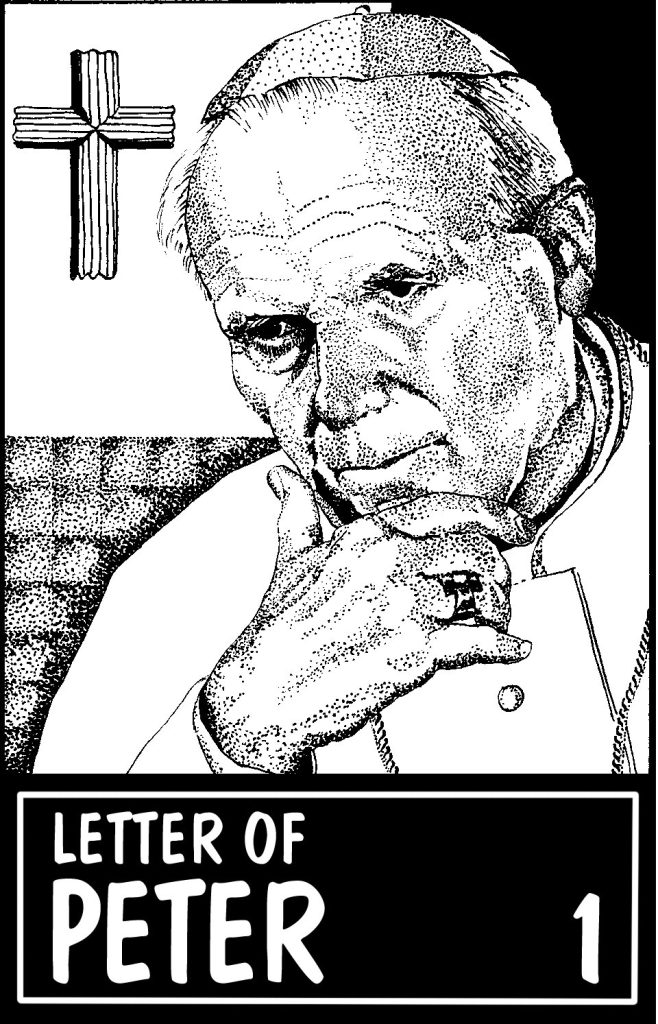
We know almost nothing about the life of the apostle Peter from the Council of Jerusalem, in the year 49 (see Acts 15), until the time he wrote this letter, around the year 64. It is certain that he went to Rome. Being in charge of the entire Church, he, like Paul, had to go to the center of the Roman world, though their motives were different.
A very ancient tradition affirms that he was killed in the persecution of Nero, in 66, and that he was buried on the grounds of the Vatican Hill. Investigations carried out these past years have enabled us to discover a grave and bones with various inscriptions which are, almost certainly, those of the apostle, the first Rock of the church.
Thus it was a short time before his death that he wrote this letter from Rome. Peter had neither the genius nor the literary talent of Paul. Instead, with simple words, he addressed the Christians of the Asian province, where the first persecutions were beginning. Different from Paul, he is not concerned with clarifying or defending the faith. He tries to encourage believers who are suffering by presenting the example of Christ to them and by explaining the consequences of baptism.
In this letter, everything from 1:3 to 3:7 is inspired by the baptismal ceremony in the early Church: hymns, homily on the ritual and on Christian life. For Peter, it is an excellent way to remind his readers that they are Christians.
The end of the letter tells us that Peter wrote through Silvanus, who had been a disciple of Paul. This may be why, in various passages, we find the same topics found in Paul’s letters.
Down below are the introductions in the Mandarin Chinese, Tagalog, Cebuano, and Spanish editions.
Translation: Mandarin Chinese
从公元49年耶路撒冷会议(宗15章),到伯多禄写这封信的公元64年,我们对这位宗徒的生活几乎一无所知。可以肯定的是他到过罗马。因为负责整个教会,他和保禄一样必须前往罗马世界的中心,虽然他们的动机并不相同。
一项非常古老的传说确信,他是在公元66年尼禄的迫害时期被杀的,而且他被埋葬于梵蒂冈山丘的墓地。在过去几年的考察中,人们发现了一个坟墓以及有不同刻文的骨头,几乎可以肯定这些是宗徒伯多禄——教会最早的磐石的遗骨。
因此,他从罗马写这封信,应是在他去世前不久。伯多禄没有保禄的天赋和文采,他以简单的文字写信给最先遭受迫害的亚洲省份。和保禄不同的是,他书信的重点不是为澄清或捍卫信理。他借着基督的例子,解释领洗的结果,鼓励受苦的信友。
在这封信中,1:3-3:7所受的灵感启发都是得自早期教会的洗礼仪式,那是对于仪式和基督教生活的赞美诗和讲道。对伯多禄而言,这是提醒读者他们基督徒状况的绝佳方式。
信末告诉我们,伯多禄的写作是通过原是保禄门徒的息拉而完成。这可能正是我们在许多段落上,可以找到与保禄的书信有相同主题的原因。
Translation: Tagalog
Halos wala tayong nalaman tungkol sa buhay ng apostol na si Pedro mula sa Kunsilyo ng Jerusalem, sa taong 49 (tingnan ang Gawa 15), hanggang nang sulatin niya ang liham na ito, nang dakong taong 64. Ngunit tiyak na nagtungo siya sa Roma. Nangasiwa siya sa buong Iglesya, kaya kailangan niyang puntahan na tulad ni Pablo ang pusod ng daigdig na Romano, bagamat magkaiba ang kanilang layunin.
Tinitiyak ng isang sinaunang tradisyon na napatay siya sa pag-uusig ni Nero, noong 66, at inilibing siya sa burol ng Batikano. Ang mga pagsisiyasat nitong ilang taong nagdaan ay nakatulong upang matuklasan naman ang isang libingan at mga butong pinapatunayan ng mga inskripsyon na mga buto ng apostol, ang unang Bato ng Iglesya.
Samakatwid, malapit na ang kanyang kamatayan nang isinulat niya ang liham na ito mula sa Roma. Hindi angkin ni Pedro ang karunungan o talinong pampanitikan ni Pablo. Sa halip, sa pamamagitan ng mga payak na pangungusap siya nagsasalita sa mga Kristiyano ng lalawigan ng Asia, na pinagsisimulan ng mga unang pag-uusig. Kaiba kay Pablo, hindi siya nababahala sa paglilinaw o pagtatanggol sa pananampalataya. Sinisikap niyang hikayatin ang mga naghihirap na mananampalataya sa pagpapaalaala sa kanila ng halimbawa, na si Kristo, at sa pagpapaliwanag sa mga bunga ng pagbibinyag.
Sa liham na ito, mula sa 1:3 hanggang 3:7, ipinaaalaala ng lahat ang pagdiriwang sa binyag sa sinaunang Iglesya: himno, homiliya sa ritwal at sa buhay-Kristiyano. Kay Pedro, iyon ang pinakamabuting paraan upang mapaalalahanan ang kanyang mga mambabasa tungkol sa kanilang kalagayang Kristiyano.
Nagsasabi ang pagwawakas ng liham na sumulat si Pedro sa tulong ni Silvano na naging alagad ni Pablo. Ito ang dahilan kung bakit makikita sa ilang talata ang gayunding paksa sa mga liham ni Pablo.
Translation: Cebuano
Halos wala tay nahibaw-an sa kinabuhi ni Pedro, ang Apostol, sukad sa konsilyo sa Jerusalem, sa tuig 49 (tan-awa ang Mga Buhat 15) hangtod sa pagsulat ini, sa mga tuig 64. Piho nga miadto siya sa Roma. Isip pangulo sa tibuok simbahan, sama ni Pablo, kinahanglang moadto siya sa ulohan sa Romanong kalibotan bisag lahi ang katuyoan.
Gimatud-an sa karaan na kaayong tradisyon nga gipatay siya sa panglutos ni Nero sa tuig 66. Ug gilubong sa kabuntoran sa Vaticano.
Ang mga pagsusi nga gihimo sa nangaging katuigan makapakitag timailhan, sama sa lubnganan ug mga bukog nga may nagkalainlaing timaan. Napiho ni nga iya ni Apostol Pedro, ang unang Bato sa simbahan.
Gipadala ni gikan sa Roma sa hapit na siya patyon. Wala ni Pedro ang kahait sa salabotan ni ang gasa sa mga pulong ni Pablo. Hinunoa, pinaagi sa yanong pinulongan gisulatan niya ang mga Kristyano sa Asia diin nagsugod ang panglutos. Lahi ni Pablo wala niya tagda ang pagtin-aw o pagpanalipod sa pagtoo. Naningkamot siya pagdasig sa mga magtotoo nga nag-antos pinaagi sa pagpakita nila sa mga sanglitanan ni Cristo ug pagpatin-aw sa mga sangpotanan sa bunyag.
Ining sulata, ang tanan gikan sa 1:3 hangtod sa 3:7 dinasig sa seremonyas sa bunyag sa unang Simbahan: ang mga awit, wali sa rito ug sa kinabuhing Kristohanon. Alang ni Pedro, ang labi ning maayo nga paagi pagpahinumdom sa mga magbabasa sa Kristohanon nilang kahimtang.
Ang kataposan sa sulat nagsulti nga si Pedro nagsulat ni Silvano, nga natinun-an ni Pablo. Makita ni sa sinugdan sa mensahe. Susama sab ang gihisgotan sa mga sulat ni Pablo.
Translation: Spanish
No sabemos casi nada de la vida del apóstol Pedro después de su liberación milagrosa, relatada en He 12. Era el año 44. En los meses siguientes, la muerte de Herodes Agripa no impidió a los sumos sacerdotes que siguieran intentando su muerte. ¿Cuándo partió para el mundo griego? ¿Qué contactos tuvo con las co-munidades fundadas por Pablo? Se sabe que en Corinto una facción se declaraba partidaria de él y que aparentemente lo conocía (1Cor 1,12).
¿Cómo pudo participar en el concilio de Jerusalén el año 49 (He 15)? ¿Cuándo llegó a Roma? Esta carta es un testimonio de su presencia en esa ciudad.
La carta de Pedro tiene numerosos puntos de contacto tanto con la carta de Santiago como con las de Pablo. Al final nos informa que el redactor fue Silvano, o Silas, uno de los responsables de la Iglesia de Jerusalén que luego acompañó a Pablo en sus misiones. Con eso nos confirma la unidad de la fe desde los comienzos de la Iglesia; Pedro, Santiago y Pablo eran los testigos incontestables de Cristo que, lejos de enseñar versiones diferentes del Evangelio, inspiraban una predicación común del misterio cristiano a partir de datos intocables que ya se llamaban “la Tradición” o “la Doctrina”.
Los profetas de la Iglesia, acostumbrados a dar una interpretación cristiana del Antiguo Testamento, iban creando poco a poco un lenguaje cristiano y, como eran itinerantes, ese lenguaje debía necesariamente estar de acuerdo con el testimonio de los apóstoles.
La originalidad de esta carta se nota en los tres puntos siguientes:
– de 1,3 a 3,7 todo está inspirado en la ceremonia del bautismo: los himnos, la homilía sobre el sentido del bautismo y el género de vida que llevarán en el mundo los nuevos bautizados:
– la carta hace el elogio de un nuevo pueblo de bautizados, piedras vivas del templo auténtico y sacerdotes de Dios para un culto espiritual;
– repetidas veces Pedro invita a meditar la pasión de Cristo: su sacrificio está siempre presente en el corazón del pueblo de Dios y la persecución forma parte de su vocación.
Una tradición muy antigua asegura que Pedro fue ejecutado durante la persecución de Nerón y que fue enterrado en unos terrenos de la colina del Vaticano. Excavaciones recientes han permitido descubrir una tumba conteniendo osamentas y marcada con diferentes inscripciones, que es casi con certeza la del apóstol, primera piedra de la Iglesia.
kiss
The Hebrew and the Greek that is usually directly translated as “kiss” in English is translated more indirectly in other languages because kissing is deemed as inappropriate, is not a custom at all, or is not customary in the particular context (see the English translation of J.B. Phillips [publ. 1960] in Romans 16:16: “Give each other a hearty handshake”). Here are some examples:
- Pökoot: “greet warmly” (“kissing in public, certainly between men, is absolutely unacceptable in Pökoot.”) (Source: Gerrit van Steenbergen)
- Southern Birifor: puor or “greet” (source: Andy Warren-Rothlin)
- Chamula Tzotzil, Ixcatlán Mazatec, Tojolabal: “greet each other warmly” or “hug with feeling” (source: Robert Bascom)
- Afar: gaba tittal ucuya — “give hands to each other” (Afar kiss each other’s hands in greeting) (source: Loren Bliese)
- Roviana: “welcome one another joyfully”
- Cheke Holo: “love each other in the way-joined-together that is holy” (esp. in Romans 16:16) or “greet with love” (esp. 1 Thessalonians 5:26 and 1 Peter 5:14)
- Pitjantjatjara: “when you meet/join up with others of Jesus’ relatives hug and kiss them [footnote], for you are each a relative of the other through Jesus.” Footnote: “This was their custom in that place to hug and kiss one another in happiness. Maybe when we see another relative of Jesus we shake hands and rejoice.” (esp. Rom. 16:16) (source for this and two above: Carl Gross)
- Kamba: “greet with the greeting of love” (source: Andy Warren-Rothlin)
- Balanta-Kentohe and Mandinka: “touch cheek” or “cheek-touching” (“sumbu” in Malinka)
- Mende: “embrace” (“greet one another with the kiss of love”: “greet one another and embrace one another to show that you love one another”) (source for this and two above: Rob Koops)
- Gen: “embrace affectionately” (source: John Ellington)
- Kachin: “holy and pure customary greetings” (source: Gam Seng Shae)
- Kahua: “smell” (source: David Clark) (also in Ekari and Kekchí, source: Reiling / Swellengrebel)
- San Blas Kuna: “smell the face” (source: Claudio and Marvel Iglesias in The Bible Translator 1951, p. 85ff. )
- Chichewa: “suck” (“habit and term a novelty amongst the young and more or less westernized people, the traditional term for greeting a friend after a long absence being, ‘clap in the hands and laugh happily'”)
- Medumba: “suck the cheek” (“a novelty, the traditional term being ‘to embrace.'”)
- Shona (version of 1966) / Vidunda: “hug”
- Elhomwe: “show respect by hugging” (source: project-specific translation notes in Paratext)
- Balinese: “caress” (source for this and three above: Reiling / Swellengrebel; Vidunda: project-specific translation notes in Paratext)
- Tsafiki: earlier version: “greet in a friendly way,” later revision: “kiss on the face” (Bruce Moore [in: Notes on Translation 1/1992, p. 1ff.] explains: “Formerly, kissing had presented a problem. Because of the Tsáchilas’ [speakers of Tsafiki] limited exposure to Hispanic culture they understood the kiss only in the eros context. Accordingly, the original translation had rendered ‘kiss’ in a greeting sense as ‘greet in a friendly way’. The actual word ‘kiss’ was not used. Today ‘kiss’ is still an awkward term, but the team’s judgment was that it could be used as long as long as it was qualified. So ‘kiss’ (in greeting) is now ‘kiss on the face’ (that is, not on the lips).)
- Kwere / Kutu: “show true friendship” (source: Pioneer Bible Translators, project-specific translation notes in Paratext)
In the German New Testament translation by Berger / Nord (publ. 1999) it is translated as heiliger Kuss or “holy kiss” in the epistles. The translators note (p. 62): “It is possible that this is an early practice in which Christians communicate the Holy Spirit to one another or rekindle it.”
See also The kiss of Christian love (image), Let him kiss me with the kisses of his mouth and kissed (his feet).
the Jews (Judeans)
In the English Good News Bible (2nd edition of 1992), this occurrence of the Greek hoi Ioudaioi, traditionally “the Jews” in English, is translated with “Judeans” or “people from Judea.” For an explanation of the differentiated translation in English as well as translation choices in a number of languages, see the Jews.
offering (qorban)
The Hebrew qorbān (קָרְבָּ) originally means “that which is brought near.” Most English Bibles translate it as “offering.” The Hebraic English translation of Everett Fox uses near-offering and likewise the German translation by Buber-Rosenzweig has (the neologism) Darnahung.
See also burnt-offering and offering.
know for a certainty
The now commonly-used English idiom “know for a certainty” (for something that is known without a doubt) was first coined in 1611 in the King James Version/Authorized Version (spelled as know for a certainety) in Joshua 23:13. (Source: Crystal 2010, p. 263)
For other idioms in English that were coined by Bible translation, see here.
put the words in one's mouth
The now commonly-used English idiom “put the words in one’s mouth” (meaning a person who is blamed for the wrongdoings, mistakes, or faults of others) was first coined in 1395 in the English translation by John Wycliffe (in the spelling puttide the wordis in hir mouth). (Source: Crystal 2010, p. 279)
In Russian, this phrase (вложил в уста ее (vlozhil v usta yeye) is also widely used in many variations as an idiom in every-day life. The wording of the quote originated in the Russian Synodal Bible (publ. 1876). (Source: Reznikov 2020, p. 92)
For other idioms in English that were coined by Bible translation, see here.