
Introduction to 1 Peter (Christian Community Bible)

(The Catholic Christian Community Bible [first English edition 1997, other translations into Indonesian, Chinese, Cebuano, Chavacano, French, Ilonggo, Korean, Quechuan, Spanish, and Tagalog] “for the Christian Communities of the Third World” uses the following introduction.)
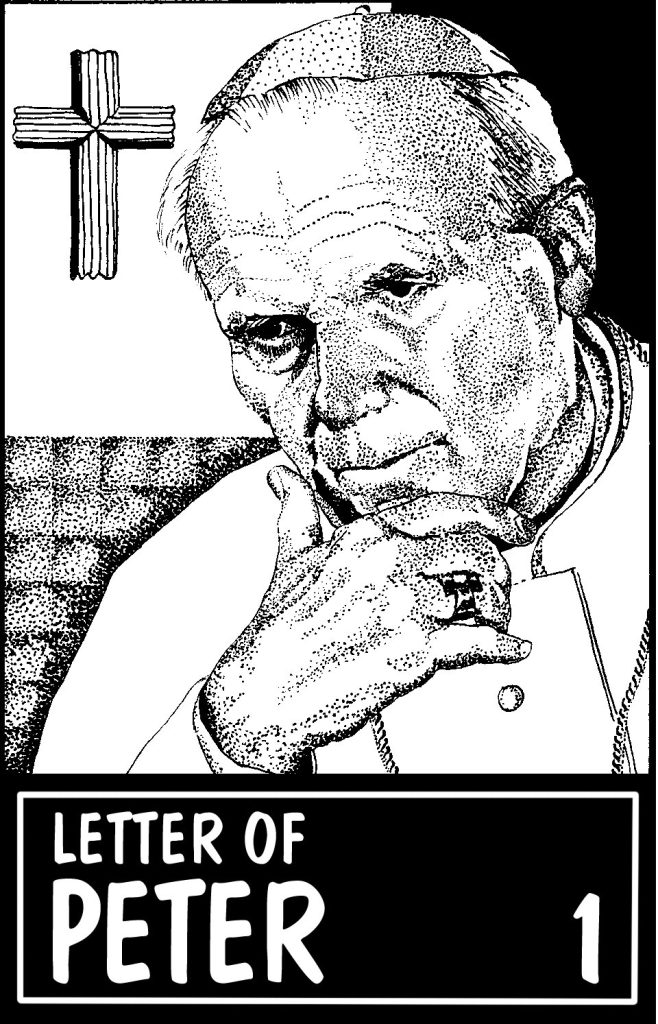
We know almost nothing about the life of the apostle Peter from the Council of Jerusalem, in the year 49 (see Acts 15), until the time he wrote this letter, around the year 64. It is certain that he went to Rome. Being in charge of the entire Church, he, like Paul, had to go to the center of the Roman world, though their motives were different.

A very ancient tradition affirms that he was killed in the persecution of Nero, in 66, and that he was buried on the grounds of the Vatican Hill. Investigations carried out these past years have enabled us to discover a grave and bones with various inscriptions which are, almost certainly, those of the apostle, the first Rock of the church.

Thus it was a short time before his death that he wrote this letter from Rome. Peter had neither the genius nor the literary talent of Paul. Instead, with simple words, he addressed the Christians of the Asian province, where the first persecutions were beginning. Different from Paul, he is not concerned with clarifying or defending the faith. He tries to encourage believers who are suffering by presenting the example of Christ to them and by explaining the consequences of baptism.

In this letter, everything from 1:3 to 3:7 is inspired by the baptismal ceremony in the early Church: hymns, homily on the ritual and on Christian life. For Peter, it is an excellent way to remind his readers that they are Christians.

The end of the letter tells us that Peter wrote through Silvanus, who had been a disciple of Paul. This may be why, in various passages, we find the same topics found in Paul’s letters.

Down below are the introductions in the Mandarin Chinese, Tagalog, Cebuano, and Spanish editions.

Translation: Mandarin Chinese

从公元49年耶路撒冷会议(宗15章),到伯多禄写这封信的公元64年,我们对这位宗徒的生活几乎一无所知。可以肯定的是他到过罗马。因为负责整个教会,他和保禄一样必须前往罗马世界的中心,虽然他们的动机并不相同。

一项非常古老的传说确信,他是在公元66年尼禄的迫害时期被杀的,而且他被埋葬于梵蒂冈山丘的墓地。在过去几年的考察中,人们发现了一个坟墓以及有不同刻文的骨头,几乎可以肯定这些是宗徒伯多禄——教会最早的磐石的遗骨。

因此,他从罗马写这封信,应是在他去世前不久。伯多禄没有保禄的天赋和文采,他以简单的文字写信给最先遭受迫害的亚洲省份。和保禄不同的是,他书信的重点不是为澄清或捍卫信理。他借着基督的例子,解释领洗的结果,鼓励受苦的信友。

在这封信中,1:3-3:7所受的灵感启发都是得自早期教会的洗礼仪式,那是对于仪式和基督教生活的赞美诗和讲道。对伯多禄而言,这是提醒读者他们基督徒状况的绝佳方式。

信末告诉我们,伯多禄的写作是通过原是保禄门徒的息拉而完成。这可能正是我们在许多段落上,可以找到与保禄的书信有相同主题的原因。

Translation: Tagalog

Halos wala tayong nalaman tungkol sa buhay ng apostol na si Pedro mula sa Kunsilyo ng Jerusalem, sa taong 49 (tingnan ang Gawa 15), hanggang nang sulatin niya ang liham na ito, nang dakong taong 64. Ngunit tiyak na nagtungo siya sa Roma. Nangasiwa siya sa buong Iglesya, kaya kailangan niyang puntahan na tulad ni Pablo ang pusod ng daigdig na Romano, bagamat magkaiba ang kanilang layunin.

Tinitiyak ng isang sinaunang tradisyon na napatay siya sa pag-uusig ni Nero, noong 66, at inilibing siya sa burol ng Batikano. Ang mga pagsisiyasat nitong ilang taong nagdaan ay nakatulong upang matuklasan naman ang isang libingan at mga butong pinapatunayan ng mga inskripsyon na mga buto ng apostol, ang unang Bato ng Iglesya.

Samakatwid, malapit na ang kanyang kamatayan nang isinulat niya ang liham na ito mula sa Roma. Hindi angkin ni Pedro ang karunungan o talinong pampanitikan ni Pablo. Sa halip, sa pamamagitan ng mga payak na pangungusap siya nagsasalita sa mga Kristiyano ng lalawigan ng Asia, na pinagsisimulan ng mga unang pag-uusig. Kaiba kay Pablo, hindi siya nababahala sa paglilinaw o pagtatanggol sa pananampalataya. Sinisikap niyang hikayatin ang mga naghihirap na mananampalataya sa pagpapaalaala sa kanila ng halimbawa, na si Kristo, at sa pagpapaliwanag sa mga bunga ng pagbibinyag.

Sa liham na ito, mula sa 1:3 hanggang 3:7, ipinaaalaala ng lahat ang pagdiriwang sa binyag sa sinaunang Iglesya: himno, homiliya sa ritwal at sa buhay-Kristiyano. Kay Pedro, iyon ang pinakamabuting paraan upang mapaalalahanan ang kanyang mga mambabasa tungkol sa kanilang kalagayang Kristiyano.

Nagsasabi ang pagwawakas ng liham na sumulat si Pedro sa tulong ni Silvano na naging alagad ni Pablo. Ito ang dahilan kung bakit makikita sa ilang talata ang gayunding paksa sa mga liham ni Pablo.

Translation: Cebuano

Halos wala tay nahibaw-an sa kinabuhi ni Pedro, ang Apostol, sukad sa konsilyo sa Jerusalem, sa tuig 49 (tan-awa ang Mga Buhat 15) hangtod sa pagsulat ini, sa mga tuig 64. Piho nga miadto siya sa Roma. Isip pangulo sa tibuok simbahan, sama ni Pablo, kinahanglang moadto siya sa ulohan sa Romanong kalibotan bisag lahi ang katuyoan.

Gimatud-an sa karaan na kaayong tradisyon nga gipatay siya sa panglutos ni Nero sa tuig 66. Ug gilubong sa kabuntoran sa Vaticano.

Ang mga pagsusi nga gihimo sa nangaging katuigan makapakitag timailhan, sama sa lubnganan ug mga bukog nga may nagkalainlaing timaan. Napiho ni nga iya ni Apostol Pedro, ang unang Bato sa simbahan.

Gipadala ni gikan sa Roma sa hapit na siya patyon. Wala ni Pedro ang kahait sa salabotan ni ang gasa sa mga pulong ni Pablo. Hinunoa, pinaagi sa yanong pinulongan gisulatan niya ang mga Kristyano sa Asia diin nagsugod ang panglutos. Lahi ni Pablo wala niya tagda ang pagtin-aw o pagpanalipod sa pagtoo. Naningkamot siya pagdasig sa mga magtotoo nga nag-antos pinaagi sa pagpakita nila sa mga sanglitanan ni Cristo ug pagpatin-aw sa mga sangpotanan sa bunyag.

Ining sulata, ang tanan gikan sa 1:3 hangtod sa 3:7 dinasig sa seremonyas sa bunyag sa unang Simbahan: ang mga awit, wali sa rito ug sa kinabuhing Kristohanon. Alang ni Pedro, ang labi ning maayo nga paagi pagpahinumdom sa mga magbabasa sa Kristohanon nilang kahimtang.

Ang kataposan sa sulat nagsulti nga si Pedro nagsulat ni Silvano, nga natinun-an ni Pablo. Makita ni sa sinugdan sa mensahe. Susama sab ang gihisgotan sa mga sulat ni Pablo.

Translation: Spanish

No sabemos casi nada de la vida del apóstol Pedro después de su liberación milagrosa, relatada en He 12. Era el año 44. En los meses siguientes, la muerte de Herodes Agripa no impidió a los sumos sacerdotes que siguieran intentando su muerte. ¿Cuándo partió para el mundo griego? ¿Qué contactos tuvo con las co-munidades fundadas por Pablo? Se sabe que en Corinto una facción se declaraba partidaria de él y que aparentemente lo conocía (1Cor 1,12).

¿Cómo pudo participar en el concilio de Jerusalén el año 49 (He 15)? ¿Cuándo llegó a Roma? Esta carta es un testimonio de su presencia en esa ciudad.

La carta de Pedro tiene numerosos puntos de contacto tanto con la carta de Santiago como con las de Pablo. Al final nos informa que el redactor fue Silvano, o Silas, uno de los responsables de la Iglesia de Jerusalén que luego acompañó a Pablo en sus misiones. Con eso nos confirma la unidad de la fe desde los comienzos de la Iglesia; Pedro, Santiago y Pablo eran los testigos incontestables de Cristo que, lejos de enseñar versiones diferentes del Evangelio, inspiraban una predicación común del misterio cristiano a partir de datos intocables que ya se llamaban “la Tradición” o “la Doctrina”.

Los profetas de la Iglesia, acostumbrados a dar una interpretación cristiana del Antiguo Testamento, iban creando poco a poco un lenguaje cristiano y, como eran itinerantes, ese lenguaje debía necesariamente estar de acuerdo con el testimonio de los apóstoles.

La originalidad de esta carta se nota en los tres puntos siguientes:

– de 1,3 a 3,7 todo está inspirado en la ceremonia del bautismo: los himnos, la homilía sobre el sentido del bautismo y el género de vida que llevarán en el mundo los nuevos bautizados:

– la carta hace el elogio de un nuevo pueblo de bautizados, piedras vivas del templo auténtico y sacerdotes de Dios para un culto espiritual;

– repetidas veces Pedro invita a meditar la pasión de Cristo: su sacrificio está siempre presente en el corazón del pueblo de Dios y la persecución forma parte de su vocación.

Una tradición muy antigua asegura que Pedro fue ejecutado durante la persecución de Nerón y que fue enterrado en unos terrenos de la colina del Vaticano. Excavaciones recientes han permitido descubrir una tumba conteniendo osamentas y marcada con diferentes inscripciones, que es casi con certeza la del apóstol, primera piedra de la Iglesia.

Subscribe
Notify of
guest
0 Comments
Oldest
Newest Most Voted
Inline Feedbacks
View all comments