Tzotzil: “[people who] are zealously doing what they think is God’s word”
Mezquital Otomi: “[people who] very much believe what they have been taught about God” (source for this and five above: Viola Waterhouse in Notes on Translation August 1966, p. 86ff.)
Chichewa interconfessional translation, publ. 1999: “[people who] love God” (source: Wendland 1998, p. 90)
Uma: “[people who] submit to Lord God” (Source: Uma Back Translation)
Yakan: “very religious” (source: Yakan Back Translation)
Western Bukidnon Manobo: “[people who] are faithful in carrying out the commands of God” (source: Western Bukidnon Manobo Back Translation)
Kankanaey: “[people who] are serving God” (source: Kankanaey Back Translation)
Tagbanwa: “[people who] are indeed devout-worshipers of God” (Source: Tagbanwa Back Translation)
Bariai: “[people who] respect God” (source: Bariai Back Translation)
Kupsabiny: “[people who] have dedicated themselves to God” (source: Kupsabiny Back Translation)
German: “God-fearing” (gottesfürchtig) or “pious” (fromm)
Low German translation by Johannes Jessen, publ. 1933, republ. 2006: “[people who] take their faith very seriously” (source for this and above: Zetzsche)
HausaCommon Language Bible: “owners of worshiping God” (source: Hausa Common Language Bible Back Translation)
Hiligaynon: “godly” (source: Hiligaynon Back Translation)
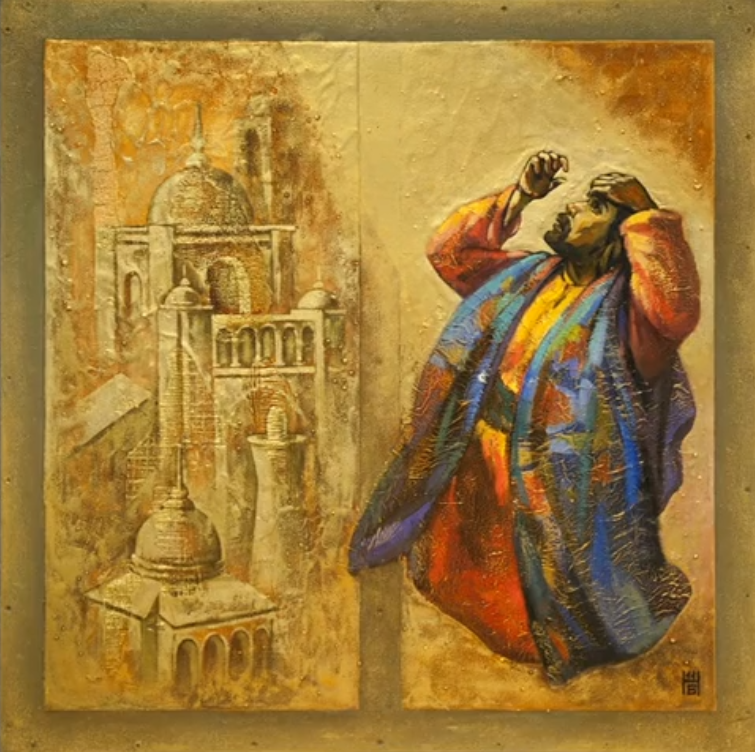
The Greek that is transliterated as “Ananias” in English is translated in Spanish Sign Language with a sign depicting “putting hands on eyes,” referring to Acts 9:17. (Source: Steve Parkhurst)
Following are a number of back-translations of Acts 22:12:
Uma: “‘In Damsyik, there was a man, Ananias his name. This Ananias, he was an upright man, strong his following to the Law of Musa. All the Yahudi people who lived in Damsyik respected him.” (Source: Uma Back Translation)
Yakan: “‘There in Damaskus, there was a man named Ananiyas. He was very-religious and followed our (incl.) law. He was greatly respected by all the Yahudi in Damaskus.” (Source: Yakan Back Translation)
Western Bukidnon Manobo: “And there was a person there named Ananias. He was very faithful in carrying out our law and he was respected by all the Jews there in Damascus.” (Source: Western Bukidnon Manobo Back Translation)
Kankanaey: “‘That being so, there was there a person named Ananias who consistently-obeyed our law. All his townsmen who were Jews also thoroughly respected/esteemed (him).” (Source: Kankanaey Back Translation)
Tagbanwa: “There was a person there who was a devout-worshipper, in harmony with all which is contained in our laws. His name was Ananias. All the Jews from there spoke highly of that person.” (Source: Tagbanwa Back Translation)
There was a man named Ananias is rendered rather literally by Moffatt, “a certain Ananias,” and by the Revised Standard Version, “and one Ananias.” The Greek phrase is merely a way of introducing a person in a narrative and of pointing him out, but a literal translation of the Greek does this rather awkwardly for the English reader. Phillips, New English Bible, and An American Translation* have all done something similar to what the Good News Translation has here.
In 9.10 Ananias is identified merely as “a disciple,” but the fact that he is a religious man is introduced here because of the nature of Paul’s speech. Paul wants to impress on his listeners that both he and the man whom God sent to him were religious people, devoted to the will of God. A religious man may be translated as “a person who genuinely worships God” or “one who truly worships God.”
Obeyed our Law is literally “according to the Law”; the meaning of this phrase in the context is that Ananias obeyed the Jewish Law. Some translators take the entire Greek phrase, “religious according to the Law,” as one expression (see New English Bible “a devout observer of the Law”; note also Phillips, An American Translation*, and Moffatt). The phrase obeyed our Law may be translated as “lived just as the Law said he should live” or “obeyed the Law given to us Jews.”
Highly respected by all is rendered by several translators as “well spoken of by all.” The phrase Jews living in Damascus is rendered by most translators by something like “Jews living there.” There is actually a textual problem involved, since the phrase in Damascus does not appear in all manuscripts. However, this may be handled translationally, because it is obvious that the Jews referred to were those living in Damascus. This final clause in verse 12 may be rendered as “all the Jews living in Damascus thought very highly of Ananias,” “all the Jews who lived in Damascus thought that Ananias was a very good person,” or “… honored him very much.”
Quoted with permission from Newman, Barclay M. and Nida, Eugene A. A Handbook on The Acts of the Apostles. (UBS Handbook Series). New York: UBS, 1972. For this and other handbooks for translators see here .
22:12a introduces Ananias to the story, and 22:12b–c tells some things about him. 22:13a then continues the story. For example:
12a A certain Ananias, 12bwho was a devout man according to the law 12cand well spoken of by all the Jews living there, 13acame to me (New Revised Standard Version)
Consider how to introduce Ananias here in your language, and continue the story about Paul in 22:13. Other ways to translate this meaning are:
12aIn that city was a man named Ananias, 12ba religious man who obeyed our Law 12cand was highly respected by all the Jews living there. 13aHe came to me (Good News Translation) -or-
12aSomeone called Ananias, 12ba devout follower of the Law 12cand highly thought of by all the Jews living there, 13acame to see me (New Jerusalem Bible)
You may want to reorder the information. For example:
12aA man named Ananias 13a came to see me. 12bHe was a devout observer of the law 12cand highly respected by all the Jews living there. (New International Version)
22:12a
There a man named Ananias: This phrase in Greek is literally “a certain Ananias.” The word “certain” probably indicates that Paul did not expect those listening to him to know who this Ananias was. The word also indicates that this Ananias was not the Jewish high priest. Other ways to translate this phrase are:
A certain Ananias (New Revised Standard Version) -or-
There a man named Ananias (New Century Version) -or-
In that city there was a man named Ananias (Contemporary English Version)
22:12b
a devout observer of the law: This phrase in Greek is literally “devout according to the law.” This phrase indicates that Ananias obeyed God as the law of Moses said to. Other ways to translate this phrase are:
a devout man according to the law (New Revised Standard Version) -or-
a godly man as the law ⌊of Moses⌋ said one should live -or-
a devout-worshiper, in harmony with all which is contained in our laws
See how you translated this word in 2:5 and 8:2, where the Berean Standard Bible translates it as “God-fearing.”
22:12c
who was highly regarded by all the Jews living there: The Greek word that the Berean Standard Bible translates as highly regarded indicates that the Jews in Damascus said Ananias was a very good man. Other ways to translate this phrase are:
well spoken of by all the Jews who lived there (Revised Standard Version) -or-
he had a good reputation among all the Jews living there -or-
all the Jews living there respected him very much
See how you translated highly regarded in 10:22 (“with a good reputation”) or 16:2 (“spoke well of him”).
living there: The word there refers to Damascus here.
Living Water is produced for the Bible translation movement in association with Lutheran Bible Translators. Lyrics derived from the ESV® Bible (The Holy Bible, English Standard Version®).

Leave a Reply
You must be logged in to post a comment.