
camel

The Hebrew, Latin and Greek that is translated in English as “camel” is translated in Muna as “water buffalo.” René van den Berg explains: “Camels are unknown; the biggest known animal is the water buffalo (though now rare on Muna).”

In Bislama is is translated as buluk: “cow” / “bull” (source: Ross McKerras) and in Bahnar as aseh lăk-đa which is a combination of the Vietnamese loan word for “camel” (lăk-đa) and the Bahnar term for “horse” (aseh) to communicate that the camel is a beast of burden (source: Pham Xuan Tin in The Bible Translator 1952, p. 20ff. ).

In the 1900 Kalaallisut (Greenlandic) translation (a newer version was published in 2000) it was translated as ĸatigagtôĸ or “big-backed ones.” “Katigagtôĸ (modern qatigattooq), which has the literal meaning of ‘something with a big back.’ It comprises the noun ĸatigak (modern qatigak) ‘back’ combined with the suffix –tôĸ (modern –tooq) ‘something possessing a big X.’” (Source: Lily Kahn & Riitta-Liisa Valijärvi in The Bible Translator 2019, p. 125ff.)

In Luke 18:25, Mark 10:25, and Matthew 19:24 some versions of the Peshitta translation in Syriac Aramaic (Classical Syriac) show an ambiguity between the very similar words for “camel” and “rope.” Some translations of the Peshitta, therefore, use the “rope” interpretation, including the Classical Armenian Bible (մալխոյ for “rope”), the English translation by George Lamsa (publ. 1933) (It is easier for a rope to go through the eye of a needle), or the Dutch translation by Egbert Nierop (publ. 2020) (het voor een kabel eenvoudiger is het oog van een naald binnen te gaan).

In the above-mentioned three verses, it is translated in Noongar as “kangaroo” (source: Warda-Kwabba Luke-Ang).


There were two types of camel known in Bible times the most common being the Arabian Dromedary camelus dromedarius, which was indigenous to the area. The two-humped Bactrian Camel camelus bactrianus was also known and prized, but it was imported from Central Asia.

Camels belong to the same family as the South American llama, vicuna, alpaca, and guanaco, but camels are much larger and have a big fatty hump on their backs. Bactrian camels may reach a height of about two meters (6.5 feet), while dromedaries are even bigger. Dromedaries are a uniform light fawn color, while Bactrian camels are darker, especially in winter when they grow longer fur.

Camels do not have hooves but a large footpad with two broad toes ideally suited to walking on sand. In other ways too they are ideally suited to life in desert areas. They store excess food in their humps and this makes it possible for them to go a long time without eating. Special blood cells also enable them to go without water for long periods. They also have a very efficient digestive system and can extract the maximum amount of nutrition from apparently dry vegetation. This adaptation to harsh environments means that camels can make long journeys through dry areas which would be beyond the abilities of other types of pack animal such as donkeys. Camels were used for riding and for carrying heavy loads. They were also used to pull carts.

In winter the fur of camels thickens and grows longer and then when summer comes they shed their winter fur in large wads. These wads of camel hair are collected and twisted into cords and ropes or spun into thread which is then used for weaving coarse cloth. This cloth was usually used for making tents but it was sometimes used for making outer robes.

Camels’ milk was used as food and drink but their meat was considered unclean by the Israelites.

In spite of the fact that camels were considered to be unclean for food they were a symbol of wealth and commerce. People or nations with many camels were automatically viewed as commercially successful and wealthy as the possession of camels opened up the possibility of transporting goods long distances and engaging in trade.

In areas where camels are not known, the word is often transliterated from Hebrew or the dominant language of the area. However, in some languages descriptive names have been invented. In some South American languages names meaning “hump-backed llama” or “big alpaca with a hump” have been used. Elsewhere expressions such as “hump-backed horse” have been used. A fuller description should usually be included in a glossary or word list.

Source: All Creatures Great and Small: Living things in the Bible (UBS Helps for Translators)

For information on the domestication of camels, see Early camel incidents in the Hebrew Bible .

Click or tap here to see a short video clip about camels (source: Bible Lands 2012)

myrrh

The Greek and Hebrew that is translated as “myrrh” in English is translated as “bitter medicine” in Michoacán Nahuatl and as “myrrh perfume” in Tzotzil (source: Ronald D. Olson in Notes on Translation January, 1968, p. 15ff.).

In Mark 15:23, Usila Chinantec translates it as “the herb myrrh which is useful so that one not feel pain in his body.” (Source: B. Moore / G. Turner in Notes on Translation 1967, p. 1ff.)


Myrrh is probably the most precious spice in the Bible. It was worth more than its weight in gold. Our experts agree that the Hebrew word mor refers to the resin of one of the Commiphora genus, either myrrha, abyssinica or schimperi, all of which grew in what is now Yemen, Ethiopia, Somalia, and Madagascar. Other kinds of myrrh may have come from India (Commiphora erythraea, Commiphora opobalsamum). A more difficult question is the meaning of the word deror in Exodus 30:23. In the other places where it occurs it means “freedom” or “liberty.” This is the basis for the word “liquid” in some versions, but there is no certainty that “free” means “liquid.” The fact that myrrh was sometimes mixed with wine may suggest that deror means “liquid” here, but on the other hand, the weight of the myrrh is given in dry measure rather than liquid measure, which argues against it.

The myrrh plant is a bush or shrub with thick thorny branches that project and bend at odd angles. The leaves come in sets of three. The fruit is oval like a plum. The wood and bark have a pleasant smell. The gum oozes naturally from the branches, though some harvesters incise the branches to increase the flow. The sap or gum is clear or yellowish brown when it comes out, but gets darker as it dries. The taste of the gum is bitter (note the similarity of mor to the Hebrew word mar meaning “bitter”). In markets the gum is often found mixed with that of the kataf bush (bisabol).

God prescribed myrrh as an ingredient of the holy anointing oil (Exodus 30:23), and it is used as perfume in Esther, Psalms, Proverbs, and eight times in Song of Songs. It was brought as an expensive gift by the Magi to the new King (Matthew 2:11). As Jesus was dying on the cross, sympathetic bystanders may have offered it to him mixed with wine (Mark 15:23; see the parallel account in Matthew 27:34). Joseph of Arimathea and Nicodemus brought a mixture of myrrh and aloes to prepare Jesus’ body for burial (John 19:39). In ancient Egypt myrrh was burned on the altars of the sun god, and in Persia it was attached to the crowns of kings when they appeared in public. Romans burned myrrh at funerals and cremations, which helps to explain its inclusion in the list of spices in Revelation 18:13. Today it is used in perfumes, lotions, and even in toothpaste.

Varieties of myrrh grow in the Horn of Africa and Madagascar, so people from those areas should have no difficulty finding words for it. As to whether the myrrh in Exodus 30:23 was liquid or solid, there seems to be no consensus, and the translator may be forgiven for simply ignoring the Hebrew word deror . Possible transliterations are Hebrew mor, Arabic mar, French mireh, and Spanish/Portuguese mirra.

Harvesting myrrh, Wikimedia Commons

Source: Each According to its Kind: Plants and Trees in the Bible (UBS Helps for Translators)

See also mixture of myrrh with aloes.

fennel (galbanum)

Although its identity in the Bible is uncertain, galbanum is probably a gum resin from a plant called Fennel Ferula galbaniflua, which grows in India, Iran and Afghanistan, and especially in the high mountains of Iran. The fennel is related to the parsley family. Today most commercial galbanum comes from Lebanon and Iran.

The fennel plant can grow to 1.5 meters (5 feet) in height. It has fine, shiny leaflets, a thick smooth stem, and a flower head like an umbrella. The seeds are shiny and very small. The plant has a milky juice that comes out by it-self from the joints or oozes out from the stem when it is cut. It forms aromatic greenish or yellowish beads when it dries. The taste is bitter and the smell is strong. A kind of fennel grows in Galilee (Ferula communis), but it does not yield the galbanum resin. Another kind, known from Roman coins from Carthage, grew in North Africa under the name silphion (probably Ferula tingitana).

According to Exodus 30:34, galbanum resin was part of the incense prescribed by Moses for burning in the Tabernacle. In Assyria it was used as a fumigant. It could have been the “gum” mentioned in Genesis 37:25. The Roman writer Pliny considered it a powerful remedy.

Translation  Since fennel is not well known, most translators will need to transliterate from a major language. Some possibilities are:

1. transliteration from Hebrew: helibena, elbenahi, lebena;
2. transliteration from Latin via English: galbanum;
3. substitution of a local type of gum, adding chelbenah or galbanum as a tag or in a footnote.
4. transliteration of the name of the plant with a classifier: gum of ferula (French), feneli (English), hinojo/ferula (Spanish).

Fennel, Wikimedia Commons

Source: Each According to its Kind: Plants and Trees in the Bible (UBS Helps for Translators)

liquidambar (Oriental sweetgum𖺗 storax)

The Hebrew word tsori (“balm”) may be the basis for the word “storax,” which Zohary (Plants of the Bible. Cambridge University Press, 1982) takes to be a name for the dried resin of the liquidambar Liquidambar orientalis, a tree that is also called kataf or nataf in Hebrew.

The Hebrew word nataf does not occur outside of Exodus 30:34 in the Bible. The Septuagint renders it staktē, which New Revised Standard Version, updated edition transliterates as “stacte.” According to Zohary, nataf is a synonym of tsori (= storax), which is found six times in the Bible. The liquidambar (or storax) is a tree that used to grow widely in the Middle East and Turkey.

The liquidambar tree grows to 10 meters (33 feet) tall, and has deeply incised leaves with five points and round yellow flowers on a 4 centimeter (2 inch) stalk. The fruits are prickly. The sticky gray-brown gum is produced by making cuts in the trunk of the tree.

The Jeremiah and Ezekiel references indicate that tsori was medicinal. We conclude from Exodus 30:34 that it was aromatic. Genesis 37:25 shows that it was highly valued in trade with Egypt.

The genus Liquidambar was widespread many thousands of years ago, according to fossil evidence, but it disappeared from Europe when the glaciers came. The surviving species, apart from orientalis in the Middle East, are formosana in South China and Taiwan and styraciflua in the eastern United States and Central America.

The references to tsori in Genesis and Ezekiel are non-rhetorical, as is nataf in Exodus. If Zohary is correct, and the translator wants to be specific, then a transliteration of “storax” may be used in these passages. Alternatively, in Exodus 30:34 translators can use a generic expression such as “resin” or “gum resin”; that is, they can use their local word for the globs of hardened sap that come from trees that produce it.

If a word for “sweet-smelling healing ointment” exists, it can be used for tsori in Genesis. Tsori is the second of three spices the Ishmaelite traders carried in Genesis 37:25, the other two being neko’th (“gum”) and lot (“myrrh” or “resin”). Translators can cover all three words with a phrase such as “different kinds of sweet-smelling medicine and incense.” Transliteration is also possible, from Hebrew tsori or Arabic nakaa/nakati. “Balm” in English is not a good basis for transliteration.
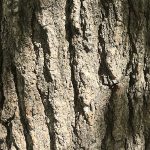
Liquidambar trunk, Wikimedia Commons

Source: Each According to its Kind: Plants and Trees in the Bible (UBS Helps for Translators)

cinnamon

True cinnamon Cinnamomum verum (or Cinnamomum zeylanicum) is a tree found mostly in Sri Lanka, India, and Burma. The Hebrew word qinnamon may ultimately derive from an early form of the Malaysian/Indonesian expression kayu manis, meaning “sweet wood.” As in the case of cassia, there is debate about whether the cinnamon mentioned in the Old Testament could have been imported from the Far East or whether there was perhaps a spice from Arabia or Africa that was named qinnamon, because this name was known at the time of writing. Some scholars believe that there was trade between India and Egypt as early as the second millennium B.C. In fact, the renowned Egyptian queen Hatshepsut is thought to have brought myrrh or frankincense trees from “Punt,” which could have been Somalia or even India, in 1490 B.C. However, she apparently did not bring cinnamon trees, nor are cinnamon and cassia among the spices found in the tombs of Egypt. So the true identity of the biblical cinnamon is still in question.

The true cinnamon tree grows to 10 meters (33 feet) in height. The stem branches plentifully. The leathery leaves are 10-15 centimeters (4-6 inches) in length and have three light-colored, radiating veins. The spongy outer bark is scraped off, revealing a fragrant pale brown inner bark. This inner bark carries the cinnamon flavor. It is cut off and dried, and the bark curls to form little scrolls. The small flowers have an unpleasant smell.

According to Exodus 30:23, cinnamon was an ingredient of the holy oil used to anoint the Tabernacle, ark, and priests. The temptress of Proverbs 7:17 perfumes her bed with it, together with myrrh and aloes. Today the bark of cinnamon is ground into powder and used as a spice for food and as an ingredient in incense and perfume. Even the leaves and unripe berries (“buds”) are marketed as condiments.

Translators in Asia will be able to use their own word for cinnamon. They will even be able to distinguish between cassia and cinnamon. In other areas it is best to transliterate from Hebrew qinnamon or a major language. Since the bark was ground into powder, the words “bark” or “powder” may be useful as classifiers. In Exodus 30:23 and 24 translators will need two words for the closely related cassia and cinnamon.

Cinnamon tree with bark removed, Wikimedia Commons

Source: Each According to its Kind: Plants and Trees in the Bible (UBS Helps for Translators)

Translation commentary on Sirach 24:15

Like cassia and camel’s thorn I gave forth the aroma of spices, and like choice myrrh I spread a pleasant odor: Ziegler’s Greek text does not contain the clause I gave forth the aroma of spices; it is not found in some Greek manuscripts. It is very similar to, and certainly means the same, as I spread a pleasant odor in the second line. We suggest that this clause not be included, and that it be treated as a translational matter rather than a textual one. English does not have an easy way for a person, such as the figure of Wisdom here, to talk about giving off an odor, pleasant or otherwise. That is why Good News Translation translates “My breath was the spicy smell of….” Another possible approach is “Like cassia … I perfumed the air,” “I filled the air with the sweet smell of…,” or “The spicy smell of cassia … surrounded me.” Other languages may find one of these alternatives easier to deal with. A model will be presented below.

Cassia is a spice made from the bark of a tree. It is much like cinnamon, and may be used as a substitute. Good News Translation translates “cinnamon.” It is found also at Exo 30.24; Psa 45.8; and Ezek 27.19. In cultures where this spice is unknown, we may say “a sweet-smelling substance named ‘cassia.’ ” Camel’s thorn is a kind of low thorn bush. A fragrant oil was produced from its roots, and New American Bible renders it “fragrant balm.” Good News Translation translates “sweet perfume.” It is found nowhere else in Scripture, unless the “aromatic cane” in Exo 30.23 refers to the product of the same plant. Shekan translates “fragrant cane.” Aromatic cane may be in view here, since it is also mentioned along with cassia, cinnamon, and myrrh in Exo 30.23-25. According to the passage in Exodus, these spices were mixed with olive oil to make the anointing oil used by Israel’s priests. If aromatic cane is indeed intended here in Sirach, the plant in question is likely lemon grass, which is aromatic and used as a source of perfumes and flavorings. Possible alternatives are “cane” (Contemporary English Version) and “lemon grass.” Myrrh is a sweet-smelling resin produced by a shrub that grew widely in Palestine. It was used in making incense. Choice myrrh refers to myrrh of the finest quality; Good News Translation says “finest myrrh.” This substance is referred to numerous times in the Bible, and translators will no doubt have encountered it earlier. See, for example, Exo 30.23; Psa 45.8; Pro 7.17; Matt 2.11; Rev 18.13.

Like galbanum, onycha, and stacte, and like the fragrance of frankincense in the tabernacle: Galbanum, stacte, and frankincense are gums or resins derived from certain plants; onycha is probably derived from a sea animal. The important thing about them is that they were the ingredients used for making the incense to be burned as part of Israelite worship in the Tabernacle; see Exo 30.34-35. For tabernacle see the comments on verse 10 above.

The substances in this verse fall into two groups. The first group, in the first two lines, are the ingredients for the holy anointing oil. The second group, in the last two lines, are the ingredients for the holy incense. Translators will find the first group easier to deal with, since cinnamon and possibly lemon grass are widely enough known to be recognized. Only myrrh is a problem. The four ingredients of the incense are more difficult since all four are unfamiliar. One way of dealing with them is simply to name them as foreign words; this may have the effect of creating a mysterious, exotic atmosphere that is consistent with what the author is trying to do. This is the only purpose they serve in English versions. Another way is give up any attempt to render them individually, and combine them into the incense that they were used for. This will probably be more satisfactory. An alternative model that does this is:

• My perfume had the smell of cinnamon,
the fragrance of lemon grass and finest myrrh,
the sweet smoke of the incense
burning in the Sacred Tent.

But for translators who wish to keep all the names, we may translate:

• My perfume had the smell of cinnamon;
the fragrance of lemon grass and finest myrrh,
the sweet-smelling smoke in the Sacred Tent
coming from galbanum, onycha, stacte, and frankincense.

Quoted with permission from Bullard, Roger A. and Hatton, Howard A. A Handbook on Sirach. (UBS Helps for Translators). New York: UBS, 2008. For this and other handbooks for translators see here.