
liquidambar (Oriental sweetgum𖺗 storax)

The Hebrew word tsori (“balm”) may be the basis for the word “storax,” which Zohary (Plants of the Bible. Cambridge University Press, 1982) takes to be a name for the dried resin of the liquidambar Liquidambar orientalis, a tree that is also called kataf or nataf in Hebrew.

The Hebrew word nataf does not occur outside of Exodus 30:34 in the Bible. The Septuagint renders it staktē, which New Revised Standard Version, updated edition transliterates as “stacte.” According to Zohary, nataf is a synonym of tsori (= storax), which is found six times in the Bible. The liquidambar (or storax) is a tree that used to grow widely in the Middle East and Turkey.

The liquidambar tree grows to 10 meters (33 feet) tall, and has deeply incised leaves with five points and round yellow flowers on a 4 centimeter (2 inch) stalk. The fruits are prickly. The sticky gray-brown gum is produced by making cuts in the trunk of the tree.

The Jeremiah and Ezekiel references indicate that tsori was medicinal. We conclude from Exodus 30:34 that it was aromatic. Genesis 37:25 shows that it was highly valued in trade with Egypt.

The genus Liquidambar was widespread many thousands of years ago, according to fossil evidence, but it disappeared from Europe when the glaciers came. The surviving species, apart from orientalis in the Middle East, are formosana in South China and Taiwan and styraciflua in the eastern United States and Central America.

The references to tsori in Genesis and Ezekiel are non-rhetorical, as is nataf in Exodus. If Zohary is correct, and the translator wants to be specific, then a transliteration of “storax” may be used in these passages. Alternatively, in Exodus 30:34 translators can use a generic expression such as “resin” or “gum resin”; that is, they can use their local word for the globs of hardened sap that come from trees that produce it.

If a word for “sweet-smelling healing ointment” exists, it can be used for tsori in Genesis. Tsori is the second of three spices the Ishmaelite traders carried in Genesis 37:25, the other two being neko’th (“gum”) and lot (“myrrh” or “resin”). Translators can cover all three words with a phrase such as “different kinds of sweet-smelling medicine and incense.” Transliteration is also possible, from Hebrew tsori or Arabic nakaa/nakati. “Balm” in English is not a good basis for transliteration.
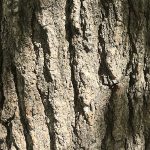
Liquidambar trunk, Wikimedia Commons

Source: Each According to its Kind: Plants and Trees in the Bible (UBS Helps for Translators)

camel

The Hebrew, Latin and Greek that is translated in English as “camel” is translated in Muna as “water buffalo.” René van den Berg explains: “Camels are unknown; the biggest known animal is the water buffalo (though now rare on Muna).”

In Bislama is is translated as buluk: “cow” / “bull” (source: Ross McKerras) and in Bahnar as aseh lăk-đa which is a combination of the Vietnamese loan word for “camel” (lăk-đa) and the Bahnar term for “horse” (aseh) to communicate that the camel is a beast of burden (source: Pham Xuan Tin in The Bible Translator 1952, p. 20ff. ).

In the 1900 Kalaallisut (Greenlandic) translation (a newer version was published in 2000) it was translated as ĸatigagtôĸ or “big-backed ones.” “Katigagtôĸ (modern qatigattooq), which has the literal meaning of ‘something with a big back.’ It comprises the noun ĸatigak (modern qatigak) ‘back’ combined with the suffix –tôĸ (modern –tooq) ‘something possessing a big X.’” (Source: Lily Kahn & Riitta-Liisa Valijärvi in The Bible Translator 2019, p. 125ff.)

In Luke 18:25, Mark 10:25, and Matthew 19:24 some versions of the Peshitta translation in Syriac Aramaic (Classical Syriac) show an ambiguity between the very similar words for “camel” and “rope.” Some translations of the Peshitta, therefore, use the “rope” interpretation, including the Classical Armenian Bible (մալխոյ for “rope”), the English translation by George Lamsa (publ. 1933) (It is easier for a rope to go through the eye of a needle), or the Dutch translation by Egbert Nierop (publ. 2020) (het voor een kabel eenvoudiger is het oog van een naald binnen te gaan).

In the above-mentioned three verses, it is translated in Noongar as “kangaroo” (source: Warda-Kwabba Luke-Ang).


There were two types of camel known in Bible times the most common being the Arabian Dromedary camelus dromedarius, which was indigenous to the area. The two-humped Bactrian Camel camelus bactrianus was also known and prized, but it was imported from Central Asia.

Camels belong to the same family as the South American llama, vicuna, alpaca, and guanaco, but camels are much larger and have a big fatty hump on their backs. Bactrian camels may reach a height of about two meters (6.5 feet), while dromedaries are even bigger. Dromedaries are a uniform light fawn color, while Bactrian camels are darker, especially in winter when they grow longer fur.

Camels do not have hooves but a large footpad with two broad toes ideally suited to walking on sand. In other ways too they are ideally suited to life in desert areas. They store excess food in their humps and this makes it possible for them to go a long time without eating. Special blood cells also enable them to go without water for long periods. They also have a very efficient digestive system and can extract the maximum amount of nutrition from apparently dry vegetation. This adaptation to harsh environments means that camels can make long journeys through dry areas which would be beyond the abilities of other types of pack animal such as donkeys. Camels were used for riding and for carrying heavy loads. They were also used to pull carts.

In winter the fur of camels thickens and grows longer and then when summer comes they shed their winter fur in large wads. These wads of camel hair are collected and twisted into cords and ropes or spun into thread which is then used for weaving coarse cloth. This cloth was usually used for making tents but it was sometimes used for making outer robes.

Camels’ milk was used as food and drink but their meat was considered unclean by the Israelites.

In spite of the fact that camels were considered to be unclean for food they were a symbol of wealth and commerce. People or nations with many camels were automatically viewed as commercially successful and wealthy as the possession of camels opened up the possibility of transporting goods long distances and engaging in trade.

In areas where camels are not known, the word is often transliterated from Hebrew or the dominant language of the area. However, in some languages descriptive names have been invented. In some South American languages names meaning “hump-backed llama” or “big alpaca with a hump” have been used. Elsewhere expressions such as “hump-backed horse” have been used. A fuller description should usually be included in a glossary or word list.

Source: All Creatures Great and Small: Living things in the Bible (UBS Helps for Translators)

For information on the domestication of camels, see Early camel incidents in the Hebrew Bible .

Click or tap here to see a short video clip about camels (source: Bible Lands 2012)

terebinth

The Hebrew words ’elah and ’alah refer to any of three species of terebinth mentioned in the Bible: 1) the Atlantic terebinth Pistacia atlantica, 2) the Palestinian terebinth Pistacia palaestina, and 3) the Lentisk Terebinth Pistacia lentiscus, also called the mastic tree.

According to Zohary (Plants of the Bible, Cambridge University Press, 1982), the Atlantic terebinth, also called the teil tree, is found in the Negev, Lower Galilee, and the Dan Valley. Hepper (Baker Encyclopedia of Bible Plants, Baker Book House, 1992) says it was once abundant in Gilead, the trunk and bark being a possible source for aromatic resin (mastic) exported to Egypt. It is a dry-land tree that grows in the border areas between ever-green woodlands and the dwarf-shrub steppes (note “valley of Elah” in 1 Samuel 17:2 et al.). The nuts of the Atlantic terebinth are used for dyeing and tanning animal skins, but they can be eaten if roasted. They are often sold in Arab markets, are bigger than the nuts of the Palestinian terebinth, and are quite different from the true pistachio nuts.

The Palestinian terebinth is found mostly on wooded hills, often together with the common oak. Its little round nuts can be eaten whole, fresh, or roasted, and it is probably these nuts (boten) that were carried to Egypt by the sons of Jacob (Genesis 43:11).

The lentisk terebinth is a shrub or bush that grew in the hills of Gilead, and may be the source of the “balm/resin” (tsori in Hebrew) carried by the Ishmaelites in Genesis 37:25, and by the sons of Jacob to Egypt along with pistachio nuts in Genesis 43:11. The fact that Genesis 37:25 et al. all mention Gilead in connection with the resin tsori, suggests that its source was a plant unique to Palestine. That is why it could be used to trade for goods from Egypt. The references in Jeremiah (8:22 and 46:11) presumably refer to the salve made from the terebinth resin.

Terebinths look like oaks but have pinnate leaves. The Atlantic terebinth may reach a height of 10 meters (33 feet). The Palestinian terebinth species is shorter, reaching to 5 meters (17 feet). The lentisk terebinth, or mastic (gum) tree, is a small shrub or tree 1-3 meters (3-10 feet) in height that produces a sweet-smelling resin when the stem or branches are cut. The resin dries into hard lumps, which are then ground and dissolved in olive oil for medicinal use, per-fume, incense, varnish, and glue.

Both of the larger terebinths were revered by ancient Israelites and other peoples. They built shrines and altars in the terebinth groves, and sometimes buried people there. The resin of the lentisk terebinth was highly prized for its medicinal value, which is why the Ishmaelites and the sons of Jacob were carrying them as trade goods to Egypt. Sirach 24:16 uses the wide-spreading branches terebinth as a metaphor for wisdom.

Pistacia palaestina, Wikimedia Commons
Pistacia atlantica, Wikimedia Commons
Mastic resin hanging from mastic (Pistacia lentiscus) tree, Wikimedia Commons

Source: Each According to its Kind: Plants and Trees in the Bible (UBS Helps for Translators)

complete verse (Genesis 37:25)

Following are a number of back-translations as well as a sample translation for translators of Genesis 37:25:

  • Kankanaey: “When that was finished, they sat-down to eat. But Ruben was not there because he had gone somewhere. When they were-eating, they saw-in-the-distance a group of people who were descendants of Ismael and descendants of Midian approaching from Gilead. Their camels were loaded (lit. cargoed) with expensive kinds of perfume and embalming-spice (loan balsamo) that they were going to sell in Egipto.” (Source: Kankanaey Back Translation)
  • Newari: “When they sat down to eat, at a great distance they saw Ishmaelites coming from Gilead. Their camels were carrying loads of fragrant spices, medicine to be applied, and myrrh. They were on their way to Egypt.” (Source: Newari Back Translation)
  • Hiligaynon: “While they were-eating, there-was in- their -view merchants who (were) Ishmaelinhon who came-from Gilead. Their camels had cargo with spices, medicines, and perfumes which (were) to-be-brought to Egipto.” (Source: Hiligaynon Back Translation)
  • English: “After they sat down to eat some food, they looked up and saw a caravan/group of traders, descendants of Ishmael, coming from the Gilead area. Their camels were loaded with bags of spices and nice-smelling resins. They were going down to Egypt to sell those things there.” (Source: Translation for Translators)

Translation commentary on Genesis 37:25

Then they sat down to eat: translators may find this sentence fits best as concluding the episode of throwing of Joseph into the cistern. In that case it will be linked with verse 24, and a new paragraph will begin at verse 25b. Good News Translation begins a new paragraph with “While they were eating….” In some languages a transition is required between putting Joseph in the cistern and the brothers sitting down to eat. We may say, for example, at the beginning of verse 25, “After the brothers had put him into the cistern, they sat down to eat” or “After that was done, they sat down and began to eat.”

Looking up they saw is literally “They lifted their eyes and looked and behold,” where “behold” draws the attention of readers to what they saw. Good News Translation says “they suddenly saw.”

A caravan of Ishmaelites … Gilead: caravan in this context means a group or company of merchant traders traveling with camels across the country. The Hebrew is literally as in Revised Standard Version, which King James Version renders “a traveling company of Ishmaelites.” In its literal sense Ishmaelites refers to descendants of Ishmael, but it is their occupation as traders or merchants that is important here. Traders are people who transport merchandise to other areas to sell. If the term Ishmaelite is retained in translation, it is helpful to call these people “Ishmaelite traders”; but see comments below at verse 28. Gilead is the mountainous region east of the Jordan river in what is now modern Jordan. It lay on the main trade route from the Gulf of Aqaba to Damascus, and its inhabitants controlled access to that area.

Bearing gum, balm, and myrrh: gum and balm are two kinds of resin or sap taken from certain trees. Myrrh is also an aromatic or scented gum. It was used in incense (Exo 30.23) and as a perfume for clothing (Psa 45.8). See also Pro 7.17. It was particularly important in Egypt, where it was used in the embalming or preserving of dead human bodies. All three of these articles seem to have been in demand for sweet smelling incense and perfume. Good News Translation renders the whole expression “loaded with spices and resins.” If Good News Translation will not serve as a translation model, it is possible to say, for example, “loaded with things that give food special flavors and that give off pleasant smells.”

To carry it down to Egypt: this information may fit better immediately following the place of origin of the traders, Gilead. In that case we may say “coming from Gilead and going to Egypt.”

Quoted with permission from Reyburn, William D. and Fry, Euan McG. A Handbook on Genesis. (UBS Helps for Translators). New York: UBS, 1997. For this and other handbooks for translators see here .