
liquidambar (Oriental sweetgum𖺗 storax)

The Hebrew word tsori (“balm”) may be the basis for the word “storax,” which Zohary (Plants of the Bible. Cambridge University Press, 1982) takes to be a name for the dried resin of the liquidambar Liquidambar orientalis, a tree that is also called kataf or nataf in Hebrew.

The Hebrew word nataf does not occur outside of Exodus 30:34 in the Bible. The Septuagint renders it staktē, which New Revised Standard Version, updated edition transliterates as “stacte.” According to Zohary, nataf is a synonym of tsori (= storax), which is found six times in the Bible. The liquidambar (or storax) is a tree that used to grow widely in the Middle East and Turkey.

The liquidambar tree grows to 10 meters (33 feet) tall, and has deeply incised leaves with five points and round yellow flowers on a 4 centimeter (2 inch) stalk. The fruits are prickly. The sticky gray-brown gum is produced by making cuts in the trunk of the tree.

The Jeremiah and Ezekiel references indicate that tsori was medicinal. We conclude from Exodus 30:34 that it was aromatic. Genesis 37:25 shows that it was highly valued in trade with Egypt.

The genus Liquidambar was widespread many thousands of years ago, according to fossil evidence, but it disappeared from Europe when the glaciers came. The surviving species, apart from orientalis in the Middle East, are formosana in South China and Taiwan and styraciflua in the eastern United States and Central America.

The references to tsori in Genesis and Ezekiel are non-rhetorical, as is nataf in Exodus. If Zohary is correct, and the translator wants to be specific, then a transliteration of “storax” may be used in these passages. Alternatively, in Exodus 30:34 translators can use a generic expression such as “resin” or “gum resin”; that is, they can use their local word for the globs of hardened sap that come from trees that produce it.

If a word for “sweet-smelling healing ointment” exists, it can be used for tsori in Genesis. Tsori is the second of three spices the Ishmaelite traders carried in Genesis 37:25, the other two being neko’th (“gum”) and lot (“myrrh” or “resin”). Translators can cover all three words with a phrase such as “different kinds of sweet-smelling medicine and incense.” Transliteration is also possible, from Hebrew tsori or Arabic nakaa/nakati. “Balm” in English is not a good basis for transliteration.
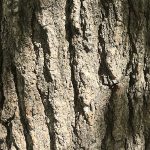
Liquidambar trunk, Wikimedia Commons

Source: Each According to its Kind: Plants and Trees in the Bible (UBS Helps for Translators)

virgin

The Hebrew and Greek that is mostly translated as “virgin” in English can be translated as “woman that is untouched” in Batak Toba or “a woman with a whole (i.e. unopened) body” in Uab Meto.

“Similar words for ‘girl,’unmarried young woman,’ suggesting virginity without explicitly stating it, are found in Marathi, Apache, or Kituba. Cultural features naturally influence connotations of possible renderings, for instance, the child marriage customs in some Tboli areas, where the boy and girl are made to sleep together at the initial marriage, but after that do not live together and may not see each other again for years. Hence, the closest attainable equivalent, ‘female adolescent,’ does not imply that a young girl is not living with her husband, and that she never had a child, but leaves uncertain whether she has ever slept with a male person or not. Accordingly, in Luke one has to depend on Luke 1:34 to make clear that Mary and Joseph had not had sexual intercourse. A different problem is encountered in Pampanga, where birhen (an adaptation of Spanish virgen — ‘virgin’), when standing alone, is a name of the ‘Virgin Mary.’ To exclude this meaning the version uses “marriageable birhen,” thus at the same time indicating that Mary was relatively young.” (Source: Reiling / Swellengrebel, see here)

In Navajo (Dinė), the term that is used is “no husband yet” (Source: Wallis, p. 106) and in Gola the expression “trouser girl.” “In the distant past young women who were virgins wore trousers. Those who were not virgins wore dresses. That doesn’t hold true anymore, but the expression is still there in the language.” (Source: Don Slager)

The term in Djimini Senoufo is katogo jo — “village-dance-woman” (women who have been promised but who are still allowed to go to dances with unmarried women). (Source: Übersetzung heute 3/1995)

In Igbo translations, typically a newly-created, multi-word phrase is used that very explicitly states that there has not been any sexual relations and that translates as “a woman (or: maiden) who does not know a man.” This is in spite of the fact that there is a term (agb͕ọghọ) that means “young woman” and has the connotation of her not having had sexual relations (this is for instance used by the Standard Igbo Bible of the Bible Society of Nigeria for Isaiah 7:14). Incidentally, the euphemistic expression “know” (ma in Igbo) for “having sex” has become a well-known euphemism outside of Bible translation. (Source: Uchenna Oyali in Sociolinguistic Studies Vol. 17 No. 1-3 (2023): Special Issue: Gender and sexuality in African discourses )

In Chichewa, it is translated as namwali which is used to refer to a girl who has reached puberty stage and is ready to get married. Apart from the physical aspect, the word also has social implications in the sense that it is used to recognize the fact that the girl has become responsible enough to make informed decisions and take care of herself and others. (Source: Mawu a Mulungu mu Chichewa Chalero Back Translation)

See also virgins (Revelation 14:4) and complete verse (Matthew 1:23).

terebinth

The Hebrew words ’elah and ’alah refer to any of three species of terebinth mentioned in the Bible: 1) the Atlantic terebinth Pistacia atlantica, 2) the Palestinian terebinth Pistacia palaestina, and 3) the Lentisk Terebinth Pistacia lentiscus, also called the mastic tree.

According to Zohary (Plants of the Bible, Cambridge University Press, 1982), the Atlantic terebinth, also called the teil tree, is found in the Negev, Lower Galilee, and the Dan Valley. Hepper (Baker Encyclopedia of Bible Plants, Baker Book House, 1992) says it was once abundant in Gilead, the trunk and bark being a possible source for aromatic resin (mastic) exported to Egypt. It is a dry-land tree that grows in the border areas between ever-green woodlands and the dwarf-shrub steppes (note “valley of Elah” in 1 Samuel 17:2 et al.). The nuts of the Atlantic terebinth are used for dyeing and tanning animal skins, but they can be eaten if roasted. They are often sold in Arab markets, are bigger than the nuts of the Palestinian terebinth, and are quite different from the true pistachio nuts.

The Palestinian terebinth is found mostly on wooded hills, often together with the common oak. Its little round nuts can be eaten whole, fresh, or roasted, and it is probably these nuts (boten) that were carried to Egypt by the sons of Jacob (Genesis 43:11).

The lentisk terebinth is a shrub or bush that grew in the hills of Gilead, and may be the source of the “balm/resin” (tsori in Hebrew) carried by the Ishmaelites in Genesis 37:25, and by the sons of Jacob to Egypt along with pistachio nuts in Genesis 43:11. The fact that Genesis 37:25 et al. all mention Gilead in connection with the resin tsori, suggests that its source was a plant unique to Palestine. That is why it could be used to trade for goods from Egypt. The references in Jeremiah (8:22 and 46:11) presumably refer to the salve made from the terebinth resin.

Terebinths look like oaks but have pinnate leaves. The Atlantic terebinth may reach a height of 10 meters (33 feet). The Palestinian terebinth species is shorter, reaching to 5 meters (17 feet). The lentisk terebinth, or mastic (gum) tree, is a small shrub or tree 1-3 meters (3-10 feet) in height that produces a sweet-smelling resin when the stem or branches are cut. The resin dries into hard lumps, which are then ground and dissolved in olive oil for medicinal use, per-fume, incense, varnish, and glue.

Both of the larger terebinths were revered by ancient Israelites and other peoples. They built shrines and altars in the terebinth groves, and sometimes buried people there. The resin of the lentisk terebinth was highly prized for its medicinal value, which is why the Ishmaelites and the sons of Jacob were carrying them as trade goods to Egypt. Sirach 24:16 uses the wide-spreading branches terebinth as a metaphor for wisdom.

Pistacia palaestina, Wikimedia Commons
Pistacia atlantica, Wikimedia Commons
Mastic resin hanging from mastic (Pistacia lentiscus) tree, Wikimedia Commons

Source: Each According to its Kind: Plants and Trees in the Bible (UBS Helps for Translators)

complete verse (Jeremiah 46:11)

Following are a number of back-translations as well as a sample translation for translators of Jeremiah 46:11:

  • Kupsabiny: “Go now to Gilead to look for your medicine plants
    you people of Egypt.
    You have gone around looking for medicine for a long time
    and it has not helped you at all.” (Source: Kupsabiny Back Translation)
  • Hiligaynon: “‘O people of Egipto, even if you go to Gilead to look for medicines, all your medicines are- worthless and can- not -heal you (plur.).” (Source: Hiligaynon Back Translation)
  • English: “You people of Egypt,
    go up to the Gilead region to obtain medicine;
    but it will be useless to take all those medicines;
    you will not be healed.” (Source: Translation for Translators)

2nd person pronoun with low register (Japanese)

Click or tap here to see the rest of this insight.

Like a number of other East Asian languages, Japanese uses a complex system of honorifics, i.e. a system where a number of different levels of politeness are expressed in language via words, word forms or grammatical constructs. These can range from addressing someone or referring to someone with contempt (very informal) to expressing the highest level of reference (as used in addressing or referring to God) or any number of levels in-between. One way Japanese shows different degree of politeness is through the choice of a second person pronoun (“you” and its various forms) as shown here in the widely-used Japanese Shinkaiyaku (新改訳) Bible of 2017. The most commonly used anata (あなた) is typically used when the speaker is humbly addressing another person.

In these verses, however, omae (おまえ) is used, a cruder second person pronoun, that Jesus for instance chooses when chiding his disciples. (Source: S. E. Doi, see also S. E. Doi in Journal of Translation, 18/2022, p. 37ff. )

See also first person pronoun with low register and third person pronoun with low register.

Translation commentary on Jeremiah 46:11

Go up to Gilead, and take balm: For Gilead see 8.22. For balm see 8.22; 51.8. Good News Translation uses a more general term for balm, “medicine.” Gilead was famous for its medical knowledge. What may not be clear from many translations for this line is that the LORD is mocking Egypt a bit, telling them to go ahead and look for some remedy, even in Gilead, but it will be to no avail. Translators can say something like “Go ahead, look for a balm in Gilead,” or even “Try to find some healing medicine in Gilead.”

Virgin daughter of Egypt: The expression virgin daughter is frequently used in the Bible of cities, nations, and smaller communities. It is used of Jerusalem (Isa 37.22), Judah (Lam 1.15), Sidon (Isa 23.12), and Babylon (Isa 47.1). Note also Jeremiah’s usage of it in 14.17. In such contexts the focus seems to be on the frailty and vulnerability of the group described. Certainly the expression itself will not be understood by many readers, so an expression such as “you unfortunate people of Egypt” can be used. Note, too, that Good News Translation moves this addressing expression to the beginning of the verse. Not only is this more natural in English and many other languages, but it helps readers see immediately that this verse is addressed to the Egyptians.

In vain you have used many medicines: Good News Translation reverses the order to “All your medicine has proved useless.” Translators may also render the line as “You have used much medicine, but none of it has done you any good.”

There is no healing for you: Translators can follow Good News Translation or have a rendering such as “You can’t be healed.”

Quoted with permission from Newman, Barclay M. and Stine, Philip C. A Handbook on Jeremiah. (UBS Helps for Translators). New York: UBS, 2003. For this and other handbooks for translators see here .