
Introduction to Matthew (Christian Community Bible)

(The Catholic Christian Community Bible [first English edition 1997, other translations into Indonesian, Chinese, Cebuano, Chavacano, French, Ilonggo, Korean, Quechuan, Spanish, and Tagalog] “for the Christian Communities of the Third World” uses the following introduction.)
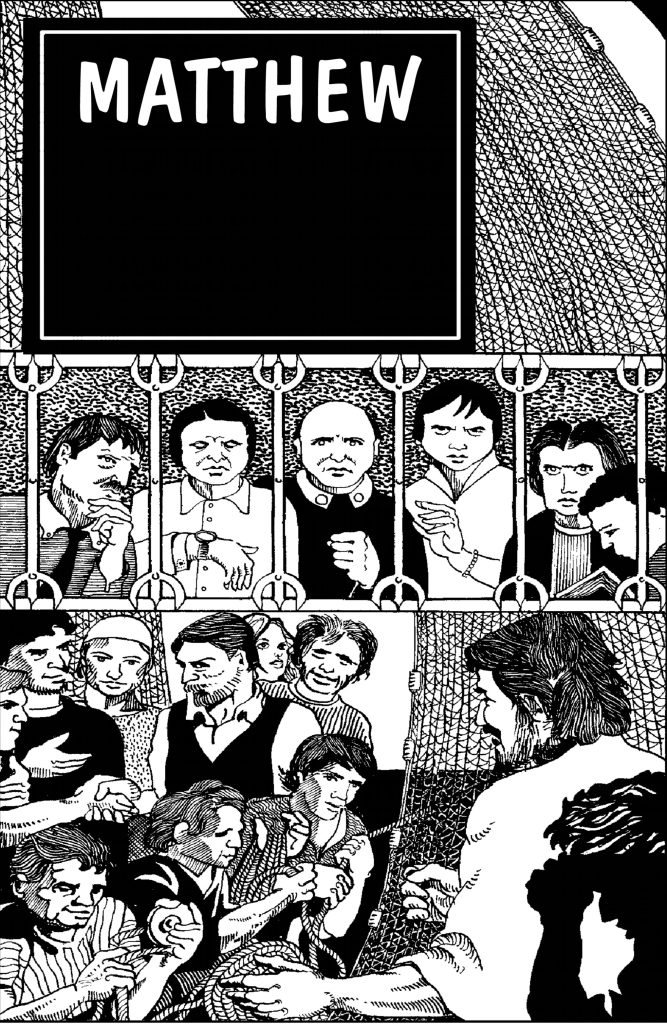
Who was Matthew, known also as Levi? We read in the Bible that he was a tax collector and that Jesus called him to be one of his apostles (Mt 9:9 and Mk 2:13). Yet we know for certain that the Gospel under his name was drawn up in its actual form towards the year 80 CE that is after his death. Could the author have been one of his disciples and used a first draft compiled by Matthew? Most probably this Gospel was written in a Christian community of both Jews and Greeks, possibly at Antioch (see Acts 12:19 and 13). It was a time deeply marked by conflict between Jews and Christians, when the Jewish community – suffering terribly from the war with Rome that destroyed the nation – was reorganizing itself under the direction of the Pharisees. These latter had only recently decided to exclude all Jews who believed in Jesus and were members of a Christian community.

This Gospel intends to assure Christians that they have no reason to be troubled even if their own people reject them. The very fact that the Jewish community did not recognize its Messiah resulted in the loss of its right to speak and to decide about God’s promises. Matthew refers to numerous texts in the Old Testament to prove that Christians are the true heirs of the people of the covenant.

In this perspective the whole history of Jesus is presented as a conflict, ending in a separation. The turning point corresponds with the end of chapter 13 where Jesus no longer speaks to the crowd, but to his disciples.

Matthew was impressed by the fact that Jesus during his two or three years of ministry presented himself most often as a preacher, as a teacher of Scripture. He therefore insists on the words of Jesus, which are more numerous in his Gospel than in the others.

It does not surprise us then that Matthew builds his gospel around five “discourses,” in which he has put together the words of Jesus spoken on different occasions. These discourses are:

– The New Law: 5–7.
– Instructions to Missionaries: 10.
– Parables of the Kingdom: 13.
– Admonitions for the Christian community: 18.
– The Future of the Church: 23–25.

Down below are the introductions in the Mandarin Chinese, Tagalog, Cebuano, and Spanish editions.

Translation: Mandarin Chinese

玛窦又叫做肋未的这人是谁?从圣经中我们了解到他曾是一位税吏,听从耶稣的召叫而成为他的门徒(玛9:9和谷2:14)。然而玛窦福音成书的年代大致在公元八十年,那时玛窦已不在人世了。因而我们猜测这本书的作者可能是玛窦的一位门徒,使用了玛窦留下的福音初稿(请看新约的引言)。

这部福音极有可能是在安提约基雅成书的,是由那里的犹太人及希腊人组成的基督徒团体完成的(宗12:19和13章)。那正是犹太人和基督徒严重冲突的时期。与罗马帝国的战争使犹太人民国破家亡,他们在水深火热的痛苦中,试图跟从法利塞人的指导重建家园。这些法利塞人将所有信耶稣而参加了基督团体的犹太人拒之门外。因而这部福音的旨意在确证基督徒的信念和信心,尽管他们为自己人抛弃,亦应泰然处之。玛窦在福音中多次引证旧约,以此来证实,基督徒是天主盟约的继承人。

从这点来看,耶稣的整个历史,是用冲突的方式表达出来的。十三章尾处是全书的转折点,耶稣问话的对象已不再是聚会的众人,而是他的门徒,伯多禄的回答将整本福音的旨意照亮。

耶稣在两、三年传教生涯中,总是以一位讲道人,一位经典讲师的形象出现,这给玛窦留下了深刻的印象。因而他在这本福音中多次强调“耶稣的言”,超过其它的福音。

很自然地,玛窦福音是以五篇“训道”为基础的。作者将耶稣在不同的场景下的讲话集中在其中,这五篇训道为:

山中圣训:5―7;

宗徒传教训导:10;

天国的比喻:13;

规劝基督徒团体:18;

教会的未来:23―25。

在首章,玛窦叙述了耶稣的诞生,但是,与路加福音的区别在于:玛窦以耶稣家谱为开端,突现耶稣是由童贞女受孕而诞生,着重于教会初期就有的信仰。

Translation: Tagalog

Sino ba si Mateo? Mababasa natin sa Ebanghelyo na maniningil ng buwis si Mateo na tinatawag ding Levi. Tinawag siya ni Jesus na maging isa sa labindalawang apostol (Mt 9:9 at Mc 2:13). Layunin ng Ebanghelyo ni Mateo na mailahad nang maayos ang aral ni Jesus. Hindi niya binanggit ang maraming detalye tungkol sa mga gawa ni Jesus na kanyang isinasalaysay, sa halip ay mga salita ni Jesus ang binigyang-pansin niya.

Bilang introduksyon, ilang istorya tungkol sa kamusmusan ni Jesus ang inilagay ni Mateo sa simula ng kanyang Ebanghelyo. Mahahati naman sa limang bahagi ang kabuuan ng Ebang¬-helyo; nagsisimula sa mga gawa ni Jesus ang bawat isa, at nagwawakas naman sa kanyang pananalita. Narito ang lima niyang diskursong ito:

Ang Bagong Batas: 5-7.

Mga tagubilin sa mga misyonero: 10.

Mga talinhaga ng Kaharian: 13

Mga salita tungkol sa pamayanang Kristiyano: 18.

Ang Kinabukasan ng Iglesya: 23-25.

Isinulat ang Ebanghelyo ni Mateo para gamitin ng mga pamayanang Kristiyano na mga Judio ang nakararami. Kaya ipinakikita nito na si Jesus ang Mesiyas na hinihintay ng mga Judio. Binigyang-diin nito na binigyang-kaganapan ni Jesus ang maraming propesiya ng Matandang Tipan tungkol sa Mesiyas at sa kanyang mga daan: Mt 4:14; 8:17; 12:17…

Maraming beses nitong inuulit ang mensaheng ito: dapat munang ipangaral sa mga Judio ang kaharian ng Diyos, pero alam ni Jesus na tatanggihan nila ito, kaya mga bansang pagano ang pagpapahayagan ng Iglesya.

Para sa Ebanghelyo ni Mateo, si Jesus ang Guro ng sangkatauhan. Isang daan ng kaganapan ang itinuturo sa atin ng kanyang aral at mga talinhaga, at ibinibigay ang mga panuntunan para sa sama-sama nating pamumuhay sa isang dukhang Iglesyang kung saan pantay-pantay ang lahat.

Sa edisyong ito, walang ibinibigay na mga paliwanag sa mga talatang halos kapareho ng nasa Ebanghelyo ni Marcos, at doon ipinapaliwanag.

Translation: Cebuano

Kinsa si Mateo? Sa Ebanghelyo si Mateo nga gitawag sab og Levi, mangungobrag buhis. Gitawag siya ni Jesus aron mausa sa 12 ka Apostol (Mt 9:9 ug Mc 2:13). Ang katuyoan ni Mateo sa ebanghelyo mao ang pagpaklaro sa mga pagtulon-an ni Jesus sa hapsayng paagi. Wala iapil ni Mateo ang daghang detalye sa mga buhat ni Jesus nga gihisgotan. Hinuon, gihatagag gibug-aton ang mga pulong ni Jesus.

Isip pasiuna, gihan-ay ni Mateo sa sinugdan sa Ebanghelyo ang pipila ka istorya sa pagkatawo ni Jesus. Ang uban, gibahin sa lima ka dagkong tema. Ang matag bahin nagsugod sa mga buhat ni Jesus ug ang wali. Kini ang mga wali:

Ang Wali sa Bukid: 5-7

Mga Awhag Alang sa mga Misyonaryo: 10

Mga Sambingay sa Gingharian: 13

Mga Pahimangno Alang sa Kristohanong Katilingban: 18

Ang Kaugmaon sa Simbahan: 23-25

Ang Mateo gisulat aron magamit sa mga Kristohanong Katilingban diin ang kadaghanan mga Judio. Tungod ini, gipaila ni Mateo nga si Jesus ang Mesiyas nga gipaabot sa mga Judio. Gikutlo niya ang daghang tudling gikan sa Daang Kasabotan diin gipanagna ang Mesiyas ug gihulagway ang iyang agianan: 4:14; 18:17; 12:17...

Sa makadaghan giingon: ang Gingharian sa Diyos kinahanglang isangyaw ngadto sa mga Judio, apan nasayod si Jesus nga ila ning isalikway. Busa, ang Simbahan angayng mowali sa paganong kanasoran.

Alang ni Mateo, si Jesus, una sa tanan, Magtutudlo sa katawhan. Ang iyang pagtulon-an ug sambingay nagpakita nato sa dalan sa kahingpitan ug nagbilig mga lagda sa katilingbanong pag-ambitay sa Simbahan sa mga kabos diin naay pag-angay-angay sa matag-usa.

Niining edisyona walay komentaryo nga gihimo sa susamang mga parapo nga makita sa Marcos diin gikomentaryohan ni.

Translation: Spanish

Quién era Mateo, llamado también Leví? Leemos en el Evangelio que era cobrador de impuestos y que Jesús hizo de él uno de sus apóstoles (Mt 9,9 y Mc 2,13). Los testigos más antiguos (Papías hacia el año 130; Ireneo hacia el 180; Orígenes hacia el 200) le atribuyen un Evangelio “escrito en letras hebraicas” que todavía era conocido en el tiempo de san Jerónimo (siglo cuarto). Nuestro Evangelio según Mateo, escrito posteriormente en griego, debe tal vez su nombre al hecho de que integró en su relato la traducción de la obra primitiva de Mateo: véase la Introduccion al Nuevo Testamento.

Con toda probabilidad este Evangelio fue escrito en una comunidad cristiana en la que había cristianos de origen judío y griego, tal vez Antioquía (véase He 12,1 y 13). Es el momento en que el sumo sacerdote Ananías hizo apedrear a Santiago, el obispo de Jerusalén (62). Entonces los cristianos son excluidos de la comunidad judía y ya no son protegidos por las leyes romanas que autorizaban a los judíos a que no sacrificaran a las divinidades romanas y un poco más tarde serán perseguidos por Nerón (64-65).

Este Evangelio trata de mostrar que los cristianos no deben preocuparse si por ahora los rechaza su pueblo. La comunidad oficial que no ha creído se ha quedado fuera del Reino, al que entraron los que han reconocido al Mesías. Esta minoría ha recibido los “bienes de la alianza” prometidos por los profetas. En adelante deben compartirlos con los creyentes de todo origen que querrán integrarse en la Iglesia.

Bajo esta perspectiva, toda la historia de Jesús es presentada como un conflicto que termina en una separación: véase el final del capítulo 13. En adelante Jesús no predicará ya a las muchedumbres sino sólo a sus discípulos.

Mateo destaca la figura de Jesús como predicador y Maestro de la Escritura. Se interesa en forma especial por las palabras de Jesús, que son más numerosas en su Evangelio que en los demás, y en cambio cuenta sus gestos y sus milagros del modo más esquemático posible.

No hay pues que extrañarse de que Mateo haya construido su Evangelio en torno a cinco “discursos”, en los que reunió palabras que Jesús pronunció en diferentes ocasiones. Estos discursos son:

– El Sermón de la montaña: 5, 6 y 7. Esta carta magna de los hijos de Dios se completa con diez signos de poder que anuncian nuestra liberación del pecado (c. 8 y 9).
– Las instrucciones a los misioneros: 10. Estas instrucciones son completadas por las controversias que enfrentan a Jesús con sus adversarios (c.11 - 12).
– Las Parábolas del Reino: 13. Los fariseos se ciegan, mientras que la fe de los Doce y de Pedro permite que Jesús funde su Iglesia.
– Las advertencias a la comunidad cristiana: 18. La ley funamental del perdón fraterno se completa con instrucciones diversas. Los guías del pueblo judío se cierran, mostrando por contraste lo que deberán ser los guías del pueblo cristiano.
– Cómo vivir a la espera del fin de los tiempos: 24 y 25.

A manera de introducción Mateo pone los dos primeros capítulos sobre la infancia de Jesús. Son relatos de un carácter especial, en los que se preocupa muy poco de la historicidad de los hechos, pues la intención es presentar a través de imágenes una enseñanza teológica.

Subscribe
Notify of
guest
0 Comments
Oldest
Newest Most Voted
Inline Feedbacks
View all comments