Start by entering a Bible verse here and select Find Verse
Step into the multitudes of languages of the Bible and join the worldwide conversation!
Language: Mandarin Chinese
Mandarin Chinese (cmn) is a(n) Sino-Tibetan language of China, Korea, Democratic People's Republic of, Lao People's Democratic Republic, Myanmar, Mongolia, Russian Federation, Taiwan, Province of China, Viet Nam, marked as not endangered
The Greek that is translated as “kingdoms of the world” is translated in Quetzaltepec Mixe with a phrases denoting “rich empires” rather than a collection of all the ethnic groups (source: Robert Bascom).
In the Kölsch translation (Boch 2017) it is translated as “all the great and beautiful things of this world” and in the Mandarin ChineseUnion Version very literarily and elegantly as “the 10,000 nations and the glory and the glory of the 10,000 nations (万国与万国的荣华 — Matthew 4:8) and “the 10,000 nations under the heaven” (天下的万国 — Luke 4:5). (Source: Jost Zetzsche)
(The Catholic Christian Community Bible [first English edition 1997, other translations into Indonesian, Chinese, Cebuano, Chavacano, French, Ilonggo, Korean, Quechuan, Spanish, and Tagalog] “for the Christian Communities of the Third World” uses the following introduction.)
The book of Chronicles, now divided into two parts, was most probably written together with those of Ezra and Nehemiah in the fourth century before Christ, after the Jews came back from Exile: compare the last verses of Chronicles and the firsts of Ezra.
It was like a second attempt of telling the Sacred History from the beginning to the times of Judaism. The first attempt, much broader, had been carried out during the time of the Kings and Prophets and we find it in the previous books, from Genesis to Kings. Now, in taking again past events and memories, the author of Chronicles wanted to show that the future of the Jewish people depended on their faithfulness to the Law of Moses and to the prescriptions for worship.
In his time, the Jews were no longer an independent nation, but more or less an autonomous province of the Persian empire. There was a growing desire among them to become a “theocracy,” that is to say, a kingdom of God, ruled in God’s name by the priests. They were trying to forget the Persian administrators who left them quite free and they were organizing national life around the Temple and the law of Moses. They looked forward to the coming of “David’s son” and used to say: “If the Law were followed exactly throughout the country for one whole day, the Messiah would come.”
This is why the author is almost exclusively interested in the history of the kings of Judah, David’s descendants. While the author gives us a list of David’s ancestors all the way back to Adam, he does not say a word about the kingdom of Israel where most of the chosen people lived, because Israel had separated from the kingdom of David. The author gives us many colorful details not found in the books of Samuel and Kings, but generally speaking, his story seems unreal and uninteresting to us. Moreover, carried away by his enthusiastic faith, he delights in huge numbers and, at times, distorts reality to strengthen his point (compare 1 K 22:30 and 2 Chr 20:35; 2 S 12:31 and 1 Chr 20:3).
The author addresses Jewish people and strives to convince them that there is noblessing or future for them unless they remain strongly united around their faith, rooted in their land, obeying the Law and the priests and putting above all concerns the true worshipping in the temple of Jerusalem. The people of God must remain one and with a visible hierarchy.
How can we benefit from reading this book? On each page we will find the conviction that the believing people must have no other ambition but to fulfill the will of God; other victories will come as a gift. Moreover, it is a reminder that Christ’s people, even though they do not have visible borders now and do not live in isolation among other people, must not lose their uniqueness in an attempt to blend with the masses. Believers will never totally resemble those who do not believe, nor will they think in exactly the same way. They have their own mission and are concerned about the visible unity of the church, around those whom God placed among them as his representatives.
Down below are the introductions in the Mandarin Chinese, Tagalog, Cebuano, and Spanish editions.
Para sa mga may gusto sa atin na malaman ang kasaysayan ng Israel, walang itinuturong bago ang Mga Kronika. Muli lamang isinusulat dito ang naisalaysay na sa mga libro ni Samuel at ng Mga Hari. Nasa paraan lamang ng pagpili sa mga pangyayari at sa paglalahad ng mga ito ang kaibahan.
Gustong ipakita ng sumulat ng Mga Kronika na nakasalalay sa katapatan sa Batas ni Moises at sa mga kautusan sa pagsamba ang kinabukasan ng sambayanang Judio.
Dahil sa kanyang panahon, hindi isang bansang malaya ang mga Judio, kundi parang isang malayang probinsya na lamang ng imperyo ng Persia. At may lumalaking pagnanasa sa kanila na maging isang “teokrasya,” na ibig sabihi’y isang kaharian ng Diyos na pinamumunuan ng mga pari sa kanyang pangalan. Sinisikap nilang kalimutan ang mga Persianong tagapamahala na hinayaan silang magkaroon ng sapat na kalayaan, at inoorganisa nila ang buhay ng bansa na sa Templo at sa Batas ni Moises nakasentro. Sa paghihintay nila sa pagdating ng “Anak ni David,” nakagawian na nilang sabihin: “Kung sa buong maghapon ay ganap na susundin ang Batas sa buong bansa, tiyak na darating ang Mesiyas.”
Kaya halos sa kasaysayan lamang ng mga hari ng Juda na mga inapo ni David interesado ang awtor. Bagamat ibinibigay niya sa atin ang listahan ng mga ninuno ni David, na pabalik pa hanggang kay Adan, wala naman siyang binabanggit na kataga man lamang tungkol sa kaharian ng Israel kung saan nabuhay ang karamihan sa bayang pinili, dahil hiwalay ito sa kaharian ni David. Maraming makukulay na detalye ang ibinibigay sa atin ng awtor na wala sa mga libro ni Samuel at ng Mga Hari, pero sa kabuua’y para bang di kapani-paniwala at nakakasawa para sa atin ang kanyang salaysay. Isa pa’y nadadala siya ng masigasig niyang pananampalataya, mahilig siya sa malalaking numero at pagkaminsa’y iniiba niya ang katotohanan para bigyang-diin ang gusto niyang sabihin (paghambingin ang 1 H 22:50 at 2 Kro 20:35, 2 S 12:31 at 1 Kro 20:3).
Ano naman ang mapapala natin sa pagbasa sa aklat na ito? Matutunghayan natin sa bawat pahina ang katiyakan na hindi dapat magkaroon ng ano pa mang ambisyon ang bayang sumasampalataya liban sa pagtupad sa kalooban ng Diyos: darating na lang ang iba pang mga tagumpay bilang regalo. At ipinaaalaala rin nito sa atin na hindi dapat iwala ng bayan ni Kristo ang pagiging orihinal at bukod-tangi, sa kabila ng kawalan nito ng mga nakikitang hangganan at di pamumuhay nang hiwalay sa gitna ng ibang mga tao upang mapalahok sa masa. Hinding-hindi ganap na makakahawig sa di-sumasampalataya ang sumasampalataya, ni maging katulad na katulad sa takbo ng isip. May sarili siyang misyon at iniingatan niya ang nakikitang pagkakaisa ng Iglesya sa paligid ng mga inilagay ng Diyos sa kanila para maging mga kinatawan niya.
Translation: Cebuano
Kon gusto tag dugang pang kasayoran sa kasaysayan sa Israel, ang Kronikas dyotay rag ikatampo: halos tanan nga gisaysay dinhi nasulat na sa Samuel ug sa mga Hari. Ang kalainan lang mao ang paagi sa pagpili sa mga hitabo ug sa pagpadayag ini.
Buot ipadayag sa tagsulat ining basahona nga ang kaugmaon sa katawhang Judio nag-agad sa kamaunongon sa Balaod ni Moises ug sa gilatid nga tulumanon sa pasimba.
Niining panahona, ang mga Judio dili na gawasnong nasod, apan lalawigan sa Persianong imperyo, bisag gihatagan silag dyotayng awtonomiya. Dako kaayo ang ilang pangandoy nga mahimong “Teyokrasya,” sa ato pa, gingharian sa Diyos nga magmando sa ngalan sa Diyos pinaagi sa kaparian. Ilang gisulayan nga dili lang manumbaling sa Persianong administrador nga naghatag nilag kagawasan sa pagpalambo sa nasodnong kinabuhi alirong sa Templo ug sa mga balaod ni Moises. Kanunay silang naglantaw sa pag-abot sa “anak ni David” ug sagad moingon: “kon hingpit lang nga motuman ang tanang katawhan sa Balaod, bisag sa usa ra ka adlaw, nan, moabot gyod ang Mesiyas.”
Mao man gani nga interesado kaayo ang tagsulat sa paghatag og dakong gibug-aton sa kasaysayan sa gingharian sa Juda nga kaliwat ni David. Gihatag sa tagsulat ang taas nga talaan sa katigulangan ni David, sukad ni Adan, apan wala niya hisgoti ang gingharian sa Israel diin namuyo ang kadaghanan sa piniling katawhan, kay ang Israel mibulag man sa gingharian ni David.
Daghang mabulokan nga mga detalye ang gisaysay sa tagsulat nga dili mabasa sa Samuel ug sa Mga Hari, apan sa kinatibuk-an, ang iyang istorya morag sumada ug dili nato katoohan nga mosaysayg dagkong mga numero, usahay tuison ang panghitabo, aron lang paglig-on sa buot niyang ipasabot (itandi ang 1 H 22:30 ug 2 Kro 20:35; 2 S 12:31 ug 1 Kro 20:3).
Unsay makuha natong kaayohan pagbasa ining basahona? Sa matag panid, makita ang hugot nga pagtoo, nga ang matoohong katawhan kinahanglang walay laing tinguhaon gawas sa pagtuman sa kabubut-on sa Diyos; ang ubang kadaogan naangkon kay gihatag ni isip gasa. Dugang pa, nagpahinumdom ni natong kristyanos nga bisag wala tay makita nga mga utlanan karon, ug wala magpuyo nga himulag sa ubang katawhan, kinahanglang dili ta malimot sa atong sinugdan, aron masagol ta ug dili mahilayo sa katawhan. Kinahanglan nga ang mga magtotoo dili gyod hingpit nga mahisama sa walay pagtoo, ni hingpit nga mahisama ang ilang panghunahuna. Aduna silay kaugalingong misyon, ug maglantaw kanunay alang sa makitang kahiusa sa simbahan, diin gipahimutang sa Diyos ang iyang mga tinugyanan.
Translation: Spanish
INTRODUCCION A LAS CRÓNICAS
En un primer momento las Crónicas parecen no contener muchas cosas que no hayamos leído en los libros anteriores, especialmente en los libros de Samuel y de los Reyes. La diferencia está en la manera de presentar los hechos.
Cuando regresaron los judíos deportados a Babilonia, Judá no era más que una provincia del imperio persa, pero la reforma de Esdras había hecho de los sacerdotes la única autoridad de la provincia judía. Los sacerdotes ahora quieren una historia de Israel que conduzca a sus lectores desde Moisés, que lo ha previsto todo, hasta Esdras, que ha reformado todo, pasando por el santo rey David que ha organizado y codificado la liturgia. Todo gira en torno al templo de Jerusalén y la vocación única del pueblo judío. El autor no quiere negar las faltas del pasado, pero sobre todo se necesitan grandes ejemplos; la vida y la obra de David y de Salomón, pues, recibirán un trato especial y serán escritas como una “vida de santos”, quedándose como figuras ejemplares.
Éste es el marco en que se escribieron las Crónicas. Un libro plagado de genealogías, porque entre los sacerdotes la posición dependía de la familia donde uno había crecido. No deberían extrañarnos, por tanto, las genealogías fabulosas con que comienza la obra: la genealogía de David se remonta ¡hasta Adán! Un libro lleno de cifras fantásticas (como los Números o como los 600.000 hombres del Éxodo). Una historia que sólo se ocupa del reino de Judá, olvidando o condenando a priori todo lo que había pasado en las otras tribus de Israel: en cuanto se separaron del centro elegido por Dios, perdieron el beneficio de sus promesas.
Las Crónicas, redactadas con toda probabilidad al final del siglo cuarto, siempre han sido consideradas como un libro reservado a los estudiosos y apenas encontraron un lugar en la liturgia judía. Hoy en día, para el lector que se toma la libertad de pegar un triple o cuádruple salto por encima de las listas interminables de nombres, deben su sabor a las numerosas tradiciones curiosas que han sabido conservar.
El libro manifiesta a veces una estrechez de espíritu propia de personas que viven de uno o dos principios. Pero también nos ofrece una visión grandiosa del culto de Dios, de la oración de un pueblo, de la convicción que el pueblo elegido debe tener de su propia identidad. Insiste, entre otras cosas, en que la unidad es a la vez la riqueza y la obligación del pueblo de Dios, condición para que la obediencia a Dios sea auténtica. Para nosotros la ciudad de Jerusalén y el Templo único han sido sustituidos por la Iglesia única. Ninguno de los que se buscan iglesias a su gusto podrá leer este libro sin sentirse interpelado.
(The Catholic Christian Community Bible [first English edition 1997, other translations into Indonesian, Chinese, Cebuano, Chavacano, French, Ilonggo, Korean, Quechuan, Spanish, and Tagalog] “for the Christian Communities of the Third World” uses the following introduction.)
Shortly after Haggai and Zechariah, this prophet intervenes to correct several evil customs within the community. Through Malachi, the Lord argues with those who call him to account, but who do not acknowledge his love.
Down below are the introductions in the Mandarin Chinese, Tagalog, Cebuano, and Spanish editions.
Hindi nagtagal at dumating ang propetang ito kasunod nina Ageo at Zacarias para iwasto ang maraming masamang kaugalian ng pamayanan. Sa pamamagitan ni Malakias, nakikipagtalo si Yawe sa mga nangangatwiran at nagpapapanagot sa kanya at di kumikilala sa kanyang pagmamahal: “Sinasabi ninyong...”
Translation: Cebuano
Human dayon ni Ageo ug Zacarias, kining maong propeta nangilabot aron pagtarong sa pipila ka hiwi nga kostumbre sulod sa katilingban. Pinaagi ni Malakias, ang Diyos mibarog atubangan adtong nanawagan kaniya sa pakighusay, apan wala moila sa Iyang gugma: “Miingon ka...”
Translation: Spanish
Poco después de Ageo y Zacarías, este profeta interviene para corregir varias costumbres malas de la comunidad. Por medio de Malaquías, Yavé discute con esos razonadores que le piden cuentas y no reconocen su amor.
The Hebrew that is translated as “one in (your/my) hand” in English is translated in the Protestant Mandarin ChineseUnion Version with an established Chinese idiom: hé ér wéi yī (合而為一 / 合而为一) or “united as one.” (Source: Toshikazu S. Foley in Hong Kong Journal of Catholic Studies, 2011, p. 45ff.)
The Hebrew in Jonah 1:3 that is translated as “found” in many English versions is translated in Mandarin Chinese as yùjiàn (遇見) — “meet” — which correctly does not indicate the conclusion of a search for something lost, but simply coming across something by chance.
The Greek and Hebrew that is translated as “In the beginning” is translated in Lisu as ꓬꓲ ꓚꓰ ꓬꓲ ꓪꓴꓸ — yi tshe yi vu: “In very early times, when there were no people.” This construction follows a traditional four-couplet construct in oral Lisu poetry that is usually in the form ABAC or ABCB. The same phrase is also used as a title for the book of “Genesis.” (Source: Arrington 2020, p. 58)
In the most widely used Mandarin Chinese Bible translation, the Union Version, the term 太初 — tàichū is used in John 1:1 (but not for Gen. 1:1) — vice versa in the Yue Chinese (Cantonese)New Cantonese Bible of 1997, whereas in Hakka Chinese, 太初 — thai-chhû in Hakka — is used in both cases). Tàichū originally was used in early Daoist writings (Liezi, Zhuangzi — both 5th century BC) which is remarkable because of the connection with “dào” (道) in the same verse (see Word / Logos), suggesting connections between Chinese culture and John 1:1. (Source: Zetzsche)
Other translations include:
Jamaican Patois: “when time started” (wen taim did staat); similarly the English translation by James A. Kleist (1954): when time began or Knox (1949): at the beginning of time
Bariai: “prior to the coming forth of everything” (source: Bariai Back Translation)
Hiligaynon: “When before still in the past” (source: Hiligaynon Back Translation)
Kölsch: “in the beginning of everything” (translation by Boch 2017)
German: “primordial beginning” (Urbeginn) (translation by Fridolin Stier, 1989)
English translation of the gospels of Sarah Ruden (2021, p. xlii): “inauguration” which “echoes similar connotations of a Hebrew word in Genesis”
EnglishTranslation for Translators: “show that I am innocent/have not done what is wrong” / Easy English Bible: “show that I am not guilty of wrong things”
(The Catholic Christian Community Bible [first English edition 1997, other translations into Indonesian, Chinese, Cebuano, Chavacano, French, Ilonggo, Korean, Quechuan, Spanish, and Tagalog] “for the Christian Communities of the Third World” uses the following introduction.)
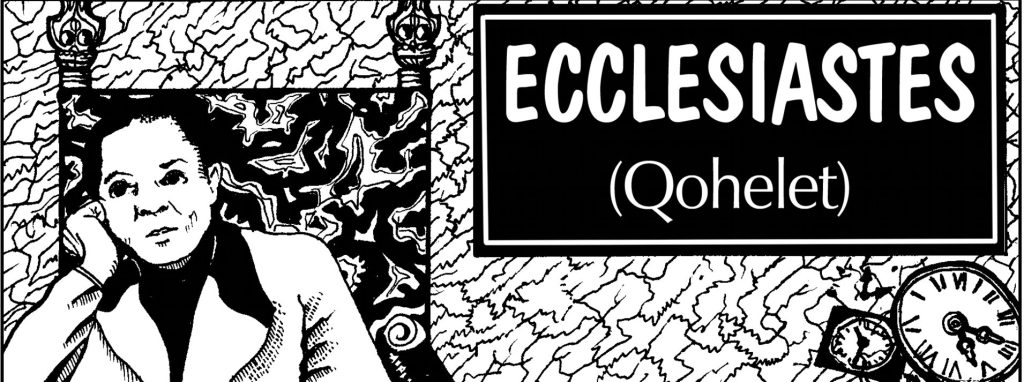
Ecclesiastes perhaps summarized the essence of his thought in this verse in chapter 3: “God made everything fitting in its time; but he also set eternity in our hearts, though we are not able to embrace the work of God from the beginning to the end” (3:11-14; 8:16-17). Humankind, created in the image of God, is to rule the universe. Nevertheless, humans are no more than servants made of clay upon whom God imposed the laborious task of always searching.
Ecclesiastes lived in the third century before Christ, when Greek culture began to influence the Jewish people. The dynamism of the Greek civilization came from its confidence in the unlimited resources of human thinking. Greek philosophers strove to explain all the mysteries of human destiny (and it is known that this aim is still the core of western humanism). Ecclesiastes denies this optimism: we are in a world where all is disconcerting. Let us try to sense the mystery of God and the weight of his silence; the human person is a limited mortal being. Let us not take appearance for the reality of wisdom. Be satisfied with fully living the present moment, trying to solve the problems within our reach. Know how to profit by the joys that God has in store for us today, and leave the rest to his goodness.
Religion has always tried to explain, to give a more reassuring view of existence. Ecclesiastes does not ask this service. At that time, pious people affirmed that here below God rewarded the good and punished the wicked. Ecclesiastes remains doubtful. Although accepting that the commandments of God show us a way, he respects the silence and apparent absence of God.
The author of this book in the third century before Christ did what many writers and poets do now; he signed his work with a pseudonym, or a made-up name. He presented his teaching as if it were the work of King Solomon, David’s son. It is well known that Solomon had the reputation of being well-versed in human wisdom. As he himself was a man charged with the instruction of the assembly of believers (that is what the word Ecclesiastes means) those who published his book have used both words: Ecclesiastes and Solomon.
Down below are the introductions in the Mandarin Chinese, Tagalog, Cebuano, and Spanish editions.
Binuod marahil ni Eclesiastes ang diwa ng kanyang kaisipan sa bersikulong ito sa kabanata 3: “Ginawa ng Diyos ang bawat bagay na angkop sa kanyang kapanahunan; subalit inilagay din niya sa ating mga puso ang kawalang-hanggan, kahit na hindi natin kayang intindihin ang kabuluhan ng Diyos mula sa simula hanggang katapusan (3:11-14; 8:16-17).
Panginoon ng sansinukob ang taong nilikhang kalarawan ng Diyos. Gayunman, taga-paglingkod lamang siyang gawa sa putik na pinatawan ng mabigat na gawaing palaging maghanap. Hindi makatotohanang isipin na lubos na mabibigyang-linaw ng tao balang araw ang kahulugan ng kanyang buhay o ganap na malulutas ang mga tensiyon at mga proble-mang wumawasak sa sangkatauhan.
Nabuhay si Eclesiastes sa ikatlong dantaon bago kay Kristo, nang umabot ang kulturang Griyego sa bansang Judio. Ang patuloy na pag-unlad ng sibilisasyong Griyego ay bunga ng tiwala nito sa walang-hanggang kakayahan ng pag-iisip ng tao. Pinagsikapang ipaliwanag ng mga pilosopong Griyego ang lahat ng hiwaga ng kapalaran ng tao (at alam natin na ang layunin pa ring ito ang pinakapuso ng makataong pilosopiya ng Kanluran).
Hindi pinaniniwalaan ni Eclesiastes ang optimismong ito: tayo’y nasa mundong ang lahat ay nakaliligalig. Sikapin nating damhin ang misteryo ng Diyos at ang bigat ng kanyang katahimikan; ang tao ay nilalang na may hangganan at kamatayan.
Huwag nating ipagkamali ang itsura sa katunayan ng karunungan. Masiyahan sa ganap na pagsasabuhay ng kasalukuyan, sa pagsisikap na malutas ang mga suliranin sa abot ng ating makakaya. Matutunang pakinabangan ang mga kagalakang inilaan sa atin ng Diyos sa araw na ito at ipaubaya ang iba sa kanyang kagandahang-loob.
Laging sinisikap magpaliwanag ng relihiyon at magbigay ng mas nakakapanatag na pananaw kung bakit tayo umiiral. Hindi hinihingi ni Eclesiastes ang ganitong layunin. Nang panahong iyon, pinaniniwalaan ng mga relihiyosong tao na ginagantimpalaan ng Diyos ang mabubuti at pinarurusahan ang masasama dito sa ibaba. Nag-aalinlangan pa rin si Eclesiastes. Bagamat tinatanggap niya na ipinakikita ng mga utos ng Diyos ang daan, isinasaalang-alang niya ang katahimikan at waring pagkawala ng Diyos.
Ginawa ng sumulat ng aklat na ito sa ikatlong dantaon bago kay Kristo ang gaya ng ginagawa ngayon ng maraming manunulat at makata: ang paggamit ng pangalan sa panulat o inimbentong pangalan para sa kanilang mga sinulat. Inilahad niya ang kanyang aral na parang kay Haring Solomon na anak ni David. Kilala si Solomon sa pagkakaroon ng malawak na kaalaman sa karunungan ng tao. Pero yamang siya mismo’y binigyan ng tungkuling turuan ang nagkakatipong mga mananampalataya (ito ang kahulugan ng Eclesiastes), parehong ginamit ng mga naglimbag ng aklat na ito ang dalawang salita: Eclesiastes at Solomon.
Translation: Cebuano
Siguro, gisumada ni Eclesiastes ang dugokan sa iyang panghunahuna ining mosunod nga mga tudling. Ang Diyos nagpahigayon sa tanang butang sa hustong panahon. Gibutang sab niya ang walay kataposang mithi sa ilang kasingkasing bisag dili matugkad sa tawo ang gibuhat sa Diyos gikan sa sinugdan hangtod sa kataposan (3:11-14; 8:16-17).
Ang tawo gibuhat sa dagway sa Diyos ug magmando siya sa uniberso. Apan bisan pa ini, sulugoon lang siya inumol sa lapok nga gisangonan sa Diyos og bug-at nga tahas sa makanunayong pagpangita. Sayop ang panghunahuna nga may adlaw rang mahatagag katagbawan ang iyang pagpangita sa kahulogan sa kinabuhi, nga makit-an niya ang kasulbaran sa kasamok ug panagbangi ining nawataswatas nga kalibotan.
Si Eclesiastes nagpuyo sa ikatulong siglo sa wala pa si Cristo, ang pag-abot sa Griyegong Kultura sa nasod sa mga Judio. Ang naghatag og kinabuhi sa Griyegong buhilaman nagsukad sa iyang pagtoo sa walay kinutobang panghunahuna sa tawo. Ang makinaadmanong Griyego misulay pagtugkad sa lawom nga misteryo sa tumong ug padulngan sa tawhanong pagpakabuhi, (giingon nga bisan hangtod karon, kining Griyego nga panghunahuna mahitungod sa tawo, mao gihapon ang gisagop sa taga kasadpang bahin sa kalibotan).
Si Eclesiastes misupak ining maong panglantaw. Hinuon iyang gipakita ang daghang kakulangan sa tawhanong kahimtang ug ang daghang malinglahong bahin sa kinabuhi. Dili tuyo niya nga maghunahuna na lang ta sa mga butang langitnon kondili, gitudloan ta nga kining daghang “apan” sa kinabuhi sangpotanan sa lintunganay nga kamatuoran: ang tawo mamatay ug may kinutoban. Wala sab siya moingon nga tungod ini angay tang mangyugpos ug magpaabot sa badlis sa kapalaran; giaghat hinuon ta sa dili pag-usik sa kusog ug panahon sa mga damgo ug ilusyon. Nagdasig siya nga puy-an sa kinatibuk-an ang kinabuhi karon, pinaagi sa pag-atubang ug pagsulbad sa mga problema sa matag adlaw, paglipay uban sa mga kaayohan nga nadawat karong adlawa ug pagpiyal sa ubang butang sa Diyos.
Ang relihiyon: Wala ba ni makapasabot nato sa tanang butang? Kini dili maoy panghunahuna ni Eclesiastes. Bisan kon ang sugo sa Diyos nagtudlo nato sa sigurong pamaagi, wala ni magsulbad sa daghang problema ni magtubag sa daghang pangutana. Niadtong panahona, ang mga tumotoo nag-ingon nga ang Diyos nagpahalipay sa tarong ug nagsilot sa daotan ining kinabuhia. Gipanghimakak ni ni Eclesiastes pinaagi sa makitang kamatuoran. Susama sab ang makita karon: adunay makahupay ug makalukmay nga tubag alang sa tumotoo nga walay klaro kon atong ayohon pagtuki ang mga kamatuoran.
Ang nagsulat ining basahon sa ikatulong siglo una matawo si Cristo nagbuhat sama sa atong manunulat ug magbabalak karong panahona. Ilang gilagdaan ang ilang mga sinulat dili sa matuod kondili, sa minugna nilang ngalan. Gipadayag niya nga daw mga pagtulon-an ni hari Solomon nga anak ni David. Dayag ang kamatuoran nga si Solomon nabantog sa iyang kaalam. Dinhi, gitawag si Solomon nga Eclesiastes o ang panagtipon o panagtagbo aron pagtudlo sa kaigsoonan.
Translation: Spanish
El Eclesiastés vivió en el siglo III a.C. Palestina estaba dominada por los dueños de Egipto a los que sólo les interesaba obtener riquezas a costa de sus súbditos. Era el momento en que se imponían por todas partes la lengua griega y el helenismo, es decir, la cultura griega. Jerusalén se salvó por un tiempo de esta invasión cultural, pero luego el peso de la política obligó a los sumos sacerdotes a concertarse con las familias que tenían el manejo de los negocios.
Había una verdadera invasión de comerciantes griegos. Aquellos que querían hacer carrera frecuentaban las escuelas en donde se enseñaba a los autores griegos. Aparentemente no había quien pudiera hacer frente al helenismo, la fe en el Dios de Israel se perdía día tras día.
Es entonces cuando un maestro de la Ley acepta el desafío. Predicador, polemista (este es el sentido de la palabra “eclesiastés”, en hebreo qohelet: el que convoca, que interpela, pone en tela de juicio las certezas de la filosofía griega. Esta pretendía desvelar las incógnitas de la existencia.
Dice el Eclesiastés que el hombre no es el dueño de su destino: todo es don de Dios. En lugar de caer en el activismo y de pensar sólo en el dinero, los jóvenes deberían aprender a vivir y a disfrutar de las alegrías que Dios nos regala a lo largo de nuestra existencia. Todo es incierto y nuestra razón se ve superada a cada instante. Aquel que rehúsa mirar de frente a una muerte cierta, sólo posee una sabiduría aparente.
El Eclesiastés tal vez resumió lo esencial de su pensamiento en esta sentencia: «Toda obra de Dios llega a su tiempo, pero ha puesto la eternidad en el corazón de los hombres; y éstos no encuentran el sentido de la obra divina desde el principio al fin» (Qo 3,11; 8,16). Tendrán, pues, que cargar con su destino, tomándolo a la vez como una misión y un enigma, dando gracias por lo que cada cual ha recibido.
Al Eclesiastés le gusta la repetición de las mismas palabras, pero procurando que cada vez expresen nuevos significados. Así, el enigmático “Esto no tiene sentido, esto no tiene sentido...nada a qué aferrarse” que aparece al inicio del libro (1,2), revela todo su significado al final, cuando el autor ha mostrado las limitaciones del conocimiento humano y la necesidad de aprender a vivir la alegría cotidiana (12,8).
Los discípulos de este desconocido publicaron su obra atribuyéndosela a Salomón, el rey que se ganó la reputación de sabio. Resumieron las enseñanzas de su maestro en este breve escrito que tal vez sirvió para la enseñanza en la escuela del Templo. Parece haber sido redactado hacia los años 240-220 a.C.
Hoy el Eclesiastés es nombrado preferentemente Qohelet, según el nombre hebreo, para distinguirlo del libro de Ben Sirac, llamado tradicionalmente Eclesiástico. Por esta razón lo citaremos con la abreviatura Qo.