
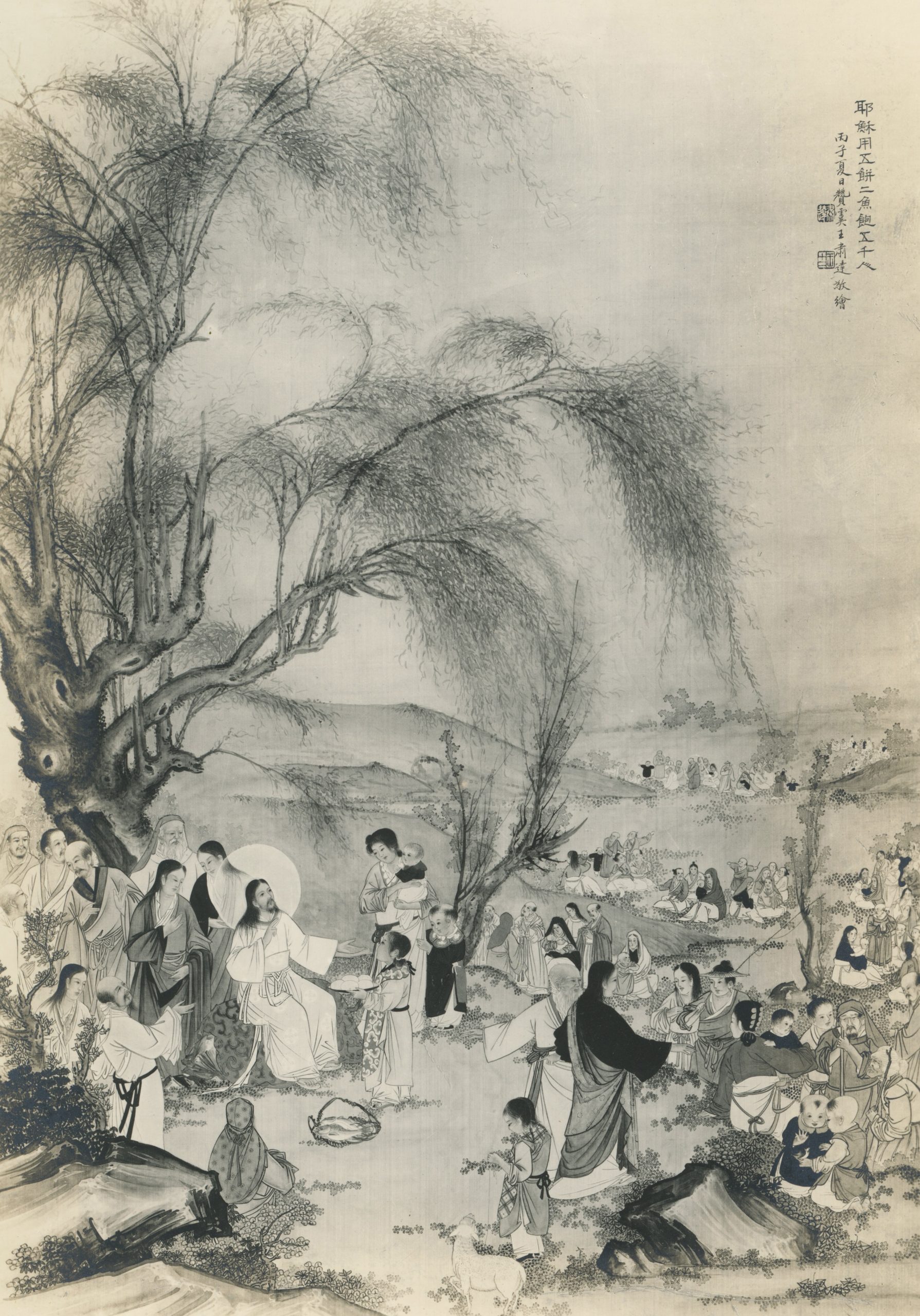
Housed in the Société des Auxiliaires des Missions Collection – Whitworth University
(click image to enlarge)
Image taken from Chinese Christian Posters . For more information on the “Ars Sacra Pekinensis” school of art, see this article , for other artworks of that school in TIPs, see here.
Following is a 1973 painting of the JESUS MAFA project, a response to New Testament readings from the Lectionary by a Christian community in Cameroon, Africa. Each of the readings was selected and adapted to dramatic interpretation by the community members. Photographs of their interpretations were made, and these were then transcribed to paintings:

Jesus stands in the center inspecting the baskets of leftover food the disciples are bringing to him. All around him are content crowds of people who have just been fed. The miracle of this story rests in Jesus’ taking the resources people shared and breaking (read dividing) them among all in attendance that day. Christians are called to live and follow Christ in his example—this means sharing what we have with those around us, especially those in need. In this world, there is plenty to go around. Rather than projecting a gospel of prosperity, we should radiate a gospel of giving.
From Art in the Christian Tradition , a project of the Vanderbilt Divinity Library, Nashville, TN. Image retrieved March 23, 2026. Original source: librairie-emmanuel.fr.
Leave a Reply
You must be logged in to post a comment.