Introduction to 1 Peter (Christian Community Bible)

(The Catholic Christian Community Bible [first English edition 1997, other translations into Indonesian, Chinese, Cebuano, Chavacano, French, Ilonggo, Korean, Quechuan, Spanish, and Tagalog] “for the Christian Communities of the Third World” uses the following introduction.)
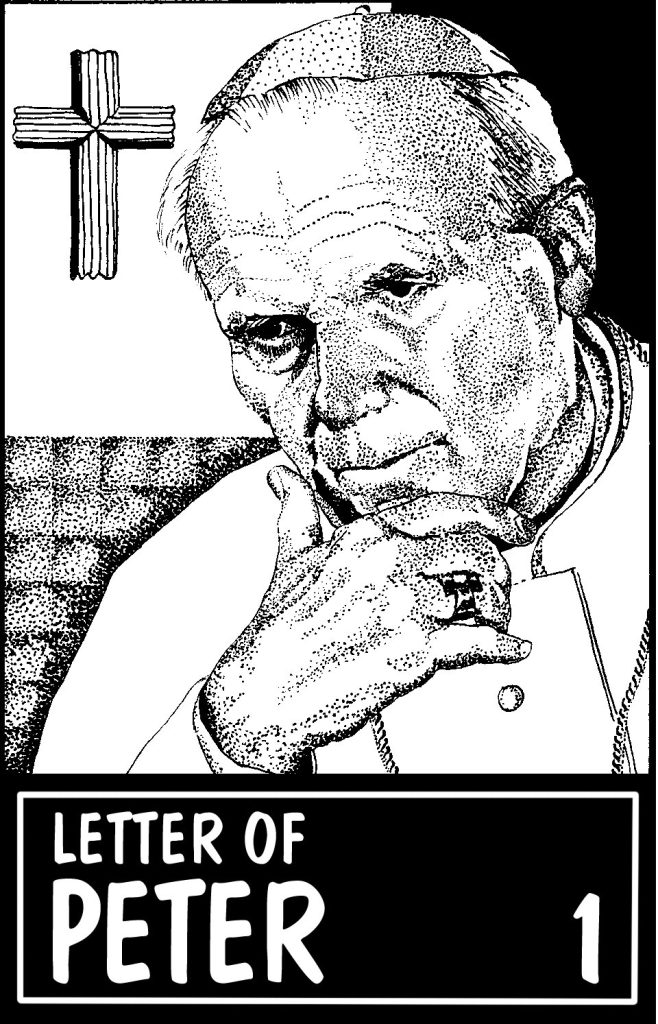
We know almost nothing about the life of the apostle Peter from the Council of Jerusalem, in the year 49 (see Acts 15), until the time he wrote this letter, around the year 64. It is certain that he went to Rome. Being in charge of the entire Church, he, like Paul, had to go to the center of the Roman world, though their motives were different.

A very ancient tradition affirms that he was killed in the persecution of Nero, in 66, and that he was buried on the grounds of the Vatican Hill. Investigations carried out these past years have enabled us to discover a grave and bones with various inscriptions which are, almost certainly, those of the apostle, the first Rock of the church.

Thus it was a short time before his death that he wrote this letter from Rome. Peter had neither the genius nor the literary talent of Paul. Instead, with simple words, he addressed the Christians of the Asian province, where the first persecutions were beginning. Different from Paul, he is not concerned with clarifying or defending the faith. He tries to encourage believers who are suffering by presenting the example of Christ to them and by explaining the consequences of baptism.

In this letter, everything from 1:3 to 3:7 is inspired by the baptismal ceremony in the early Church: hymns, homily on the ritual and on Christian life. For Peter, it is an excellent way to remind his readers that they are Christians.

The end of the letter tells us that Peter wrote through Silvanus, who had been a disciple of Paul. This may be why, in various passages, we find the same topics found in Paul’s letters.

Down below are the introductions in the Mandarin Chinese, Tagalog, Cebuano, and Spanish editions.

Translation: Mandarin Chinese

从公元49年耶路撒冷会议(宗15章),到伯多禄写这封信的公元64年,我们对这位宗徒的生活几乎一无所知。可以肯定的是他到过罗马。因为负责整个教会,他和保禄一样必须前往罗马世界的中心,虽然他们的动机并不相同。

一项非常古老的传说确信,他是在公元66年尼禄的迫害时期被杀的,而且他被埋葬于梵蒂冈山丘的墓地。在过去几年的考察中,人们发现了一个坟墓以及有不同刻文的骨头,几乎可以肯定这些是宗徒伯多禄——教会最早的磐石的遗骨。

因此,他从罗马写这封信,应是在他去世前不久。伯多禄没有保禄的天赋和文采,他以简单的文字写信给最先遭受迫害的亚洲省份。和保禄不同的是,他书信的重点不是为澄清或捍卫信理。他借着基督的例子,解释领洗的结果,鼓励受苦的信友。

在这封信中,1:3-3:7所受的灵感启发都是得自早期教会的洗礼仪式,那是对于仪式和基督教生活的赞美诗和讲道。对伯多禄而言,这是提醒读者他们基督徒状况的绝佳方式。

信末告诉我们,伯多禄的写作是通过原是保禄门徒的息拉而完成。这可能正是我们在许多段落上,可以找到与保禄的书信有相同主题的原因。

Translation: Tagalog

Halos wala tayong nalaman tungkol sa buhay ng apostol na si Pedro mula sa Kunsilyo ng Jerusalem, sa taong 49 (tingnan ang Gawa 15), hanggang nang sulatin niya ang liham na ito, nang dakong taong 64. Ngunit tiyak na nagtungo siya sa Roma. Nangasiwa siya sa buong Iglesya, kaya kailangan niyang puntahan na tulad ni Pablo ang pusod ng daigdig na Romano, bagamat magkaiba ang kanilang layunin.

Tinitiyak ng isang sinaunang tradisyon na napatay siya sa pag-uusig ni Nero, noong 66, at inilibing siya sa burol ng Batikano. Ang mga pagsisiyasat nitong ilang taong nagdaan ay nakatulong upang matuklasan naman ang isang libingan at mga butong pinapatunayan ng mga inskripsyon na mga buto ng apostol, ang unang Bato ng Iglesya.

Samakatwid, malapit na ang kanyang kamatayan nang isinulat niya ang liham na ito mula sa Roma. Hindi angkin ni Pedro ang karunungan o talinong pampanitikan ni Pablo. Sa halip, sa pamamagitan ng mga payak na pangungusap siya nagsasalita sa mga Kristiyano ng lalawigan ng Asia, na pinagsisimulan ng mga unang pag-uusig. Kaiba kay Pablo, hindi siya nababahala sa paglilinaw o pagtatanggol sa pananampalataya. Sinisikap niyang hikayatin ang mga naghihirap na mananampalataya sa pagpapaalaala sa kanila ng halimbawa, na si Kristo, at sa pagpapaliwanag sa mga bunga ng pagbibinyag.

Sa liham na ito, mula sa 1:3 hanggang 3:7, ipinaaalaala ng lahat ang pagdiriwang sa binyag sa sinaunang Iglesya: himno, homiliya sa ritwal at sa buhay-Kristiyano. Kay Pedro, iyon ang pinakamabuting paraan upang mapaalalahanan ang kanyang mga mambabasa tungkol sa kanilang kalagayang Kristiyano.

Nagsasabi ang pagwawakas ng liham na sumulat si Pedro sa tulong ni Silvano na naging alagad ni Pablo. Ito ang dahilan kung bakit makikita sa ilang talata ang gayunding paksa sa mga liham ni Pablo.

Translation: Cebuano

Halos wala tay nahibaw-an sa kinabuhi ni Pedro, ang Apostol, sukad sa konsilyo sa Jerusalem, sa tuig 49 (tan-awa ang Mga Buhat 15) hangtod sa pagsulat ini, sa mga tuig 64. Piho nga miadto siya sa Roma. Isip pangulo sa tibuok simbahan, sama ni Pablo, kinahanglang moadto siya sa ulohan sa Romanong kalibotan bisag lahi ang katuyoan.

Gimatud-an sa karaan na kaayong tradisyon nga gipatay siya sa panglutos ni Nero sa tuig 66. Ug gilubong sa kabuntoran sa Vaticano.

Ang mga pagsusi nga gihimo sa nangaging katuigan makapakitag timailhan, sama sa lubnganan ug mga bukog nga may nagkalainlaing timaan. Napiho ni nga iya ni Apostol Pedro, ang unang Bato sa simbahan.

Gipadala ni gikan sa Roma sa hapit na siya patyon. Wala ni Pedro ang kahait sa salabotan ni ang gasa sa mga pulong ni Pablo. Hinunoa, pinaagi sa yanong pinulongan gisulatan niya ang mga Kristyano sa Asia diin nagsugod ang panglutos. Lahi ni Pablo wala niya tagda ang pagtin-aw o pagpanalipod sa pagtoo. Naningkamot siya pagdasig sa mga magtotoo nga nag-antos pinaagi sa pagpakita nila sa mga sanglitanan ni Cristo ug pagpatin-aw sa mga sangpotanan sa bunyag.

Ining sulata, ang tanan gikan sa 1:3 hangtod sa 3:7 dinasig sa seremonyas sa bunyag sa unang Simbahan: ang mga awit, wali sa rito ug sa kinabuhing Kristohanon. Alang ni Pedro, ang labi ning maayo nga paagi pagpahinumdom sa mga magbabasa sa Kristohanon nilang kahimtang.

Ang kataposan sa sulat nagsulti nga si Pedro nagsulat ni Silvano, nga natinun-an ni Pablo. Makita ni sa sinugdan sa mensahe. Susama sab ang gihisgotan sa mga sulat ni Pablo.

Translation: Spanish

No sabemos casi nada de la vida del apóstol Pedro después de su liberación milagrosa, relatada en He 12. Era el año 44. En los meses siguientes, la muerte de Herodes Agripa no impidió a los sumos sacerdotes que siguieran intentando su muerte. ¿Cuándo partió para el mundo griego? ¿Qué contactos tuvo con las co-munidades fundadas por Pablo? Se sabe que en Corinto una facción se declaraba partidaria de él y que aparentemente lo conocía (1Cor 1,12).

¿Cómo pudo participar en el concilio de Jerusalén el año 49 (He 15)? ¿Cuándo llegó a Roma? Esta carta es un testimonio de su presencia en esa ciudad.

La carta de Pedro tiene numerosos puntos de contacto tanto con la carta de Santiago como con las de Pablo. Al final nos informa que el redactor fue Silvano, o Silas, uno de los responsables de la Iglesia de Jerusalén que luego acompañó a Pablo en sus misiones. Con eso nos confirma la unidad de la fe desde los comienzos de la Iglesia; Pedro, Santiago y Pablo eran los testigos incontestables de Cristo que, lejos de enseñar versiones diferentes del Evangelio, inspiraban una predicación común del misterio cristiano a partir de datos intocables que ya se llamaban “la Tradición” o “la Doctrina”.

Los profetas de la Iglesia, acostumbrados a dar una interpretación cristiana del Antiguo Testamento, iban creando poco a poco un lenguaje cristiano y, como eran itinerantes, ese lenguaje debía necesariamente estar de acuerdo con el testimonio de los apóstoles.

La originalidad de esta carta se nota en los tres puntos siguientes:

– de 1,3 a 3,7 todo está inspirado en la ceremonia del bautismo: los himnos, la homilía sobre el sentido del bautismo y el género de vida que llevarán en el mundo los nuevos bautizados:

– la carta hace el elogio de un nuevo pueblo de bautizados, piedras vivas del templo auténtico y sacerdotes de Dios para un culto espiritual;

– repetidas veces Pedro invita a meditar la pasión de Cristo: su sacrificio está siempre presente en el corazón del pueblo de Dios y la persecución forma parte de su vocación.

Una tradición muy antigua asegura que Pedro fue ejecutado durante la persecución de Nerón y que fue enterrado en unos terrenos de la colina del Vaticano. Excavaciones recientes han permitido descubrir una tumba conteniendo osamentas y marcada con diferentes inscripciones, que es casi con certeza la del apóstol, primera piedra de la Iglesia.

Introduction to 2 Samuel (Christian Community Bible)

(The Catholic Christian Community Bible [first English edition 1997, other translations into Indonesian, Chinese, Cebuano, Chavacano, French, Ilonggo, Korean, Quechuan, Spanish, and Tagalog] “for the Christian Communities of the Third World” uses the following introduction.)

The books of Samuel are two parts of the same work. What has been said in the introduction to the first book holds true for the second.

In this second part, the deeds of King David are narrated. No history as sincere as this was ever written in ancient times –- a story written by a man of God who could unearth David’s real greatness. Thus, what is exceptional about King David can be noted in a series of small things that perhaps seemed insignificant or even stupid to his contemporaries (see how different David is from Joab, the “achiever” and “effective” man). But these things did not pass unnoticed by the one who narrated the story. Then, Israel understood that if they had had several outstanding kings, only David provided them with an anticipated image of the true King, Christ.

To better understand the events that follow, let us bear in mind that even before David, the tribe of Judah which settled in southern Palestine felt different from the tribes of Israel situated more to the north. Saul had more allies in the north; while David was a Bethlehemite from the tribe of Judah and found his support there.

Down below are the introductions in the Mandarin Chinese, Tagalog, Cebuano, and Spanish editions.
Translation: Mandarin Chinese

撒慕尔纪的上下卷是同一部作品的两部分。我们在上卷引言中所说的,也适用于下卷。

在下卷中,我们读到达味王的功绩。这是在古代所写下的最真实的历史——这个故事,是由一位能够挖掘出达味真正伟大之处的信徒所写的。伟人不一定都能在有生之年做出惊天动地的大事,圣人也不见得都是些表现出更大的同情心或行了更多奇迹的人。因此,达味王特殊的地方可以从一连串的小事情中看出来,这些在他同时代的人看来,可能不甚重要,甚至愚不可及(见达味和约阿布的差异,约阿布是“较有成就”也是“较有效率”的人)。但是讲故事的人并没有放过这些小细节。在达味之后,以色列了解到:如果说他们曾经有过几位体谅民心的国王的话,只有达味给了他们真正君王-基督的预像。

为了更清楚地理解以下的故事,我们首先要知道,即使在达味之前,定居在南巴勒斯坦的犹大支派,也感到和北面的众以色列支派有所不同。撒乌耳的同盟多在北边,但达味因是白冷人,属于犹大支派,所以他在南部犹大寻求支援。

Translation: Tagalog

2 Samuel Introduksyon

Dalawang bahagi ng iisang libro ang mga aklat ni Samuel, kayat para rin sa ikalawang aklat ang sinabi sa Introduksyon sa una.

Isinasalaysay sa atin sa ikalawang bahaging ito ang mga gawa ni Haring David. Walang kasaysayang nasulat na kasintapat nito noong mga unang panahon. Kasaysayang sinulat ng isang tao ng Diyos, at alam niya kung paano madidiskubre ang tunay na kadakilaan ni David. Kaya ang katangi-tangi kay Haring David ay mapapansin sa isang serye ng maliliit na bagay na para sigurong walang halaga o kaya’y kahangalan pa nga para sa kanyang mga kapanahon (tingnan ang tungkol sa pagkakaiba nina David at Yoab, ang may nagagawa at ang “mabisa”). Ngunit hindi nakalampas ang mga ito sa nagsalaysay ng kanyang buhay. Kayat naintindihan ng Israel na kung nagkaroon nga sila ng ibang magagaling na mga hari, si David lamang ang nakapaglahad sa kanila ng isang larawan bilang pagpapauna sa tunay na Hari, si Kristo.

Para madaling maintindihan ang sumusunod na mga pangyayari, alalahanin nating bago pa man dumating si David ay itinuring na ng tribu ng Juda na nanirahan sa timog ng Palestina, na sila’y iba sa mga tribu ng Israel na nasa mas hilagang bahagi. Mas maraming kakampi si Saul sa hilaga samantalang taga-Betlehem naman si David, sa tribu ng Juda.

Translation: Cebuano

Gibahig duha sa mao rang tagsulat ang Samuel. Ang napadayag na sa Pasiuna sa 1 Samuel, mohaom sab dinhi.

Gisaysay ang dinhi binuhatan ni David. Ang 2 Samuel maoy lalbing matinud-anong kasaysayan sa kakaraanan – sinulat sa tawo sa Diyos, nga nakasuhid sa tinuod nga kabantog ni David. Ang nakatalagsaon ni Hari David makita sa nagsunodsunod nga gagmayng butang nga daw walay bili o gani binuang alang sa katawhan sa iyang panahon. (Basaha ang kalainan tali ni David ug ni Joab, ang “makab-oton” ug “malamposon”.) Apan wala palabya kining mga butanga sa tagsulat ining istoryaha. Human ini, natino sa Israel nga bisag may pipila sila ka masinabotong mga hari, si David lang ang nakahatag nila sa inisyal nga hulagway ni Cristo, ang matuod nga hari.

Alang sa mas maayong pagsabot sa mosunod nga mga hitabo, angayng timan-an nga bisan sa wala pa si David, ang tribu ni Juda nga nagpuyo sa habagatan sa Palestina mibati nang daan og kalahi sa mga tribu ni Israel sa amihanang Palestina. Daghan ang katawhan nga nagpaluyo ni Saul gikan sa Amihanan diin gisuportahan si David nga taga Betlehem sa tribu ni Juda.

Translation: Spanish

Los libros de Samuel son las dos partes de una misma obra, y vale para el segundo lo que se dijo en la Introducción al primero.

En esta segunda parte se nos cuentan los hechos de David, rey. Historia tan sincera como no se escribió ninguna otra en la antigüedad. Historia escrita por un hombre de Dios que supo descubrir la verdadera grandeza de David. Lo inimitable del rey David se nota en una serie de cosas pequeñas que a sus contemporáneos les parecieron insignificantes o incluso tonterías (ver al respecto las divergencias entre David y Joab, el hombre cumplidor y «eficaz»). Pero no pasaron inadvertidas al que contó su vida y, después de él, Israel comprendió que si bien habían tenido algunos reyes excelentes, sólo David les había presentado alguna figura anticipada del Rey verdadero, Cristo.

Para facilitar la comprensión de los acontecimientos que vienen a continuación, recordemos que, ya antes de David, la tribu de Judá instalada en el sur de Palestina se oponía frecuentemente a las tribus de Israel ubicadas más al norte. Saúl había tenido más partidarios en el norte, mientras que David era el hombre de Belén, en la tribu de Judá.

Introduction to Zechariah (Christian Community Bible)

(The Catholic Christian Community Bible [first English edition 1997, other translations into Indonesian, Chinese, Cebuano, Chavacano, French, Ilonggo, Korean, Quechuan, Spanish, and Tagalog] “for the Christian Communities of the Third World” uses the following introduction.)

Like Haggai, Zechariah took part in the “restoration” of God’s people and the Temple, when the Jews returned from Babylon (520 B.C.).

When they returned from exile, the fabulous promises of the prophets while they were captives in Babylon were not fulfilled (see Is 40-55). So they continued to hope. Zechariah sees their building of the Temple as a symbol: a new age has begun and the Lord is preparing for the day of his salvation. The visions found in the first six chapters teach the Jews who are gathered round their Temple, that they must be watchful and wait for the Day of the Lord.

The Second Part of the Book of Zechariah

Chapters 9–14 are the work of another prophet who lived two centuries later, possibly when the famous conqueror, Alexander, came to the Eastern countries. He teaches the Jews that they must not be afraid: the victory of God and the coming of his kingdom will take place in the midst of very painful events.

Down below are the introductions in the Mandarin Chinese, Tagalog, Cebuano, and Spanish editions.
Translation: Mandarin Chinese

在犹太人刚从巴比伦回国时(公元前520年),匝加利亚和哈盖一样参与了振兴天主的子民和圣殿的重建工作。

当他们被困巴比伦时,先知们作了美妙的许诺。流放归来后,这些许诺并没有实现(依40:55)。因此,他们继续期望着,匝加利亚将他们建圣殿看作一种象征:新的时代开始了,上主在为救赎的日子作准备。前六章的神视教诲聚在圣殿中的犹太人,要他们警醒着,等待雅威日子的到来。

匝加利亚书第二部

9-14章是另一位先知的作品,这位先知晚匝加利亚两百年,可能是在大名鼎鼎的征服者亚历山大到东方国家之时。他告诉犹太人不要害怕:天主的胜利和王国的来临将发生在非常痛苦的时刻。

Translation: Tagalog

Tulad ni Ageo, nakibahagi rin si Zacarias sa “muling pagtatayo” sa bayan ng Diyos at sa Templo, nang kauuwi pa lamang ng mga Judio mula sa Babilonia (520 bago kay Kristo).

Sa pag-uwi nila mula sa pagkatapon, hindi nagkatotoo ang kahanga-hangang mga pangakong binitiwan ng mga propeta sa panahon ng pagkabihag nila sa Babilonia (tingnan ang Is 40-55). Kaya patuloy silang umaasa, itinuring naman ni Zacarias bilang isang sagisag ang muling pagtatayo ng Templo: nagsimula na ang isang bagong panahon. at naghahanda si Yawe para sa araw ng kanyang ganap na pagliligtas. Ang mga pangitaing bumubuo sa unang anim na kabanata ay nagtuturo sa mga Judiong nagkakatipon sa kanilang Templo na kailangan silang maghintay at maging listo para sa Araw ni Yawe.

Ang Ikalawang Bahagi ng Lihro ni Zacarias

Ang mga kabanata 9-14 ay gawa ng ibang propeta na nabuhay makalipas ang dalawang dantaon, maaaring sa panahon ng pagdating ng kilalang mananakop na Alejandro sa mga bansa sa Silangan. Itinuturo ng propetang ito sa mga Judio na hindi sila dapat matakot: magaganap sa gitna ng napakasakit na mga pangyayari ang tagumpay ng Diyos at ang pagdating ng kanyang paghahari.

Translation: Cebuano

Sama ni Ageo, si Zacarias miapil sa pagtukod pag-usab sa katawhan sa Diyos ug sa Templo, dihang mibalik ang mga Judio gikan sa Babilonia (520 B.C.).
Dihang mibalik sila gikan sa pagkabihag, ang mga dagkong saad nga gihimo sa mga propeta samtang didto pa sila naulipon sa Babilonia, wala matuman (tan-awa ang Is 40:55). Busa, nagsigi silag paabot. Nakita ni Zacarias nga timaan ang ilang pagtukod pagbalik sa Templo: bag-ong panahon ang nagbanagbanag, ug ang Diyos nangandam sa adlaw sa Iyang talagsaong kaluwasan. Ang mga panan-awon nga makita sa unang 6 ka kapitulo, nagtudlo sa mga Judio nga nagtapok sa ilang Templo, nga magtukaw sila ug maghulat sa Adlaw sa Ginoo.

Ang Ikaduhang Bahin sa Libro ni Zacarias

Ang kapitulo 9-14, mga buhat sa laing propeta nga nagpuyo sa ulahing duha ka siglo – posibli sa panahon nga ang inila nga manggugubat, si Alejandro, miadto sa mga nasod sa Silangan. Nagtudlo siya sa mga Judio nga dili sila angayng mahadlok: ang kadaogan sa Ginoo, ug ang pag-abot sa iyang Gingharian mahitabo taliwala sa sakit nga mga hitabo.

Translation: Spanish

Al igual que Ageo, Zacarías participó en la «restauración» del pueblo de Dios y del Templo, cuando recién regresaban de Babilonia los judíos (520 antes de Cristo).

A su vuelta del destierro no se habían cumplido las estupendas promesas hechas por los profetas en el tiempo que estaban cautivos en Babilonia (ver Is 40-55). Por tanto, seguían esperando. Zacarías considera la reconstrucción del Templo como un símbolo: un tiempo nuevo ha empezado, y Yavé se prepara para el día de su trascendental sal vación.

Las visiones que ocupan los seis primeros capítulos enseñan a los judíos reunidos en torno a su Templo que deben esperar, atentos, el Día de Yavé.

La segunda parte del libro de Zacarías

Los capítulos 9-14 son obra de otro profeta que vivió dos siglos después, muy posiblemente cuando el célebre conquistador Alejandro llegó a los países de Oriente. El enseña a los judíos que no deben asustarse: la victoria de Dios y la venida de su Reino tendrán lugar en medio de acontecimientos muy dolorosos.

Introduction to Proverbs (Christian Community Bible)

(The Catholic Christian Community Bible [first English edition 1997, other translations into Indonesian, Chinese, Cebuano, Chavacano, French, Ilonggo, Korean, Quechuan, Spanish, and Tagalog] “for the Christian Communities of the Third World” uses the following introduction.)

Proverbs and Wisdom

The word of God came to the people of Israel in different ways. We have already dealt with the origin of the prophetic and historical books: they arose from the prophets’ preaching and from the reflection of religious circles on the history of Israel.

However, other believers preferred to meditate on human behavior, the vicissitudes of life, the different fortunes of those who are irresponsible and those who control their desires. In particular, they wanted to understand God’s justice in this world.

The wisdom of people of all times has developed around these themes. We hear about Chinese wisdom, Hindu wisdom… Yet, the wisdom of the Middle East may have come first. There had been an abundance of wisdom writings for almost thirty centuries before Christ both in Egypt and Mesopotamia (as we know, Palestine is between the borders of these two countries).

The Jewish people were profoundly marked by this wisdom which shines through almost all the parables and’“sayings” of Jesus who was formed at that school.

This literature, what the religious community has preserved and accepted, is no less the word of God than the prophetic books. Even if, at times, this wisdom seems a bit pedestrian and utilitarian, it does attest to many convictions of the Jewish and the Christian faiths, namely, as human beings, we are responsible for our actions; experience is a teacher of truth and it is the touchstone of what sages have declared; God created the world and he reveals himself in his creation. Finally, our wisdom has its limits and beyond that, we can only put our trust in the justice and the providence of God.

The greater part of the Book of Proverbs is very old (chapters 10–31). The first section (chapters 1–9), however, is much more recent, around the second century before Christ. There we find a meditation on the Wisdom of God, from which all human wisdom proceeds. The height of this contemplation on divine Wisdom is found in the famous eighth chapter.

Down below are the introductions in the Mandarin Chinese, Tagalog, Cebuano, and Spanish editions.

Translation: Mandarin Chinese

天主的圣言以各种不同的方式传达给以色列子民,我们已经说过先知书和历史书的来由:前者起自先知的布道,而后者则是源于对以色列宗教历史的回顾。

但另有一些人从不同的角度出发,对反思人类本身的行为表示了更大的兴趣:人生的辗转起落,财富的得与失,丧失责任的人和克己的人命运各有不同。他们最关心的是:这个世界上到底有没有正义?

世世代代,各民族的智慧书大多是围绕着这些主题。我们听说过中国的和印度的智慧书,但中东的智慧书应是最古老的。在埃及和美索不达米亚两地(巴勒斯坦正处在这两国的边端),智慧书籍的写作远在公元前三千年就已开始。后来以色列的智慧书也出现在这个文学潮中。所罗门王召集了第一批“智者”。他们的首批作品在很大程度上(如书中10-30章)受到埃及和其它邻国文化的影响。

谈及这些章节的作者,我们必须记住:他们只是把当时流行的“箴言”加以编辑而已。但这些著作对后代道德观念的发展及道德构架的形成起了决定性的作用。这些智慧通过耶稣的比喻和讲道深深影响了那个时代的犹太人。

由宗教团体保存并整理出来的这些书,与先知书一样是天主的工程:是另一种圣言,它从另外一个角度表达了生命和信仰。

《箴言》中的精彩部分已相当古老(10-31章)。第一部分(1-9章)是较后期的作品,成于公元前二世纪左右。我们从这部分可以发现对天主智慧的默想,人类所有的智慧都是由此诞生并发展的。对这神圣智慧的沉思,在最著名的第8章中,达到最高点。

Translation: Tagalog

Mga Kasabihan Introduksyon

Ang salita ng Diyos ay dumating sa bayan ng Israel sa iba’t ibang paraan. Nasabi na natin na nagsimula ang mga aklat ng mga propeta at mga aklat ng kasaysayan sa pangangaral ng mga propeta at sa pagninilay sa kasaysayan ng Israel ng mga mulat sa kalagayan ng relihiyon.

Subalit may mga tao ring may kakaibang saloobin. Mas interesado silang pagnilayan ang asal ng tao, ang pakikipagsapalaran sa buhay, ang papel ng kayamanan, at ang magkaibang kapalaran ng iresponsable at ng nakapangyayari sa kanyang mga pagnanasa. Higit sa lahat, pinakamahalaga sa kanila ang malaman kung may katarungan nga sa mundong ito.

Sa ganitong mga paksa nabuo ang pangmadlang karunungan ng lahat ng bayan ng anumang panahon. May nababalitaan tayong karunungang Intsik, karunungang Hindu… Tiyak na nauna ang karunungan ng Gitnang Silangan kung panahon ang pag-uusapan. Tatlumpung siglo bago kay Kristo, laganap na ang mga kasulatan tungkol sa karunungan sa Ehipto at Mesopotomia (at alam nating ang Palestina’y nasa pagitan ng mga hangganan ng dalawang bansang ito). Mahabang panahon pa ang lumipas bago tumubog ang mga Israelita sa ganitong agos ng panitikan na tinatawag na “pangkarunungan”: tinipon ni Haring Solomon ang mga unang “pantas”. Ang mga unang gawa nila (tulad din ng Mga Kabanata 10-30 ng Kasabihan) ay maraming hiniram sa mga naunang gawa ng mga taga-Ehipto at sa iba pa.

Walang gaanong ginawa ang mga manunulat na ito kundi i-edit ang mga “kasabihan” o “salawikain” ng pangmadlang karunungan. Ngunit ang kanilang mga sinulat ay tutulong sa pagsisikap na mapalago ang kaalaman at kamalayan sa kagandahang-loob ng mga salinlahing darating. Sa panahon ni Jesus, nakakintal na sa isipan ng bayang Judio ang karunungang ito na ang ningning ay nakikita sa lahat ng mga talinghaga at kasabihan ni Jesus.

Kung paanong salita ng Diyos ang mga aklat ng mga propeta, gayon din ang literaturang ito na iningatan at kinilala ng sambayanang panrelihiyon. Ibang klase lamang ito ng salita na nagbibigay ng ibang liwanag sa buhay.

Napakatanda na ang mas malaking bahagi ng aklat (kab. 10-31). Mas huli naman ang unang bahagi (kab. 1-9), mga ikalawang dantaon bago kay Kristo. Napapaloob dito ang pagninilay sa Karunungan ng Diyos, na siyang bukal ng lahat ng karunungan ng tao. Nasa tanyag na ika-8 kabanata ang pinakasukdulan ng pagninilay na ito.

Translation: Cebuano

Ang pulong sa Diyos nakutlo sa katawhan sa Israel sa lainlaing paagi. Napadayag kanato sa unsang paagi nagsugod ang mga basahon sa propeta ug kasaysayan. Nagsukad ni sa wali sa mga propeta ug sa pamalandong sa kasaysayan sa Israel sa matoohon.

Apan may mga tawo sab, nga lahig nadawat nga mga gasa, kinsa may dakong kaikag sa pagpamalandong sa mga gawi sa tawo; sa iyang kalamposan ug kapakyasan, sa iyang panglantaw sa bahandi, sa lainlaing padulngan adtong mapasagaron ug mapugnganon sa ilang mga tinguha. Ang unang gihatagag pagtagad mao ang pagtuki kon naa bay hustisya ining kalibotana.

Ang kaalam nga motumaw sa tanang katawhan sa bisag unsang panahon, naglibot ining maong mga tema. Ingon sab ini ang mga Israelita. Sa nahamutang na sila sa pagpuyo sa ilang yuta, may migula sab nga mga magsusulat sa panahon ni Solomon, ug nakahimog unang mga basahon sa mga sanglitanan ug mga panultihon. Dinhi nagsugod ang mga basahon sa Kaalam diha sa Biblia.

Sama sa mga basahon sa mga propeta, kining matanga sa mga sinulat pulong gihapon sa Diyos: lahi nga matang sa pagtan-aw sa kinabuhi. Wala ni maghisgot sa kaugmaon ug sa padulngan sa katawhan sa Diyos, apan naghatag og giya ug kahayag alang sa mas husay ug hataas nga ang-ang sa pagpuyo sa kinabuhi.

Ang mas taas nga bahin sa basahon sa mga Panultihon, karaan na kaayo (mga kapitulo 10-31). Ang unang bahin hinuon (mga kapitulo 1-9) bag-o pa lang nga nasulat, mga duha ka siglo sa wala pa si Cristo. Diha makita ang pamalandong sa Kaalam sa Diyos, diin nagsukad ang tanang kaalam nga tawhanon. Ang kinatumyan ining pamalandong sa diyosnong Kaalam mabasa sa nabantog nga ikawalong kapitulo.

Translation: Spanish

El libro de los Proverbios es, junto con el de Qohelet, el testimonio más característico de la “sabiduría” hebrea. Es uno de los que mejor encarna un espíritu opuesto o complementario al que inspiró los libros de los profetas o de los sacerdotes. Puede causar admiración o indiferencia; pero ha gozado siempre de una popularidad excepcional tanto en el mundo monástico como en el pueblo cristiano más sencillo.

Los Proverbios no son extraños a la literatura profética; en Jeremías especialmente, pero también en Isaías y Amós, muchos pasajes son del mismo tenor: véase Jer 17,1-18. Los Salmos, a su vez, se alimentan tanto de la corriente profética como de la tradición de los sabios. No obstante, uno se siente aquí en otro mundo y la oposición de esas dos corrientes nos ayuda a captar mejor aspectos esenciales de la Biblia.

En primer lugar hay que recordar que la cultura hebrea era esencialmente oral, y así fue hasta la época del Evangelio, aun cuando fueran incontables los documentos escritos. Para nosotros lo oral es algo frágil y deformable; decir que la tradición se transmitió oralmente antes de la redacción de lo escrito, es como poner en duda su veracidad. No pasaba lo mismo en la cultura hebrea en la que las formas de la poesía, de la declamación, o de la memorización permitían fiarse de lo oral.

En tales condiciones, si bien el estudio de los proverbios de la Biblia pone de manifiesto puntos de contacto con tal o cual escrito de sabiduría de los pueblos vecinos, especialmente de Egipto, no llega sin embargo a lo esencial. La base de los proverbios es una sabiduría popular en la que desaparecen los autores. Sirac lo recalca: “El hombre instruido entiende una palabra sabia, la aprecia y le agrega otra” (Si 21, 15).

El pueblo tiene su propia experiencia de Dios y de la vida, que no es la de los sacerdotes ni la de los profetas. Aquí no hay necesidad de ellos, y aun cuando se crea en su inspiración, se ve la vida y la relación con Dios sin depender siempre de la alianza de Dios y sus oráculos. Estamos en un mundo laico en el que se sabe que la piedad no basta, que la estupidez es una gran miseria, que en la vida hay que saber defenderse, que el hombre es reconocido por sus cualidades humanas, y que la nobleza del alma vale más que todos los discursos.

No hay que extrañarse, pues, si los libros de sabiduría de la Biblia coinciden a menudo con la sabiduría de otros pueblos de todos los tiempos y parece que no se elevan mucho, religiosamente hablando. Esto no impide que expresen las certidumbres fundamentales de la fe judía y cristiana: el hombre es responsable de sus actos; la experiencia es la que nos lleva a la verdad y es la piedra de toque de lo que afirman los sabios; Dios ha ordenado el mundo y se revela en la creación; nuestra sabiduría tiene límites y más allá de su dominio sólo podemos confiar en la justicia y en la providencia de Dios.

Introduction to Philippians (Christian Community Bible)

(The Catholic Christian Community Bible [first English edition 1997, other translations into Indonesian, Chinese, Cebuano, Chavacano, French, Ilonggo, Korean, Quechuan, Spanish, and Tagalog] “for the Christian Communities of the Third World” uses the following introduction.)

Here again a real letter from Paul, personal, full of attention and tenderness that Paul sent from prison to the community that had always been the most concerned for his well-being. More than once Paul counted on their material assistance, showing the confidence he had in them. Usually, in order to avoid any suspicion of personal interest, he preferred to earn his living while continuing his mission. In this letter we have the famous page: “Let the same project that was in Christ Jesus be found in you.”

We have just said it is a real letter from Paul. Actually, all in it does not follow, as if fragments of several letters from Paul had been combined. We shall draw attention to it as we proceed: 2:19, 21; 4:1. It may well be a question of two short letters, one where Paul wanted to give his news and to thank, the other a warning, in the same style as the letter to the Galatians.

When Paul’s letters were gathered together, the most important were arranged according to length: Romans, Corinthians, Galatians. Then came those we call “captivity letters.” It is there we have Philippians between Ephesians and Colossians as if the three had been sent from the same prison. Yet there is every reason to think that Philippians was not written when Paul was in Rome, about 60 A.D., but several years earlier, more like 56 A.D. Perhaps he was at that time imprisoned in Ephesus.

Down below are the introductions in the Mandarin Chinese, Tagalog, Cebuano, and Spanish editions.

Translation: Mandarin Chinese

斐理伯书是保禄的另一封亲笔信,他满怀关怀与爱意,从狱中给极为关注他的教友团体写信。保禄曾不止一次地依赖他们的物质帮助,以此来表示自己对这个团体的信任。为了避免某些人对他个人所得利益的猜疑,保禄通常一边传教,一边赚钱维持自己的生活。在此信中我们将读到一句名言:“你们应以基督耶稣之心为心”(2:5)。

我们已说过,这是保禄的一封亲笔信。然而事实上整封信并不连贯,好像是他好几封信的混合体。读者读到2:19,21;4:1时,便会发现这一点。此信很可能是保禄两封短信的合并:一封是报告他自己的近况,并表示谢意;另一封是警告的信,使用了与迦拉达书相同的文体。

人们收集保禄书信时,把重要的几封书信,依其篇幅长短加以编排:罗马书,格林多前后书和迦拉达书,之后即称为“监狱书简”的几封信。编辑把斐理伯书放在厄弗所书与哥罗森书中间,似乎保禄的这三封信出自同一监狱。但我们敢肯定,当保禄于公元六十年左右在罗马时,并没有写此书。这封信很可能是早些年,大约公元五十六年,保禄在厄弗所被囚禁时写成的。

Translation: Tagalog

Makahihinga tayo nang maluwag sa pagbasa ng sulat sa mga taga-Filipos, matapos ang matinding pagtuturo at pakikipagtalo ni Pablo sa naunang mga liham. Isa itong tunay na liham, mas personal, mas maunawain at magandang-loob. Sinulat ito ni Pablo mula sa kulungan, para sa pamayanang nagpakita sa kanya ng lubos na pagmamahal. Nagbabalita siya tungkol sa kanyang sarili at inaanyayahan silang mabuhay sa higit na pagkakaisa.

Dito niya isinulat ang kilalang-kilalang pangungusap: Hangarin ninyo ang na kay Kristo Jesus.

Tinanggap ni Pablo ang kanilang tulong, na nagpapatunay ng malaki niyang tiwala sa kanila. Sapagkat kadalasa’y tumatanggi siyang tumanggap ng pera at mas gusto niyang mabuhay mula sa kanyang pagtatrabaho kasabay ng kanyang pangangaral, upang hindi ito mapagkamalang pansariling kapakanan lamang.

Nakakulong si Pablo nang isulat niya ang liham na ito. Ngunit hindi natin tiyak kung sinulat ba niya ito sa Roma sa kanyang kulungan sa taong 62 (nang lumiham siya sa mga taga-Efeso at mga taga-Colosas), o sa bilangguan niya sa Efeso sa taong 56.

Translation: Cebuano

Ang sulat alang sa taga Filipos makapapahulay nato human sa miaging mga pahina diin si Pablo kusganong nakiglantogi ug nagtudlo. Nagpakita ni sa kaaghop ug kamasinaboton ni Pablo ug nasulat sa prisohan alang sa katilingban nga sa kanunay nagpakita niyag dakong gugma. Gibalitaan sila bahin niya ug gihangyo sa pagpuyo nga mas hiniusa.

Dinhi mabasa ang labing inila niyang tudling: Pagbaton sa samang pagbati nga gihuptan ni Jesu Cristo.

Gidawat ni Pablo ang ilang hinabang nga, nagpaila sa dako niyang pagsalig. Kasagaran, sa paglikay nga tawgog hakog, dili siya modawat og salapi ug palabihon niya ang panginabuhi sa kaugalingong paningkamot samtang nagwali siya.

Priso si Pablo sa pagsulat ini. Dili ta makasiguro kon sa Roma ba ni masulat sa tuig 62 (dihang nagsulat siya sa taga Efeso ug sa taga Colosas), o sa Efeso ba sa tuig 56.

Translation: Spanish

Nos encontramos ante otra carta verdadera y personal de Pablo, llena de atenciones y de delicadeza, que envió desde la prisión a la comunidad que siempre se había preocupado más por él. Más de una vez Pablo había contado con su ayuda material, manifestando así la confianza que tenía en ellos. Para evitar cualquier suspicacia de interés personal, casi siempre prefería ganarse la vida trabajando y dedicándose totalmente a su misión.

Esta carta contiene dos joyas, dos aperturas definitivas sobre el misterio cristiano que es el del mismo Dios. La primera, que parecerá tal vez muy simple, es la creación de la palabra “humildad” que no existía en griego y que se encuentra en 2,3. Esta palabra puede tener diversas interpretaciones y podría significar la modestia mencionada en Pro 15,33 y 18,12. Pero Pablo descubre el modelo de la humildad en el gesto asombroso del Hijo de Dios que se ha despojado de su naturaleza divina. A continuación nos ofrece el himno que se lee en 2,5-12 y que vislumbra en forma genial el misterio de las Personas divinas. Posteriormente el prólogo de Jn 1,1-18 desarrollará otros aspectos de la persona del Verbo de Dios, pero no ahondará más en el misterio de Dios Amor.

Arriba hemos afirmado “que estamos ante una carta verdadera” de Pablo. Pero como no está todo bien hilado, muchos piensan que se han reunido dos cartas distintas: en la primera daba noticias suyas, al mismo tiempo que agradecía la ayuda recibida; la otra en cambio era una fuerte advertencia del mismo estilo que la carta a los Gálatas. Véase al respecto la página: Las Cartas de Pablo, p. 357.

En la segunda sección Pablo destaca con fuerza la total novedad de la fe cristiana comparada con el judaísmo. Más de un lector moderno se extrañará de semejante vigor, que contrasta con el tono conciliador de ciertos autores modernos, ansiosos por no criticar a ningún adversario de la fe cristiana: tendrán que tener presente que Pablo se dirige a cristianos. Pablo retoma las mismas advertencias que el Antiguo Testamento dirigía a los judíos fieles: “Ustedes no pueden ser los amigos de todos y de Dios y tampoco pueden acoger todas las prácticas”.

Cuando se reunieron las cartas de Pablo, se agruparon en primer lugar, ordenadas por su extensión, las cuatro más importantes: a los Romanos, a los Corintios y a los Gálatas. Después siguieron las llamadas “cartas de la cautividad”, entre las que se encuentra la carta a los Filipenses, entre las cartas a los Efesios y Colosenses, como si las tres hubiesen sido enviadas desde la misma prisión. Es mucho más probable, sin embargo, que la carta a los Filipenses no fuera escrita cuando Pablo estaba preso en Cesarea, en los años 58-60, sino antes, tal vez en el año 56, estando encarcelado en Éfeso.

Introduction to Hosea (Christian Community Bible)

(The Catholic Christian Community Bible [first English edition 1997, other translations into Indonesian, Chinese, Cebuano, Chavacano, French, Ilonggo, Korean, Quechuan, Spanish, and Tagalog] “for the Christian Communities of the Third World” uses the following introduction.)

Hosea has come down through history as the prophet deceived by his wife whom he never stopped loving, in spite of her infidelities. God, who called him to speak on his behalf to an idolatrous and materialistic people, wanted his prophet to experience the grief and the shame of a betrayed husband. The prophets reveal a God who feels a love so real and so personal for us that it can be expressed in human words. Hosea was about to carry the same cross as God’s: constantly loving and forgiving a fickle and unfaithful wife. Hosea will also shout God’s indignation at Israel because of their sins.

Hosea began to preach around the year 746, that is to say, at the end of the prosperous reign of Jeroboam II, in the northern kingdom of Israel. Right after that would begin the twenty years of decadence which would conclude with the capture of Samaria and the deportation of its inhabitants (721).

Hosea rises to accuse and threaten the people who are unconcerned. He continues to preach while the kingdom is collapsing and predicts the punishment of the people who are irresponsible and unfaithful to the covenant with their God. He understands that God is an educator and does not allow the misfortunes and even the destruction of the nation without his reasons. Through such means, Israel will again become what they once were when the Lord took them by the hand and brought them out of Egypt: they will become a poor and humble people, able to follow their God with faith and love.

The book of Hosea begins with the story of the failure of his married life. From that he draws a lesson for Israel, unfaithful to the Lord (chapters 1-3).

Then in chapters 4–13 we have a mixture of reproaches, threats, invitations to conversion and predictions of the exile. The final passage 14:2-10 offers hope for the future, when the Lord will have taken away all the riches in which Israel had trusted.

Down below are the introductions in the Mandarin Chinese, Tagalog, Cebuano, and Spanish editions.
Translation: Mandarin Chinese

欧瑟亚在历史上是一位为妻子所负的先知,虽然妻子不忠,欧瑟亚却没有因此而不爱她。天主召唤了欧瑟亚,希望他代表天主对一群崇拜偶像、只重物质享受的人民说话,因此要先知经历被妻子背叛的悲哀和耻辱。先知们展示了一位对人类深怀真切亲密爱情的天主,以至于这种爱能以人类的语言来表达。先知受到天主召唤之后,享受到一种特权:那就是在看待和对待事物方面,他与天主的眼光和做法一致。欧瑟亚将和天主背负着同样的十字架:不断地热爱并且原谅一个善变不忠的妻子。由于以色列的罪,欧瑟亚也将对着以色列喊出天主极大的不满和愤怒。

欧瑟亚约从公元前746年开始宣道,也就是在北部的以色列王国,雅洛贝罕二世盛世的末期。紧接着是二十年的衰亡期,最终以撒玛利亚的沦陷以及居民遭放逐结束(公元前721年)。

欧瑟亚起而斥责恐吓那些麻木不仁的人们,当王国不断衰亡之际,他还是不停地布道:他预言对和天主所订的盟约既不负责、又不忠实的人将受到惩罚。他了解天主是位教育家,绝不会毫无理由地让这个民族遭受不幸,甚至毁灭。但是只有这么做,以色列才能回到上主带着他们出离埃及时的样子:他们将会变为穷困谦虚的民族,能够以信心和爱来追随他们的天主。

欧瑟亚书以叙述他婚姻生活失败的故事为开端,他希望以色列从中得到一个教训,因为以色列不忠于雅威(1-3章)。

而后,在4-13章,我们看到了混合着斥责、威胁、要求皈依以及预言流放的经文。最后在14:2-10提出了对未来的希望,在这之前,上主将会带走以色列深信不疑的一切财富。

Translation: Tagalog

Nakilala si Oseas sa kasaysayan bilang propetang niloko ng kanyang asawa na patuloy pa rin niyang minahal sa kabila ng mga kataksilan nito. Tinawag siya ng Diyos para magsalita sa ngalan niya sa isang bayang materyalista at maraming dinidiyos na iba. At nais ng Diyos na maranasan din ng kanyang propeta ang sakit at kahihiyan ng isang asawang kinaliwa. Isang Diyos na nakadarama ng pagmamahal sa tao ang ipinakikilala sa atin ng mga propeta; tunay at personal na pagmamahal kayat naipahahayag sa wika ng tao. Pagkatawag ng Diyos sa propeta, tinanggap niya ang pribilehiyong madama at makita ang mga bagay gaya ng Diyos: kayat papasanin din ni Oseas ang parehong krus ng Diyos -- ang laging mahalin at patawarin ang asawang salawahan at taksil. At sa kabilang dako naman, isisigaw rin ni Oseas ang galit ng Diyos sa Israel sa harap ng mga kasalanan nito.

Mga taong 746 nang magsimulang mangaral si Oseas, ibig sabihi’y sa dakong huli ng masaganang paghahari ni Yeroboam II sa hilagang kaharian ng Israel. Pagkatapos na pag-katapos nito’y agad na magsisimula ang dalawampung taon ng pagbagsak at kabulukan na magwawakas sa pagkabihag sa Samaria at pagdedeport sa mga tagaroon (taong 721).

Narito si Oseas para akusahan at babalaan ang bayang nabubuhay nang walang paki-alam. Patuloy siya sa pangangaral samantalang pabagsak naman ang kaharian: ipinahahayag niya ang parusa ng bayang iresponsable at taksil sa pakikipagtipan ng kanilang Diyos. Pero nauunawaan niya na tagapagturo ang Diyos at hindi nito pahihintulutan nang walang dahilan ang mga kapahamakan at kahit na ang pagkawasak ng bansa. Sa ganitong paraan, ang Israel ay magbabalik sa dati nitong kalagayan nang akayin siya ni Yawe at ilabas mula sa Ehipto: siya ay magiging dukha at abang bayan, kayang sundan ang kanyang Diyos nang may pananampalataya at pagmamahal.

Nagsisimula ang libro ni Oseas sa istorya ng kabiguan ng kanyang buhay may-asawa. Naglalahad siya mula rito ng aral sa Israel na taksil kay Yawe (kab. 1-3).

At sa mga kabanata 4-13 naman, sama-sama ang mga panunumbat, babala, paanyaya sa pagbabalik-loob at pagbabalita ng pagkatapon. Isang pag-asa sa kinabukasan ang binubuksan ng huling talata, 14:2-10, sa oras na alisin na ni Yawe sa Israel ang lahat ng kayamanang pinanghawakan nito.

Translation: Cebuano

Si Oseas naila sa kasaysayan nga propetang gibudhian sa asawa apan, wala niya hunongi sa paghigugma bisan pa sa mga kakulangan sa kamatinud-anon. Ang Ginoo nga nagtawag niya sa pagsulti sa Iyang ngalan sa mga matootoohon ug materyalista nga mga tawo, buot nga ang iyang propeta makasinati sa pag-antos ug kaulawan sa gibudhian nga bana. Ang mga propeta nagpadayag sa Ginoo nga mibatig gugma nga tiunay ug suod alang sa katawhan, nga mahimong mapadayag sa tawhanong pinulongan. Human tawga sa Ginoo, ang propeta nakadawat sa pribilihiyo nga mobati ug makakita sa mga butang sama sa Ginoo: Si Oseas magpas-an sa krus sama sa Ginoo: makanunayon sa iyang paghigugma ug pagpasaylo sa mabalhinon ug mabudhion nga asawa. Ug si Oseas sab mopalanog sa kasuko sa Ginoo ngadto sa Israel tungod sa ilang mga sala.

Si Oseas nagsugod sa pagwali sa mga tuig 746, sa ato pa, sa kataposan sa mauswagon nga paghari ni Jeroboam II, sa amihanang gingharian sa Israel. Human adto, nagsugod ang 20 ka tuig sa kadunot sa gingharian nga misangko sa pagkabihag sa Samaria ug sa pagpalagpot sa mga lumolupyo (721).

Si Oseas mibarog aron pagsudya ug paghulga sa mga tawo nga walay pagpakabana. Nagpadayon siya sa pagwali samtang ang gingharian nag-anam og kahugno; iyang gitagna ang pagsilot sa mga tawo nga iresponsabli ug dili matinud-anon sa kasabotan tali sa Ginoo. Apan, nakasabot siya nga ang Ginoo magtutudlo ug dili motugot sa kaalaot, bisan sa pagkabungkag sa nasod nga walay mga rason. Pinaagi ini, ang Israel mahisama na pod sa iyang pagkasiya adtong panahon nga gisapwang sila sa kamot sa Ginoo ug gidala gawas sa Ehipto; mahimo silang kabos ug mapaubsanon nga mga tawo, nga nagsunod sa ilang Ginoo uban ang pagtoo ug gugma.

Ang libro ni Oseas nagsugod sa sugilanon sa iyang pakyas nga kaminyoon. Gikan ini, nakakuha siyag pagtulun-an alang sa Israel nga wala magmatinud-anon sa Ginoo (kapitulo 1-3).

Dayon, sa kapitulo 4-13, anaay pagsagol sa panudya, panghulga, pagdapit sa pagbag-o, ug panagna bahin sa pagkabihag. Ang kataposan nga parapo (14:2-10) nagtanyag og paglaom alang sa umaabot, sa dihang gidala na sa Ginoo ang tanang bahandi nga gitagoan sa Israel.

Translation: Spanish

Oseas encabeza a los «Profetas Menores». Menores lo son si se mide por el largo de sus libros. Pero también es cierto que muchos de ellos no han tenido en la tradición el mismo peso que los tres «Grandes». Oseas ha tenido en contra suya que era de Israel, el Reino del Norte, y que todas sus profecías se referían a dicha nación; esto no facilitó su reconocimiento por los judíos de Jerusalén que reunieron los escritos proféticos. Merece, sin embargo, una mención muy especial por ser el primero que conoció a Yavé como el amante de Israel.

Dios lo llamó para advertir en su nombre a un pueblo idólatra y materializado, y le pidió hablar, no sólo el lenguaje de Dios Sabaot, Señor de Israel, sino también el del esposo traicionado. Esa era una gran novedad. Grandes profetas que vinieron después de Oseas: Jeremías, el Segundo-Isaías, Ezequiel iban a retomar esta primera proclamación de Dios-amante. Una nueva visión de la alianza, unión y comunión de Dios con la humanidad, saldría de ahí, pasando a ser uno de los rasgos más decisivos de la fe judía, y luego, cristiana.

Para un tal mensaje, no era suficiente que el profeta supiera expresar con figuras humanas la forma divina de mirar a los hombres. La profecía auténtica no es cosa de palabras y de literatura, y era necesario que el profeta hubiese experimentado en carne propia lo que Dios siente y vive, en cierto sentido, tan realmente como nosotros. El primer profeta de Dios-amante fue un profeta engañado por su esposa, a la que, a pesar de sus infidelidades, no dejó de amar.

Oseas empezó a predicar como en el año 746, es decir, al final del próspero reino de Jeroboam II, en Israel del Norte. Inmediatamente después iban a empezar los veinte años de decadencia que tendrían por conclusión la toma de Samaria y el destierro de sus habitantes (año 721).

— El libro de Oseas comienza con el relato de su problema conyugal. De allí saca una lección para Israel, infiel a Yavé (cc. 1-3).

— Después, en los capítulos 4-13, se mezclan reproches, amenazas, invitaciones a la conversión y anuncio del destierro. Oseas, sin embargo, comprende que Dios es un educador y que no permite sin razón las desgracias y aun la destrucción de la nación. Israel va a volver a ser lo que era cuando Yavé lo tomó de la mano al sacarlo de Egipto: será un pueblo pobre y humilde, capaz de seguir a su Dios con fe y amor: 14,2-10.

Introduction to 2 Peter (Christian Community Bible)

(The Catholic Christian Community Bible [first English edition 1997, other translations into Indonesian, Chinese, Cebuano, Chavacano, French, Ilonggo, Korean, Quechuan, Spanish, and Tagalog] “for the Christian Communities of the Third World” uses the following introduction.)

This is the latest book in the whole Bible, probably written around the year 100, and it is presented as a second letter by Peter. Its three chapters deal with three concerns in the Church of that time:

– preserving the faith as it was taught by Jesus’ eyewitnesses;
– fighting against “teachers” who distort the faith at the same time as they lead to immorality;
– explaining why Christ had not yet returned.

Down below are the introductions in the Mandarin Chinese, Tagalog, Cebuano, and Spanish editions.

Translation: Mandarin Chinese

这是整部圣经中最晚的作品,可能写在公元一百年左右,人们认为此信是伯多禄的第二封信,全书共三章讨论当时教会所关心的三个问题:

-维护耶稣见证人所教导的信仰;
-反对当时许多所谓的“导师”,他们歪曲信仰,败坏道德;
-解释为什么基督还没有回来。

Translation: Tagalog

Ito ang pinakahuling aklat sa buong Biblia, marahil ay isinulat nang taong 100, at iniharap bilang pangalawang liham ni Pedro. May kinalaman ang tatlong kabanata nito sa tatlong pinagmamalasakitan sa simbahan nang panahong iyon:

– pangangalaga sa pananampalataya, kung paano itinuro ng mga apostol na saksi ni Jesus;
– pakikipaglaban sa mga “guro” na pumipilipit sa paniniwala at nagbubunsod sa kahalayan;
– pagpapaliwanag kung bakit hindi pa nagbabalik si Kristo.

Translation: Spanish

Esta segunda carta de Pedro, al igual que la primera, no nombra a sus destinatarios; parece que sus advertencias van dirigidas a todas las Iglesias. La primera impresión que resalta al dar una mirada crítica a esta carta es que se trata de una carta tardía, atribuida a Pedro equivocadamente. Ante todo por ciertas insistencias, como si el autor tuviera miedo de que duden de su identidad (1,1; 1,14; 1,18; 3,1); y más todavía por la manera de recordar la muerte de los apóstoles (3,2). Sin embargo hay que tratar con mucha cautela el tema de la autenticidad, porque son numerosas las palabras y los temas que se encuentran tanto en 1Pe como en 2Pe y que casi no se encuentran en los otros escritos del Nuevo Testamento, a excepción de los discursos del mismo Pedro, relatados en los Hechos. Por eso aunque no se puede negar sin más su autenticidad, hay que reconocer que ciertamente debe mucho a Pedro. No hay nada que se oponga a priori a que esta carta fuera escrita antes de la muerte de Pedro, ya que no hace alusión a las primeras persecuciones de la Iglesia del año 64 ni a la guerra judía de los años 66-70. Sin embargo puede ser que la carta, ya escrita, fuera revisada y publicada después de la muerte del apóstol por Silvano, que ya fue nombrado como el redactor de la primera carta (1Pe 5,12). Para entender los motivos de esta carta, el tono de las advertencias y los argumentos a que recurre, habría que acercarla más bien a la carta de Judas. Ambas denuncian un mal que Pablo ya temía: los abusos de la libertad cristiana (Gál 5,13). Si bien los cristianos fueron muy pronto objeto de toda clase de difamaciones, tales ataques hallaban un pretexto en el comportamiento de algunas personas que veían en el llamado cristiano a la libertad como una justificación de la propia ausencia de principios morales. El epicureismo, doctrina que se centraba en la búsqueda de los placeres más elevados, podía incitar a los caracteres nobles a elecciones muy honorables, pero para la mayoría sería dejar el campo libre para los instintos. Ante la tentación de la vida materializada, y consciente de que en breve tiempo la generación de los testigos de Cristo habría desaparecido, el autor señala y desarrolla los tres puntos, en los que habrá que mostrarse muy firme: – mantener la fe tal como la enseñaron los testigos de Jesús; -- luchar contra “maestros” que sólo pueden atraer sobre sí los juicios de Dios; -- mantener entre los creyentes la espera de la venida de Cristo. Esta carta contiene afirmaciones definitivas sobre algunos puntos importantes de la fe. Su aceptación en el canon por la Iglesia ha sido bastante tardía, pero eso no quita que sea palabra de Dios como los demás libros del Nuevo Testamento.

Introduction to 1 Kings (Christian Community Bible)

(The Catholic Christian Community Bible [first English edition 1997, other translations into Indonesian, Chinese, Cebuano, Chavacano, French, Ilonggo, Korean, Quechuan, Spanish, and Tagalog] “for the Christian Communities of the Third World” uses the following introduction.)

The period of the Kings is the third stage in Israel’s history. It follows the period of the Patriarchs (Abraham in 1750 B.C.) and that of the Exodus and the Conquest (Moses in 1250 B.C.).

David captured Jerusalem around 1000 B.C. After Solomon’s death in 932 B.C., the Kingdom of David and his son Solomon would be divided. The northern part, called the Kingdom of Israel, would cease to exist as a nation two centuries later. The southern part, called the Kingdom of Judah, would last until the year 587 B.C., the year of the destruction of Jerusalem and the Temple, and of the Exile to Babylon.

This period covers a total of four centuries. These four centuries of the Kings are the most important in sacred history because these are the period during which God raised up prophets from among his people.

The greater part of the Bible was written during those four centuries. It was not only the major prophets who produced writings, e.g., Isaiah and Jeremiah. There were also groups of prophets of lesser importance who wrote much of Israel’s history, such as the greater part of the pages of Genesis and Exodus, the books of Deuteronomy, Joshua, Judges, Samuel and Kings.

We can say that the period of the Kings is the most important period in sacred history. It is also the time which we know with the greatest precision.

These four centuries would appear to be the time of the Kingdom of Israel’s decadence if we paid attention only to its wealth and power. But during these four centuries, through trials, persecutions and difficulties of all kinds, Israel’s faith matured to the point of reaching, in the great prophets, a sublimity and clarity which only Christ would enhance.

The book of Kings

In the beginning, the actual books of Kings formed one book. This work is the fruit of the prophets’ reflection and was edited during the Exile in Babylon.

It is a religious history. And the events which other historians would consider important are deliberately omitted. For instance, it hardly discusses the important reigns of Omri and of Jeroboam II in Samaria. Its judgment on the Kings of Israel (Kingdom of Samaria) is always negative, blaming them for the division of the ancient Kingdom of David. Only a few kings of Judah are praised for their loyalty to Yahweh.

We can easily note three parts:

– the grandeur of Solomon’s reign and of the Temple;

– the history of the two kingdoms of Israel and Judah after their division;

– after the destruction of the Kingdom of Israel, the history of Judah until Jerusalem’s destruction in 587.

The chapters referring to Elijah and Elisha form a unit apart: 1 K 17–19 and 2 K 2–8.

Down below are the introductions in the Mandarin Chinese, Tagalog, Cebuano, and Spanish editions.

Translation: Mandarin Chinese

列王纪上:引言

列王时期是以色列历史的第三阶段。在此之前是民长时代(公元前1750年的亚伯郎)和出离埃及与征服许地的时代(公元前1250年的梅瑟)。

达味王在公元前一千年左右攻占了耶路撒冷。公元前932年所罗门死后,达味王和他儿子所罗门的江山一分为二。北部的以色列王国,在分裂后有过两百年的历史,然后面对了亡国的厄运。南部的犹大王国,分裂后持续到公元前587年,就在这一年,耶路撒冷沦陷于巴比伦之手,圣殿遭到毁灭,以色列人也被放逐到巴比伦。

这个时期,历时四百年之久。列王时期的这四百年,是圣经历史上最重要的年代段限,因为在这段时期内,天主从祂的子民当中兴起了先知。

圣经中有一大部分书籍也是在这个时期写成,不单只是依撒意亚和耶肋米亚这些大先知在从事创作,还有一群较不为人所知的先知也写下了大部分的以色列历史。其中有:大部分的创世纪和出谷纪、申命纪、若苏厄、民长纪、撒慕尔纪和列王纪。

我们了解到列王时期是圣经上最重要的时期,我们对这个时期有很清楚的了解。

如果我们单单就以色列的财富和国力而论,那么这四百年就好像以色列王国的衰亡史。但是,就民族精神和信仰的成熟而言,以色列在这四百年中,经由各种磨难、迫害和困难,在信仰上臻于成熟,其崇高和纯净的程度,许多先知认为只有基督才能将之更向前推展。

列王纪

刚开始的时候,真正的列王纪只有一部书。这部作品是先知反省的果实,编纂时期大约是在以色列人流放到巴比伦的时候。

这部书记载了信仰的发展史,所以很多历史学家得出结论:重要的历史事实在这本书中被故意地省略掉了:如书中几乎没有讨论到撒玛利亚的敖默黎和雅洛贝罕二世的重要统治。书中对列王的评断是很严厉的,认为这些人必须为分裂负责。只有犹大的一些君王因忠于雅威受到赞美。

本书分三部分

前编:所罗门统治期间和圣殿的光荣(1-11)。

中编:犹大以色列两国君王史(列上12-列下17)。

后编:以色列王国毁灭之后,公元前587年耶路撒冷陷落前,犹大国晚年史(列下18-25)。

有关厄里亚和厄里叟的章节,另成独立的单元:列上17-19和列下2-8。

Translation: Tagalog

1 Mga Hari Introduksyon

Ang panahon ng Mga Hari ang ikatlong yugto sa kasaysayan ng Israel. Kasunod ito ng panahon ng Mga Patriyarka (si Abram sa taong 1750 bago dumating si Kristo) at ng panahon ng Exodo at Pananakop (si Moises sa taong 1250 bago kay Kristo).

Nakuha ni David ang Jerusalem mga taong 1000 bago kay Kristo. Mahahati naman ang kaharian ni David at ng kanyang anak na si Solomon pagkamatay ni Solomon sa taong 932 bago kay Kristo. At pagkaraan ng dalawang dantaon, mawawala bilang bansa ang hilagang bahagi na tinatawag na kaharian ng Israel. Mananatili naman ang bahaging timog na tinatawag na kaharian ng Juda hanggang sa taong 587, ang taon ng pagkawasak ng Jerusalem at ng Templo pati na ng Pagkatapon sa Babilonia.

Apat na dantaon ito sa kabuuan. At ang apat na dantaong ito ng Mga Hari ang pinakaimportante sa banal na kasaysayan. Sapagkat ito humigit-kumulang ang panahon nang palitawin ng Diyos ang mga propeta mula sa bayang iyon.
Sa apat na dantaong ito nasulat ang malaking bahagi ng Biblia. Hindi lamang ang mga dakilang propeta ang nag-iwan ng kanilang mga gawa: Isaias, Jeremias… kundi ang mga pangkat ng mga propeta na di masyadong mahalaga ang silang sumulat sa malaking bahagi ng kasaysayan ng Israel: ang mas maraming bahagi sa mga pahina ng Genesis at ng Exodo, ang mga libro ng Deuteronomio, Josue, Mga Hukom, Samuel at Mga Hari.

Kaya masasabi nating ang panahon ng Mga Hari ang pinakaimportante sa banal na kasaysayan, at ito ang panahong alam natin nang may higit na katiyakan.

Magiging pagbagsak at kabulukan nga lamang ng Kaharian ng Israel ang apat na dantaong ito kung ang kasaganaan lamang at kapangyarihan nito ang pagtutuunan natin ng pansin. Pero sa apat na dantaong ito lumago ang pananampalataya ng Israel na nahaharap sa lahat ng klase ng tukso, pag-uusig at kahirapan, hanggang marating ang kadakilaan at kaliwanagan sa mga dakilang propeta na tanging si Kristo lamang ang mas makapagsusulong.

Ang Aklat ng Mga Hari

Sa simula’y iisang aklat lamang ang dalawang libro ng Mga Hari. Bunga ng pagninilay ng mga propeta ang librong ito na binuo at tinipon sa panahon ng Pagkatapon sa Babilonia.

Isa itong kasaysayang panrelihiyon kaya naman kusang di isinasama ang mga bagay-bagay na maaaring importante para sa iba: halos wala itong sinasabi tungkol sa mahalagang paghahari nina Omri at Yeroboam II sa Samaria. Laging di maganda ang paghuhusga nito sa mga hari ng Israel (Kaharian ng Samaria), at isinisisi sa kanila ang pagkakahati ng matandang Kaharian ni David. Ilang hari lamang ng Juda ang pinupuri nito dahil sa kanilang katapatan kay Yawe.
Tatlong bahagi ang mapapansin:

– ang karilagan ng paghahari ni Solomon at ng Templo;
– ang kasaysayan ng dalawang kaharian ng Israel at Juda matapos mahati;
– matapos maglaho ang kaharian ng Israel, nagpapatuloy ang kasaysayan ng Juda hanggang sa pagkawasak nito sa taong 587.

Bumubuo ng isang hiwalay na bahagi ang mga kabanata tungkol kina Elias at Eliseo: 1 Hari kab. 17-19 at 2 Hari kab. 2 hanggang 8.

Translation: Cebuano

Ang panahon sa mga Hari maoy ikatulong yugto sa Kasaysayan sa Israel. Sunod ni sa panahon sa mga Patriarka (Abraham, 1750 B.C. ug sa Exodo ug Kadaogan (Moises, 1250 B.C.).

Nailog ni David ang Jerusalem sa mga tuig 1000, B.C. Human mamatay si Solomon sa 932, B.C., ang gingharian ni David ug sa anak niya nga si Solomon nabahin sa duha. Ang Amihanang bahin nga gitawag og Gingharian sa Israel nahanaw sa paglabay sa duha ka siglo. Ang habagatang bahin nga gitawag og Gingharian sa Juda milungtad hangtod sa tuig 587, B.C., ang pagkalumpag sa Jerusalem ug sa Templo ug ang Pagkabihag ini sa Babilonia.

Kining panahon may gidugayon nga upat ka siglo. Kining upat ka siglo sa mga Hari maoy labing importanti sa Balaang Kasaysayan kay mao man ni ang panahon kanus-a ang Diyos nagpadalag mga propeta sa iyang katawhan.

Ang taas nga bahin sa Biblia nasulat ining upat ka siglo. Wala lang kini sulata sa mga dagkong propeta sama nila ni Isaias ug Jeremias, apan dunay pundok sa ubang propeta nga dili kaayo ilado nga nagsulat sa dagkong bahin sa kasaysayan sa Israel: ang taas nga bahin sa Genesis ug Exodo, ang mga basahon sa Deuteronomio, Josue, Mga Maghuhukom, Samuel ug mga Hari.
Gawas nga ang panahon sa mga Hari maoy labing mahinungdanon sa balaang kasaysayan; mao sab kini ang panahon kanus-a ang mga hitabo klaro ug tukma gayod.

Makita nga kining upat ka siglo panahon sa nagkaawop nga kasaysayan sa Gingharian sa Israel, kon mao lay atong lantawon ang gahom ug bahandi. Apan sulod ining upat ka siglo, pinaagi sa mga pagsulay, mga panglutos, ug sa tanang matang sa kalisdanan nga ilang naagian, uban sa mga propeta, nakaabot ang Israel sa kahamtongan sa pagtoo nga nahingpit ug natuman diha ni Cristo.

Ang Basahon sa mga Hari

Sa Sinugdan ang mga Hari gihimong usa ra ka basahon. Kining tanan bunga sa pamalandong sa mga propeta nga nahashasan sa pagkabihag nila sa Babilonia.

Usa ni ka relihiyosong kasaysayan; gituyo nga wala dinhi ilakip ang mga hitabo nga giisip nga mahinungdanon sa ubang batid sa kasaysayan: halos wala mahisgoti dinhi ang mahinungdanong pagmando ni Omri ug Yeroboam II sa Samaria. Gihinumdoman ang mga hukom ug binuhatan sa mga Hari nga nakaingon sa pagkabulag sa Gingharian. Pipila ra ang mga hari sa Juda nga gidayeg tungod sa ilang kamaunongan kang Yahwe.

Tulo ka bahin ang dali rang mamatikdan:
– ang mahimayaong paghari ni Solomon ug ang Templo;
– ang kasaysayan sa duha ka gingharian sa Israel ug Juda human sa ilang pagkabulag;
– human sa pagkapukan sa Gingharian sa Israel, giasoy ang kasaysayan sa Juda hangtod sa pagkapukan sa Jerusalem sa tuig 587 B.C.

Ang mga ulohan nga naghisgot ni Elias ug Eliseo himulag nga han-ay 1 Hari 17 nagdto sa 19 ug 2 Hari 2 ngadto sa 8.

Translation: Spanish

El tiempo de los Reyes constituye la tercera etapa de la historia de Israel, después del tiempo de los Patriarcas (Abraham, en los años 1750 antes de Cristo) y el tiempo del Exodo y la Conquista (Moisés, en los años 1250 antes de Cristo).

David había tomado Jerusalén más o menos en el año 1000 antes de Cristo. El reino de David y su hijo Salomón se dividirá a la muerte de Salomón, ocurrida en el 932 antes de Cristo. La parte del norte, llamada reino de Israel, dejará de existir como nación al cabo de dos siglos. La parte del sur, llamada reino de Judá, durará hasta el año 587, año de la destrucción de Jerusalén y del Templo, con el Destierro a Babilonia.

Son cuatro siglos en total. Estos cuatro siglos de los Reyes son los más importantes de la historia sagrada, porque éste fue, más o menos, el tiempo en que Dios hizo surgir en ese pueblo los profetas.

La mayor parte de la Biblia se escribió en esos cuatro siglos. No solamente los grandes profetas dejaron sus obras: Isaías, Jeremías..., sino que grupos de profetas de menos importancia escribieron gran parte de la historia de Israel: la mayoría de las páginas del Génesis y del Exodo, los libros del Deuteronomio, de Josué, de los Jueces, de Samuel y de los Reyes.

Con esto queremos decir que el período de los Reyes es el que conocemos con mayor precisión histórica.

Estos fueron cuatro siglos en que la fe de Israel, enfrentando tentaciones, persecuciones y dificultades de toda clase, maduró hasta alcanzar, en los grandes profetas, esta sublimidad y lucidez que sólo Cristo podía llevar más adelante.

El libro de los Reyes

Al comienzo, los dos libros de los Reyes formaban uno solo. Esta obra es el fruto de la reflexión de los profetas y terminó de redactarse durante el Destierro a Babilonia.

Se trata de una historia religiosa que, deliberadamente, omite hechos que a otros parecerían muy interesantes: apenas se habla de los importantes reinados de Omri y Jeroboam II en Samaria. El juicio es siempre desfavorable para los reyes de Israel, recordando cada vez la culpa del primero de ellos, Jeroboam, responsable de la división. Solamente se alaba a algunos reyes de Judá por su fidelidad a Yavé.

Se notarán tres partes:

— La magnificencia del reinado de Salomón y del Templo.
— La historia de los dos reinos separados de Israel y de Judá.
— Después de la desaparición del reino de Israel, sigue la historia de Judá hasta su destrucción, en el 587.

Los capítulos referentes a Elías y Eliseo forman un conjunto aparte: 1 R, capítulos 17-19, y 2 R, capítulos 2 a 8.