Introduction to Nehemiah (Christian Community Bible)

(The Catholic Christian Community Bible [first English edition 1997, other translations into Indonesian, Chinese, Cebuano, Chavacano, French, Ilonggo, Korean, Quechuan, Spanish, and Tagalog] “for the Christian Communities of the Third World” uses the following introduction.)
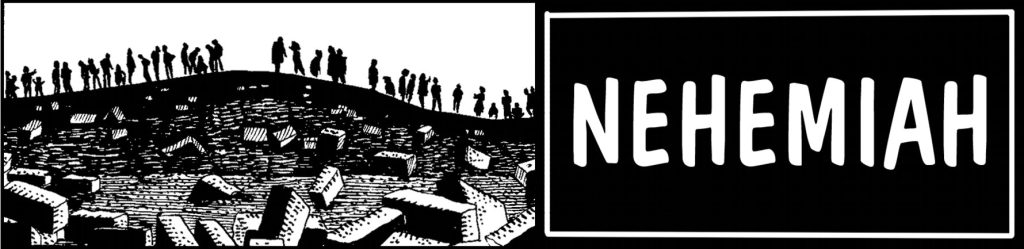
The books of Samuel and Kings related five centuries of Israel’s history without interruption, from David to the Babylonian exile.

Then came the seventy years of “Captivity,” or Exile. Not all the people were de ported. Most of the people who remained on the land were small farmers. They had neither political nor spiritual leaders and did little to put the nation back on its feet.

In the year 538 B.C. a decree of Cyrus, conqueror of the Chaldeans, authorized the return to their homeland of all the Jews deported to Babylon. This gesture of Cyrus was above all political, but the Bible sees in it the fulfillment of God’s promises to the prophets (especially to Jeremiah and Ezekiel). The decree of Cyrus marked the beginning of the return of the deportees: they were to revive the nation. The first came back with Zorobabel, a descendant of the kings. After a difficult start, they re organized themselves under the direction of Ezra and Nehemiah in the following century.

The decree of Cyrus did not modify the political situation of Palestine which had become a province of the Empire. Jerusalem remained under the authority of Samaria with regard to administration and the aristocracy of Samaria had no desire to be surpassed by the notables of Judah returning to their homeland after fifty years of exile. This accounts for the conflict between Jews and Samaritans which was to remain irreconcilable.

Not all the Jews returned to their land. Many of them had emigrated abroad before the exile and remained in the countries where they were living: Egypt, Assyria, Persia. Others, who had been deported, did not come back from Babylon, for they had succeeded in overcoming their miserable situation with one another’s help, and now held good positions there. Those who returned arrived as families and organized groups; they were the Jews who had best assimilated the prophets’ message, urging them to rebuild a purified and holy Israel.

For them a first danger was that, by settling in their homeland among foreigners and Jews not too attuned to their mission, they might lose their enthusiasm. That is why the work of Ezra and Nehemiah was very important in keeping the Jews united among themselves and apart from everyone else. See especially the problem of mixed marriages (Ezra 9-10; Ne 9:2 and 13:10-30).

Later, in his biblical work, Ezra played a decisive role by collecting the books and putting them together for the first time, and making the Sacred Book the basis of their religion. Until that time, the existing books of the Bible were kept only in the hands of the priests, and it was enough for the people to attend the traditional Temple ceremonies. It was Ezra who started a new form of worship through which the communal reading of the Bible would become the basis of the people’s religious life, bringing them to a more grounded and responsible faith. See Nehemiah 8. Ezra’s role in the formation of the Bible is remembered in 2 Maccabees 2:13-14.

Ezra’s reform gave the Jewish community of the post-Babylonian exile its unique features. the people of God became a holy people, consecrated to God and separated from others by the many barriers of their Law. Their reason for being was to maintain the worship of the only God and, since they did not have national independence, their priests held both civil and religious power, in the name of God.

At first, these two books formed only one book. They provide us with some information concerning the work accomplished by these two men. The following steps toward the restoration of the Jewish community can be seen:

– Beginning with the decree of Cyrus in 538 B.C., several groups of exiles come back to Jerusalem and Zerubbabel rebuilds THE TEMPLE: see Ezra 1:1 to 4:5 and 4:24 to 6:2.

– Then, the enemies of the Jews try to prevent the reconstruction of THE CITY (see Ezra 4:7-23).

– In 458 perhaps, Ezra comes to organize the community, imposing the Law of Moses as a rule (see Ezra 7 to 10).

– In 445 Nehemiah comes from Persia and he rebuilds THE WALLS. Then he administers Jerusalem for twelve years (see Ne 1 to 7).

– Finally, there is Nehemiah’s second mission in 425 (see Ne 13).

Down below are the introductions in the Mandarin Chinese, Tagalog, Cebuano, and Spanish editions.

Translation: Mandarin Chinese

乃赫米雅(厄斯德拉下):引言历史背景

《撒慕尔纪》和《列王纪》叙述了从达味时代到流放至巴比伦这五百年的以色列历史,中间没有间断。

接下来便是七十年的沦陷,或者说是流放。但是并非所有百姓都遭到流放。留在国土上的大部分是小农,他们没有领导者,也没有精神上的领袖,因此对于光复国家无所作为。

公元前538年,加色丁的征服者居鲁士发了一道谕令,让流放到巴比伦的所有以色列人返回他们的家园。居鲁士的这一姿态,首先是出于政治目的,圣经将此视为天主对先知们(尤其是耶肋米亚和厄则克耳)的许诺的应验。居鲁士的谕令标志着流放者回归的开始:他们将要复兴国家。首先启程回国的人是和国王的后裔则鲁巴贝耳一起走的。历经了艰难的开头之后,犹太人终于在下一个世纪,在厄斯德拉和乃赫米雅的引导下得到了重组。

厄斯德拉的改革

居鲁士的谕令并未缓和已成为波斯帝国一个省份的巴勒斯坦的政治局势。耶路撒冷仍然处于撒玛利亚人的管辖之下,撒玛利亚贵族不想被经过五十年的流放之后重返家园的犹太贵族后来居上。这便引发了犹太人和撒玛利亚人之间不可调和的冲突。

并非所有的犹太人都回到了故土。许多人在流放之前就已移居他国,并继续留在他们的居住国,如埃及、亚述、波斯等地。有些被流放到巴比伦的人没有回来,因为他们互相帮助,已成功地克服了困难,在当地享有不错的地位。而那些以整个家族或以有组织的团体形式迁回的,是最能认同先知信息的犹太人,这促成他们重建一个纯洁神圣的以色列。

对他们来说,第一项危机就是定居在外方人充斥的家园,犹太人并没有完全认知他们的使命,这可能使他们失去热情。这就是厄斯德拉和乃赫米雅促成犹太人本身团结,不和其他民族混在一起的工作,它的重要性所在。请特别参阅异族通婚的问题(厄上9-10;厄下9:2和13:10-30)。

后来,在圣经工作中,对于收集书卷并首次将这些作品编纂在一起,使圣典形成宗教基础这方面,厄斯德拉扮演了决定性的角色。在此之前,圣经都是被收藏在宫殿里或把持于司祭的手中,对民众来说,只要能参加传统的圣殿仪式就足够了。

厄斯德拉开创了新的礼拜形式,使共同阅读圣经成为民众宗教生活的基础,从而使他们的信仰更稳固。见厄下9:2。加下2:13-14追忆了厄斯德拉在编纂圣经成书上的地位。

厄斯德拉的改革使经过巴比伦流放之后的犹太团体有了其独特性。天主的子民成为一神圣的民族,献身于天主,并以许多律法屏障和其他民族相隔离。他们生存就是要维持对唯一天主的敬拜,而且因为他们并非独立国家,司祭便以天主之名掌握了世俗和宗教的权力。

《厄斯德拉》和《乃赫米雅》

最早,这两卷书是不分的。即使现在,我们也称前者为厄斯德拉上,后者为厄斯德拉下(乃赫米亚)。这些书卷提供了有关这两个人所完成的工作的资料。以下是犹太团体光复的步骤:

1) 从公元前538年居鲁士颁布谕令开始,好些被流放的团体和则鲁巴贝耳返回故土,重建圣殿(厄上1:1-4:5;4:24-6:2)。

2) 而后,犹太人的敌众想要阻止圣城的重建(厄上4:7-23)。

3) 大约在公元前458年,厄斯德拉开始组织团体,将梅瑟律法强制成规则(厄上7-10)。

4) 公元前445年,乃赫米雅从波斯归来,重筑城墙,而后治理耶路撒冷长达十二年(厄下1-7)。

5) 最后则是乃赫米雅在公元前425年的第二项使命(厄下13)。

Translation: Tagalog

Mga Kaalamang Pangkasaysayan

Isinalaysay sa atin ng mga libro ni Samuel at ng Mga Hari ang limang dantaong walang lagot na kasaysayan ng Israel, mula kay David hanggang sa Pagkatapon sa Babilonia.

At pagkatapos ay dumating naman ang pitumpung taon ng “Pagkabihag” o Pagkatapon. Hindi naman idineport ang buong bayan. Mas malaking bahagi ng sambayanan na binubuo ng maliliit na magsasaka ang naiwan sa kanilang lupain. Pero wala silang mga pinuno o mga lider espirituwal, wala silang ginawa para ibangon ang kanilang bansa. Nabuhay lamang muli ang bansa dahil sa mga itinapon na umuwing kasama ni Zorobabel pabalik sa kanilang lupain. At pagkaraan ng mahirap na pagsisimula, nareorganisa sila sa ilalim ng pamumuno nina Esdras at Nehemias.

Ang Reporma ng Esdras

Hindi lahat ng Judio ay bumalik sa kanilang lupain. Marami sa kanila ang nangibang-bayan na bago pa ang Pagkatapon at nanatili sila sa mga bayang kanilang tinitirhan: sa Ehipto, Asiria, Persia. Ang iba naman sa mga idineport ay hindi umuwi mula sa Babilonia kung saan nila napagtagumpayan ang miserable nilang kalagayan, at sa pagtutulung-tulong ay nagkaroon sila ng magagandang posisyon. Pero ang mga nagsibalik ay pami-pamilyang dumating at bilang mga grupong organisado. Sila ang lubos na nakapagsaloob sa mensahe ng mga propeta na nag-aanyaya sa kanilang itayong muli ang isang Israel na dinalisay at banal.

Para sa kanila, ito ang unang panganib na makakaharap nila sa pagtira sa sariling bayan sa piling ng mga dayuhan at mga Judiong di gaanong mulat sa kanilang misyon: baka mawalan sila ng sigasig. Kaya mahalaga ang gawa nina Esdras at Nehemias sa pagpapanatili sa pagkakabuklod ng mga Judio sa isa’t isa at hiwalay sa lahat ng iba pa. Tingnan lalo na ang problema ng pag-aasawa ng mga may magkaibang relihiyon (Esdras 9-10; Nehemias 9:2 at 13:10-30).
At naging mahalaga ang gawang pambiblia ni Esdras na siyang nagtipon sa mga libro ng Biblia sa unang pagkakataon, at pagkatapos ay ginawang base ng kanilang relihiyon ang Banal na Aklat. Hanggang sa mga sandaling iyon, ang mga libro ng Biblia na meron na noon ay nasa palasyo lamang o sa mga kamay ng mga pari at sapat na para sa bayan ang dumalo sa tradisyunal na mga seremonya sa Templo. Si Esdras ang nagsimula ng isang bagong paraan ng pagsamba kung saan ang pangkomunidad na pagbasa sa Biblia ang magiging base ng buhay relihiyoso ng mga sambayanan. Ito ang maghahatid sa kanila sa isang pananampalatayang mas matatag at mas responsable. Tingnan ang Nehemias 8. Inaalala sa 2 Mac 2:13-14 ang papel ni Esdras sa pagbubuo ng Biblia.

Ang repormang ito ni Esdras ang nagbigay ng mga sariling katangian sa pamayanang Judio pagkatapos ng Pagkatapon sa Babilonia. Ang bayan ng Diyos ay naging isang bayang banal, o bayang nakatalaga sa Diyos at inihiwalay sa iba pa ng maraming harang ng kanilang Batas. Sila ay nabubuhay lamang para ipagpatuloy ang pagsamba sa Kaisa-isahang Diyos, at dahil wala silang pambansang kalayaan, hawak ng mga pari sa ngalan ng Diyos ang kapwa kapangyarihang sibil at panrelihiyon.

Ang Libro Nina Esdras at Nehemias

Sa simula’y iisa lamang ang dalawang librong ito. Binibigyan tayo ng mga ito ng ilang impormasyon tungkol sa ginawa ng dalawang lalaking iyon. Mapapansin ang sumusunod na mga hakbang sa muling pagtatayo sa pamayanang Judio:

– Nagsimula sa dekreto ni Ciro sa taong 538 ang pagbabalik sa Jerusalem ng maraming grupo ng mga itinapon, at doon muling itinatayo ni Zorobabel ANG TEMPLO. (Tingnan ang Esdras 1:1 hanggang 4:5 at 4:24 hanggang 6:2).
– At sinikap namang hadlangan ng mga kaaway ng mga Judio ang muling pagtatayo sa LUNSOD. (Tingnan ang Esdras 4:7-23).
– Mga taong 458 siguro nang dumating si Esdras para buuin ang pamayanan, sa pagta-tadhana sa Batas ni Moises bilang isang panuntunan. (Tingnan ang Esdras 7 hanggang 10).
– Taong 445, dumating naman si Nehemias galing Persia, at sinimulan niya ang muling pagtatayo ng MGA PADER. At pagkatapos ay labindalawang taon niyang pinamahalaan ang Jerusalem. (Tingnan ang Nehemias 1 hanggang 7).
– At sa katapusan, may pangalawang misyon si Nehemias sa taong 425. (Tingnan ang Nehemias 13).

Translation: Cebuano

Ang mga basahon, Samuel ug Mga Hari, nag-asoy sa walay bugto nga kasaysayan sa Israel sulod sa lima ka siglo gikan ni David hangtod sa Pagkabihag nila sa Babilonia.

Unya, miabot ang kalim-an ka tuig sa Pagkabihag. Dili tanan sa katawhan ang gihinginlan. Kasagaran sa nahibilin mga gagmayng mag-uuma. Dili sila hanas sa pagpangulo ug yano ra sab ang ilang pagtoo, mao nga wala silay gibuhat aron sa pagpabangon sa ilang nasod. Salamat kay nabalik ang mga Judio nga nabihag ubos ni Zorobabel; human sila makasinatig lisod nga sinugdan, nakahimo ra sila pagbarog ug pagbangon ubos sa pagpangulo ni Esdras ug Nehemias.

Ang mga Reporma nga Gihimo ni Esdras

Dili tanan sa mga Judio mibalik sa ilang yuta. Daghan nila milangyaw ug nanimpalad gawas sa nasod, bisan sa wala pa ang pagkabihag. Daghan ang namuyo na sa Ehipto, sa Asiria, sa Persia. Ang ubang Judio sa Babilonia, tungod sa maayo na nilang pagkabutang, ug sa gihuptan nga maayong katungdanan, wala na makahunahunag balik sa kanhi nilang yutang natawhan. Apan kadtong mibalik, miabot isip mga pamilya ug nagkahugpong nga mga pundok; ang mga Judio nga matinud-anon sa mensahe sa mga propeta nga nag-awhag nila sa pagpabarog og usab sa putli ug balaang Israel.

Alang nila, ang unang hulga nga ilang giatubang mao nga sa nagpuyo sila uban sa mga langyaw ug sa mga Judio nga wala maanad sa ilang misyon, tingalig masuyop ug mawad-ag kadasig. Mao man gani nga ang gihimo ni Esdras ug Nehemias importanti kaayo aron ang mga Judio magpabiling magkahiusa halayo sa uban nga lahi nila. Basaha labi na ang problema sa panagminyoay sa taga gawas (Esd 9-10; Ne 9:2 ug 13:10-30).

Sa paglabay sa panahon, ang balaang sinulat nga gihimo ni Esdras nakatampo og dako sa paghipos sa ubang basahon sa Biblia; gihiusa ni sa unang higayon, hangtod nga ang Balaang Kasulatan nahimong sukaranan sa ilang tinoohan. Niadtong panahona, ang mga basahon sa Biblia gitagoan sa mga palasyo o sa kaparian; igo na alang sa mga tawo ang pagtambong sa naandang seremonyas sa Templo. Si Esdras ang nagsugod ining bag-ong paagi sa pagsimba diin ang katilingbanong pagbasa sa Biblia nahimong kabahin sa tinoohanong kinabuhi sa katawhan. Kini ang nagdala nila sa pagtoo nga lig-on ug hingkod. Basaha ang Ne 8. Ang tampo ni Esdras sa paghimo sa Biblia gihinumdoman sa 2 Mac 2:13-14.

Ang mga kausaban ni Esdras nakahimo sa katilingbang Judio nga lahi sa kaniadto nga wala pa sila mabihag. Ang katawhan sa Diyos gipalayo sa ubang tawo pinaagi sa ilang Balaod. Ang hinungdan nganong ingon sila ani mao nga nagpabilin sila pagsimba sa usa ra ka Diyos, ug wala silay nasodnong kaugalingnan. Sa ngalan sa Diyos, ang ilang mga pari naghupot sa gahom sibil ug relihiyoso.

Amg Basahon ni Esdras ug Nehemias

Sa una, giusa kining duha ka basahon nga naghatag og kasayoran kabahin sa gipanghimo ining duha ka tawo. Makita sa mosunod ang mga ang-ang sa ilang pagpabarog pag-usab sa Judiong katilingban:
– Nagsugod ni sa kamandoan ni Hari Ciro sa 538 B.C.
– Dihay ubay-ubay nga pundok sa mga binihag nga mibalik sa Jerusalem, diin ubos ni Zorobabel gisugdan ang pagpabangon sa TEMPLO. (Basaha sa Esd 1:1 ngadto sa 4:5 ug 4:24 ngadto sa 6:2).
– Dayon, misulay ang mga kaaway sa mga Judio pagsanta sa subling pagtukod Sa SYUDAD (Esd 4:7-23).
– Sa mga tuig 458, B.C., lig-ong giumol ni Esdras ang katilingban; iyang gigamit ang Balaod ni Moises isip batakang balaod (basa sa Esd 7 ngadto sa 10).
– Sa tuig 445, miabot si Nehemias gikan sa Persia, ug iyang gitukod pag-usab ANG MGA PARIL ug gidumala ang Jerusalem sulod sa dose ka tuig.
– Sa kataposan, naa ang ikaduhang misyon ni Nehemias sa tuig 425 (basa sa Ne 13).

Translation: Spanish

El Judaísmo

Esdras y las Crónicas

La deportación a Babilonia de las elites del pueblo de Judá, en los años 606 y 587, puso fin a la nación de Israel en la tierra de Palestina. La mayor parte de ese pueblo, las tribus del norte: Efraím, Manasés y las otras menos importantes, habían ya dejado de existir como “reino de Israel” después de las deportaciones asirias de los años 634 y 621.

Cuando el persa Ciro se apoderó de Babilonia, su edicto del año 538 invitó a los deportados de Judá a reconstruir, no ya su reino, sino una provincia persa de Jerusalén. Pero nada parecido ocurre con las tribus del norte. Estas nunca pudieron imponer su cultura y su religión a los cananeos y a los nuevos inmigrantes con los cuales se habían mezclado (2Re 17,24-34).

La historia de Israel en Palestina será en adelante la de la provincia de Judá, y de la palabra Judeo se derivó la palabra Judío. La comunidad religiosa y cultural que va a nacer y desarrollarse, será conocida por la historia como el Judaísmo.

Las Crónicas y los libros de Esdras son los testimonios de la formación del Judaísmo. Estos libros, que sólo entraron muy tardíamente a la Biblia hebrea, son inseparables.

Esdras y Nehemías

No es fácil discernir lo que corresponde a cada uno de estos dos hombres. Además de las otras razones que pudieron inducir al autor a mezclar la obra de los dos, se dejó engañar por el hecho de que sus documentos mencionaban en diversos lugares al rey Artajerjes (Esd 4; 7; 8,1; Ne 1; 2; 5; 13...) como si hubiera sido uno solo. Ahora bien, hubo dos reyes con ese nombre: Artajerjes I que reinó de 465 a 423, y Artajerjes II, de 404 a 358.

Lo más probable es que Nehemías haya llegado a Jerusalén el 445 y que volvió donde el rey el 433. Luego regresó para una segunda misión en una época no determinada. Tal vez ya no estuviera cuando reinó Darío II (423-404). Y fue sólo el séptimo año de Artajerjes II (Esd 7,8), o sea el 398, cuando Esdras llegó a Jerusalén.

Las etapas de la reconstrucción de un pueblo

El decreto de Ciro del 538 fue un signo de su benevolencia con las diferentes culturas y religiones de los pueblos que había reunido en su inmenso imperio. Pero había también intenciones políticas. Sea como fuere, no se equivocó al confiar en los judíos. Los judíos que habían ya emigrado a muchas regiones del Medio Oriente habían adquirido la fama de personas más confiables. La reconstrucción del pueblo de Dios será, pues, tanto fruto de la pedagogía de Dios en los siglos anteriores como producto de las circunstancias que Dios había previsto en la historia mundial.

Zorobabel

Una primera ola de deportados regresa al país de Judá y se esfuerza por abrirse un espacio allí donde otros han ocupado los espacios abandonados. Zorobabel, un descendiente de Joaquín, el último rey, se destaca entre los exiliados y toma la iniciativa de reconstruir el Templo, aunque sólo levanta una pobre réplica de éste. El asunto no era tan simple como parecía (Esd 4,1-6). Los profetas Ageo y Zacarías estimulan el trabajo. El templo es reconstruido el año 520 (Ag 1,1; Za 1,1). Ésa fue una primera etapa.

Nehemías

La reconstrucción del Templo produjo roces entre los repatriados y el pueblo que se había quedado en el país. Cuestión de intereses, es cierto, por el temor de los que estaban ante la llegada de grupos más motivados y que contaban con el apoyo del rey. Pero también cuestión religiosa, porque si el pueblo de Dios ya no se identifica con una nación ni con un territorio, hay que fijar de nuevo los criterios de pertenencia a la comunidad.

Transcurrieron así cerca de ochenta años. El entusiasmo de los repatriados decayó, la moralidad se rebajó al nivel mismo de la población del país. Los profetas Zacarías, Malaquías y el tercer Isaías denuncian las mismas fechorías que los profetas anteriores.

Es entonces cuando Nehemías se siente llamado. Comprende que la comunidad no será respetada si no tiene fronteras. No pretende independizarse del imperio persa, pero se necesitan murallas para hacer frente a las amenazas y violencias de los poderes intermediarios y de los vecinos. Luego, será necesario reorganizar la comunidad, exigiendo a los más ricos la solidaridad con sus hermanos necesitados, y respetando la prioridad que se debe al culto divino. La comunidad escapará al peligro de ser asimilada por el medio ambiente merced a barreras que se impondrán de a poco: no habrá más matrimonios mixtos y la familia será judía; se respetará el descanso sabático; el poder civil será responsable de la fidelidad religiosa al igual que los sacerdotes.

Esdras

Esdras llega veinte años después de Nehemías. El Gran Rey quiere que cada pueblo tenga un código de leyes escritas; por eso confía, para los judíos, en un maestro de la Ley. La Ley del pueblo judío estaba toda en los libros sagrados. Aunque no se sabe de forma precisa si Esdras participó personalmente en la redacción de los libros santos, a él se debió su recopilación (Ne 8,1). Él fue quien realmente instauró el “judaísmo” al hacer de la lectura y de la puesta en práctica de esa Ley la regla suprema de la comunidad. El documento que se lee en Ne 10 (el nombre de Nehemías en el versículo 2 es una inserción anacrónica) es la confirmación de lo que éste ya había emprendido.

Con Esdras, que es un sacerdote, y con su misión oficial, los sacerdotes pasan a ser el grupo dominante. Estarán ligados al poder imperial persa y serán los garantes de la estabilidad, lo que, en el plano religioso, contiene una amenaza para el porvenir. Se pensará que la prosperidad del Templo, los sacrificios, la aceptación de la Ley aseguran las correctas relaciones entre Dios y su pueblo. Pero la espera de tiempos nuevos se va debilitando; el profetismo pasa a ser marginal y sus obras tardías se incluirán en los libros anteriores tal como fue el caso de Joel y de la segunda parte de Zacarías.

De ese judaísmo no se renegará, sino que será seriamente cuestionado por la invasión de la cultura helénica, y como una respuesta del alma judía aparecerá el movimiento asideo. Véase al respecto la introducción a Daniel.

Introduction to Romans (Christian Community Bible)

(The Catholic Christian Community Bible [first English edition 1997, other translations into Indonesian, Chinese, Cebuano, Chavacano, French, Ilonggo, Korean, Quechuan, Spanish, and Tagalog] “for the Christian Communities of the Third World” uses the following introduction.)

Jesus presented himself as the Savior. First of all he wanted to save the Jewish people. He spoke to them of the kingdom and they understood that God would reign over them just as he would reign in their lives. Their collective aspirations were not unknown to him, but he oriented them towards a more universal mission: it was truly “good news” for them.

With the beginning of the mission into Roman territory the Gospel had equally to be good news for the Greeks of the Roman Empire who were listening to the word of the apostles. Protected by solid structures that no-one questioned, they did not share the Jewish longing for liberation. In absorbing them the Roman Empire had practically reduced to nothing the pride and ambitions of nations great and small, leaving a void for religious concerns to take root. These people were interested in all that related to the human person and searched high and low in a jumble of doctrines and religions as a means of escaping Fate. So it was essential to speak to them of Christ, as the one who unravels our contradictions and gives us life.

In this letter to the Christians of Rome, capital of the Empire, Paul intends to respond to the concerns of the Greeks but without thereby neglecting the Jews.

The Letter to the Romans is for the most part a long exposition about Christian vocation. To us it will seem difficult, because that is what it is. It must be remembered that Paul’s teaching does not stem from a doctrinal system or from a theology: rather it constantly springs from his own experience. The encounter with the Risen Christ, the call made to Paul that put him at the service of the Gospel, the long experience as an apostle, the gifts of the Spirit acting in him and constant communion with Jesus: these were the sources of his vision of faith.

So Paul spoke of God’s salvation as if forgetful of the explosive Palestinian context where Jewish nationalism was at grips with the Romans and where all religious hopes were politicized. God’s salvation is the salvation of the human race, a total project, but taking place in the heart of people; all will depend on our response to God’s call: can we trust him?

Paul, marked by his own history, presents the beginning of faith as dramatic conversion. People are slaves to Sin (it would be necessary to understand what Paul means by that). We have been created to share the life of God, and as long as we do not achieve this we carry within ourselves a conscious or unconscious rebellion against God. Must we turn towards religion? We would gain very little, says Paul, with insistence that will shock many people: as long as we believe in becoming “good” through religious practices we turn our back on the only power that can free us: God’s merciful love. The only response he expects from us is our act of faith, a faith which immediately frees us.

This salvation is the one announced by the Bible, but it will disconcert those believers who do not go beyond religious practices. These belong to a first stage of sacred history that ended with Jesus’ death. Our baptism gives us entrance to a mysterious world which is no other than the Risen Christ: from now on we are “in Christ”, and living by his Spirit. The gift of the Spirit opens a new era where all is inspired by the law of love, for those who have become true sons and daughters of God.

Paul had decided to leave the Eastern provinces of the empire and to reach its very heart, that is to say, Rome (Rom 15:23). But others had established and formed that community, Peter for sure, and many others who are unknown. These Christians already had their own ways and their customs. Some of them had heard comments that did not predispose them favorably toward Paul and his methods. Therefore, it is understandable that Paul wanted to prepare his coming. He may have been thinking even more about the Jerusalem Christians who were spreading rumors and slandering him (Acts 21:21). Before Paul went to Rome, he had to go to Jerusalem to bring the proceeds of the collection taken in the Greek communities for the poor of Jerusalem. Paul was not too sure of being welcomed as a brother (Rom 15:31). So, he sent this letter to Rome, knowing that it would quickly reach Jerusalem. In this letter, Paul dwells on the complementary vocation of the Jews and the pagans.

His calls for mutual understanding, that make up the content of chapters 13-15 of this letter, were important concerns of Paul at the time. Even if he addressed the Jewish community of Jerusalem in a special way, his remarks were not out of place in Rome. There, like everywhere, it was not easy to gather Jews and converted pagans in the same community. Paul was already preaching what we fail to put into practice, namely, to accept one another with our differences.

Paul probably sent this letter from Corinth in the winter of 57-58.

It is now impossible to speak of the letter to the Romans without saying at least a word on the place it has held and continues to hold in Protestant Churches. It has been considered by many as the key to the interpretation of the whole bible.

It is known that Luther deepened the Reformation by commenting on this epistle. He was not wrong in seeing in this letter the condemnation of a Church established in the world, where faith had been degraded, becoming no more than practice devoid of faith which saves. The Christianity of the Middle Ages was in fact a people, rather like what the people of Israel had become. A person was a Christian by birth and continued to be one; he/she could be a believer, but as one is in any culture whatever. It was thought that salvation was gained by religious rites and by the practice of good deeds that merited heaven.

It was therefore very important to remember that faith is at the heart of every conversion, and that this conversion is the response to a freely given call from God. This letter emphasizes Christ the Savior and this emphasis was sufficient to devaluate the whole religious system which at the time was crushed by tradition and devotions. There was faith, at a time when preaching rarely touched on anything other than morality with its catalogues of moral principles. There was the word of God directed towards the individual person at a time when people were quite happy to trust Church leaders. It was then, a radical criticism of the Church which ended up looking at itself instead of turning towards God, and of a Church whose whole system – political, doctrinal and repressive, blocked the horizon.

We have said, however, that this letter had its roots in Paul’s experience as a Jew, a Pharisee and as an apostle called directly by Christ. It is from that point that Paul spoke of sin and justification, of call, of salvation through faith. For their part, Luther and his contemporaries read this letter against the backdrop of their own problems — or better — of their anguish.

They magnified the perspective of sin and eternal condemnation, victims of a philosophy (nominalism) in which nothing was good or bad in itself but only if God declares it so. Because of that, everything Paul said about predestination of the Jewish people was interpreted by them as a personal predestination to heaven or hell.

When Paul spoke of justification – a word which at that time had a large and imprecise meaning – he meant that God re-establishes in us an order which is the true one; they understood instead that, if we believe, God will accept us even if nothing has been changed in us. The great perspectives of humankind and history as a battlefield of sin and grace, were reduced to a personal problem: am I really free or am I enslaved to sin or grace. Taking literally Paul’s images and comparisons, a doctrine of original sin was developed in which we all pay now and forever, for the sin of our first ancestors.

Several generations of protestants and catholics have been marked by these controversies: salvation through faith alone, or through faith and works, or through faith, works and sacraments? The love of the Father who saves and of Christ the Savior were eclipsed in fact by an obsession for salvation: how can I escape from this rigid frame in which God confines me? The concept of a just God, of inexorable decisions, which so easily condemns people into hell would traumatize the West and prepare a revolt in the next centuries, that of militant atheism.

It is not pointless for us today to know this. We are all children of our time and the remedy, if we do not wish to be enslaved, is to not give over-importance to one biblical text to the detriment of others. When you have become familiar with Paul and first with the letter to the Romans you see that for him the Father of Jesus is really father, and passionately loved. Thousands of details are to be discovered in Paul that disclose his experience of a continual communion and a life “in” the Triune God, an experience very close to that of St. John.

That will not prevent us from finding in this letter just what Luther, after St. Augustine, saw there: a genial presentation of the mystery of humanity redeemed by Christ. There is a certain forgetfulness perhaps of this letter and of this doctrine which too often has allowed Catholics to hem themselves in by their practices and their sacraments, and neglect mission.

Down below are the introductions in the Mandarin Chinese, Tagalog, Cebuano, and Spanish editions.

Translation: Mandarin Chinese

耶稣以救世主的身份显现,他最先想救赎的是犹太人。他对他们讲论天国,于是他们了解:救主要来领导他们,亦如在生命中指引他们一样。耶稣不是不知道犹太人的盼望,但他引导他们朝向另一更广博深奥的使命:对他们而言,那才真是一种“福音”。

虽然对以色列人传教受挫,传教工作却在罗马帝国的领地上发展开来,福音也同时传给了罗马帝国内的希腊人,这些希腊人都成了保禄宗徒的听众。他们生活在稳固的社会结构下,并没像犹太人那般渴求解放。罗马帝国吸收容纳了被征服的民众,挫败了境内大小诸国原有的傲气和雄心,结果反留下了一片精神空白,正给予宗教热切成长的时机。这些有信仰热情的人,对所有触及“人”的事物都有兴趣,并想从众说纷纭的宗教理论中寻求挣脱命运之法。这时候就应该将解决人的冲突,赋予人生命的基督介绍给他们。

保禄在写给帝国首都-罗马的基督徒的信中,为饥渴慕义的希腊人提供了心灵之粮,同时并没有忽略犹太人。犹太人在罗马这个社群内为数众多。基督徒本来以为,凡是以色列人,都会分辨救主天主的来临,且终日怀此希望。但是当他们认清了大多数的同胞已弃绝了基督信仰后,他们才开始思考,该如何在天主面前重新定位?他们难道成了站在悠久救恩历史边缘的少数人吗?

罗马书的内容

罗马书的主要内容是有关基督徒圣召的冗长说明。保禄虽受了传统文化的熏陶,但他不从什么教义或神学理论着笔,而时常以自己的经验为例:他与复活的基督相遇;他为福音传播而历尽沧桑的奉献;受圣神恩赐的影响;以及不断与主耶稣心灵沟通的心得;这些都是他对信仰看法的基础。

保禄因受自身经验的影响,他视信仰之路为“皈依天主”,他以为“人是罪恶的奴隶”。我们希望挣脱罪的禁锢,但总缺乏领悟:只有信德能使我们皈依天主,分享天主的生命。要是不辨识这点,我们总会有意无意地来叛逆天主。

我们需要皈依于宗教信仰吗?保禄用令人吃惊的语气说:“皈依宗教得不到什么好处。若人们以为遵行教规就能成为‘好人’的话,正违背了那唯一能解救我们的原则。唯一得救之道在于相信天主的仁慈大爱,靠了这种坚定的信仰,我们才能得救。”

整部圣经所宣讲的就是“得救之恩”。但并不指生活在犹太宗教意识中的复合与完美,因为犹太人的宗教好像其他宗教,只成为人类历史上的一段而已;但耶稣的死完全成全了这一切。洗礼把我们带进复活基督的神秘世界:我们已在“基督内”,并且借他的圣神而生活。圣神的恩赐开启了新的纪元在新纪元里,一切按爱的法则而行事,使我们能成为天主的真正子女。

保禄又回到犹太人的问题上:对于天主应允以色列人一位救主,最后他们却不承认他,这样的以色列历史该怎么去理解呢?

保禄写信的年代大约在公元五十七或五十八年,地点可能是在格林多。在此之前,他只写信给他所清楚本身有困难的教会团体。而这封信则内容不同,他除了说到信仰意义和一般教友的信仰生活外,还特别强调不同的民族要彼此接纳。在罗马和帝国的其它地方,将犹太基督徒和其他民族的教友组成一个教会团体是不容易的。保禄很清楚这一点,但仍跟他们苦口婆心地讲道,宣讲连今天的我们都难以做到的“多元化”。

教会中的罗马书

谈论罗马书,必须指出此书在天主教和基督教(新教)中已占有且继续占有极重要的地位。对基督新教来说,马丁路德认为这部书坚定并深化了他的“宗教改革”。他对当时世俗化教会信德腐败的指责,不是没有道理的。当时十六世纪的西方人民的确像以色列人民,一出生即为教徒,且终生都得是。不论其文化背景有何不同,人人都以为借宗教仪式或善行,就能得救升天。

要慎重提醒大家:信德是皈依的中心,而这样的皈依是出于对天主爱的召唤的回应。这封信以“基督救主”为中心思想,这样可以让我们看到被传统和狂热摧毁的一个宗教还能有的前景。当时有信仰,但所能听到的就是道德或道德规条的教诲而已。当时也有天主圣言要念给所有的人听,于是这些人都满足地信任“神职人员”。故而路德激烈地批评教会,想使教会在朝向天主之前,回过头来看看自己:教会依附着政治,或是压抑体系,已封闭了自己的眼界。

在此书中,保禄以犹太人、法利塞人和直接被召叫为宗徒的经验,来定此书的基调。由此出发,他谈到罪恶、成义、天主的召叫、信德、救赎等问题。路德和他同时代的人,正是触碰到了这一困扰。他们代表了一群穷途末路的悲世者,被入地狱的威胁恐吓,而放大了罪的前景,终致成了“唯名论”的受害者。这种哲学认为事物本身没有好坏,只靠天主来宣判好或坏。因此,保禄所说关于犹太民族的命运安排,被他们诠释为个人上天堂或下地狱的宿命了。保禄提到天主,他要使我们成义,合于义:其实是指天主要在我们内重建新秩序,一个真实的秩序。但路德的理解却是:如果我们相信,天主就称我们为合于义的义人,尽管人实际上并没有内在的变化,成义和被称为义并不相同。被称为义是外在表面的说法。但我们人类受罪和圣宠之影响,本身难以自主,故而人类的前途就似乎化为个人的问题,乃系于天主之决定。那么我是真的自由吗?还是静待他的恩典赐予呢?若将保禄的言语仅以字面解释,就会归纳出原罪的论调,我们都将为原始父母的罪而永远付出代价。

新教友和天主教教友为此已经作了好几世纪的争论。即使今日回顾历史和争论肇因都很值得。若经常阅读保禄书信,特别是罗马书,我们就会发现对保禄而言,耶稣的“父亲”是一位真正的父亲,他极受爱戴。我们从保禄不断的灵修经验和他生活在“天主三位一体”中的经验,觉得他与圣若望的想法有极近之处。

我们不难从这篇书信中,再看到一幅圣奥斯定和路德都看到的“人类在基督内蒙救赎”的神秘之景象。但我们往往忽略了这篇书信所肯定的这种奥秘,以致于天主教徒太过强调教规和宗教活动等方面,而疏忽了对这世界重要的传福音使命。

Translation: Tagalog

Dumating si Jesus bilang Tagapagligtas, at una sa lahat, hangad niyang iligtas ang sambayanang Judio. Nangusap siya sa kanila tungkol sa Paghahari ng Diyos, at naintindihan nila ito bilang paghahari ng Diyos sa kanilang sambayanan tulad ng paghahari niya sa buhay ng bawat isa sa kanila. Pinahalagahan niya ang kanilang mga inaasam sa buhay at binigyang-direksyon ang mga ito upang ibilang ang lahat sa pagmamagandang-loob ng Diyos: ito ang mabuting balita para sa kanila.

Ngunit pagkalipas ng ilang taon, sa pagsisimula ng misyon sa mga lupaing nasasakupan ng imperyo ng Roma, kailangang ipangaral din ang Ebanghelyo bilang mabuting balita sa mga Griyego na silang mga tagapakinig ni Pablo. Matatag ang kaayusan ng kanilang lipunan kayat hindi sila gaya ng mga Judio na paglaya ang hangad. Sa pananakop ng imperyo ng Roma sa mga bayan, pinawi nito ang dangal at mga ambisyon ng maliliit pati na ng malalaking bansa. Lumikha ito ng guwang sa kalooban ng mga tao na siyang magbibigay-lugar sa relihiyon at paghahanap ng kahulugan sa buhay. Interesado sila sa anumang may kinalaman sa tao, at sa kung anu-anong mga doktrina at relihiyo’y naghahanap sila ng daan para matakasan ang guhit ng tadhana. Sa kanila kailangang ipahayag si Kristo na siyang lulutas sa mga kontradiksyon at magbibigay-buhay sa kanila.

Sa sulat na ito sa mga Kristiyano sa Roma na kapitolyo ng imperyo, layunin ni Pablo na sagutin ang mga alalahanin ng mga Griyego nang hindi kinakaligtaan ang mga Judio. Marami ang mga Judio sa komunidad sa Roma gaya ng sa lahat ng komunidad sa buong imperyo. At para sa mga sumampalataya kay Kristo, problema nila kung saan nila ilalagay ang sarili sa relasyon sa Diyos matapos tanggihan ng kanilang sambayanan ang pananampalatayang-Kristiyano. Hanggang noo’y kaisa sila sa pag-asa ng kanilang bayan, sa pag-aakalang makikilala ng buong Israel ang pagdating ng Diyos na Tagapaglitas. Ngunit ngayo’y napakaliit na grupo lamang sila sa dulo ng mahabang kasaysayan.

Paglalahad tungkol sa buhay-Kristiyano ang malaking bahagi ng sulat sa mga taga-Roma. At hindi lamang parang mahirap kundi talagang mahirap itong intindihin. May mababasa tayo ritong mga paliwanag at paggamit sa ilang teksto sa biblia na kalimita’y ipagtataka natin dahil may mga pagkakataong pamamaraan ng mga rabbi sa Jerusalem ang ginagamit ni Pablo para patunayan ang kanyang mga argumento. Pero hindi agad na nakikita ang layunin ng mga tekstong ito ni ang gustong patunayan ng mga ito. Ipaliliwanag natin ang mga talatang ito. Ngunit maaari ring makalito ang sulat na ito sa maraming babasa nito na hindi sanay ituring ang pananampalataya at buhay-Kristiyano bilang bunga ng kumbersyon sa sandaling madiskubre ninuman ang pagtawag at pagmamahal ng Diyos.

Hindi doktrina o teolohiya ang simula ni Pablo kundi sariling karanasan. Ang karanasan niya sa Kristong nabuhay, ang pagtawag at pagtatalaga sa kanya sa paglilingkod sa ebanghelyo at ang mahaba niyang karanasan sa buhay bilang apostol, ang mga kaloob ng Espiritung patuloy na gumagawa sa kanya, ang palagiang pakikipagbuklod kay Jesus na siyang Panginoon – sa mga ito nakaugat ang pananaw niya sa pananampalataya.

Kayat nagsasalita si Pablo tungkol sa pagliligtas ng Diyos na para bang hindi pansin ang magulong kalagayan ng Palestina kung saan katunggali ng nasyonalismo ng mga Judio ang mga Romano, at may kinalaman sa pulitika ang anumang adhikain sa relihiyon. Pagliligtas sa buong sangkatauhan ang pagliligtas ng Diyos ngunit sa puso ng mga tao ito nagkakatotoo; sa pagsagot natin sa panawagan ng Diyos nakasalalay ang lahat: may lakas ba tayo ng loob na manalig sa kanya?

Dahil mismo sa kanyang kasaysayan kaya inilalahad ni Pablo ang pagsampalataya bilang isang madulang kumbersyon. Alipin ni Kasalanan si Tao (mahalagang maintindihan natin kung ano ang gustong sabihin dito ni Pablo). Wala na siyang ano pang sagot na hinihintay kundi ang ating pagsampalataya, isang pananampalatayang magpapalaya sa atin.

Ito ang pagliligtas na ipinahahayag ng biblia ngunit hindi ito pagbabagong-anyo lamang o pagpapaging mas mabuti sa relihiyon ng mga Judio. Ipinapasok tayo ng ating binyag sa mahiwagang daigdig na walang iba kundi ang sa Kristong nabuhay: “nakay Kristo” na tayo at nabubuhay ayon sa kanyang Espiritu. Isang bagong panahon ang pinasisinayaan ng kaloob na Espiritu kung saan batas ng pag-ibig ang dahilan ng lahat para sa mga naging mga tunay na anak ng Diyos. Kayat babalikan ni Pablo ang pinoproblema ng mga Judio: paano iintindihin ang kasaysayang ito ng Israel na pinangakuan ng Diyos ng tagapagligtas gayong hindi naman nila siya kilala?

Ipinadala ni Pablo ang sulat na ito mga taong 57 o 58, at maaaring mula Corinto. Sa mga komunidad lamang na kilala niya nang personal siya sumusulat, at alam niya ang mga problema ng mga ito. Sa pagkakataong ito, gumagawa siya ng malawakang paglalahad ng pananampalataya, pagliligtas at buhay-Kristiyano. Ngunit sa ikalawang bahagi ng kanyang paglalahad sa pananampalataya, tinatalakay rin niya ang partikular na mga problema. Tulad sa iba pang bahagi ng imperyo, mahirap pagbuklurin sa isang pamayanan ang mga Judio at ang mga paganong nanampalataya. Alam ito ni Pablo at ipinahahayag niya sa kanila ang para sa ati’y napakahirap gawin: ang tanggapin ang ating mga pagkakaiba’t iba.

Ang Lugar sa Iglesya ng Sulat sa Mga Taga-Roma

Hindi natin puwedeng pag-usapan ang Sulat sa mga Taga-Roma nang hindi binabanggit ang lugar nito sa mga Iglesyang Protestante. Ipinapalagay ng marami na ito ang pinakasusi sa pag-intindi sa Bagong Tipan.

Sa katunaya’y napag-ibayo ni Luther ang Repormasyon dahil sa pagbibigay niya ng paliwanag sa sulat na ito. Hindi siya nagkamali nang makita niya rito ang paghatol sa nakatayo nang Iglesya na kung minsa’y makamundo at madalas na nababale-wala ang pananampalataya dahil sa mga kaugaliang wala namang kinalaman sa pananampalatayang nagliligtas. Naging tulad nga ng sambayanan ng Israel noon ang sambayanang Kristiyano ng Gitnang Panahon. Kristiyano sila dahil ipinanganak silang Kristiyano; sumasampalataya sila pero tulad ng sa alinmang kultura, naniniwala silang maliligtas dahil sa mga seremonya ng relihiyon at sa paggawa ng mabuti na langit ang kapalit. Kayat malaking bagay ang paalalahanan ang mga Kristiyanong ito noon na pananampalataya pala ang pinakasentro ng anumang kumbersyon na siyang pagtugon sa pagmamagandang-loob na tawag ng Diyos. Tanging ang Kristong Tagapagligtas lamang ang nasa sulat na ito, at sapat na ito para ilagay sa dapat kalagyan ang buong sistema ng relihiyon na pinabigat ng mga tradisyon at debosyon nang panahong iyon. Pananampalataya ang binibigyang-diin ng Repormasyon, samantalang sa loob ng Iglesya’y halos pangangaral lamang tungkol sa moralidad o listahan kaya ng mga paglabag dito ang kanilang naririnig. Ipinaabot nito ang Salita ng Diyos sa lahat ng binyagan na noo’y mga “taong-Simbahan” ang nakagawiang panaligan. Mabigat nga itong puna sa Iglesya na sarili ang pinagtutuunan ng pansin sa halip na ang Diyos, at nakakapit sa isang mapaniil na sistemang pampulitika, pandoktrina na nagsasara sa mas malawak na pananaw.

Ngunit hindi nila nabigyan ng sapat na pansin ang pagkakaugat ng sulat na ito sa kabuuan ng karanasan ni Pablo bilang Judio at Pariseo, na noo’y isang apostol na deretsahang tinawag ni Kristo. Ito ang pinakasimula ng pagsasalita niya tungkol sa sala at pagpapaging-matuwid, tungkol sa pagtawag ng Diyos at pagliligtas ng pananampalataya. Tulad ng kanyang mga kapanahon, naghahanap ng sagot si Luther sa kanilang problema o sa kanilang kabalisahan. Pinalaki nila ang tingin sa kasalanan at walang hanggang parusa. Biktima sila ng isang pilosopiya na nagpapalagay na walang anumang masama o mabuti sa ganang sarili malibang ang Diyos mismo ang magsabi nito. Dahil dito, inintindi nila ang lahat ng sinasabi ni Pablo tungkol sa predestinasyon ng sambayanang Judio bilang personal na predestinasyon sa langit o impiyerno.

Kapag nagsasalita si Pablo tungkol sa pagpapaging-matuwid – isang salita na noong panahong iyo’y may malawak at walang tiyakang kahulugan – ang pagpapanumbalik ng tunay at totoong kaayusan na gawa sa atin ng Diyos ang gusto niyang ipakahulugan dito. Ngunit iba ang naging pag-intindi nila dito: na kung sasampalataya tayo, tatanggapin tayo ng Diyos kahit na walang anumang nabago sa atin. Ang malawak na pagtingin sa sangkatauhan at kasaysayan bilang larangan ng paglalaban ng sala at grasya ay naging pampersonal na problema lamang: talaga nga bang malaya ako o alipin ng sala o grasya? Sa literal na pag-intindi sa mga larawan at paghahambing ni Pablo, nabuo ang doktrina ng kasalanang orihinal na nagsasabing pinagbabayaran nating lahat ngayon at magpakailanman ang pagkakasala ng mga unang magulang natin.

Tampok sa pagtatalo ng maraming salinlahi ng mga Protestante at mga Katoliko ang mga kontrobersyang ito: kaligtasan sa pamamagitan lamang ng pananampalataya, o sa pamamagitan ng pananampalataya at mga gawa, o sa pamamagitan ng pananampalataya, mga gawa at mga sakramento? Natabunan ng labis na pagbibigay-diin sa kaligtasan ang pagmamahal ng Amang nagliligtas at ng Kristong Tagapagligtas: paano ako makalalabas sa masikip at mahigpit na kahong ito na pinagkukulungan sa akin ng Diyos? Magiging masama ang karanasan ng Kanlurang daigdig sa konseptong ito ng isang makatarungang Diyos na may mga pasyang walang pagkabali at kaagad-agad na naghahatol sa mga tao na mapasaimpiyerno. Ito ang magbibigay-daan sa paghihimagsik sa mga susunod na dantaon: ang militanteng ateismo.

Mahalaga ring tingnan ang kasaysayan at mga sanhi nito. Makikita ng sinumang babasa kay Pablo lalo na sa kanyang sulat sa mga taga-Roma na para kay Pablo, isa ngang amang may maalab na pagmamahal sa kanyang mga anak ang Ama ni Jesus. Malaki ang pagkakatulad nito sa kaisipan ni Juan sapagkat kadalasa’y sariling karanasan ng pakikipagbuklod sa Diyos ang pinagninilayan ni Pablo.

Sa pagbasa natin sa liham na ito, maranasan din sana natin ang nakita nina Agustin at Luther: isang sulyap sa hiwaga ng sangkatauhang iniligtas ni Kristo. Sapagkat maaaring ang paglimot sa hiwagang ito ang dahilan ng pagbibigay-diin ng mga Katoliko sa mga sakramento at mga kaugalian, at nababale-wala ang napakahalagang misyon sa daigdig.

Translation: Cebuano

Agig tubag sa labing lawom nga pangandoy gisangyaw ni Jesus ang Maayong Balita sa nasod sa mga Judio. Ang pagsangyaw sa gingharian sa Diyos dili taman lang sa kaluwasan sa kalag. Mianhi si Jesus isip Manluluwas sa mga Judio. (Ang mensahe hinuon niya dili alang ra sa maong katawhan kondili, sa tanang kanasoran).

Busa, kinahanglan nga ang Ebanghelyo nga gisangyaw sa mga Judio mahimo sab nga “maayong balita” sa mga Griyego ubos sa Romanong kagamhanan. Bisag nagpuyo sila sa lig-on ug madaugdaogong mga gambalay, wala sa ilang hunahuna ang pag-usab ini busa, ang ilang panglantaw layo ug himulag ra sa pangandoy sa mga Judio alang sa kalingkawasan. Nangandoy silag lahi nga kausaban sa tawo. Hangtod adtong panahona, nakagamot gihapon sa ilang hunahuna nga ang tawo walay mahimo sa pag-usab sa badlis sa kapalaran; alang nila ang kadaotan ug kamatayon balaod sa kinabuhi nga dili mabuntog; walay nakapasabot nila sa panagbangi sa atong kailadman. Hinunoa, kinahanglang ipatin-aw nga si Cristo nagdalag kinabuhi.

Ining sulata alang sa katilingban sa Roma, ang ulohan sa Imperyo, gipadayag ni Pablo ang tibuok plano sa kaluwasan isip tubag sa kahingawa sa katilingban sa mga Griyego, sa walay paghikalimot sa daghang Judio nga sakop sa maong katilingban.

Miingon siya nga ang kaluwasan tibuok kalingkawasan sa tawo ug nga maluwas ta kon maamgohan nato ang gugma sa Diyos pinaagi sa kamatayon ug pagkabanhaw ni Jesus.

Ang pagkabahinbahin ug pakigbisog sa kailadman sa mga tawo mga ilhanan anang lawom ug malukpanong kadaotan nga gitawag ni Pablo og “sala”. Ang tawo buot mohaw-as sa iyang kasakitan, apan wala siyay lyabe sa pagsabot sa kaugalingong gibuhat aron pag-ambit sa kinabuhi sa Diyos. Samtang dili ni makab-ot, mag-antos siya sa sangpotanan sa natago o dayag nga pagsukol sa Diyos.

Hinuon, bisag asang nasora may daghan nga naningkamot pagpuyog tarong nga kinabuhi. Gawas pa, daghang Judio misubay sa dalan sa hustisya nga gilatid kanila sa Biblia. Apan si Pablo namulong nga ang katarong nagsukad sa Diyos, dili sa tawo. Kon isipon na sa tawo nga kining tanan nakab-ot gumikan ra niya, iyang gitakpan ang pultahan sa bugtong gahom nga makapalingkawas: ang maluluy-ong gugma sa Diyos.

Unsaon man nato pagsulod sa kalibotan sa gugma sa Diyos? Ang Diyos nagdapit ug nagtudlo nato sa gugma. Mianhi si Jesus aron pagluwas nato, ug gilansang ta siya sa krus; niini napadayag ang Diyos sa dili matukib niyang gugma ug pasaylo.

Ang motutok ni Cristo ug motoo ining timaan sa diyosnong gugma, makaangkon sa matuod nga kagawasan, ug (nangusog si Pablo pag-ingon) tungod ini, gihimo ta sa Diyos nga iyang mga anak sa pagbubo sa iyang Espiritu dinhi nato. Ang magtotoo nakalingkawas sa iyang gapos ug kahuyang, kay nakakat-on man siya sa paghigugma.

Wala maghan-ay si Pablo og programa alang sa katilingbanong kausaban, apan sa kataposang mga pahina sa sulat, gipakita niyag unsaon sa katilingban pag-angkon sa panaghiusa ug pag-inigsoonay, pinaagi sa usag usa ka paninguha sa pagsinabtanay – nga ang matag usa maningkamot paghimo sa unang lakang.

Translation: Spanish

La evangelización de los griegos

Jesús se había presentado como el Salvador, y en primer lugar quería salvar al pueblo judío. Al hablar del reino de Dios les abría nuevos horizontes, sin ignorar sus aspiraciones colectivas. Pero cuando empezó la misión entre los griegos, ajenos al deseo de liberación de los judíos, fue necesario mostrarles que el Evangelio respondía también a sus aspiraciones.

El imperio romano había reducido prácticamente a nada las ambiciones de naciones pequeñas y grandes al absorberlas, dejando un vacío donde crecerían las preocupaciones religiosas. Esa gente se interesaba por todo lo que afectaba a la persona y buscaba entre una balumba de doctrinas y de religiones un medio para escapar al destino. Por eso había que hablarles de Cristo como del que resuelve nuestros conflictos y da nueva vida.

En la carta a los Romanos Pablo quiere responder a las preocupaciones de los griegos pero sin descuidar a los judíos, muy numerosos en esa comunidad. Para los judíos creyentes resultaba muy difícil resituarse ante Dios después de que la mayoría de su pueblo rechazara la fe cristiana.

La justificación de Dios y la salvación de la humanidad

La carta a los Romanos es en gran parte una exposición sobre la vocación cristiana. No sólo nos parecerá difícil sino que lo es. Encontramos en ella discusiones y una utilización de los textos bíblicos que desconciertan, porque Pablo argumenta como había aprendido en las escuelas de los rabinos. Pero conviene recordar que Pablo no vertebra un sistema doctrinal, una teología, sino que recurre constantemente a su propia experiencia. El encuentro con Jesús resucitado, la conversión que lo puso al servicio del Evangelio, y posteriormente la amplia experiencia de su vida de apóstol, son las bases de su visión de la fe.

Pablo va a hablar de la salvación de Dios, que es la salvación de la raza humana, como un todo, y que se juega en el corazón de las personas. Todo dependerá de la respuesta personal a la llamada de Dios. ¿Sabremos confiar en él?

Pablo está marcado por su propia historia y presenta el encuentro con la fe como una conversión más o menos dramática. El hombre es esclavo del pecado (convendrá ver lo que Pablo entiende con esto) y quisiera liberarse de él, pero le falta la clave para comprenderse a sí mismo: ha sido creado para compartir la vida de Dios, y hasta que no lo consiga, experimentará una rebelión consciente o inconsciente contra Dios. ¿Habrá que volverse hacia la religión? Con eso se ganaría muy poco, dice Pablo con una insistencia que sorprenderá a muchos; pues mientras se piense encontrar la superación en las prácticas religiosas, se dará la espalda a la única fuerza que puede liberarle: el amor misericordioso de Dios. Pero Dios tiende la mano y enseña a amar. Jesús viene al encuentro y es crucificado y así Dios manifiesta su amor y perdón. Sólo espera respuesta de un acto de fe, una fe que libera de un solo golpe.

Para explicar esta transformación que la fe obra en el hombre, Pablo utiliza una palabra que tendrremos que explicar: la justificación.

Esta salvación es la que anunciaba toda la Biblia, pero desconcierta a todos los que, en la religión judía, se habían quedado con las prácticas, que pertenecen a una época de la historia humana a la que ha puesto fin la muerte de Jesús. El bautismo hace entrar en un mundo misterioso, que no es otro que el Cristo resucitado: ahora ya estamos «en Cristo» y vivimos de su Espíritu. El don del Espíritu abre una nueva era en la que quienes se han hecho hijos o hijas de Dios tendrán que inventarlo todo según las leyes del amor.

Pablo se detiene sobre el problema del pueblo judío: ¿qué pensar de toda la historia de Israel, al que Dios prometió un salvador, y que cuando viene no lo reconoce? Pablo explicará que esa tragedia se inscribe dentro de un plan más amplio, según el cual Dios salva a todos, permitiendo que todos los pueblos hayan pasado por un tiempo de desobediencia a Dios.

Pablo envió esta carta el año 57 ó 58, probablemente desde Corinto. Hasta entonces se había dirigido a comunidades que conocía y cuyas dificultades no ignoraba. Esta vez no; al final de su exposición hablará de manera muy general de la vida cristiana, y sobre todo de cómo aceptarse mutuamente entre personas de orígenes muy diversos. Porque en Roma, como en cualquier otra parte, no fue tan sencillo reunir en una misma comunidad a judíos y paganos convertidos. Pablo les recomienda lo que ni siquiera nosotros logramos practicar hoy: que acepten sus diferencias.

La carta a los Romanos en la Iglesia

Sería imposible hablar de la carta a los Romanos sin decir algo sobre la importancia que ha tenido y sigue teniendo en las iglesias protestantes.

Se sabe que Lutero maduró la Reforma partiendo de esta epístola. No se equivocaba advirtiendo en ella la condenación de una Iglesia instalada en el mundo, en la que la fe se había degradado a menudo en prácticas ajenas a la fe que salva. La cristiandad de la Edad Media era un pueblo parecido al de Israel. Eran cristianos de nacimiento y así permanecían; eran creyentes, pero como en cualquier otra cultura pensaban salvarse mediante los ritos religiosos y las prácticas de las buenas obras que merecen el cielo.

Era por tanto muy importante recordar que la fe es el alma de toda conversión, y que esta conversión es la respuesta a una llamada gratuita de Dios. En esta carta no se trata de otra cosa que de Cristo Salvador, y esto era suficiente para devaluar todo el sistema religioso imperante, aplastado por sus tradiciones y devociones. Se hablaba de fe, y apenas se oía predicar sobre ninguna otra cosa fuera de la moral, o más bien de las categorías de la moral. Se hablaba de la Palabra de Dios dirigida a todos los hombres, y tan sólo se contentaban con confiar en los hombres de Iglesia. Era, pues, una crítica radical de la Iglesia que había acabado mirándose a sí misma en lugar de volverse hacia Dios, y cuyo sistema político, doctrinal o represivo ocultaba el horizonte.

Esta carta se basa en la experiencia de Pablo como judío y como fariseo, y después como apóstol llamado directamente por Cristo. Pero Lutero y sus contemporáneos leían esta carta a partir de sus problemas, o mejor dicho, de sus angustias.

Eran los representantes de una cristiandad terminal, obsesionada por la perspectiva del pecado y de la condenación eterna. Todo lo que Pablo dice sobre la predestinación del pueblo judío lo veían como un problema de predestinación personal al cielo o al infierno. Pablo habla de Dios que nos justifica —palabra que entonces tenía un sentido muy poco preciso— para enseñar que Dios restablece en nosotros un orden auténtico; comprenden que, si nosotros creemos, Dios nos considerará justos aunque nada cambie en nosotros. Las grandes perspectivas de una humanidad angustiada por el pecado y la gracia, incapaz de liberarse a sí misma, se reducirán a un problema personal: ¿soy yo realmente libre o soy un simple juguete de la gracia? Tomando al pie de la letra el lenguaje imaginario de Pablo, se elaborará una doctrina sobre el pecado original en la que todos expiamos, y por la eternidad, el pecado del primer antepasado.

Muchas generaciones de protestantes y católicos se verán marcados por estas controversias. Por más que se hable de salvación sólo mediante la fe, o por la fe y las obras, o por la fe, las obras y los sacramentos, el amor del Padre que salva y de Cristo Salvador pasará a un segundo plano, obsesionados por la salvación: ¿cómo puedo escapar de este rígido círculo en que Dios me encierra? El Dios justo, de sentencias inexorables, que condena con tanta facilidad al infierno, traumatizará a Occidente y desencadenará la rebelión del ateísmo militante.

Cuando se ha meditado mucho tiempo a Pablo, y sobre todo la carta a los Romanos, se aprecia que para él el Padre de Jesús es realmente padre, y que es amado apasionadamente. Se descubren mil detalles que revelan su experiencia de la comunión continua y de la vida “en” el Dios Trino, una experiencia muy semejante a la de san Juan.

Introduction to Jeremiah (Christian Community Bible)

(The Catholic Christian Community Bible [first English edition 1997, other translations into Indonesian, Chinese, Cebuano, Chavacano, French, Ilonggo, Korean, Quechuan, Spanish, and Tagalog] “for the Christian Communities of the Third World” uses the following introduction.)

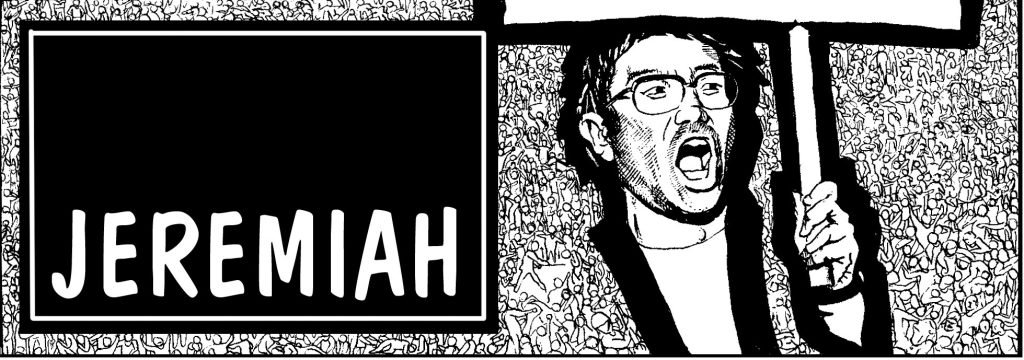
Those Who Make History

Kings and generals are in the foreground; priests and charlatans provide the people with the kind of truth they want to hear. Wars and famines have brought people to their knees: who is carrying forward the mission of Israel, the instrument of God in the world?

God looks for someone to whom he may give authority not over Israel, but over all the nations, and he entrusts him, not with the mission to speak, but to uproot and destroy, to build and to plant. In a word, God gives him the mission to speed up history. This man will be Jeremiah, a boy from Anathoth, who comes from a family of priests.

It was Jeremiah who has pronounced the discourses found in this book, but it is also he who lived the events as witness to God. He cooperated with God – the word should not frighten us – in his supreme decisions which gave direction to history.

If indeed history is the result of many known and unknown forces, it is God who draws everything together and guides events in such a way that one fails while another succeeds. God is at work in history through the works, words, writings and prayers of countless people. He also stirs up more profound forces that shake up lifeless hearts and strengthen the yearning for justice in the world. In the spheres of activity which God has reserved for himself, only those who totally surrender to him are able to cooperate with him.

God’s friends share in his sovereign rule over events: Abraham (Gen 18:16), Moses (Ex 32:14), the martyrs (Rev 20:4). Jeremiah, the quiet and peaceful lad from Anathoth became one of them because he was emptied of his own will to such an extent that God revealed to him his jealous love for Israel and his anger over sin. So he was able to utter condemnations of Israel which would become reality and to foretell the times of the New Covenant.

The Jews of later times believed that, after his death, Jeremiah was present before God interceding for them (2 Mac 2:1 and 14:14). When prophets after him spoke of a suffering Savior, they remembered Jeremiah’s trials.

Historical Background

Between Isaiah’s last prophecies (690 B.C.) and Jeremiah’s call from God (around 626) there is a span of sixty years, almost fifty of which correspond to Manasseh’s reign. This ruler persistently offended the faith of the Jews (2 K 21). Then in 640 a child, Josiah, came to the throne and the embers of faith were slowly rekindled.

This was the time when the discovery of the Book of the Law brought about a religious renewal, Josiah’s Reform (2 K 22). A few years before that, God had called Jeremiah.

Then, the events which followed and which Jeremiah witnessed, took a tragic turn. They are related in 2 Kings 23:25 and repeated in Jeremiah 39.

Outline of the Book of Jeremiah

It is difficult to say who drew up the book of Jeremiah and how. It seems that Baruch, the “secretary”, meaning the chancellor of the king, had an important part in it, and that Jeremiah himself dictated much of it to him. Various indications suggest that there has been a fusion of two texts which are partly overlapped.

The book has four parts:

– Prophecies against Judah and Jerusalem: chapters 1–25.
– Prophecies against the nations. Announced at the end of chapter 25, they form chapters 46–51.
– Promises of happiness: chapters 29–35.
– Jeremiah’s sufferings: chapters 36–45.

Down below are the introductions in the Mandarin Chinese, Tagalog, Cebuano, and Spanish editions.

Translation: Mandarin Chinese

创造历史的人

君王将相在政治舞台上奔忙,司祭们和演说者只讲人们喜欢听的道理,战争和饥荒使人丧失了尊严。在这种时刻,谁能来继续承担以色列在各民族中肩负的使命呢?天主在寻找一个人,一个能振奋以色列精神、影响全人类历史的人。天主委托他的不只是传道的使命,而是去根除,去摧毁,去建造,去栽培。天主给了他加快历史速度的使命,这人就是耶肋米亚,他出自司祭世家,生在阿纳托特。

人们在创造着历史,但是天主配合并引导事情发展的方向,因而有人跌落,有人兴起。天主借着无数人的工作、言论、写作和祈祷来参与历史。祂也会激起人文精神及道义的力量去震撼那些毫无生气的心灵,加强人们对人间正义的渴望。在天主的工程中,只有那些已全心奉献的人,才能知道怎样与天主合作。

天主的朋友分享祂神秘的工作:亚伯郎(创18:16),梅瑟(出32:14)以及众多殉道者(默20:4)。耶肋米亚,这位来自阿纳托特、安静和气的男孩,成为分享天主计划的人。因为他能空其心志,天主便能对他讲出自己对以色列的挚爱,对罪恶的痛恨。为此,耶肋米亚能向以色列讲预言,这些预言都将成真,预示了新约时代的到来。耶肋米亚死后,犹太人相信他去了天主面前说情(加下2:1;14:14)。后来的先知在提到受难的救世主时,总会记得耶肋米亚的苦难。

历史背景

从依撒意亚最后的预言(公元前690年)到耶肋米亚受召(公元前626年),时隔大约六十年。其中近五十年是在默纳协的统治下。这位君王曾一意孤行地迫害过犹大人的信仰(列下21)。到了公元前640年,一位叫约史雅的孩童即位,信仰的余烬才开始复燃。这时人们发现了法律书,这一发现为以色列带来了宗教改革,史称约史雅改革(列下22)。在这之前的几年,天主已召叫了耶肋米亚。

而后,耶肋米亚所看到的事情却有了悲剧性的转变。这些事迹在列下23;25有所叙述,在耶39又再重复。

很难说到底是谁写了耶肋米亚或这部书是怎么写成的。大多数人认为巴路克这位“秘书”对此书的写成有过重要贡献,其实他是国王的首相。

而耶肋米亚本人也亲自叙述了书中的不少内容。

耶肋米亚书大纲

耶肋米亚的言辞并没有依照所说时间的先后加以记录。本卷分为四部分:

一编:神谕集:1-25章。

二编:预言与纪事:26-35章。

三编:耶路撒冷毁灭前后:36-45章。

四编:反对各国的预言:46-51章。

Translation: Tagalog

Ang mga Nagpapagalaw sa Kasaysayan

Abala sa pulitika ang mga hari at mga heneral; ibinibigay ng mga pari at mga nagpapanggap sa bayan ang uri ng katotohanang gusto nilang marinig; inilulugmok ng mga digmaan at gutom ang mga tao. Sino ang nagdadalang pasulong sa misyon ng Israel na instrumento ng Diyos sa daigdig?

Naghahanap ang Diyos ng isang enkargado hindi para sa Israel kundi para sa mga bansa, at pagkakatiwalaan hindi ng misyong magsalita kundi bumunot at magwasak, magtayo at magtanim. Anupa’t ipinagkakatiwala sa kanya ng Diyos ang misyong pabilisin ang takbo ng kasaysayan. Ang taong ito ay si Jeremias, isang batang lalaking taga-Anatot, buhat sa isang angkan ng mga pari.

Si Jeremias ang bumigkas ng mga salitang nasa aklat na ito, ngunit siya rin ang nagsabuhay ng mga pangyayari bilang tagapagpatotoo sa Diyos. Nakipagtulungan siya sa Diyos – hindi natin dapat katakutan ang salitang ito – sa kanyang pinakadakilang mga pasiya na nagbibigay ng direksiyon sa kasaysayan.

Kung ang kasaysayan nga ay ginagawa ng mga manggagawa, militante, palaisip at lahat ng uri ng responsableng tao, ang Diyos naman ang naglalapit sa lahat ng puwersa at pumapatnubay sa mga pangyayari sa paraang may nabibigo at may nagtatagumpay. Gumagawa ang Diyos sa kasaysayan sa pamamagitan ng mga gawain, salita, sinulat at panalangin ng napakaraming tao. Ngunit pinupukaw rin niya ang mas malalalim na puwersang nagpapasigla sa mga mahinang puso at nagpapalakas sa paghahangad ng katarungan ng tao sa daigdig. Sa mga larangan ng gawaing inilaan ng Diyos para sa sarili, ang mga tao lamang na lubusang nagpapaubaya ng sarili sa kanya ang nakikipagtulungan sa kanya.

Ang mga kaibigan ng Diyos ay nakikibahagi sa kanyang ganap na pamamahala sa mga pangyayari: si Abraham (Gen 18:16), si Moises (Ex 32:14), ang mga martir (Pag 20:4). Napabilang sa kanila si Jeremias, ang tahimik at mabait na binatang taga-Anatot, sapagkat inalisan siya ng sarili niyang kalooban hanggang sa puntong maihayag sa kanya ng Diyos ang selosong pag-ibig nito sa Israel at ang pagkapoot sa kasalanan. Kaya nagawa niyang magsabi ng mga parusang magkakatotoo sa Israel at mahulaan ang panahon ng Bagong Tipan.

Naniwala ang mga Judio ng sumunod na panahon na pagkamatay ni Jeremias, naroon siya sa harap ng Diyos, at siyang namamagitan sa kanila (2 Mac 2:1 at 14:14). Nang ang mga propetang sumunod sa kanya ay magsalita tungkol sa nagdurusang Tagapagligtas, ginunita nila ang mga pagsubok na dinanas ni Jeremias.

Tungkol sa Kasaysayan

May animnapung taon ang pagitan ng mga huling propesiya ni Isaias (690 B.C.) at ng pagkatawag ng Diyos kay Jeremias (mga taong 626), na halos limampu ang saklaw ng paghahari ni Manases. Ginawa ng haring ito ang kanyang makakaya para wasakin ang pananampalataya ng mga Judio (tingnan ang 2 H 21). At noong 640, isang bata, si Yosias, ang lumuklok sa trono, at unti-unti muling nagningas ang namamatay na alab ng pananampalataya.

Iyon ang panahon na ang pagkadiskubre sa aklat ng Batas ay nagbigay-daan sa pagpapanibagong-sigla sa relihiyon, ang Reporma ni Yosias (2 H 22). Ngunit ilang taon pa bago iyon nang tawagin ng Diyos si Jeremias.

Naging malagim ang sumunod na mga pangyayari na nasaksihan ni Jeremias. Isinasalaysay ang mga ito sa 2 Hari 23:25 at inuulit sa Jeremias 39.

Balangkas ng Aklat ni Jeremias

Ang mga salita ni Jeremias ay hindi nakatala ayon sa pagkakasunud-sunod ng petsa ng pagpapahayag. May apat na bahagi ang aklat:

– Mga propesiya laban sa Juda at Jerusalem: kabanata 1-25.
– Mga propesiya laban sa mga bansa. Ipinapahayag sa wakas ng kabanata 25, ang mga iyon ang bumubuo sa mga kabanata 46-51.
– Mga pangako ng kaligayahan: kabanata 29-35.
– Mga pagdurusa ni Jeremias: kabanata 36-45.

Translation: Cebuano

Ang Nagpalihok sa Kasaysayan

Ang mga hari ug heneral linga kaayo sa panahon sa politika; ang mga pari ug tabian mihatag sa katawhan sa tipo sa kamatuoran nga ganahan nilang madungog. Ang gubat ug ang gutom nakapalup-og sa katawhan; kinsay nagdala pag-una sa misyon sa Israel, ang instrumento sa Diyos dinhi sa kalibotan?

Busa, ang Diyos nangita sa tawo nga Iya untang kahatagan og katungod dili labaw sa Israel, apan labaw sa tanang kanasoran, ug Iyang isalig niya, dili ang misyon pagsulti, apan pagluka ug pagpukan, pagpabarog ug pagtanom. Sa usa ka pulong, ang Diyos naghatag niya sa tahas pagpadagan og kusog sa kasaysayan. Siya si Jeremias, ang batang lalaki sa Anatot, sa kaliwat sa mga pari.

Ang mahinugdanon, dili kay si Jeremias naghimog mga diskurso nga mabasahan ining libroha kondili, kay mibulig siya sa Diyos sa mga balaanong hukom mahitungod sa pagdumala sa kasaysayan.

Kon tinuod man nga ang kasaysayan gihimo sa mga mamumuo, mga militanti, mga maalamon, ug uban pang tipo sa mga responsabling tawo; ang Ginoo nagtipon sa tanan ug migiya sa panghitabo, sa ingon nga ang usa mapakyas samtang ang lain molampos. Ang Diyos naglihok sa kasaysayan pinaagi sa mga buhat, pulong, sulat ug mga pag-ampo sa dili maihap nga katawhan. Apan nagpalihok siya sa lawom nga mga pwersa nga nakatay-og sa patayng kasingkasing ug nakalig-on sa pangandoy alang sa hustisya ining kalibotana. Sa naglibot nga kalihokan diin ang Diyos naggahin sa Iyang kaugalingon, ang mga tawo lang nga dunay pagtoo ang mibulig Niya, labi na gyod ang pipila nga hingpit nga mitugyan kaniya sa kaugalingon.

Ang mga higala sa Diyos miambit sa Iyang pagmando sa panghitabo; si Abraham (Gen 18-16), si Moises (Ex 32:14), ang mga martir (Reb 20:4). Si Jeremias, ang hilomon ug malinawon nga batang lalaki sa Anatot usa nila kay nahaw-asan siya sa kaugalingon niyang kabubut-on sa paagi nga ang Diyos makapahayag sa Iyang igihan nga gugma alang sa Israel, ug sa iyang kapungot sa kasal-anan nakatunglo siya sa Israel nga natinuod, ug nakatagna sa panahon sa Bag-ong Kasabotan.

Ang mga Judio sa ulahing panahon nagtoo nga human sa iyang kamatayon, si Jeremias diha sa atubangan sa Diyos nga nangama alang nila (Mc 2:1 ug 14:14). Diha nga ang mga propeta human siya naghisgot sa kasakitan sa Manluluwas, ilang nahinumdoman ang mga pagsulay ni Jeremias.

Ang Nagpaluyo sa Kasaysayan

Taliwala sa kataposang panagna ni propeta Isaias (690, B.C.) ug ang pagtawag sa Diyos kang Jeremias (626) dunay gidugayon nga 60 ka tuig, mga 50 ini mitukma sa paghari ni Manases ug Amon. Gihimo nila kutob sa mahimo aron pagpukan sa pagtoo sa mga Judio (2 K 21). Unya, sa 640, usa ka bata, si Oseas, miabot sa trono ug sa hinayhinay ang kainit sa pagtoo nahaling pag-usab.

Mao kini ang panahon kanus-a nakaplagan ang libro sa balaod nga nagdala sa relihiyosong reporma ni Yosias (2 K 22). Apan pipila ka tuig sa wala pa ni mahitabo ang Diyos mitawag ni Jeremias.

Unya, nahitabo ang makalilisang nga mga butang nga nasaksihan ni Jeremias. Gisaysay kini sa 2 H 23:25 ug gisubli sa Jeremias 39.

Ang Latid sa Libro ni Jeremias

Ang mga pulong ni Jeremias wala masulat sa panahon kanus-a gipanulti ni. Ang libro dunay upat ka bahin:

– Ang mga panagna batok sa Juda ug Jerusalem: kapitulo 1-25
– Ang mga panagna batok sa kanasoran nga gipahibalo sa kataposan sa kapitulo 25, ug naglangkob sa mga kapitulo 46-51.
– Ang mga panaad sa kalipay: kapitulo 29-35.
– Ang kasakitan ni Jeremias: kapitulo 36-45.

Translation: Spanish

Es difícil hablar de Jeremías sin oponerle a Isaías. Quizás sea un error centrar todo en la diferencia de reacciones de ambos ante la llamada de Dios, o sea, el entusiasmo de Isaías (Is 6, 8) frente al temor de Jeremías (Jer 1, 6). Puede que se trate solamente de una diferencia de temperamentos. Su respectiva vocación y misión deberían ser complementarias, tanto en lo que se refiere a sus vidas y a sus escritos como en la influencia que posteriormente ejercieron ambos en el seno del pueblo creyente.

Isaías es la profecía, mientras que Jeremías es el profeta. Ambas caras del profetismo son complementarias e igualmente necesarias para reorientar la historia. Isaías representa el mensaje al que se habrá de recurrir siempre para reafirmar la fe. Jeremías es el ejemplo siempre presente del sufrimiento de un ser humano en cuya vida ha irrumpido Dios.

No cabe, pues, una visión sentimental de un joven Jeremías, pacífico y sin defensa que sufre en silencio la maldad de sus perseguidores. Hay en el profeta atisbos de violencia (11, 20-23). A pesar de que ha pasado a la historia por el hecho mismo de sus sufrimientos, no siempre ha sido víctima de las calamidades que anunció.

En su primer anuncio dice que Dios le ha dado autoridad para arrancar y derribar, edificar y plantar, precisando que la misión que se le había encomendado abarcaba no solamente a su pequeño país, sino a “las naciones”. Podría extrañarnos la magnitud de una tal tarea asignada a un hombre sin títulos; sin embargo, es aquí donde aparece el dedo de Dios. Con la ruina del reino de Judá, seguida del Exilio, hasta llegar a los tiempos del Evangelio, Dios irá revelando su manera de salvar al mundo, su fuerza que se manifiesta en la debilidad, y la victoria del Amor. Todo esto supone siempre un sufrimiento aceptado.

No sin razón los judíos creyeron, en tiempos posteriores, que Jeremías, después de muerto, estaba delante de Dios intercediendo por ellos (2Mac 2, 1; 14,14). Pero dicha intercesión no era lo más importante y será el “segundo Isaías” el que lo adivinara: encontraremos un poco de Jeremías en los poemas del Siervo de Yavé (49,1; 50,4; 52,13).

La predicación de Jeremías

Las primeras profecías de Jeremías tienen sus raíces en el descubrimiento del Deuterónomio (2Re 23; Jer 11). El Deuterónomio enfatiza la alianza concluida entre Dios e Israel, una alianza que ha hecho de Israel un pueblo aparte, dotado de una sabiduría propia. Yavé es un Dios personal que quiere ser servido y amado.

Jeremías entra en escena en el momento en que Israel se refugia en la protección infalible que le aseguran su Dios y su templo. Jeremías es perseguido porque niega que Dios se identifique con un templo de piedra (Jer 7 y 26), lo mismo que ocurrirá con Jesús y sus apóstoles (Mc 14, 58; He 6,13). Jeremías no quiere otro Dios que aquel que se descubre en la verdad. Su predicación (y la del Deuterónomio) no es ya la misma que la de Josué y los Jueces, es decir, “ustedes poseerán la tierra si obedecen y la perderán si desobedecen”, o: “todo va mal porque no cumplen la Ley”... Jeremías pide que el hombre se convierta a la sabiduría (Jer 9,22; 10) y habla de un retorno a la fidelidad que significa, ante todo, un cambio de corazón (Jer 17, 5).

El anuncio de la Nueva Alianza, que es la cumbre del mensaje de Jeremías (Jer 31,31), es la consecuencia natural de los capítulos que sólo hablan de muerte y de ruina. Era necesario que desaparecieran todos los vestigios de una vida donde Dios está ausente, para que el pueblo, o mejor, los corazones, se abran a una otra dimensión de la existencia humana. Después de la ruina del reino de Israel, el pueblo de Dios entrará en una nueva era.

Las promesas de felicidad, que forman parte de la profecía de Jeremías (Jer 29; 31), no se pueden comprender sin esta transformación interior. Jeremías no se deja llevar por la imaginación de Ezequiel para reconstruir una Palestina ideal con un templo purificado. La lógica consecuencia de las promesas hechas a Jeremías no son los esfuerzos de Esdras para publicar la Ley y organizar el Judaísmo, sino simplemente el Evangelio.

Datos históricos

En el año 626 Jeremías, proveniente de una familia de sacerdotes de Anatot, a las puertas de Jerusalén, recibe su llamada. Unos años después, el descubrimiento de la Ley ocasiona una renovación religiosa (2Re 22,1). Durante los casi cuarenta años que va a durar el ministerio de Jeremías (la fecha de la muerte del profeta habrá que situarla hacia el 586), los cambios se suceden a un ritmo impresionante, tanto la reforma religiosa de Josías como el renacimiento nacional que la acompaña (622-609). Después, sobrevienen tres guerras: contra Egipto en el 609, contra Babilonia en el 597 y 587, seguidas de tres deportaciones (597, 587 y 582).

EL LIBRO DE JEREMÍAS

El año 604, Jeremías dicta a Baruc, que es a la vez “secretario” del rey y secretario de Jeremías, una parte de su predicación. Con mucha probabilidad estas profecías se encuentran en los capítulos 1-20. Otro documento debe haber sido el que narraba los sufrimientos de Jeremías: cap. 26-44. Otro habrá reunido sus profecías contra las naciones (caps. 46-51). Se les juntaron otras colecciones referentes a los reyes (21-23), o a los profetas (23,9-40), o a la nueva alianza (30-33).

Libro de Jeremías: 1,1—20,18 (la conclusión está en: 25,1-38)

Profecías contra los reyes y los profetas: 21,1—24,10

El libro de la nueva alianza: 26,1—33,26

Continua rebelión de Israel: 34,1—36,18

Los sufrimientos de Jeremías: 36,1—45,5

Oráculos contra las naciones: 46,1—51,64

Conclusión: fin del reino de Judá (52,1–34)

Introduction to Titus (Christian Community Bible)

(The Catholic Christian Community Bible [first English edition 1997, other translations into Indonesian, Chinese, Cebuano, Chavacano, French, Ilonggo, Korean, Quechuan, Spanish, and Tagalog] “for the Christian Communities of the Third World” uses the following introduction.)

Like Timothy, Titus is one of Paul’s assistants officially consecrated to the service of the Gospel, who visited the churches with the very authority of Paul.

The commentary will be brief since this letter is very similar to the two letters to Timothy.

Down below are the introductions in the Mandarin Chinese, Tagalog, Cebuano, and Spanish editions.

Translation: Mandarin Chinese

弟铎和弟茂德一样,也是保禄的助手,献身于福音工作,并借着保禄的权威拜访各教会。

因为这封信和给弟茂德的那两封信非常相似,所以注释很简短。

Translation: Tagalog

Si Tito, tulad ni Timoteo, ay isa sa katulong ni Pablo, opisyal na itinalaga sa paglilingkod sa Ebanghelyo at dumalaw sa mga simbahan, na ang taglay na kapangyarihan ay tulad ng kay Pablo.

Translation: Cebuano

Sama ni Timoteo, kaabag ni Pablo si Tito nga gitudlo sa Simbahan aron pag-alagad sa Ebanghelyo. Nagduaw siya sa mga simbahan dala ang awtoridad ni Pablo.

Mubo lang ang mga komentaryo ining sulata kay susama ra ni sa duha ka sulat alang ni Timoteo.

Translation: Spanish

Es el comienzo del año 58 y han transcurrido pocos meses desde el envío de la Carta a los Romanos. Pablo piensa que ya no hay más trabajo para él en la parte oriental del imperio romano y se prepara para ir a Roma y evangelizar desde allí la parte occidental del imperio, especialmente España. Pero Dios ha previsto las cosas de otra manera: dentro de poco Pablo será detenido en Jerusalén y, después de varios años de cautiverio en Cesarea, será llevado a Roma para ser allí juzgado en el tribunal del emperador.

Pablo se ha despedido de las comunidades de Grecia y de “Asia”, la provincia del imperio que corresponde a Turquía occidental (He 20,25). Tal vez fue antes de su entrevista con los presbíteros (ancianos) de la región de Éfeso, que tuvo lugar en Mileto (He 20,1), cuando Pablo redactó esta carta, que presta una atención especial a esos pastores de las comunidades cristianas. Los otros puntos importantes de la carta se refieren a las obligaciones de los cristianos según su situación en la sociedad, al respeto por sus obligaciones sociales y a la sumisión a las autoridades. Pablo retoma o desarrolla aquí lo que había expuesto en la segunda parte de la carta a los Romanos. Esa misma carta le inspira algunas pinceladas sobre el plan de Dios que encontramos en 1,3-4; 2,11-34; 3,4-7

Pablo está ya pensando en su viaje a Roma. Una de las paradas será Nicópolis, en la costa occidental de Grecia, un sector que había evangelizado Pablo (Rom 15,19), y donde se encontrará con Tito, que está en Creta.

Introduction to Joshua (Christian Community Bible)

(The Catholic Christian Community Bible [first English edition 1997, other translations into Indonesian, Chinese, Cebuano, Chavacano, French, Ilonggo, Korean, Quechuan, Spanish, and Tagalog] “for the Christian Communities of the Third World” uses the following introduction.)

An Immigrant People

Moses’ mission finished at Mt. Nebo. As we see in the Book of Deuteronomy, Moses had been called by God to ‘bring up the people’, from the slavery of Egypt to the gates of the Promised land. The people are there facing this territory and it is now Joshua, the first Jesus — Joshua and Jesus are one and the same word in Hebrew — who is to lead the people into the land of promise.

Can we even speak of a people? Actually there are no more than a few clans guided by Moses across the desert, increased doubtless by new elements they have met at the holy place Qadesh-Barné. However few in number, these nomads carry such a religious experience that it will become, after meeting other tribes that did not leave Palestine, the spiritual heritage of them all.

Facing the Canaanites who inhabit the towns and cultivate the surrounding land, those nomads gradually become aware of their identity. He who revealed himself on Mt. Sinai and multiplied marvels in favor of these escapees from Egypt, Yahweh – God, has made a covenant with this nomadic people; he has entrusted to them at the same time his promises. From now on they are the people he has chosen; and he is their God. It is during this period of Joshua and the Judges that the people of Israel will be truly formed.

Although laden as they are with favors from Yahweh, these nomads cannot but admire the Canaanites among whom they live. This period of the second millennium before Jesus Christ has doubtless been the most prestigious period of Palestine history from a cultural point of view. Compared to the Canaanite towns with their ramparts, their temples and palaces with cedar panelling and inlaid ivory the nomads cut a poor figure. The contrast was the same on the religious level; the Canaanites in the towns multiplied celebrations, feasts and rituals under the eyes of tribes who hadn’t even a temple.

The books of Joshua and Judges as well as Samuel and Kings show us how easily the Israelites let themselves be influenced. Attracted by this brilliant civilization, they abandoned their customs and faith to adopt the cults of the country.

The Reality of a Conquest

A people seduced by Canaanite culture, leaders who resist and proclaim a call to fidelity — such is the permanent conflict presented by the Bible texts of this period. The Book of Joshua seems to present a systematic conquest of the country led by Joshua at the head of the clans; but actually it must have happened quite differently.

Town dwellers and nomads were certainly very different and the obligation of both to cohabit on common land did not prevent conflicts: at one time the Canaanites were stronger, at another the nomads. But gradually the tribes imposed their law on the former inhabitants of the land, and at the time of Saul, the one-time nomads, now citizens of the country had the power to rule. David and later Solomon were to confirm such a situation.

Active minorities are the ones that make history: when we speak of the Church and its impact on the world it is often a matter of a minority of the faithful. The prophets who, several centuries after Joshua, assemble the traditions and documents on the “conquest,” made no pretense of giving us an exact account and complete history. Let us not be deceived by the triumphal tone of these accounts where Joshua and all Israel won fantastic victories. The Book of Joshua narrates small events that make up great history.

Down below are the introductions in the Mandarin Chinese, Tagalog, Cebuano, and Spanish editions.

Translation: Mandarin Chinese

若苏厄:引言

梅瑟的使命在乃波山壮丽地结束了。如同我们在《申命纪》中看到的:梅瑟受天主的召唤引领民众逃离奴役之地埃及,辗转来到许诺之地的大门前。人民面对著这片沃土以及自己的新领袖:若苏厄、第一个耶稣――在希伯来文中若苏厄和耶稣是同一个名字,正是他带领以色列民众踏上了许诺之地。

游牧的民族

我们在这里谈的其实还够不上一个民族。事实上,跟随梅瑟穿越沙漠的只是几个家族而已,后来在圣地卡德士巴尔乃亚他们遇到了新的族群,人数才有所增加。然而这些族群却是特殊的,人员虽少,但他们的宗教经验将会与没有离开巴勒斯坦的以色列人共同分享,成为他们共同的精神遗产。

面对著生活在城镇中、在周围土地上耕作的迦南人,以色列人开始慢慢觉察到自己的生活方式的不同。雅威天主曾在西乃山默示自己的旨意,祂多次行奇迹帮助以色列民众逃离了埃及;祂又与这个游牧民族立下了盟约,把这片土地许诺给自己的子民。从此他们是祂的选民,祂是这民众的唯一天主。正是在若苏厄和民长的时代,以色列民众开始作为天主的子民而生活。

虽然这个游牧民族沐浴著雅威的恩泽和甘露,他们却无法不羡慕周围的迦南人。就文化的深度而言,大约公元前两千至一千年的这段时间,无疑是巴勒斯坦历史上最辉煌的时期。迦南人的城镇中已经有了城堡、圣殿和以杉树镶边、以象牙嵌饰的王宫,比较起来,游牧民族就显得寒酸多了。这样的对比同样也表现在宗教生活中:城镇中的迦南人在那些连圣殿都没有的以色列民族面前,大肆举行庆典和各种宗教仪式。

《若苏厄》、《民长纪》、《撒慕尔》和《列王纪》向我们描绘了迦南文化是多么优越,又是多么容易对客居那里的以色列产生巨大影响。以色列各部落被迦南的灿烂文化吸引,抛弃了自己的习俗和信仰,接受了他们的礼拜仪式;先知们不断地提醒人们要记住盟约,要忠诚于雅威。

征服的真相

这个时期经文所描绘的持久冲突,正是发生在受迦南文化诱惑的以色列

民众和他们的倡导忠实不苟的领袖之间的冲突。此书叙述了以色列的新领袖若苏厄如何引领子民有系统有步骤地征服圣地,然而史实却与此大有出入。

城镇居民和游牧民族的生活方式迥然不同。两者必须生活在同一块土地上,冲突就无可避免。时而迦南人占优势,时而以色列人占上风。随著时间的推移,渐渐地,以色列部落用自己的律法侵入到迦南文化中。到了撒乌耳时代,曾为游牧民族的以色列人成了这片土地的新主人,达味和所罗门更巩固了这种局势。

创造历史的是那些活跃的少数人:当我们谈到教会和教会对世界的影响时,大多是指少数真正有信德的信徒们。若苏厄后几百年的先知们,在收集编写有关“征服”的故事时,已显示出他们所记载的并不是确切完整的历史。我们尽可以受此书的征服气概和胜利的喜悦感染,却不要为之所影响,以为若苏厄和整个以色列都赢得了胜利。若苏厄书叙述的只是组成浩荡历史之河的小事件。

Translation: Tagalog

Pangalawang Batas ang ibig sabihin ng Deuteronomio. Ganito ang itinawag dito dahil sa pagkakalagay nito sa ating Biblia pagkatapos ng kabuuan ng mga batas na nasa mga aklat ng Levitico at Mga Bilang. Subalit unang isinulat ang Deuteronomio kaysa mga ito. Para pag isahin ang mga utos at mga kaugalian ang unang layunin nito at para ibigay sa Israel ang Batas na katatagpuan nito ng buhay.

At nang inedit ang Deuteronomio, sa ika-7 dantaon bago dumating si Kristo, higit sa limandaang taon na ang lumipas mula nang makipagtagpo si Moises sa Diyos. Nasakop na ang lupain ng Kanaan, naitatag na ang Kaharian nina David at Solomon at pagkatapos ay nahati.

Bumagsak na ang mas malaki at mas masaganang probinsya sa hilaga na tinatawag na Kaharian ng Israel. At gayon ding kapalaran ang nagbabanta nang mga taong iyon sa Kaharian ng Juda na probinsya sa timog.

Noon ipinagbigay-alam ang Batas na ito ni Yawe. Inilantad nito sa kanyang bayan ang dahilan ng kanilang mga pagkatalo at iniaalok ang isang pagkakataon para maligtas. Matagal na itong nalimutan sa Templo sa panahon ng pag-uusig ni Manases. Ngunit ang pagkatuklas dito sa taong 622 (2 H 22) ang siyang pinakaugat ng reporma ni Yosias.

Si Moises at ang Deuteronomio Tinanggap ng bayan ng Israel at ng kanilang mga pastol ang Deuteronomio bilang salita ng Diyos at aral ni Moises, pero ang mga pari at ang mga propeta naman ang sumulat nito. Binuod nila sa mga pahinang ito ang kanilang karanasan sa kabuuan ng kanilang kasaysayan.

Tulad sa iba pang mga libro sa Natapos sa Bundok Nebo ang misyon ni Moises. Tulad ng nakita natin sa Aklat ng Deuteronomio, tinawag ng Diyos si Moises para "hanguin ang bayan" mula sa pang aalipin ng Ehipto patungo sa pintuan ng Lupang Pangako. Naroon na ang bayan sa harapan ng lupaing ito at si Josue na ngayon, ang unang Jesus - pareho ang Josue at Jesus sa Hebreo -- ang siyang mamumuno sa bayan pagpasok sa lupa ng mga pangako.

Bayang Dayo Masasabi ba nating isang bayan sila? Sa katunayan, hindi sila hihigit pa sa ilang angkan na pinamumunuan ni Moises patawid sa disyerto, na tiyak na nadagdagan ng mga bagong grupo na nakatagpo nila sa Kades Barnea na isang banal na lugar. Bagamat kakaunti, dala naman ng mga lagalag na ito ang gayong kahalagang karanasang reli hiyoso na magiging pamanang espiritwal nilang lahat, pati na ng mga tribung hindi umalis sa Palestina na makakatagpo nila. Sa harap ng mga Kananeong nakatira sa mga bayan at nagsasaka sa nakapaligid na lupain, unti-unting nakita ng mga lagalag na ito kung ano sila. Sila ang mga takas sa Ehipto na (PAGE 321) ginawan ng Yawe-Diyos ng mga kahanga-hangang bagay. Sila ang bayang lagalag na pinagbunyagan niya ng kanyang sarili sa Bundok Sinai. Sa kanila siya gumawa ng tipan kasabay ng kanyang mga pangako. Mula sa panahong iyon, sila ang kanyang bayang hinirang; at siya ang kanilang Diyos. Sa panahong ito ni Josue at ng Mga Hukom talagang mabubuo ang bayang Israel.

Bagamat sagana sila sa mga biyaya ni Yawe, hindi maaaring hindi hangaan ng mga lagalag na ito ang mga Kananeong pinakikipamayanan nila. Hindi mapag-aalinlanganan na ang panahong ito ng ikalawang sanlibong taon bago dumating si Jesukristo, ang pinakatanyag na bahagi ng kasaysayan ng Palestina kung kultura ang pag-uusapan. Mukhang kawawa ang mga lagalag kung ihahambing sa mga Kananeong may mga bayan na may muog, mga templo at palasyo na may mga dingding na mamahaling kahoy at nadedekorasyonan ng garing. Gayundin ang kaibhan kung relihiyon ang pag-uusapan: maraming pagdiriwang, kapistahan at seremonya ang mga Kananeo sa mga bayan, na nakikita ng mga tribu na wala ni isang templo man lang.
Ipinakikita sa atin ng mga aklat ni Josue at ng Mga Hukom, pati na ni Samuel at ng Mga Hari, kung paano pinabayaan ng mga Israelita na maimpluwensyahan sila nang gayon na lamang. Naakit sila ng maringal na sibilisasyong ito kaya tinalikdan nila ang kanilang mga kaugalian at pananampalataya at ginaya ang mga seremonya ng pagsamba ng lupain. Biblia, inilagay sa bibig ni Moises ng mga sumulat ng Deuteronomio ang mga diskursong gusto nila mismong sabihin sa kanilang bayan. Gawa-gawa lamang ang pagsasalaysay nila na bago mamatay ay nakinikinita na ni Moises ang masaklap na kapalarang naghihintay sa kanyang bayan. Sinasabi nilang sa kanya galing ang mga babala at mga batas na pupuwede pang magligtas sa Israel. Sa totoo'y ginagamit ng Deuteronomio ang pangangaral ng mga propeta tungkol sa katarungan at pag-ibig: ito ang kauna-unahang pagsisikap na ginawa sa daigdig para bumuo ng isang lipunang may pagkakaisa't pagka kapatiran.

Translation: Cebuano

Gidala ni Moises ang mga Israelita sa kapatagan sa Moab latas sa suba Jordan, apan kinahanglan pa silang mosulod sa Yuta sa Saad sa ilang katigulangan.

Bisan sa lig-ong pagpangulo ni Moises, dili organisadong nasod ang Israel. Nagpabilin ni nga mga pundok pundok sa lainlaing tribu, kabanayan ug lungsod nga nahiusa gumikan sa kumong paninguha. Ang maayong pagbasa sa Biblia morag magpakita nga daghan ang mga Israelita nga wala mouban ni Moises sa kamingawan sa Cades. Gani, nag-una sila ni Josue sa Palestina subay sa habagatang bahin; miokupar na ang uban sa kabungtoran sa Moab (Num 32).

Misulod ug mipuyo didto nga malinawon ang mitabok sa Jordan sa panahon ni Josue. Dala ang mga tolda ug karnero, nanimuyo sila sa kabungtoran libot sa kinotahang mga syudad nga Kananeo. Wala sila mopuyo sa kapatagan, kay didto na man ang mga Kananeo nga mas lig-ong nagkahugpong. Hinuon, dunay pagbinayloay tali nila ug sa mga mag-uumang Kananeo. Ug kay mas milambo man ang Kananeong kultura, may daghan sa mga Israelita nga nasuyop ug misagop sa ilang tradisyon ingon man sa pagsimba sa mga diosdios sa mga Kananeo nga nakapamiligro nga mahanaw sila isip katawhan.

Miluwas sa Israel ang mga kursonado nga uban ni Josue nakahukom sa pagbuntog sa Canaan. Dili ta uyon sa paggamit nilag kusog ug kabangis. Apan nagsunod lang sila sa laraw sa Diyos, ginamit ang pamaaging naandan adtong panahona. Ang kasyudaran ug ang mga harihari sa Canaan (nga mga dakudako lang sa gagmayng lugar) wala magkahiusa busa, wala maglisod ang mga manggugubat ni Josue sa pagbuntog nila. Tungod ini, naisa ang nasodnong kaamgohan sa Israel. Gisugdan nila ang inanayng pag-angkon sa Yuta sa Saad. Tahas ni nga malipayog katumanan human sa 200 ka tuig ubos sa pagpangulo ni David.

Ang kasagarang nahitabo maoy nga nakamugna ang malimbasugong minoriya og kasaysayan. Kon maghisgot ta sa Simbahan ug sa tahas ini sa kalibotan, makahisgot ta labi na ining gagmayng pundok sa mga magtotoo. Kadaghanan nagapos ni sa naandang gawi ug wala makaamgo sa ilang misyon. Sa samang paagi, makahisgot tag kalihokan sa kalingkawasan, apan dyotay ra ang naglihok ug nagpuyo ining panglantawa ug paglaoma. Bisan pa ini, kining gagmay ug militanting pundok mao hinuoy makaduso sa masa sa katawhan sa unahan. Mao ni ang nahitabo sa Israel. Human sa 500 ka tuig gikan ni Josue, gihipos sa mga propeta ang kasulatan mahitungod sa ilang kadaogan, ug namugna kining basahona. Wala sila mag-asoy sa kompleto ug tukmang mga hitabo sa kasaysayan. Nagpahinumdom lang sa nakatabang sa pag-umol sa Israel isip nasod. Busa, dili ta magpadala sa giingon dinhi nga “ang tanang Israelita” nakig-away uban ni Josue o nga gibuntog ni Josue ang Palestina sa pagpatay sa tanang lumolupyo. Ang Josue nagsaysay og gagmayng mga butang nga nakamugna og dakong kasaysayan nga nasinati sa katawhan sa Israel.

Translation: Spanish

EL SIGLO DE JOSUÉ

La misión de Moisés se había acabado en el monte Nebo. Como lo vimos en el Deuteronomio, Moisés había sido llamado por Dios para guiar al pueblo y hacer que “subiera” desde la esclavitud de Egipto hasta las puertas de la Tierra Prometida. El pueblo está pues allí, frente a esa tierra que Dios le da en herencia y en ese momento es Josué, el primer Jesús (pues Josué y Jesús en hebreo tienen la misma grafía) quien va a introducir al pueblo en el la tierra prometida.

Un pueblo de emigrantes

Hablar de pueblo es mucho decir. En efecto, todavía no se trata más que de algunos clanes guiados por Moisés a través del desierto y que sin duda se han incrementado con nuevos elementos con los cuales se encontraron en el lugar santo de Cadés-Barne. Por pocos que hayan sido estos nómadas confiados ahora a Josué, llevan consigo una experiencia de una riqueza tal que se transformará, después de reunirse con otras tribus que no habían abandonado la Palestina, en la herencia espiritual de todos.

Frente a los cananeos que habitaban las ciudades y cultivaban las tierras de los alrededores, estos nómadas toman poco a poco conciencia de su originalidad y de su identidad. El que se reveló a Moisés en el Sinaí y que multiplicó las maravillas a favor de los fugitivos de Egipto, Yavé-Dios, hizo una alianza con este pueblo de nómadas, con estas tribus de beduinos. Les dio su ley al mismo tiempo que su promesa. En adelante serán el pueblo que él se eligió y él será su Dios. Es durante este período de Josué y de los Jueces cuando se constituirá realmente el pueblo de Israel.

Sin embargo, por muy colmados que se sientan por Yavé, estos nómadas no pueden dejar de sentir admiración por los cananeos en medio de los cuales viven. Los historiadores nos dicen que este período del segundo milenio antes de Cristo es el período más prestigioso de la historia de Palestina en el plano cultural. Frente a las ciudades cananeas con sus fortificaciones, sus templos y sus palacios con artesonado de cedro, y decorados con incrustaciones de marfil, el nivel de vida de los nómadas parecía muy pobre. El mismo contraste se daba en el plano religioso: los cananeos de las ciudades multiplicaban sus celebraciones, fiestas y ritos a la vista de los beduinos que no tenían ni siquiera templo.

La tentación es grande, y tanto los libros de Josué y de los Jueces como los de Samuel y de los Reyes no cesarán de mostrarnos con cuánta facilidad el pueblo de Israel se dejaba arrastrar. Atraído por esa civilización brillante, abandona al mismo tiempo sus costumbres propias y su fe para adoptar los cultos de los habitantes del país. Durante todo el período de la realeza los profetas no dejarán de recordar al pueblo las exigencias de la alianza y de la fidelidad a Yavé.

La verdad sobre la conquista

Un pueblo seducido por la cultura cananea, hombres de Dios que resisten proclamándole el llamado a la fidelidad, tal es el conflicto permanente que nos presentan los textos de la Biblia con respecto a este período. El libro de Josué parece que nos presentara una conquista sistemática del país llevada a cabo por Josué a la cabeza de las tribus; sin embargo las cosas debieron suceder de manera muy distinta.

La gente de las ciudades y los nómadas eran muy diferentes, y la obligación que tenían unos y otros de cohabitar en un mismo territorio, no impidió que hubiera conflictos, unas veces eran los cananeos los que ganaban, otra, los nómadas. Con el tiempo, las tribus fueron imponiendo su ley a los antiguos habitantes del país, y en la época de Saúl, los nómadas de otrora, convertido en citadinos a medida que pasaban los años, se habían apoderado del poder en el país. David primero, y después Salomón deberían confirmar esta situación.

Las minorías activas son las que hacen la historia. Cuando hablamos de la Iglesia y de su impacto en el mundo, no se trata a veces más que de una minoría de creyentes. Los grupos de profetas que, varios siglos después de Josué, recopilaron las tradiciones y los documentos sobre la conquista, no pretendieron entregarnos una historia exacta y completa de aquélla. No nos dejemos engañar por el aspecto triunfador de estos relatos en que todo Israel obtiene junto a Josué victorias asombrosas: el libro de Josué narra pequeñas cosas que constituyeron una gran historia.

EL LIBRO DE JOSUÉ Y SUS AUTORES

Cuando se redactó el presente libro, la historia de Josué se perdía en un pasado del que ya se habían olvidado muchos detalles, sin embargo, bastaban algunas imágenes y recuerdos para ilustrar la vocación del pueblo de Dios y el sentido de sus aventuras.

Josué inaugura la serie de libros que la Biblia hebraica llama Profetas Anteriores, entendiendo por este título que estos libros históricos nos hablan de una historia que comenzó bastante antes que los profetas, pero que fueron pensados y compuestos en las cofradías de profetas. Toda la serie que lleva desde Josué a los libros de los Reyes forma en realidad una unidad con la reflexión del Deuteronomio. Hoy día se habla habitualmente de historia Deuteronomista para designar este conjunto.

El libro de Josué se compuso en gran parte en los últimos tiempos del reino de Judá. Entonces la idea de que la tierra de Palestina es el gran don de Dios a su pueblo y la señal de su alianza, invitaba a constatar en el pasado una correspondencia entre las conquistas y la fidelidad a la alianza, entre las infidelidades y el fracaso.

El autor ha conocido el tiempo de Josué a través de múltiples fuentes: tradiciones orales muy maltratadas, sin duda, a causa de los 500 años transcurridos; documentos conservados tal vez en los santuarios antiguos de Israel, como el de Guilgal, y documentos sobre el catastro de las tribus que databan de la época real.

El libro debe de haber sido retocado en tiempos del exilio de Babilonia. Fue entonces cuando intervinieron los sacerdotes y en muchos de sus pasajes impusieron otra interpretación, acentuando al mismo tiempo el carácter litúrgico de los acontecimientos importantes.

Introduction to Nahum (Christian Community Bible)

(The Catholic Christian Community Bible [first English edition 1997, other translations into Indonesian, Chinese, Cebuano, Chavacano, French, Ilonggo, Korean, Quechuan, Spanish, and Tagalog] “for the Christian Communities of the Third World” uses the following introduction.)

Nahum prophesied when the Assyrian power was collapsing, at the death of Ashurbanipal, the last king in 626. In 612 the Medes and Babylonian allies attacked and destroyed Nineveh, the capital of the Assyrians. Even before that, however, the Assyrians were losing their control over the people whom they had enslaved and who thoroughly hated them. The Jews were among them. Nahum’s poems show the heart of a patriot who believes that the Lord governs the history of the nations.

Down below are the introductions in the Mandarin Chinese, Tagalog, Cebuano, and Spanish editions.

Translation: Mandarin Chinese

纳鸿在亚述面临灭亡,也就是在末代君王亚述巴尼帕耳(公元前626年)过世时作出预言。公元前612年玛待和巴比伦联军攻打并摧毁了亚述人的首都尼尼微。但是早在被毁灭之前,亚述人已经不再能控制他们所奴役的人民,这些人也都恨透了亚述人,其中也有犹太人。纳鸿的诗歌表现出一位爱国主义者的内心,他相信天主统治着子民的历史。

Translation: Tagalog

Nagpropesiya si Nahum habang pabagsak na ang kapangyarihang Asirio, sa pagkamatay ni Asurbanipal na pinakahuling hari nila sa taong 626. Sa taong 612 naman, nilusob ng mag-kakamping mga Babilonio at mga Medo ang Ninive na kapitolyo ng mga Asirio, at winasak iyon. Pero bago pa man ito nangyari, unti-unti nang nawawala ang paghahari ng mga Asirio sa mga bayang kanilang inalipin at may matinding galit sa kanila. Kasama sa mga bayang ito ang mga Judio. Masasalamin sa mga tula ni Nahum ang puso ng isang makabayan na naniniwalang ang Panginoon ang namamahala sa kasaysayan ng mga bayan.

Translation: Cebuano

Si Nahum nanagna diha nga ang gahom sa Asiria nagkahugno, sa kamatayon ni Ashurbanipal, ang kataposang hari sa tuig 626. Sa tuig 612, ang alyansa sa taga Media ug taga Babilonia misulong ug miguba sa Ninive, ang kapital sa Asiria. Hinuon, bisan sa wala pa ni moabot, ang mga Asirio nawad-an na sa gahom pagkontrolar sa mga tawo nga ilang giulipon, ug nasilag nila pag-ayo. Ang mga Judio usa nila. Ang mga balak ni Nahum nagpakita sa kasingkasing sa bayani nga nagtoo nga ang Diyos ang nagmando sa kasaysayan sa katawhan.

Translation: Spanish

Nahúm profetizó cuando el poderío asirio se venía abajo, a la muerte de Asurbanipal, su último rey, el año 626. En el año 612 los aliados medos y babilonios atacaron y destruyeron a Nínive, capital de los asirios. Pero ya antes de esa fecha los asirios habían ido perdiendo su dominio sobre los pueblos que esclavizaban y que les tenían odio profundo. Entre esos pueblos estaban los judíos. Los poemas de Nahúm reflejan el corazón de un patriota que cree que el Señor gobierna la historia de los pueblos.

Introduction to Judith (Christian Community Bible)

(The Catholic Christian Community Bible [first English edition 1997, other translations into Indonesian, Chinese, Cebuano, Chavacano, French, Ilonggo, Korean, Quechuan, Spanish, and Tagalog] “for the Christian Communities of the Third World” uses the following introduction.)

The Book of Judith is an edifying narrative (see introduction of Esther). It was inspired by records and legends of the national resistance at the time of the Maccabees.

There was a promise made by God to Abraham (Genesis 12:2-3); it is insisted upon more clearly in Leviticus 26 and Deuteronomy 28. According to this promise, God would defend his people when they were faithful to the Law, but would deliver them to their enemies whenever they did not follow the Law.

The Book of Judith (Judith means the Jewess) attempts to demonstrate that God keeps his promise.

God’s people returned from exile a short time before. They rebuilt the capital, Jerusalem, restored the Temple and the worship of God, and were resettling in the entire country. In short, they were living a period of faithfulness to God and, according to his promise, God would protect them.

Down below are the introductions in the Mandarin Chinese, Tagalog, Cebuano, and Spanish editions.

Translation: Mandarin Chinese

友弟德传:引言

《友弟德传》是一部启示性的书(见《艾斯德尔传》引言),它是受有关玛加伯时代的民族抵抗的记录和传说的影响而成的。

天主曾对亚伯郎许下承诺(创12:2-3),肋26章和申28章中将此说得更清楚。根据承诺的内容:当人们忠于律法之时,天主将保护子民,但当他们没有遵守律法时,天主会将子民送进敌人的手中。

《友弟德传》(“友弟德”的意思是犹太女人)想要证明天主信守了诺言。

天主的子民刚自流放中归来不久。他们重建了首都耶路撒冷,恢复了圣殿和对天主的敬拜,整个国家都在重建之中。简而言之,这段时期他们的生活是忠于天主的,天主也信守自己的诺言,对他们加以保护。

Translation: Tagalog

Judit Introduksyon

Ilang salaysay na may aral ang Aklat ni Judit (tingnan ang introduksyon sa Ester). Binigyang-buhay ito ng mga talaan at alamat ng pambansang pakikidigma sa panahon ng mga Macabeo.

May pangakong binitiwan ang Diyos kay Abraham (Genesis 12:2-3) at mas malinaw na iginiit ito sa Levitico 26 at Deuteronomio 28. Ayon sa pangakong ito, ipagtatanggol ng Diyos ang kanyang bayan kapag naging tapat ito sa Batas; subalit ibibigay niya sila sa mga kaaway kapag lumayo sila sa pagtupad sa Batas.

Sinisikap ipakita ng aklat ni Judit (ang babaeng Judio ang ibig sabihin ng Judit) sa isang salaysay na tinutupad ng Diyos ang kanyang pangako.

Kauuwi pa lamang ng bayan ng Diyos mula sa pagkatapon. Itinayo nilang muli ang Jerusalem na siyang kapitolyo, kinumpuni nila ang Templo at ibinalik ang pagsamba sa Diyos, at pinamayanan ang buong lupain. Sa madaling salita, nagkaroon sila ng panahon ng katapatan sa Diyos. At, ayon sa pangako, ipagtatanggol sila ng Diyos.

Translation: Cebuano

Ang Judit mubong nobela (basaha ang pasiuna sa Ester).

Dunay saad nga gihimo ang Diyos kang Abraham (Gen 12:2-3); klaro pa ning gisubli sa Levitico 26 ug sa Deuteronomio 28. Sumala sa maong saad, ang Diyos manalipod sa iyang katawhan kon magtuman sila sa Balaod, apan itugyan niya sila sa mga kaaway, kon dili sila mosunod sa Balaod.

Ang ni Judit (Judit nagpasabot og babaye nga taga Juda), misulay pagpakita nga gituman sa Diyos ang iyang saad.

Dili pa lang dugay nga nabalik ang katawhan sa Diyos gikan sa ilang pagkabihag. Gibangon nila pag-usab ang Jerusalem, lakip ang Templo; gibalik nila ang pagsimba sa Diyos ug gipuy-an ang tibuok nasod. Sa laktod, nagpuyo sila nga maunongon sa Diyos sumala sa iyang saad, ug gipanalipdan sila.

Translation: Spanish

Judit y la historia

No emplearemos mucho tiempo en demostrar que toda esta historia es una ficción. Desde el primer versículo nos habla de Nabucodonosor, rey de los asirios, mientras que era rey de Babilonia y aplastó a Asiria. Los discursos de su general Holofernes son caricaturas fuera de toda realidad, y a cada instante se encuentran anacronismos.

Pero, después de haber dicho esto, está claro que el autor quiere recordarnos una verdad permanente de la historia: Dios está en contra de los poderes opresores y siempre lleva a cabo su propio plan. Este libro contiene numerosas alusiones al Exodo y los capítulos 15-16 de Judit retoman las ideas y las palabras de Ex 15. A lo largo de todo el libro, y en el mismo orden, se encuentran los diversos episodios y los diálogos del combate de David y Goliat.

Lo que estimuló al autor y que explica el carácter propio de esta nueva presentación de las victorias de Dios, parece que fue la resistencia heroica contra los invasores sirios en tiempos de los Macabeos. La victoria de Judit expresa las esperanzas del pueblo judío después de esos años tan duros que le permitieron recuperar, luego de más de tres siglos, su independencia. Ahora, no sólo los judíos han recobrado la independencia sino que también han conquistado una gran parte de Palestina: todos piensan que se acerca la hora en que Dios reunirá a su pueblo y reinará sobre las naciones.

Hay que agregar que Judit es uno de los escasos libros de la Biblia en que el héroe es una mujer. Esto lo perjudicó. Si fue excluido de la Biblia hebrea, fue en parte porque sólo se tenía su versión griega, pero tal vez molestaba también el personaje de Judit que les quitaba su monopolio a los sacerdotes y los doctores.

David y Goliat: el super-armado y el débil; el que dispone de la técnica, las armas sofisticadas y la banca internacional; el que puede difundir su verdad e imponerla a través del mundo... Y el débil, siempre despojado, acallado, tenido como culpable, a menudo segregado en las reservas y los campos de refugiados. Su fe y su perseverancia serán su fuerza (Sal 37; Lc 18,1). Habrá una hora de Dios, pero tal vez no será la venganza y las masacres con los que soñaba el autor de Judit. Pues las riendas de la historia están en las manos del que fue crucificado y resucitó, y todos serán salvados a pesar de que no saben cuál puede ser la salvación a la que Dios nos lleva.

Introduction to 1 Corinthians (Christian Community Bible)

(The Catholic Christian Community Bible [first English edition 1997, other translations into Indonesian, Chinese, Cebuano, Chavacano, French, Ilonggo, Korean, Quechuan, Spanish, and Tagalog] “for the Christian Communities of the Third World” uses the following introduction.)

Some persons praise the first Christians as if they had been models of all virtue. In fact, there were no more miracles then than now. Here as elsewhere, Paul addresses men and women living in a world as real as our own. Corinth had its own particular character among the Mediterranean cities. Situated on a tongue of land separating two gulfs, it had the best part of its privileged site. The two ports of the east and west had been joined by a kind of paved way on which boats were pulled by means of enormous wagons drawn by bullocks. This spared sailors having to detour to Greece by the south: a very long voyage at the time and very dangerous. Obviously it had to be paid for; this financially benefited the town; it also needed labor which meant many slaves. The city had a sanctuary dedicated to the goddess Aphrodite, the goddess of “love” for the Greeks, around which had developed (with the help of money) a prostitution that had nothing sacred about it other than its name. The prostitutes were counted in the thousands. Quite near Corinth, there was a sportive celebration—rather similar to the Olympic Games of our day—every two years. This drew large crowds of people. We notice in these two letters of Paul very clear allusions to these different aspects of Corinthian history: slavery, prostitution, stadium sports.

In Corinth, there existed a dynamic, though not well ordered Church, composed of Jews and Greeks converted by Paul. Many of them were in danger of returning to the vices of their former lives, once the enthusiasm of their first years as Christians had worn off. Those responsible in the Church apparently were not capable of dealing with many problems: internal divisions and doubts about faith. They therefore called upon Paul, who wrote the present letter, because he could not interrupt his work in Ephesus.

We notice the authority with which Paul, from afar, leads the Church in the name of Christ; also his manner of teaching: before answering any question, he reasserts the foundations of the faith.

The Corinthians, in the midst of a pagan world, were concerned about matters that are again relevant in our times:

– about celibacy and marriage,
– about living together with those who do not share the Christian faith,
– about conducting the assemblies, for both the celebration of the eucharist and the use of “spiritual gifts,”
– about the resurrection of the dead.

Down below are the introductions in the Mandarin Chinese, Tagalog, Cebuano, and Spanish editions.

Translation: Mandarin Chinese

有些人赞美早期的基督徒为所有美德的典范。实际上当时的奇迹并不比现在更多。像在其它地方一样,保禄在这里向众人发言,这些人生活的世界与我们现在的并没有什么区别。在地中海沿岸的城市中,格林多有它自己的特殊性:地处两个海湾中的舌形陆地,地势极好。东西两港由一条平坦大道连结,船只则由无数的公牛拉动,取大道为捷径,从一港至另一港,这样水手们就不再航船途径南部的希腊了,因为那里航程既长又危险。显然取道陆地要付钱,格林多就是靠这经济来源发家致富的。它也需要许多劳动力,其实都是奴隶。城里有一座献给爱神阿弗罗蒂特的神庙,因为有这座神庙,再加上金钱的帮助,卖淫业肆无忌弹地篷勃发展起来,妓女人数逾千。格林多附近有个体育运动的庆祝活动,每两年举行一次,颇似如今的奥林匹克运动会,每当彼时观众云集。我们可以注意到在保禄的这两封书信中,作者非常清楚地指出了格林多的许多与众不同的方面:奴隶制、卖淫业和体育运动。

在格林多存在着一股动力,所以在那里的教会虽非健全但充满活力,这是由因了保禄而皈依的犹太人和希腊人所组成的。早期的基督徒一旦热情消逝,就都面临回到以前罪恶生活的危险。那些负责教会事务的人,对于许多问题显然都无法处理:如内在的分化和对信仰的怀疑等等。他们因此求助于保禄,后者便写下了这封信,因为他不能中断在厄弗所的工作。

我们注意到来自远方,以基督之名领导教会的保禄所采取的权威态度以及教诲方式,在回答任何问题之前,他必先着重肯定信仰的基础。

格林多人处于外教人的世界中,关心着与我们这个时代几乎相同的问题:

1)独身和婚姻;
2)如何与非基督徒共同生活;
3)集会的安排,包括感恩的举行和“神恩”的利用;
4)死者的复活。

Translation: Tagalog

Hangang-hanga ang ilan sa atin sa mga unang Kristiyano na para bang sila na ang pinakahuwaran ng lahat ng kabutihan. Pero ang totoo’y pareho lamang sila noon sa atin ngayon.

Sa pagkakataong ito, tulad sa iba pang lugar, mga taong tulad natin ang kausap ni Pablo. Naiiba ang Corinto sa iba pang mga siyudad sa Mediterraneo sapagkat nasa pagitan ito ng dalawang golpo kaya naman napakaganda ng lokasyon nito. May dalawang daungan ito, isa sa silangan at isa sa kanluran, na pinagdugtong ng malasementadong daan kung saan “itinatawid” ang mga barko na sakay sa malalaking karitong hila ng mga baka. Kaya hindi na maglalayag pa patimog sa Gresya na mahaba at mapanganib na paglalakbay. May bayad siyempre ito. Malaki ang naitulong nito sa pananalapi ng bayan at nangailangan din ito ng maraming trabahador, ibig sabihi’y mga alipin. Sa lunsod ay may templong nakatalaga para sa diyosang si Aphrodite na siyang diyosa ng pag-ibig para sa mga Griyego. At sa templong iyon, at dahil na rin sa pera, lumaganap ang “sagradong” prostitusyon, na walang anumang sagrado liban sa pangalan nito. Libu-libo ang mga prostituta.

At malapit sa Corinto, may palaro namang idinaraos tuwing ikalawang taon na halos kapareho ng ating Olympic Games. Marami ang pumupunta roon. Mapapansin natin sa dalawang sulat na ito ni Pablo ang mga deretsahang pagtukoy niya sa iba’t ibang aspektong ito sa kasaysayan ng Corinto: ang pagkakaroon ng mga alipin, prostitusyon at palaro sa istadyum.

Bunga ng pangangaral ni Pablo, nabuo ang Iglesya sa Corinto na binubuo ng mga Judio at mga Griyego. Masigla ang pamayanang ito ngunit medyo magulo. Marami sa kanila ang nanganganib bumalik sa dati nilang mga bisyo pagkalipas ng sigasig ng mga unang taon sa pagkakristiyano. At mukhang hindi kayang harapin ng mga responsable sa Iglesya ang gayon karaming problema: ang pagkakahati-hati at pagdududa sa pananampalataya. Kaya dumulog sila kay Pablo na sumulat ng liham na ito sapagkat hindi niya maiiwan ang kanyang gawain sa Efeso.

Mapapansin natin ang kapangyarihan ni Pablo sa pamumuno niya sa Iglesya sa ngalan ni Kristo, kahit na sa malayo. Gayon din naman sa kanyang pagtuturo: bago sagutin ang anumang tanong, inilalahad muna niyang muli ang mga saligan ng pananampalataya.

Sa gitna ng paganong daigdig, mga bagay na may kinalaman din sa ating panahon ang pinoproblema ng mga taga-Corinto noon:

– ang tungkol sa di-pag-aasawa at pag-aasawa,
– ang pamumuhay sa piling ng mga di-Kristiyano,
– ang mga pagtitipon para sa pagdiriwang ng eukaristiya at paggamit ng mga “kaloob na espirituwal,”
– ang pagkabuhay ng mga patay.

Translation: Cebuano

Ang unang kristyanos gidayeg sa uban isip modelo sa tanang balaanong hiyas. Apan sa pagkatinuod ang mga milagro kaniadto dili mas daghan kay sa karon.

Syudad nga mauswagon ang Corinto, apan puno sa kahugawan. Ang mga Judio ug Griyego nga nakabig ni Pablo nakapabarog didto og simbahang aktibo, apan dili maayong pagkadumala. Daghan kaayo ang may hilig gihapon pagbalik sa daang mga bisyo labi na dihang miawop ang kadasig sa unang kristyanos. Ang mga responsabli pagdumala sa Simbahan dili maantigong moatubang sa daghang problema sama sa pagkabahinbahin ug sa mga pagduhaduha sa pagtoo. Mao nga nagpakitabang sila ni Pablo. Busa, nagsulat siya; dili niya kabiyaan ang iyang buluhaton sa Efeso.

Makita dinhi ang awtoridad ni Pablo paggiya sa Simbahan sa ngalan ni Jesus bisag tua siya sa layo. Duna siyay pamaagi pagtudlo: sa dili pa tubagon ang mga pangutana, ipadayag una ang sukaranan sa pagtoo.

Taliwala sa paganong kalibotan, ang taga Corinto nag-atubang og mga problema sama sa sagad tang ikahinagbo sa atong panahon:

– ang mahitungod sa pagminyo o sa pagpabiling dalaga o ulitawo;
– ang mahitungod sa pagpuyo uban sa lahig pagtoo;
– ang mahitungod sa pagtigom alang sa pagsaulog sa Eyukaristya ug paggamit sa mga espirituhanong gasa; ug ang mahitungod sa pagkabanhaw sa minatay.

Translation: Spanish

Algunos hablan de los primeros cristianos como si hubieran sido modelos de todas las virtudes. La primera carta a los Corintios nos hará ver que los creyentes de los primeros tiempos tenían sus debilidades como nosotros y que la fe no había eliminado el peso de las realidades humanas.

Corinto tenía su propia fisonomía entre las ciudades del Mediterráneo. Situada en una franja de tierra que separa dos golfos, se había aprovechado de su situación privilegiada. Los dos puntos del este y del oeste se habían unido por una especie de camino enlosado por el cual se tiraba de los navíos por medio de enormes carros arrastrados por bueyes. Así los marinos se ahorraban de dar la vuelta a Grecia por el sur. Pero había que pagar, lo que significaba una importante entrada para la ciudad; el transporte exigía además abundante mano de obra, lo que para la época significaba muchos esclavos.

La ciudad poseía desde tiempo muy antiguo un santuario consagrado a Afrodita, la «diosa del amor» según los griegos, en cuyo derredor se desarrollaba —y para eso siempre había plata— una prostitución que de sagrada no tenía más que el nombre. En tiempos de Pablo las prostitutas se contaban por millares.

Muy cerca de Corinto se celebraban cada dos años competencias deportivas, parecidas a los juegos olímpicos actuales, que también atraían gran cantidad de gente.

Se advertirán en estas dos cartas de Pablo alusiones muy claras a estos diferentes aspectos de Corinto: el dinero, la esclavitud, la prostitución y los juegos del estadio.

En Corinto judíos y paganos convertidos por Pablo formaban una Iglesia dinámica, aunque poco ordenada. Después del entusiasmo de los primeros años, muchos se habían dejado llevar por los vicios y por las costumbres paganas, y los responsables de la comunidad se sentían impotentes para hacer frente tanto a esas dificultades y también a las divisiones internas o dudas respecto a la fe. Hicieron pues un llamado a Pablo. Retenido en Efeso por su trabajo apostólico, les envió esta carta como respuesta.

Llama la atención tanto la autoridad con que el apóstol se dirige a la Iglesia en nombre de Cristo, como su manera de enseñar, pues antes de responder directamente a una cuestión, comienza siempre por reafirmar las bases de la fe. Las dudas de los Corintios, sumidos en un mundo pagano, se referían a temas que son aún hoy de actualidad o que se discuten entre nosotros:

— el celibato y el matrimonio;
— los problemas de coexistencia con los no creyentes;
— el orden de las reuniones de la Iglesia, tanto para la celebración de la Eucaristía como para el ejercicio de los «dones espirituales»;
— la resurrección de los muertos.