
liquidambar (Oriental sweetgum𖺗 storax)

The Hebrew word tsori (“balm”) may be the basis for the word “storax,” which Zohary (Plants of the Bible. Cambridge University Press, 1982) takes to be a name for the dried resin of the liquidambar Liquidambar orientalis, a tree that is also called kataf or nataf in Hebrew.

The Hebrew word nataf does not occur outside of Exodus 30:34 in the Bible. The Septuagint renders it staktē, which New Revised Standard Version, updated edition transliterates as “stacte.” According to Zohary, nataf is a synonym of tsori (= storax), which is found six times in the Bible. The liquidambar (or storax) is a tree that used to grow widely in the Middle East and Turkey.

The liquidambar tree grows to 10 meters (33 feet) tall, and has deeply incised leaves with five points and round yellow flowers on a 4 centimeter (2 inch) stalk. The fruits are prickly. The sticky gray-brown gum is produced by making cuts in the trunk of the tree.

The Jeremiah and Ezekiel references indicate that tsori was medicinal. We conclude from Exodus 30:34 that it was aromatic. Genesis 37:25 shows that it was highly valued in trade with Egypt.

The genus Liquidambar was widespread many thousands of years ago, according to fossil evidence, but it disappeared from Europe when the glaciers came. The surviving species, apart from orientalis in the Middle East, are formosana in South China and Taiwan and styraciflua in the eastern United States and Central America.

The references to tsori in Genesis and Ezekiel are non-rhetorical, as is nataf in Exodus. If Zohary is correct, and the translator wants to be specific, then a transliteration of “storax” may be used in these passages. Alternatively, in Exodus 30:34 translators can use a generic expression such as “resin” or “gum resin”; that is, they can use their local word for the globs of hardened sap that come from trees that produce it.

If a word for “sweet-smelling healing ointment” exists, it can be used for tsori in Genesis. Tsori is the second of three spices the Ishmaelite traders carried in Genesis 37:25, the other two being neko’th (“gum”) and lot (“myrrh” or “resin”). Translators can cover all three words with a phrase such as “different kinds of sweet-smelling medicine and incense.” Transliteration is also possible, from Hebrew tsori or Arabic nakaa/nakati. “Balm” in English is not a good basis for transliteration.
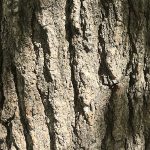
Liquidambar trunk, Wikimedia Commons

Source: Each According to its Kind: Plants and Trees in the Bible (UBS Helps for Translators)

terebinth

The Hebrew words ’elah and ’alah refer to any of three species of terebinth mentioned in the Bible: 1) the Atlantic terebinth Pistacia atlantica, 2) the Palestinian terebinth Pistacia palaestina, and 3) the Lentisk Terebinth Pistacia lentiscus, also called the mastic tree.

According to Zohary (Plants of the Bible, Cambridge University Press, 1982), the Atlantic terebinth, also called the teil tree, is found in the Negev, Lower Galilee, and the Dan Valley. Hepper (Baker Encyclopedia of Bible Plants, Baker Book House, 1992) says it was once abundant in Gilead, the trunk and bark being a possible source for aromatic resin (mastic) exported to Egypt. It is a dry-land tree that grows in the border areas between ever-green woodlands and the dwarf-shrub steppes (note “valley of Elah” in 1 Samuel 17:2 et al.). The nuts of the Atlantic terebinth are used for dyeing and tanning animal skins, but they can be eaten if roasted. They are often sold in Arab markets, are bigger than the nuts of the Palestinian terebinth, and are quite different from the true pistachio nuts.

The Palestinian terebinth is found mostly on wooded hills, often together with the common oak. Its little round nuts can be eaten whole, fresh, or roasted, and it is probably these nuts (boten) that were carried to Egypt by the sons of Jacob (Genesis 43:11).

The lentisk terebinth is a shrub or bush that grew in the hills of Gilead, and may be the source of the “balm/resin” (tsori in Hebrew) carried by the Ishmaelites in Genesis 37:25, and by the sons of Jacob to Egypt along with pistachio nuts in Genesis 43:11. The fact that Genesis 37:25 et al. all mention Gilead in connection with the resin tsori, suggests that its source was a plant unique to Palestine. That is why it could be used to trade for goods from Egypt. The references in Jeremiah (8:22 and 46:11) presumably refer to the salve made from the terebinth resin.

Terebinths look like oaks but have pinnate leaves. The Atlantic terebinth may reach a height of 10 meters (33 feet). The Palestinian terebinth species is shorter, reaching to 5 meters (17 feet). The lentisk terebinth, or mastic (gum) tree, is a small shrub or tree 1-3 meters (3-10 feet) in height that produces a sweet-smelling resin when the stem or branches are cut. The resin dries into hard lumps, which are then ground and dissolved in olive oil for medicinal use, per-fume, incense, varnish, and glue.

Both of the larger terebinths were revered by ancient Israelites and other peoples. They built shrines and altars in the terebinth groves, and sometimes buried people there. The resin of the lentisk terebinth was highly prized for its medicinal value, which is why the Ishmaelites and the sons of Jacob were carrying them as trade goods to Egypt. Sirach 24:16 uses the wide-spreading branches terebinth as a metaphor for wisdom.

Pistacia palaestina, Wikimedia Commons
Pistacia atlantica, Wikimedia Commons
Mastic resin hanging from mastic (Pistacia lentiscus) tree, Wikimedia Commons

Source: Each According to its Kind: Plants and Trees in the Bible (UBS Helps for Translators)

complete verse (Jeremiah 51:8)

Following are a number of back-translations as well as a sample translation for translators of Jeremiah 51:8:

  • Kupsabiny: “Babylon has fallen quickly.
    Mourn (plur.) for that city.
    Treat its wounds
    and then it might get well.” (Source: Kupsabiny Back Translation)
  • Hiligaynon: “Babilonia will- suddenly -be-destroyed! [You (plur.)] mourn for her! [You (plur.)] cure her wounds and perhaps she might be healed.’” (Source: Hiligaynon Back Translation)
  • English: “But suddenly Babylon will be conquered.
    You foreigners who live in Babylon, weep for its people.
    Give them medicine for their wounds;
    perhaps they can be healed.’” (Source: Translation for Translators)

Translation commentary on Jeremiah 51:8

Babylon has fallen and been broken: As in verse 7, Babylon is best understood as “Babylonia” (Good News Translation), the nation. The city comes into focus in verse 12. Die Bibel im heutigen Deutsch retains the figure of the cup by rendering “Suddenly the cup falls to the ground and is shattered.”

For wail see 4.8.

Take balm: See 46.11. Good News Translation renders Take balm for her pain as “Get medicine for its wounds.” Die Bibel im heutigen Deutsch renders “Get salve for her wounds.”

Quoted with permission from Newman, Barclay M. and Stine, Philip C. A Handbook on Jeremiah. (UBS Helps for Translators). New York: UBS, 2003. For this and other handbooks for translators see here .