bottle gourd / calabash

The Bottle Gourd or Calabash Lagenaria siceraria was one of the first plants to be domesticated by human beings. It has been used for food, for medicine, and for various utensils and musical instruments. It is indigenous to Africa but was probably introduced into Asia and the Americas about ten thousand years ago, with or without the help of humans. The name of the genus comes from the Latin word lagoena, meaning “flask” (almost certainly the first Roman flasks were dried gourds). The species name is derived from the Latin word for “dry,” suggesting that the fruit is usable in its dried form. Although the people of the Bible lands undoubtedly used the split bottle gourds in their homes as bowls or “dippers,” as we find in Africa and Asia, the only references we have are to the image of the gourd in the artwork carved into the cedar of King Solomon’s palace (1 Kings 6:18) and in the decorating of the giant bronze basin that stood in front of the Temple (1 Kings 7:24).

The bottle gourd is a climbing vine like a cucumber or pumpkin. Its stem is square, ribbed, and hairy, and can grow up to 5 meters (17 feet) long. The leaves are heart-shaped, the size of a human hand, and slightly lobed. The flowers are yellow with five petals, giving way to fruits that may be of many different shapes depending on the variety. Most gourds are globular at one end, with a protrusion that may be elongated, making them very useful, when cut in half, as big spoons in the kitchen.

Gourds or calabashes have been used as containers, or, when split, as dipping devices, for thousands of years. They have also been used for musical instruments. The pulp of most kinds is very bitter and is poisonous in some cases. Some kinds are used in medicine in some countries, for purges, expelling worms, and for chest pains and headache. In southern Africa the leaves are eaten as a vegetable, as are the young, unripe fruits.

Translators in temperate or tropical areas of Africa and Asia will have a word for these gourds. If the only gourd people are familiar with is round like a ball, then an illustration may help in the text, or a footnote can describe the special shape of the Holy Land gourd, insofar as we know it. The bottle gourd is related to the wild gourd mentioned in 2 Kings 4:39, which poisoned a group of prophets.

Bottle gourd, photo by Nigel Hepper

Source: Each According to its Kind: Plants and Trees in the Bible (UBS Helps for Translators)

See also plant / gourd / ivy.

myrtle

The Myrtle Myrtus communis is found in the mountains of the Galilee region up to the present, as well as in North Africa and throughout the Middle East. In the apocalyptic passage Isaiah 41:19 it is listed with cedars, acacias, and olives, and we are told that in the new age these verdant trees will replace the thorny bushes of the wilderness. The Arabic as (آس) and the Akkadian asu (𒊍 / 𒀀𒋢𒌝) are cognates of the Hebrew word hadas. The leaves and flowers of the myrtle are used in weddings and in medicine. The wood is used for walking sticks and furniture. The bark and roots yield tannin, used up to the present day in Russia and Turkey to prepare leather.

The myrtle shrub is an evergreen with fragrant leaves and normally grows to a height of 2-3 meters (7-10 feet). It has leathery, dark green leaves, pretty white flowers, and bluish black berries, which have a sweet smell.

Nehemiah 8:15 tells us that branches of the myrtle and other trees were used to make shelters for the Festival of Shelters, a practice still followed by Jews today. The Isaiah references associate the myrtle with a time of renewal and goodness. Taken together we may conclude that when Zechariah situates his vision of horses and riders “among the myrtles,” he is thinking of a sacred place, a place of God’s presence, possibly even a “gateway to heaven,” although the use of the definite article may also point to a particular place that Zechariah and his readers knew about. Some commentators hold that the myrtles in Zechariah’s vision represent the people of Israel. Note that these myrtles are said to be growing in some kind of depression in the ground, whether a valley or ravine, which may itself be symbolic of a negative national experience, perhaps even the Babylonian Exile, as some have suggested.

Myrtles are part of the gigantic Myrtaceae family that includes at least three thousand species throughout the world, including the guava, the eucalyptus, and the clove. Close relatives of the myrtle, however, may be hard to find, so a transliteration from a major language may be the best option. In the poetical Isaiah passages the handling of hadas will depend on what the translator does with the other names of trees in the list, whether they use literary equivalents or transliterations. In Nehemiah, transliteration is advised, unless, of course, myrtle or a close relative of it is known. In Zechariah, since we do not know the significant features of the myrtle that the writer had in mind, it is difficult to make an appropriate descriptive equivalent. However, a transliteration or a generic phrase such as “shrubs” or “small, leafy trees” may be used.

Myrtle flowers, photo by Nigel Hepper
Myrtle branch, photo by Gloria Suess

Source: Each According to its Kind: Plants and Trees in the Bible (UBS Helps for Translators)

liquidambar (Oriental sweetgum𖺗 storax)

The Hebrew word tsori (“balm”) may be the basis for the word “storax,” which Zohary (Plants of the Bible. Cambridge University Press, 1982) takes to be a name for the dried resin of the liquidambar Liquidambar orientalis, a tree that is also called kataf or nataf in Hebrew.

The Hebrew word nataf does not occur outside of Exodus 30:34 in the Bible. The Septuagint renders it staktē, which New Revised Standard Version, updated edition transliterates as “stacte.” According to Zohary, nataf is a synonym of tsori (= storax), which is found six times in the Bible. The liquidambar (or storax) is a tree that used to grow widely in the Middle East and Turkey.

The liquidambar tree grows to 10 meters (33 feet) tall, and has deeply incised leaves with five points and round yellow flowers on a 4 centimeter (2 inch) stalk. The fruits are prickly. The sticky gray-brown gum is produced by making cuts in the trunk of the tree.

The Jeremiah and Ezekiel references indicate that tsori was medicinal. We conclude from Exodus 30:34 that it was aromatic. Genesis 37:25 shows that it was highly valued in trade with Egypt.

The genus Liquidambar was widespread many thousands of years ago, according to fossil evidence, but it disappeared from Europe when the glaciers came. The surviving species, apart from orientalis in the Middle East, are formosana in South China and Taiwan and styraciflua in the eastern United States and Central America.

The references to tsori in Genesis and Ezekiel are non-rhetorical, as is nataf in Exodus. If Zohary is correct, and the translator wants to be specific, then a transliteration of “storax” may be used in these passages. Alternatively, in Exodus 30:34 translators can use a generic expression such as “resin” or “gum resin”; that is, they can use their local word for the globs of hardened sap that come from trees that produce it.

If a word for “sweet-smelling healing ointment” exists, it can be used for tsori in Genesis. Tsori is the second of three spices the Ishmaelite traders carried in Genesis 37:25, the other two being neko’th (“gum”) and lot (“myrrh” or “resin”). Translators can cover all three words with a phrase such as “different kinds of sweet-smelling medicine and incense.” Transliteration is also possible, from Hebrew tsori or Arabic nakaa/nakati. “Balm” in English is not a good basis for transliteration.

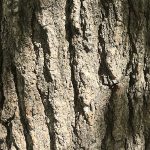
Liquidambar trunk, Wikimedia Commons

Source: Each According to its Kind: Plants and Trees in the Bible (UBS Helps for Translators)

mulberry

The references to mulberry in the Scriptures are all controversial. However, Zohary (Plants of the Bible. Cambridge University Press, 1982) on the basis of cognate words in Sumerian (messikanu, sukannu) confidently associates the Hebrew word mesukan in Isaiah 40:20 with the mulberry tree, as did Thompson before him. Further, they take the Greek word sucaminos in Luke 17:6 as also cognate with Sumerian sukannu. Like the apple, the pomegranate, the fig and the pistachio, the Black Mulberry Morus nigra may have been introduced into the Holy Land from one of the neighboring countries like Persia (now Iran).

The black mulberry is a large, broad tree (6 meters [20 feet] high) that produces flowers and leaves in spring and loses its leaves every year in winter. The crown is broad and low. The trunk gets twisted as it grows old and may rot away, only to be replaced by another one from the same root. People pile stones up in order to support the low branches of old trees. The leaves are stiff, rough, and hairy. The flowers are pollinated by the wind, and the fruit is a rather tart, black berry about the size of a large cashew nut. In Europe and North America, people use mulberries mostly to make pies and wine. A different species, the white mulberry, has a whitish fruit.

The black mulberry tree is similar in size and shape to the sycomore fig. In fact, the translators of the Greek Septuagint introduced considerable confusion by translating the Hebrew word shiqmah as sucaminos (1 Kings 10:27 et al.)

There are at least eighteen subspecies of mulberry in the world, distributed from China to North America. In the Middle East area two have been cultivated, the black mulberry and the white mulberry. The black mulberry grows well in what is now Iran, and it may have been introduced into Canaan from there. In areas where the mulberry tree is found, the local name should be used in Luke 17:6. Where it is not found (for example, most of Africa), transliteration from a major language is advised, for example, muluberi or sikamayin. (French mûrier, Spanish mora, Portuguese amoreira, Arabic tut).

Black mulberry, Wikimedia Commons

Source: Each According to its Kind: Plants and Trees in the Bible (UBS Helps for Translators)

See also mulberry tree.

wormwood

The Hebrew word la‘anah refers literally to a plant, but it is only used figuratively in the Old Testament, as something representing intense bitterness. Despite very little evidence, commentators and botanists have agreed that this word may refer to a substance derived from the white wormwood bush, which is found abundantly in the the deserts of the Holy Land.

White Wormwood Artemisia herba-alba is a bush less than half a meter (18 inches) high, with finely divided fuzzy leaves. These leaves drop at the end of the cool rainy season of Israel and are replaced with something like scales in the hot season. The flowers appear in clusters of two to four around September/October and mature into small, hairy fruits. When the plant matures, the leaves and flowers are dried to make a very bitter tea, or ground into powder, paste, or oil that is used in medicine.

Most of the references to wormwood in the Old Testament are paired with the Hebrew word for “poison/gall” (ro’sh) and are used metaphorically to represent painful experience and sorrow. In Revelation 8:11 a star named Wormwood (apsinthos in Greek) makes a third of the water on earth bitter and poisonous. The leaves of wormwood have a very bitter taste. In small quantities it was used as an anesthetic, and Europeans use it in concocting alcoholic drinks (absinthe, vermouth). It is also used to repel moths and fleas, and as an intestinal worm expeller.

The white wormwood of the Holy Land is found throughout the Middle East, North Africa (Egypt, Morocco) and Southwest Europe, but there are at least 300 species of Artemisia throughout the world, usually in dry areas. A Chinese type (huang huahaosu) is used as medicine against malaria. Artemisia cina and Artemisia maritima are found in Eurasia, where they produce santonica, an anti-worm medicine. Artemisia tilesii is used by the Inuits like codeine. The sagebrush plants of the American West also belong to this genus and were used by Native Americans for various conditions.

Most languages have words for plants that have bitter leaves and/or roots. Since all of the references to wormwood in the Old Testament are metaphorical, these plants can be used to convey the essential component of the passages. As noted above, most of the references to la‘anah are coupled with ro’sh, so the two must be dealt with together in those passages. If particular plants are not available, phrases such as “bitter fruit,” “bitter spice,” or “bitter thing” can be used.

White wormwood, Wikimedia Commons

Source: Each According to its Kind: Plants and Trees in the Bible (UBS Helps for Translators)

See also turn to wormwood.

opobalsamum (balsam; balm)

The Hebrew word bosem, which is often rendered “balm” (derived from “balsam”), can refer to any type of aromatic healing substance, but it also designates the product of a particular tree, the balsam or opobalsamum Commiphora gileadensis. Arabs call it balasam or balasham. In the Talmud it is called afarsimon. Excavations near En Gedi have uncovered an ancient processing plant for balsam oil.

The opobalsamum tree likes a desert or semi-desert climate. It grows to 2‑3 meters (7‑10 feet) tall and has small, wrinkled, three-part leaves, white flowers, and pea-sized red berries that have a fragrant yellow seed inside. The bark of younger branches is gray, turning brown with age. The resin appears by itself in green droplets from the stems and branches, but collectors also make cuts in the branches to speed the process. The droplets turn from green to brown, clump together, and fall to the ground, where they are collected.

In Bible times, balsam oil was used in holy anointing oil, as medicine, and as an ingredient of perfume.

A generic word or phrase for sweet-smelling substances is appropriate to render bosem, although where a specific name for the balsam tree is available, as in southwestern Arabia and Somalia, this could also be used. At least one hundred species of the genus Commiphora are spread throughout dry areas of the world. Translators in some areas will know the plants; others may know only the dried resin of Commiphora sold in spice markets.

Balsam tree, Photo by Nigel Hepper

Source: Each According to its Kind: Plants and Trees in the Bible (UBS Helps for Translators)

saffron crocus

Our experts agree on the identification of the Hebrew word karkom with the saffron crocus Crocus sativus, but there are others who identify it as the Indian plant Turmeric Curcuma longa on the basis of its Arabic name kurkum or kurkam. However, according to Moldenke (Plants of the Bible. Ronald Press. 1952), Arabic kurkum refers to the plant, and the product from it is called saferan, from which we get the English word “saffron” (compare Arabic asfar, meaning “yellow”). Saffron is now widely known as a food additive and dye, but in Bible times it was also considered a perfume and medicine. It comes from the reddish-purple flowers of the crocus, which grew throughout Asia Minor in Bible times. Since then it has been widely cultivated in Europe, England, and America. The English word “crocus” comes from Hebrew karkom via Greek krokos.

Archeological records indicate that saffron was cultivated in the seventh century B.C. in Assyria and later in Crete (Bronze Age). Saffron-based paint has been found in fifty thousand year old pictures in what is today Iraq. The Sumerians used saffron for medicine and magical potions and traded it with other kingdoms. International trade reached a peak with the Minoans in the second millennium B.C. Use of saffron spread into Asia via the Persians and/or the Mongol invaders, and today Buddhist monks in India wear saffron-colored robes. Merchants in the Middle East sell dried safflower (Carthamus tinctorius) as saferan, but real saffron comes only from crocus flowers. The fake saffron is appropriately called alazor bastardo in Spanish and safran batard in French.

Crocus plants have long, tapered grasslike leaves growing from an onion-like bulb under the ground. They grow to less than 13 centimeters (5 inches) in height and have beautiful reddish or purple flowers.

In Bible times saffron was used as perfume and as medicine, but today it is mostly known as a coloring agent for cloth and food. One reason why it was costly is that it takes about six hundred flowers to produce a few drops of oil.

Since Bible times the saffron crocus has been grown mostly in the Mediterranean basin, but it also thrives in India, Oceana, and North Africa, so in those places local words will likely be found. Elsewhere, transliteration from a major language is recommended.

Crocus sativus, Wikimedia Commons

Source: Each According to its Kind: Plants and Trees in the Bible (UBS Helps for Translators)

See also crocus.

poplar

There are several species of poplar in the Middle East, and that has given rise to some controversy over which one is referred to by a particular Hebrew word. Two kinds of poplar were common in Israel in Bible times, the white poplar and the Euphrates poplar.

In Genesis 30:37 (see also plane) Jacob’s magical recipe for multiplying sheep and goats relied on the light inner wood of the white poplar Populus alba, a tree that grows along riverbanks in Israel. This softwood tree with gray bark was used for timber and for making tools and rafters. In some places the bark is used as medicine.

The Euphrates poplar Populus euphratica likewise grows along riverbanks, but it is much more widespread in the Middle East than the white poplar, and that makes it a natural candidate for the reference in Psalm 137:2, which says “On the ‘aravim [‘willows’ in Revised Standard Version and New Revised Standard Version, updated edition] there we hung up our lyres.” This is further strengthened by the fact that in Iraq this poplar is called gharab, which is cognate with ‘aravah.

The white poplar is a tall tree reaching perhaps 20 meters (66 feet). Its seeds are dispersed by the wind in bunches of long, silky hair. The Euphrates poplar is also tall. It has two types of leaves. When young, it produces a narrow leaf like a willow; when it matures, its leaves are broader. This has led to some confusion among scholars as to the identity of willows and poplars mentioned in the Bible.

Populus species (cottonwood, aspen) are known throughout Europe and North America. In Africa, apart from North Africa and South Africa where a number of kinds of poplars have been introduced from Europe, there do not seem to be any Populus species. Where Populus species are known, and if the inner bark is known to be white, they could be used in Genesis, but keep in mind that another tree of the same family (willow) is mentioned in Leviticus 23:40. Where Populus species are not known, we advocate transliterating from a major language in Genesis 30:37 (for example, popula, populari, hawur [Arabic], or abele [French]), since this is a historical setting rather than a rhetorical one.

Euphrates poplar, Wikimedia Commons
White poplar trunk, Wikimedia Commons

Source: Each According to its Kind: Plants and Trees in the Bible (UBS Helps for Translators)