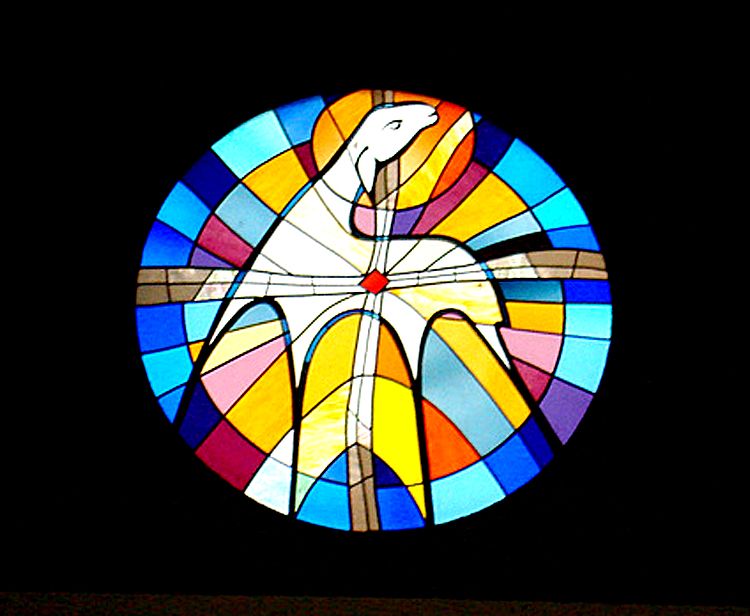
The Greek that is translated as “brother” in English in the referenced verses is translated in Lama as rɨtafal or “younger brother.” (Source: Neal Brinneman)
complete verse (John 1:40)
Following are a number of back-translations of John 1:40:
- Uma: “Those disciples of Yohanes followed Yesus, because they had heard the words of Yohanes the Baptizer earlier. One of those two, his name was Andreas, a relative of Simon Petrus.” (Source: Uma Back Translation)
- Yakan: “One of them that had followed Isa was called Andariyas. This Andariyas was a brother of Simon Petros.” (Source: Yakan Back Translation)
- Western Bukidnon Manobo: “Andrew was one of these two who heard what John said and went with Jesus. Andrew and Simon Peter were brothers.” (Source: Western Bukidnon Manobo Back Translation)
- Kankanaey: “One of those who heard what Juan said and went-with Jesus, it was Andrew the younger-sibling of Simon Pedro.” (Source: Kankanaey Back Translation)
- Tagbanwa: “One of those who accompanied Jesus was Andres who was the brother/sibling of Simon Pedro.” (Source: Tagbanwa Back Translation)
- Tenango Otomi: “One of the men who heard what John said and followed Jesus was Andrew, the brother of Peter.” (Source: Tenango Otomi Back Translation)
Sung version of John 1
Translation commentary on John 1:40
The way in which Simon Peter is introduced suggests that he was well known to John’s readers.
The Greek text contains an expression in verse 40 which identifies Andrew as “one of the two who had heard about Jesus from John and who had accompanied Jesus.” Since the reference is clear, it is enough to say “one of them was Andrew” or perhaps “one of John’s two disciples was Andrew.”
Some languages doe not use a term for “brother” without indicating whether the person named is a younger or an older brother. Although Greek and Hebrew do not make such a distinction, Hebrew and Semitic Greek tend to name the older brother first. However, the fact that Simon Peter’s name precedes that of his brother in the synoptic accounts of their vocation (Mark 1.16 and parallels) and in the lists of the Twelve (Matt 10.2 and parallels) probably indicates his prominence rather than his greater age. In John 1.44 Andrew’s name appears before that of Peter.
Quoted with permission from Newman, Barclay M. and Nida, Eugene A. A Handbook on the Gospel of John. (UBS Handbook Series). New York: UBS, 1980. For this and other handbooks for translators see here .
SIL Translator’s Notes on John 1:40
Paragraph 1:40–42
This paragraph tells how Andrew and Simon Peter became disciples of Jesus. Peter is one of the more important characters in the Gospel of John. Introduce him as you introduce an important character in a story.
1:40a–b
Andrew, Simon Peter’s brother: Andrew may have been younger than or older than Simon Peter. We do not know. But Simon Peter was the better known among the Christians for whom John was writing. At the time of this story, Jesus had not yet given Simon the name Peter. The mention of Simon Peter here is therefore parenthetical and it may be natural to place it in parentheses:
Andrew (Simon Peter’s brother)
In some languages you may need to include a verb. At the time when John wrote this Gospel, it is probable that both Andrew and Peter were dead. So it is best to use the past tense:
Andrew, ⌊who was⌋ Simon Peter’s brother
Simon Peter’s: Simon Peter was one of Jesus’ closest disciples. He later became a major leader in the early church. He is also known for denying Jesus when he was arrested. His original name was Simon. In 1:42, Jesus said that he would be called Cephas, which is Peter in Greek. If people will think that Peter is Simon’s last name, you may want to make it clear that both names are used as his first name. For example:
the brother of Simon, who was also called Peter
one of the two who heard John’s testimony and followed Jesus: Two disciples of John the Baptist had begun following Jesus (1:35–39). In some languages it is more natural to include what John the Baptist had said. For example:
one of the two men who heard John speak ⌊about Jesus⌋ and followed Jesus
-or-
one of the two who began following Jesus when they heard John ⌊call Jesus the Lamb of God⌋
© 2020 by SIL International®
Made available under the terms of a Creative Commons Attribution-ShareAlike 4.0 License (CC BY-SA) creativecommons.org/licenses/by-sa/4.0.
All Scripture quotations in this publication, unless otherwise indicated, are from The Holy Bible, Berean Standard Bible.
BSB is produced in cooperation with Bible Hub, Discovery Bible, OpenBible.com, and the Berean Bible Translation Committee.

Leave a Reply
You must be logged in to post a comment.