
He Qi © 2021 All Rights Reserved.
Image taken from He Qi Art . For purchasing prints of this and other artworks by He Qi go to heqiart.com .
For other images of He Qi art works in TIPs, see here.

Image taken from He Qi Art . For purchasing prints of this and other artworks by He Qi go to heqiart.com .
For other images of He Qi art works in TIPs, see here.
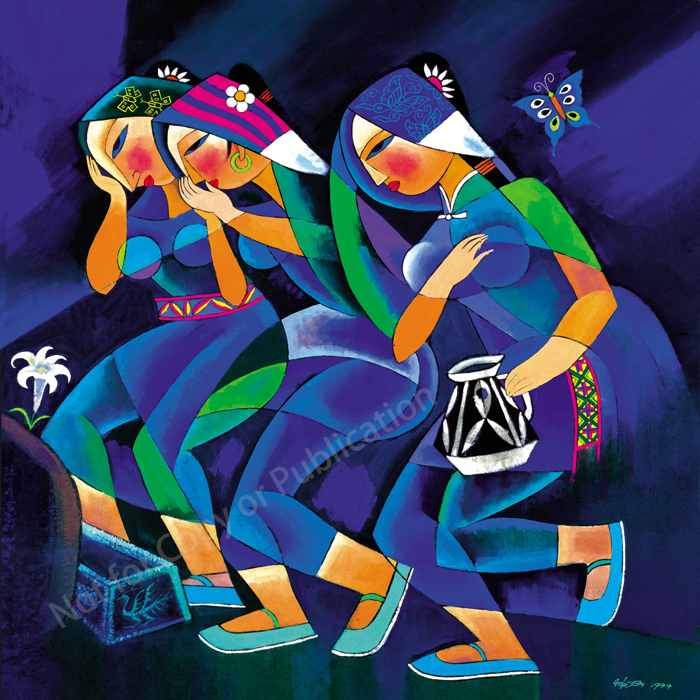
Image taken from He Qi Art . For purchasing prints of this and other artworks by He Qi go to heqiart.com .
For other images of He Qi art works in TIPs, see here.

Image taken from He Qi Art . For purchasing prints of this and other artworks by He Qi go to heqiart.com .
For other images of He Qi art works in TIPs, see here.

Image taken from He Qi Art . For purchasing prints of this and other artworks by He Qi go to heqiart.com .
For other images of He Qi art works in TIPs, see here.
The term that is transliterated as “Stephen” in English is translated in American Sign Language with a sign that combines “S” and the sign for “stoned” or “rocks,” referring to Acts 7:58. (Source: Ruth Anna Spooner, Ron Lawer)
“Stephen” in American Sign Language, source: Deaf Harbor
In Spanish Sign Language it is translated with a signs for “see” + “heaven” + “open,” referring to Acts 7:55. (Source: Steve Parkhurst)
“Stephen” in Spanish Sign Language, source: Sociedad Bíblica de España
See also the stoning of Stephen (image) and more information about Saint Stephen .
For more information on translations of proper names with sign language see Sign Language Bible Translations Have Something to Say to Hearing Christians .
The following is a contemporary stained glass window from the Messiah Episcopal Church in St. Paul, Minnesota by Peter Dohmen. Individual glass pieces were made in Germany in accordance with Dohmen’s design, using a technique first developed by Irish monks in the 9th and 10th centuries.

Source for the image and description below: The Stained Glass Windows of Messiah Episcopal Church
“This window on the east wall of the sanctuary shows us St. Stephen, the first martyr to give his life for Christ. Faith and loyalty are symbolized in the top panel by the cross. You will notice that Stephen’s eyes are turned toward heaven and we recall his words: ‘I see the heavens opened and the Son of Man standing at the right hand of God!’ The bottom section depicts the martyrdom of this great saint who was only in deacon’s orders when he met his death by stoning.”
Stained glass is not just highly decorative, it’s a medium which has been used to express important religious messages for centuries. Literacy was not widespread in the medieval and Renaissance periods and the Church used stained glass and other artworks to teach the central beliefs of Christianity. In Gothic churches, the windows were filled with extensive narrative scenes in stained glass — like huge and colorful picture storybooks — in which worshipers could ‘read’ the stories of Christ and the saints and learn what was required for their religious salvation. (Source: Victoria and Albert Museum )
The term that is transliterated as “Paul” in English means “little.” (Source: Cornwall / Smith 1997 )
In American Sign Language it is translated with a sign that signifies the many letters he wrote. (Source: Ruth Anna Spooner, Ron Lawer)
“Paul” in American Sign Language, source: Deaf Harbor
In Spanish Sign Language it is translated with a sign depicting putting away a sword, referring to his conversion from a persecutor of Christians to a Christian leader. (Source: Steve Parkhurst)
“Paul (and Saul)” in Spanish Sign Language, source: Sociedad Bíblica de España
In Hungarian Sign Language it is translated with a sign that is based on contemporary depictions and refers to the presumed baldness of the top of his head. The description originates from the 2nd-century apocryphal text titled Acts of Paul and Thecla , which represents the earliest and most detailed physical characterization of the apostle in Christian tradition (see also the icon below). (Source: Jenjelvi Biblia and HSL Bible Translation Group)
“Paul” in Hungarian Sign Language — note that only the first part refers to “Paul,” the second part refers to “apostle” (source )
For more information on translations of proper names with sign language see Sign Language Bible Translations Have Something to Say to Hearing Christians .
Following is a Georgian Orthodox icon of Paul the Apostle from the 14th century (located in the Art Museum of Georgia, Tbilisi).

Orthodox Icons are not drawings or creations of imagination. They are in fact writings of things not of this world. Icons can represent our Lord Jesus Christ, the Virgin Mary, and the Saints. They can also represent the Holy Trinity, Angels, the Heavenly hosts, and even events. Orthodox icons, unlike Western pictures, change the perspective and form of the image so that it is not naturalistic. This is done so that we can look beyond appearances of the world, and instead look to the spiritual truth of the holy person or event. (Source )
Down below you’ll see an ivory carving that is located in the Musée national du Moyen-âge in Paris from the Byzantine empire of the 6th or early 7th century:

Source: Wikimedia
The following is a contemporary stained glass window from the Messiah Episcopal Church in St. Paul, Minnesota by Peter Dohmen. Individual glass pieces were made in Germany in accordance with Dohmen’s design, using a technique first developed by Irish monks in the 9th and 10th centuries.

Source for the image and description below: The Stained Glass Windows of Messiah Episcopal Church
“This window is dedicated to St. Paul, the great apostle and missionary, for whom our city is named. At the top of the window is a ship which symbolizes the many missionary journeys of Paul — the Church is our ship, which carries us over the way of life. In the lower section we see Paul on the road to Damascus when he saw a great light and heard our Lord’s voice, which called him to discipleship.”
Stained glass is not just highly decorative, it’s a medium which has been used to express important religious messages for centuries. Literacy was not widespread in the medieval and Renaissance periods and the Church used stained glass and other artworks to teach the central beliefs of Christianity. In Gothic churches, the windows were filled with extensive narrative scenes in stained glass — like huge and colorful picture storybooks — in which worshipers could ‘read’ the stories of Christ and the saints and learn what was required for their religious salvation. (Source: Victoria and Albert Museum )
Learn more on Bible Odyssey: Paul .
The term that is transliterated as “Mary Magdalene” in English is translated in American Sign Language with a sign signifying 7 demons having gone out, referring to Luke 8:2. (Source: Ruth Anna Spooner, Ron Lawer)
“Mary Magdalene” in American Sign Language, source: Deaf Harbor
For more information on translations of proper names with sign language see Sign Language Bible Translations Have Something to Say to Hearing Christians .
The following is a stained glass window in the All Saints’ Church, Highgate, London, of the late 19thy century:

Photo by John Salmon, hosted by Wikimedia Common under the Creative Commons Attribution-Share Alike 2.0 Generic license
Stained glass is not just highly decorative, it’s a medium which has been used to express important religious messages for centuries. Literacy was not widespread in the medieval and Renaissance periods and the Church used stained glass and other artworks to teach the central beliefs of Christianity. In Gothic churches, the windows were filled with extensive narrative scenes in stained glass — like huge and colorful picture storybooks — in which worshipers could ‘read’ the stories of Christ and the saints and learn what was required for their religious salvation. (Source: Victoria and Albert Museum )
Learn more on Bible Odyssey: Mary Magdalene and Mary Magdalene in Popular Culture .
See also Mary Magdalene and Mary Magdalene (icon).
The term that is transliterated as “Judas” in English means “Praise of the LORD.” The name Iscariot means “man of Kerioth” or “a man of murder.” (Source: Cornwall / Smith 1997 )
It is translated in American Sign Language with the sign for the letter J and the sign signifying holding a bag of money, referring to John 12:6. (Source: Ruth Anna Spooner, Ron Lawer)
“Judas” in American Sign Language, source: Deaf Harbor
In Spanish Sign Language it is translated with with the sign for “kiss,” referring to Matthew 26:49 et al. (Source: Steve Parkhurst)
“Judas” in Spanish Sign Language, source: Sociedad Bíblica de España
In Hungarian Sign Language it is based on the sign for betrayal. (Source: Jenjelvi Biblia and HSL Bible Translation Group)
“Judas” in Hungarian Sign Language (source )
For more information on translations of proper names with sign language see Sign Language Bible Translations Have Something to Say to Hearing Christians .

Painting by Nalini Jayasuriya (1927 – 2014). “Jayasuriya grew up in Sri Lanka and later studied art in England. She experimented with many forms of art hut is best known for her acrylic and pastel paintings on Biblical themes. She has written extensively on art subjects and held many exhibitions. In her painting of Judas the tortured face of the disciple reflects some of the complexities of the man who betrayed Jesus.” (Source for this and the image: The Bible Through Asian Eyes by Masao Takenaka and Ron O’Grady 1991)
See more images of Nalini Jayasuriya.
Learn more on Bible Odyssey: Judas .


