(Pioneer Bible Translators and The Word for the World use the following introduction in many of their translation projects around the world.)
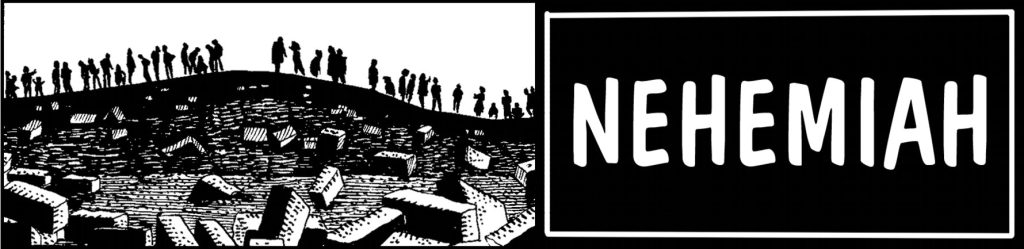
The books of Ezra and Nehemiah tell how the Israelites were permitted to return to Israel after being taken into captivity in Persia and Babylonia. Nehemiah focuses on how the wall around Jerusalem was built again. Many scholars believe that Ezra wrote and compiled the books of 1 and 2 Chronicles as well as the books of Ezra and Nehemiah. If it was not Ezra then it’s likely that one person compiled these same books. The book of Nehemiah may have been compiled around 430 B.C.
Nehemiah was the cupbearer who served Artaxerxes, king of Persia, and he asked Artaxerxes for permission to return to Jerusalem to help to build the city walls of Jerusalem again. Artaxerxes allowed Nehemiah to do this and later he appointed Nehemiah as governor of Judea, the region surrounding Jerusalem (5:14). Even though some people tried to stop Nehemiah from building the walls of Jerusalem again, the work was completed in 52 days with God’s help. Then Ezra helped Nehemiah to lead the Israelites to renew their agreement with God.
Outline of Nehemiah:
1. Chapters 1 through 6 explain how Nehemiah returned to Jerusalem and led the work to build the walls of Jerusalem again.
2. Chapters 7 through 13 tell how the Israelites started living in Jerusalem and following God’s laws again.
Les livres d’Esdras et de Néhémie racontent ce qui s’est passé quand les Israélites étaient autorisés à retourner à la terre d’Israël après être mis en captivité en Perse et à Babylone. Néhémie fixe son attention sur la reconstruction des murailles autour de Jérusalem. De nombreux experts opinent que c’était Esdras qui a écrit et compilé les livres de 1 et 2 Chroniques ainsi que les livres d’Esdras et Néhémie. Même si ce n’était pas Esdras, il est bien probable qu’une personne unique ait compilé ces mêmes livres. Il se peut que le livre de Néhémie ait été compilé environ 430 av. J-C.
Néhémie était l’échanson qui servait Artaxerxés, roi de Perse, et il lui a demandé la permission de retourner à Jérusalem afin d’aider la reconstruction des murailles de Jérusalem. Artaxerxés a permis que Néhémie fasse ceci et plus tard il a nommé Néhémie gouverneur de Judée, la région autour de Jérusalem (5.14). Bien que quelques personnes aient taché d’empêcher Néhémie de reconstruire les murailles de Jérusalem, le travail s’est achevé en 52 jours avec l’aide de Dieu. Ensuite, Esdras a aidé Néhémie à mener les Israelites à renouveler leur accord avec Dieu.
Résumé de Néhémie
1. Chapitres 1 – 6 expliquent comment Néhémie est retourné à Jérusalem et a dirigé le travail de reconstruire les murailles de Jérusalem
2. Chapitres 7 – 13 racontent comment les Israélites ont commencé à habiter à Jérusalem et à suivre les lois de Dieu de nouveau.
Translation: Swahili
Utangulizi wa Nehemia
Vitabu vya Ezra na Nehemia vinasimulia jinsi watu wa taifa la Israeli walivyoruhusiwa kurudi katika nchi yao ya Israeli baada ya kuishi kama mateka wa kivita katika mataifa ya Uajemi na Babeli. Nehemia anaweka msisitizo wake katika kusimulia jinsi ukuta uliouzunguka mji wa Yerusalemu ulivyopata kujengwa kwa mara ya pili. Wasomi wengi wa mambo ya kibiblia wanaamini kwamba Ezra aliviandika vitabu vya Mambo ya Nyakati 1 na 2, na pia vitabu vya Ezra na Nehemia, pamoja na kuviweka katika mipangilio yake. Lakini kama mtu aliyeviandika hakuwa Ezra, basi upo uwezekano kwamba mtu mwingine aliviweka vitabu hivi katika mpangilio wake. Inafikirika kwamba kitabu cha Nehemia kiliwekwa katika mpangilio wake katika mwaka wa 430 K.K.
Nehemia alikuwa ndiye mwenye jukumu mahsusi la kumnywesha mfalme Artashasta. Nehemia alimwomba mfalme amruhusu kurudi Yerusalemu ili akasaidie kuzijenga kuta za mji wa Yerusalemu zilizokuwa zimebomoka. Artashasta alimruhusu Nehemia kufanya hivyo, na kisha, baadaye alimteua Nehemia kuwa gavana wa Yudea, eneo lililoizunguka Yerusalemu (5:14). Japokuwa watu fulani walijaribu kumzuia Nehemia asizijenge kuta za Yerusalemu, kwa msaada wa Mungu, kazi hiyo ilimalizika katika kipindi kifupi cha siku 52 tu. Baadaye, Ezra alimsaidia Nehemia kuwaongoza Waisraeli kuhuisha agano lao na Mungu.
Muhtasari wa Yaliyomo:
1. Sura 1 hadi 6 zinaelezea jinsi Nehemia alivyorudi Yerusalemu na kuongoza kazi ya kuujenga tena ukuta wa Yerusalemu.
2. Sura 7 hadi 13 zinaelezea jinsi Waisraeli walivyoanza kuishi tena Yerusalemu, na kuanza tena kuzifuata sheria za Mungu.
(The Catholic Christian Community Bible [first English edition 1997, other translations into Indonesian, Chinese, Cebuano, Chavacano, French, Ilonggo, Korean, Quechuan, Spanish, and Tagalog] “for the Christian Communities of the Third World” uses the following introduction.)
The books of Samuel and Kings related five centuries of Israel’s history without interruption, from David to the Babylonian exile.
Then came the seventy years of “Captivity,” or Exile. Not all the people were de ported. Most of the people who remained on the land were small farmers. They had neither political nor spiritual leaders and did little to put the nation back on its feet.
In the year 538 B.C. a decree of Cyrus, conqueror of the Chaldeans, authorized the return to their homeland of all the Jews deported to Babylon. This gesture of Cyrus was above all political, but the Bible sees in it the fulfillment of God’s promises to the prophets (especially to Jeremiah and Ezekiel). The decree of Cyrus marked the beginning of the return of the deportees: they were to revive the nation. The first came back with Zorobabel, a descendant of the kings. After a difficult start, they re organized themselves under the direction of Ezra and Nehemiah in the following century.
The decree of Cyrus did not modify the political situation of Palestine which had become a province of the Empire. Jerusalem remained under the authority of Samaria with regard to administration and the aristocracy of Samaria had no desire to be surpassed by the notables of Judah returning to their homeland after fifty years of exile. This accounts for the conflict between Jews and Samaritans which was to remain irreconcilable.
Not all the Jews returned to their land. Many of them had emigrated abroad before the exile and remained in the countries where they were living: Egypt, Assyria, Persia. Others, who had been deported, did not come back from Babylon, for they had succeeded in overcoming their miserable situation with one another’s help, and now held good positions there. Those who returned arrived as families and organized groups; they were the Jews who had best assimilated the prophets’ message, urging them to rebuild a purified and holy Israel.
For them a first danger was that, by settling in their homeland among foreigners and Jews not too attuned to their mission, they might lose their enthusiasm. That is why the work of Ezra and Nehemiah was very important in keeping the Jews united among themselves and apart from everyone else. See especially the problem of mixed marriages (Ezra 9-10; Ne 9:2 and 13:10-30).
Later, in his biblical work, Ezra played a decisive role by collecting the books and putting them together for the first time, and making the Sacred Book the basis of their religion. Until that time, the existing books of the Bible were kept only in the hands of the priests, and it was enough for the people to attend the traditional Temple ceremonies. It was Ezra who started a new form of worship through which the communal reading of the Bible would become the basis of the people’s religious life, bringing them to a more grounded and responsible faith. See Nehemiah 8. Ezra’s role in the formation of the Bible is remembered in 2 Maccabees 2:13-14.
Ezra’s reform gave the Jewish community of the post-Babylonian exile its unique features. the people of God became a holy people, consecrated to God and separated from others by the many barriers of their Law. Their reason for being was to maintain the worship of the only God and, since they did not have national independence, their priests held both civil and religious power, in the name of God.
At first, these two books formed only one book. They provide us with some information concerning the work accomplished by these two men. The following steps toward the restoration of the Jewish community can be seen:
– Beginning with the decree of Cyrus in 538 B.C., several groups of exiles come back to Jerusalem and Zerubbabel rebuilds THE TEMPLE: see Ezra 1:1 to 4:5 and 4:24 to 6:2.
– Then, the enemies of the Jews try to prevent the reconstruction of THE CITY (see Ezra 4:7-23).
– In 458 perhaps, Ezra comes to organize the community, imposing the Law of Moses as a rule (see Ezra 7 to 10).
– In 445 Nehemiah comes from Persia and he rebuilds THE WALLS. Then he administers Jerusalem for twelve years (see Ne 1 to 7).
– Finally, there is Nehemiah’s second mission in 425 (see Ne 13).
Down below are the introductions in the Mandarin Chinese, Tagalog, Cebuano, and Spanish editions.
Isinalaysay sa atin ng mga libro ni Samuel at ng Mga Hari ang limang dantaong walang lagot na kasaysayan ng Israel, mula kay David hanggang sa Pagkatapon sa Babilonia.
At pagkatapos ay dumating naman ang pitumpung taon ng “Pagkabihag” o Pagkatapon. Hindi naman idineport ang buong bayan. Mas malaking bahagi ng sambayanan na binubuo ng maliliit na magsasaka ang naiwan sa kanilang lupain. Pero wala silang mga pinuno o mga lider espirituwal, wala silang ginawa para ibangon ang kanilang bansa. Nabuhay lamang muli ang bansa dahil sa mga itinapon na umuwing kasama ni Zorobabel pabalik sa kanilang lupain. At pagkaraan ng mahirap na pagsisimula, nareorganisa sila sa ilalim ng pamumuno nina Esdras at Nehemias.
Ang Reporma ng Esdras
Hindi lahat ng Judio ay bumalik sa kanilang lupain. Marami sa kanila ang nangibang-bayan na bago pa ang Pagkatapon at nanatili sila sa mga bayang kanilang tinitirhan: sa Ehipto, Asiria, Persia. Ang iba naman sa mga idineport ay hindi umuwi mula sa Babilonia kung saan nila napagtagumpayan ang miserable nilang kalagayan, at sa pagtutulung-tulong ay nagkaroon sila ng magagandang posisyon. Pero ang mga nagsibalik ay pami-pamilyang dumating at bilang mga grupong organisado. Sila ang lubos na nakapagsaloob sa mensahe ng mga propeta na nag-aanyaya sa kanilang itayong muli ang isang Israel na dinalisay at banal.
Para sa kanila, ito ang unang panganib na makakaharap nila sa pagtira sa sariling bayan sa piling ng mga dayuhan at mga Judiong di gaanong mulat sa kanilang misyon: baka mawalan sila ng sigasig. Kaya mahalaga ang gawa nina Esdras at Nehemias sa pagpapanatili sa pagkakabuklod ng mga Judio sa isa’t isa at hiwalay sa lahat ng iba pa. Tingnan lalo na ang problema ng pag-aasawa ng mga may magkaibang relihiyon (Esdras 9-10; Nehemias 9:2 at 13:10-30).
At naging mahalaga ang gawang pambiblia ni Esdras na siyang nagtipon sa mga libro ng Biblia sa unang pagkakataon, at pagkatapos ay ginawang base ng kanilang relihiyon ang Banal na Aklat. Hanggang sa mga sandaling iyon, ang mga libro ng Biblia na meron na noon ay nasa palasyo lamang o sa mga kamay ng mga pari at sapat na para sa bayan ang dumalo sa tradisyunal na mga seremonya sa Templo. Si Esdras ang nagsimula ng isang bagong paraan ng pagsamba kung saan ang pangkomunidad na pagbasa sa Biblia ang magiging base ng buhay relihiyoso ng mga sambayanan. Ito ang maghahatid sa kanila sa isang pananampalatayang mas matatag at mas responsable. Tingnan ang Nehemias 8. Inaalala sa 2 Mac 2:13-14 ang papel ni Esdras sa pagbubuo ng Biblia.
Ang repormang ito ni Esdras ang nagbigay ng mga sariling katangian sa pamayanang Judio pagkatapos ng Pagkatapon sa Babilonia. Ang bayan ng Diyos ay naging isang bayang banal, o bayang nakatalaga sa Diyos at inihiwalay sa iba pa ng maraming harang ng kanilang Batas. Sila ay nabubuhay lamang para ipagpatuloy ang pagsamba sa Kaisa-isahang Diyos, at dahil wala silang pambansang kalayaan, hawak ng mga pari sa ngalan ng Diyos ang kapwa kapangyarihang sibil at panrelihiyon.
Ang Libro Nina Esdras at Nehemias
Sa simula’y iisa lamang ang dalawang librong ito. Binibigyan tayo ng mga ito ng ilang impormasyon tungkol sa ginawa ng dalawang lalaking iyon. Mapapansin ang sumusunod na mga hakbang sa muling pagtatayo sa pamayanang Judio:
– Nagsimula sa dekreto ni Ciro sa taong 538 ang pagbabalik sa Jerusalem ng maraming grupo ng mga itinapon, at doon muling itinatayo ni Zorobabel ANG TEMPLO. (Tingnan ang Esdras 1:1 hanggang 4:5 at 4:24 hanggang 6:2).
– At sinikap namang hadlangan ng mga kaaway ng mga Judio ang muling pagtatayo sa LUNSOD. (Tingnan ang Esdras 4:7-23).
– Mga taong 458 siguro nang dumating si Esdras para buuin ang pamayanan, sa pagta-tadhana sa Batas ni Moises bilang isang panuntunan. (Tingnan ang Esdras 7 hanggang 10).
– Taong 445, dumating naman si Nehemias galing Persia, at sinimulan niya ang muling pagtatayo ng MGA PADER. At pagkatapos ay labindalawang taon niyang pinamahalaan ang Jerusalem. (Tingnan ang Nehemias 1 hanggang 7).
– At sa katapusan, may pangalawang misyon si Nehemias sa taong 425. (Tingnan ang Nehemias 13).
Translation: Cebuano
Ang mga basahon, Samuel ug Mga Hari, nag-asoy sa walay bugto nga kasaysayan sa Israel sulod sa lima ka siglo gikan ni David hangtod sa Pagkabihag nila sa Babilonia.
Unya, miabot ang kalim-an ka tuig sa Pagkabihag. Dili tanan sa katawhan ang gihinginlan. Kasagaran sa nahibilin mga gagmayng mag-uuma. Dili sila hanas sa pagpangulo ug yano ra sab ang ilang pagtoo, mao nga wala silay gibuhat aron sa pagpabangon sa ilang nasod. Salamat kay nabalik ang mga Judio nga nabihag ubos ni Zorobabel; human sila makasinatig lisod nga sinugdan, nakahimo ra sila pagbarog ug pagbangon ubos sa pagpangulo ni Esdras ug Nehemias.
Ang mga Reporma nga Gihimo ni Esdras
Dili tanan sa mga Judio mibalik sa ilang yuta. Daghan nila milangyaw ug nanimpalad gawas sa nasod, bisan sa wala pa ang pagkabihag. Daghan ang namuyo na sa Ehipto, sa Asiria, sa Persia. Ang ubang Judio sa Babilonia, tungod sa maayo na nilang pagkabutang, ug sa gihuptan nga maayong katungdanan, wala na makahunahunag balik sa kanhi nilang yutang natawhan. Apan kadtong mibalik, miabot isip mga pamilya ug nagkahugpong nga mga pundok; ang mga Judio nga matinud-anon sa mensahe sa mga propeta nga nag-awhag nila sa pagpabarog og usab sa putli ug balaang Israel.
Alang nila, ang unang hulga nga ilang giatubang mao nga sa nagpuyo sila uban sa mga langyaw ug sa mga Judio nga wala maanad sa ilang misyon, tingalig masuyop ug mawad-ag kadasig. Mao man gani nga ang gihimo ni Esdras ug Nehemias importanti kaayo aron ang mga Judio magpabiling magkahiusa halayo sa uban nga lahi nila. Basaha labi na ang problema sa panagminyoay sa taga gawas (Esd 9-10; Ne 9:2 ug 13:10-30).
Sa paglabay sa panahon, ang balaang sinulat nga gihimo ni Esdras nakatampo og dako sa paghipos sa ubang basahon sa Biblia; gihiusa ni sa unang higayon, hangtod nga ang Balaang Kasulatan nahimong sukaranan sa ilang tinoohan. Niadtong panahona, ang mga basahon sa Biblia gitagoan sa mga palasyo o sa kaparian; igo na alang sa mga tawo ang pagtambong sa naandang seremonyas sa Templo. Si Esdras ang nagsugod ining bag-ong paagi sa pagsimba diin ang katilingbanong pagbasa sa Biblia nahimong kabahin sa tinoohanong kinabuhi sa katawhan. Kini ang nagdala nila sa pagtoo nga lig-on ug hingkod. Basaha ang Ne 8. Ang tampo ni Esdras sa paghimo sa Biblia gihinumdoman sa 2 Mac 2:13-14.
Ang mga kausaban ni Esdras nakahimo sa katilingbang Judio nga lahi sa kaniadto nga wala pa sila mabihag. Ang katawhan sa Diyos gipalayo sa ubang tawo pinaagi sa ilang Balaod. Ang hinungdan nganong ingon sila ani mao nga nagpabilin sila pagsimba sa usa ra ka Diyos, ug wala silay nasodnong kaugalingnan. Sa ngalan sa Diyos, ang ilang mga pari naghupot sa gahom sibil ug relihiyoso.
Amg Basahon ni Esdras ug Nehemias
Sa una, giusa kining duha ka basahon nga naghatag og kasayoran kabahin sa gipanghimo ining duha ka tawo. Makita sa mosunod ang mga ang-ang sa ilang pagpabarog pag-usab sa Judiong katilingban:
– Nagsugod ni sa kamandoan ni Hari Ciro sa 538 B.C.
– Dihay ubay-ubay nga pundok sa mga binihag nga mibalik sa Jerusalem, diin ubos ni Zorobabel gisugdan ang pagpabangon sa TEMPLO. (Basaha sa Esd 1:1 ngadto sa 4:5 ug 4:24 ngadto sa 6:2).
– Dayon, misulay ang mga kaaway sa mga Judio pagsanta sa subling pagtukod Sa SYUDAD (Esd 4:7-23).
– Sa mga tuig 458, B.C., lig-ong giumol ni Esdras ang katilingban; iyang gigamit ang Balaod ni Moises isip batakang balaod (basa sa Esd 7 ngadto sa 10).
– Sa tuig 445, miabot si Nehemias gikan sa Persia, ug iyang gitukod pag-usab ANG MGA PARIL ug gidumala ang Jerusalem sulod sa dose ka tuig.
– Sa kataposan, naa ang ikaduhang misyon ni Nehemias sa tuig 425 (basa sa Ne 13).
Translation: Spanish
El Judaísmo
Esdras y las Crónicas
La deportación a Babilonia de las elites del pueblo de Judá, en los años 606 y 587, puso fin a la nación de Israel en la tierra de Palestina. La mayor parte de ese pueblo, las tribus del norte: Efraím, Manasés y las otras menos importantes, habían ya dejado de existir como “reino de Israel” después de las deportaciones asirias de los años 634 y 621.
Cuando el persa Ciro se apoderó de Babilonia, su edicto del año 538 invitó a los deportados de Judá a reconstruir, no ya su reino, sino una provincia persa de Jerusalén. Pero nada parecido ocurre con las tribus del norte. Estas nunca pudieron imponer su cultura y su religión a los cananeos y a los nuevos inmigrantes con los cuales se habían mezclado (2Re 17,24-34).
La historia de Israel en Palestina será en adelante la de la provincia de Judá, y de la palabra Judeo se derivó la palabra Judío. La comunidad religiosa y cultural que va a nacer y desarrollarse, será conocida por la historia como el Judaísmo.
Las Crónicas y los libros de Esdras son los testimonios de la formación del Judaísmo. Estos libros, que sólo entraron muy tardíamente a la Biblia hebrea, son inseparables.
Esdras y Nehemías
No es fácil discernir lo que corresponde a cada uno de estos dos hombres. Además de las otras razones que pudieron inducir al autor a mezclar la obra de los dos, se dejó engañar por el hecho de que sus documentos mencionaban en diversos lugares al rey Artajerjes (Esd 4; 7; 8,1; Ne 1; 2; 5; 13...) como si hubiera sido uno solo. Ahora bien, hubo dos reyes con ese nombre: Artajerjes I que reinó de 465 a 423, y Artajerjes II, de 404 a 358.
Lo más probable es que Nehemías haya llegado a Jerusalén el 445 y que volvió donde el rey el 433. Luego regresó para una segunda misión en una época no determinada. Tal vez ya no estuviera cuando reinó Darío II (423-404). Y fue sólo el séptimo año de Artajerjes II (Esd 7,8), o sea el 398, cuando Esdras llegó a Jerusalén.
Las etapas de la reconstrucción de un pueblo
El decreto de Ciro del 538 fue un signo de su benevolencia con las diferentes culturas y religiones de los pueblos que había reunido en su inmenso imperio. Pero había también intenciones políticas. Sea como fuere, no se equivocó al confiar en los judíos. Los judíos que habían ya emigrado a muchas regiones del Medio Oriente habían adquirido la fama de personas más confiables. La reconstrucción del pueblo de Dios será, pues, tanto fruto de la pedagogía de Dios en los siglos anteriores como producto de las circunstancias que Dios había previsto en la historia mundial.
Zorobabel
Una primera ola de deportados regresa al país de Judá y se esfuerza por abrirse un espacio allí donde otros han ocupado los espacios abandonados. Zorobabel, un descendiente de Joaquín, el último rey, se destaca entre los exiliados y toma la iniciativa de reconstruir el Templo, aunque sólo levanta una pobre réplica de éste. El asunto no era tan simple como parecía (Esd 4,1-6). Los profetas Ageo y Zacarías estimulan el trabajo. El templo es reconstruido el año 520 (Ag 1,1; Za 1,1). Ésa fue una primera etapa.
Nehemías
La reconstrucción del Templo produjo roces entre los repatriados y el pueblo que se había quedado en el país. Cuestión de intereses, es cierto, por el temor de los que estaban ante la llegada de grupos más motivados y que contaban con el apoyo del rey. Pero también cuestión religiosa, porque si el pueblo de Dios ya no se identifica con una nación ni con un territorio, hay que fijar de nuevo los criterios de pertenencia a la comunidad.
Transcurrieron así cerca de ochenta años. El entusiasmo de los repatriados decayó, la moralidad se rebajó al nivel mismo de la población del país. Los profetas Zacarías, Malaquías y el tercer Isaías denuncian las mismas fechorías que los profetas anteriores.
Es entonces cuando Nehemías se siente llamado. Comprende que la comunidad no será respetada si no tiene fronteras. No pretende independizarse del imperio persa, pero se necesitan murallas para hacer frente a las amenazas y violencias de los poderes intermediarios y de los vecinos. Luego, será necesario reorganizar la comunidad, exigiendo a los más ricos la solidaridad con sus hermanos necesitados, y respetando la prioridad que se debe al culto divino. La comunidad escapará al peligro de ser asimilada por el medio ambiente merced a barreras que se impondrán de a poco: no habrá más matrimonios mixtos y la familia será judía; se respetará el descanso sabático; el poder civil será responsable de la fidelidad religiosa al igual que los sacerdotes.
Esdras
Esdras llega veinte años después de Nehemías. El Gran Rey quiere que cada pueblo tenga un código de leyes escritas; por eso confía, para los judíos, en un maestro de la Ley. La Ley del pueblo judío estaba toda en los libros sagrados. Aunque no se sabe de forma precisa si Esdras participó personalmente en la redacción de los libros santos, a él se debió su recopilación (Ne 8,1). Él fue quien realmente instauró el “judaísmo” al hacer de la lectura y de la puesta en práctica de esa Ley la regla suprema de la comunidad. El documento que se lee en Ne 10 (el nombre de Nehemías en el versículo 2 es una inserción anacrónica) es la confirmación de lo que éste ya había emprendido.
Con Esdras, que es un sacerdote, y con su misión oficial, los sacerdotes pasan a ser el grupo dominante. Estarán ligados al poder imperial persa y serán los garantes de la estabilidad, lo que, en el plano religioso, contiene una amenaza para el porvenir. Se pensará que la prosperidad del Templo, los sacrificios, la aceptación de la Ley aseguran las correctas relaciones entre Dios y su pueblo. Pero la espera de tiempos nuevos se va debilitando; el profetismo pasa a ser marginal y sus obras tardías se incluirán en los libros anteriores tal como fue el caso de Joel y de la segunda parte de Zacarías.
De ese judaísmo no se renegará, sino que será seriamente cuestionado por la invasión de la cultura helénica, y como una respuesta del alma judía aparecerá el movimiento asideo. Véase al respecto la introducción a Daniel.

Leave a Reply
You must be logged in to post a comment.