The Hebrew, Greek, Ge’ez, and Latin that is translated as “idol(s)” in English is translated in Central Subanen as ledawan or “images” (source: Robert Brichoux in OPTAT 1988/2, p. 80ff. ) and in Cherokee “imaginary gods” (source: Bender / Belt 2025, p. 16).
In German, typically the term Götze is used. Originally this was used as a term of endearment for Gott (“God” — see here ), later for “icon” and “image, likeness.” Luther started to use it in the 16th century in the meaning of “false god, idol.” Other terms that are used in German include Götzenbild(er) (“image[s] of idols”) or Bildnis (“image” — Protestant) / Kultbild (“cultish image” — Catholic) (used for instance in Exodus 20:4 and Deuteronomy 5:8). The latest revision of the Catholic Einheitsübersetzung (publ. 2016) also uses the neologism Nichtse (“nothings”) in 1 Chron. 16:26 and Psalm 96:5. (Source: Zetzsche)
The word chazir is used for domestic and wild pigs. The domesticated pig was known in Egypt around 2500 B.C. and was probably domesticated in Canaan about that time too. Domestication of wild pigs seems to have coincided everywhere with the development of agriculture. Wild pigs were probably penned in large enclosures and fed scraps, thus keeping them away from planted fields. Later on, when full domestication had taken place, it was more usual for pigs to be herded rather than kept in pens. Pigs eat almost anything and herding did away with the necessity to feed them. It soon was noticed that the rooting activity of the pigs rid areas of tree roots and shrubs and promoted the growth of grass for grazing. So early swineherds herded the pigs into areas where future grazing was wanted, away from planted fields. Jews who kept pigs may not have done so with the idea of eating their meat, which was unclean, but to promote grazing grass and to sell the pigs to neighboring tribes.
Wild pigs, in the form of the European Boar Sus scrofus, were once abundant in Israel, especially in the Jordan Valley. Even now since neither Jews nor Moslems eat the meat of wild pigs, and thus do not hunt them, they can still be found in the Jordan Valley and in many other areas where there is both water and thick undergrowth.
The Greek words choiros and hueios mean “pig” or “pig meat”. The word hus means a female pig or sow.
The domesticated pigs of biblical times looked much more like wild pigs than the modern breeds of pig. They would have been brown or gray in color and fairly hairy. The young pigs probably had horizontal stripes.
Of all animals the pig was considered the most unclean.
In languages that differentiate between wild and domestic pigs, in Psalms 80:13 the word for a wild pig should be used. In 2 Peter 2:22, although the Greek specifies a female pig, the gender of the pig is not really important in the proverb. Many translations have simply “pig”.
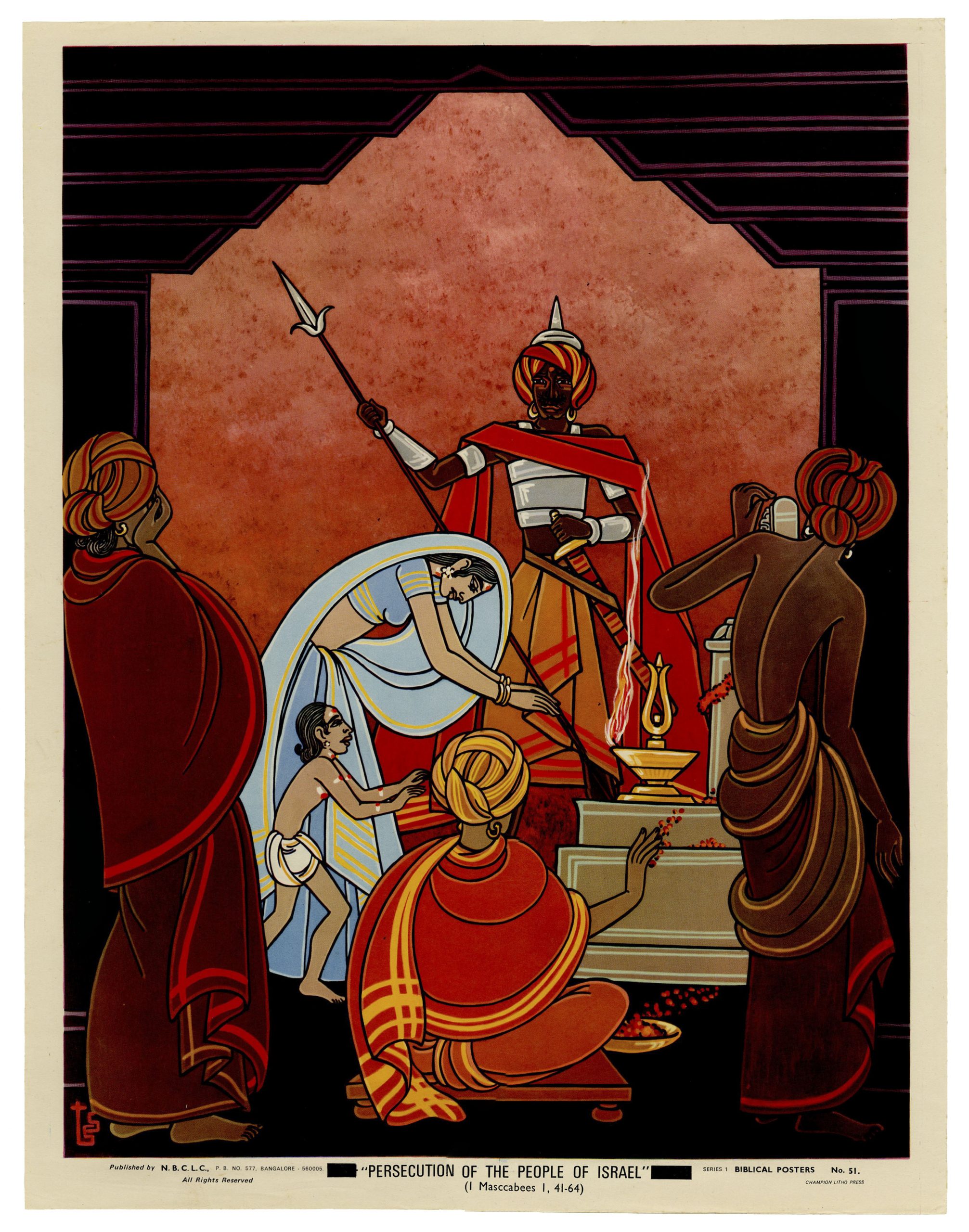
To build altars and sacred precincts and shrines for idols: In cultures where altars are unknown, translators may say “places [or, platforms] for sacrificing animals.” The Greek words for sacred precincts and shrines for idols refer to sanctuaries for worshiping idols. An alternative model for the whole clause is “Altars, temples, and other places to worship idols were to be built” or “You must build altars, temples, and other places to worship idols [or, our gods].”
To sacrifice swine and unclean animals: Unclean animals are animals that are ritually unclean. They are unclean is from the standpoint of the Jews, not Antiochus. So this clause may be rendered “Pigs and other animals that were unclean [or, taboo] to the Jews were to be sacrificed” or “You must sacrifice pigs and other animals that you consider unclean [or, taboo].”
Quoted with permission from Bullard, Roger A. and Hatton, Howard A. A Handbook on 1-2 Maccabees. (UBS Helps for Translators). New York: UBS, 2011. For this and other handbooks for translators see here.

Leave a Reply
You must be logged in to post a comment.