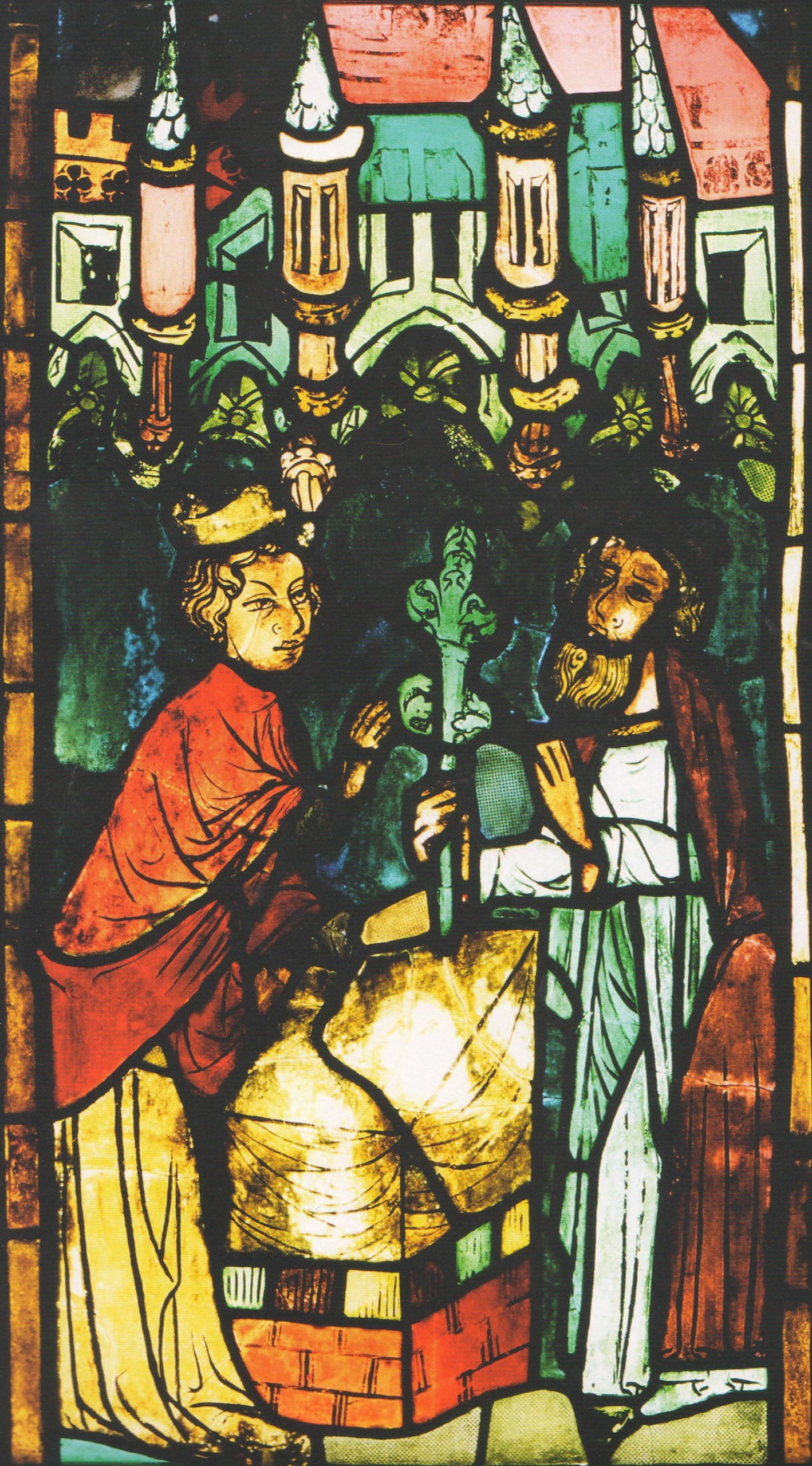
The following is a stained glass window from the Three choir windows in the Marienkirche, Frankfurt (Oder), Germany, of the 14th century, depicting Solomon and the Queen of Sheba:
Source: Der gläserne Schatz: Die Bilderbibel der St. Marienkirche in Frankfurt (Oder), Neuer Berlin Verlag, 2005, copyright for this image: Brandenburgisches Landesamt für Denkmalpflege und Archäologisches Landesmuseum
Stained glass is not just highly decorative, it’s a medium which has been used to express important religious messages for centuries. Literacy was not widespread in the medieval and Renaissance periods and the Church used stained glass and other artworks to teach the central beliefs of Christianity. In Gothic churches, the windows were filled with extensive narrative scenes in stained glass — like huge and colorful picture storybooks — in which worshipers could ‘read’ the stories of Christ and the saints and learn what was required for their religious salvation. (Source: Victoria and Albert Museum )
The following is a stained glass window from the Three choir windows in the Marienkirche, Frankfurt (Oder), Germany, of the 14th century, depicting the budding of Aaron’s rod:
Source: Der gläserne Schatz: Die Bilderbibel der St. Marienkirche in Frankfurt (Oder), Neuer Berlin Verlag, 2005, copyright for this image: Brandenburgisches Landesamt für Denkmalpflege und Archäologisches Landesmuseum
Stained glass is not just highly decorative, it’s a medium which has been used to express important religious messages for centuries. Literacy was not widespread in the medieval and Renaissance periods and the Church used stained glass and other artworks to teach the central beliefs of Christianity. In Gothic churches, the windows were filled with extensive narrative scenes in stained glass — like huge and colorful picture storybooks — in which worshipers could ‘read’ the stories of Christ and the saints and learn what was required for their religious salvation. (Source: Victoria and Albert Museum )
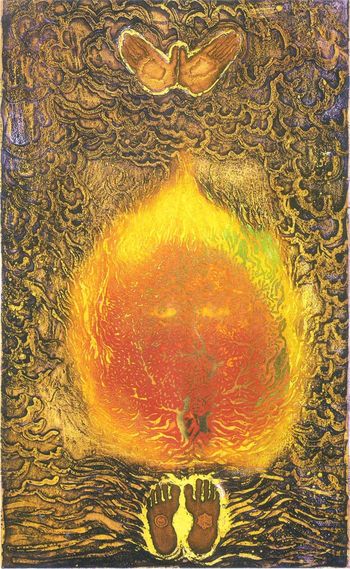
Artwork by Indian artist Paul Koli (b. 1945). “Paul Koli is Professor of the Print Making Class of the Sir J.J. School of Art, Bombay. His print ‘Burning Bush’ was produced in 1984 and was part of a collection of Christian art which traveled through Europe and America in 1988/89. It shows a strong command of color in printing.” (Source for this and the image: The Bible Through Asian Eyes by Masao Takenaka and Ron O’Grady 1991)
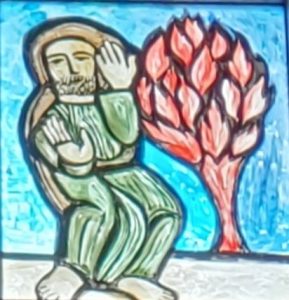
The following is a stained glass window in the Sacred Heart Cathedral in Chiang Mai, Thailand, depicting Moses and the burning bush:
Photo by Jost Zetzsche
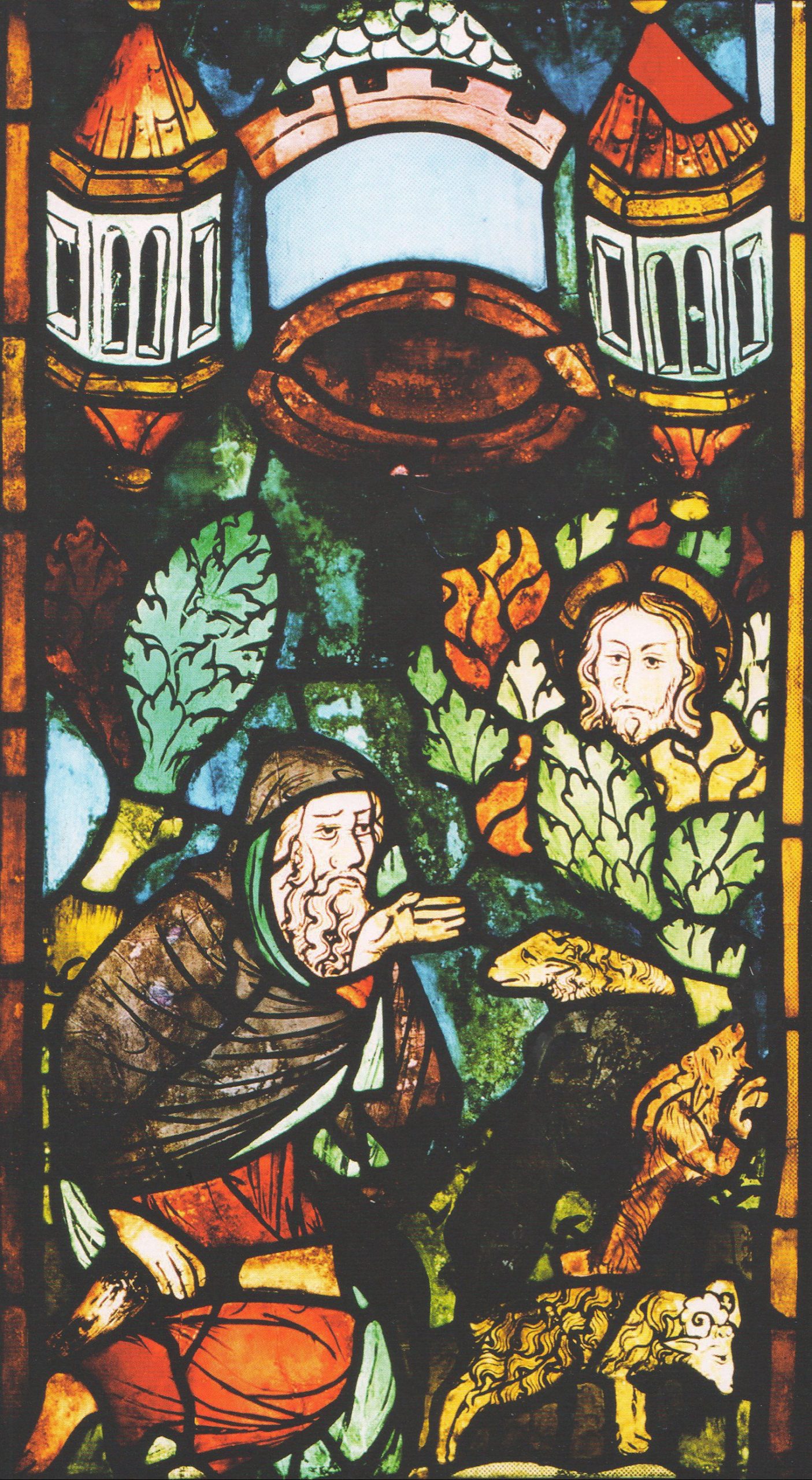
The following is a stained glass window from the Three choir windows in the Marienkirche, Frankfurt (Oder), Germany, of the 14th century:
Source: Der gläserne Schatz: Die Bilderbibel der St. Marienkirche in Frankfurt (Oder), Neuer Berlin Verlag, 2005, copyright for this image: Brandenburgisches Landesamt für Denkmalpflege und Archäologisches Landesmuseum
Stained glass is not just highly decorative, it’s a medium which has been used to express important religious messages for centuries. Literacy was not widespread in the medieval and Renaissance periods and the Church used stained glass and other artworks to teach the central beliefs of Christianity. In Gothic churches, the windows were filled with extensive narrative scenes in stained glass — like huge and colorful picture storybooks — in which worshipers could ‘read’ the stories of Christ and the saints and learn what was required for their religious salvation. (Source: Victoria and Albert Museum )
The following is a stained glass window in the Sacred Heart Cathedral in Chiang Mai, Thailand, depicting Jonah praying in the fish:
Photo by Jost Zetzsche
Stained glass is not just highly decorative, it’s a medium which has been used to express important religious messages for centuries. Literacy was not widespread in the medieval and Renaissance periods and the Church used stained glass and other artworks to teach the central beliefs of Christianity. In Gothic churches, the windows were filled with extensive narrative scenes in stained glass — like huge and colorful picture storybooks — in which worshipers could ‘read’ the stories of Christ and the saints and learn what was required for their religious salvation. (Source: Victoria and Albert Museum )
The following is a stained glass window in the Sacred Heart Cathedral in Chiang Mai, Thailand, depicting Joseph in the cistern:
Photo by Jost Zetzsche
Stained glass is not just highly decorative, it’s a medium which has been used to express important religious messages for centuries. Literacy was not widespread in the medieval and Renaissance periods and the Church used stained glass and other artworks to teach the central beliefs of Christianity. In Gothic churches, the windows were filled with extensive narrative scenes in stained glass — like huge and colorful picture storybooks — in which worshipers could ‘read’ the stories of Christ and the saints and learn what was required for their religious salvation. (Source: Victoria and Albert Museum )
The Hebrew, Latin, and Greek that is transliterated as “Hosea” in English means “Jehovah is help or salvation,” “salvation.” (Source: Cornwall / Smith 1997 )
In Swiss-German Sign Language it is translated with a sign that depicts going away and returning, referring to Hosea going away and finding the prostitute Gomer to marry and then returning home with her (see Hosea 1:2 and Hosea 1:3).
In Hungarian Sign Language it is translated with a sign thatrefers to the faithful acceptance of God’s inexplicable command (as one who is able, as it were, to swallow the evil—that is, to endure his wife’s infidelity — see Hosea 3:1). (Source: Jenjelvi Biblia and HSL Bible Translation Group)
“Hosea” in Hungarian Sign Language — note that only the first part refers to “Hosea,” the second and third parts refer to “prophet” and “book” (source )
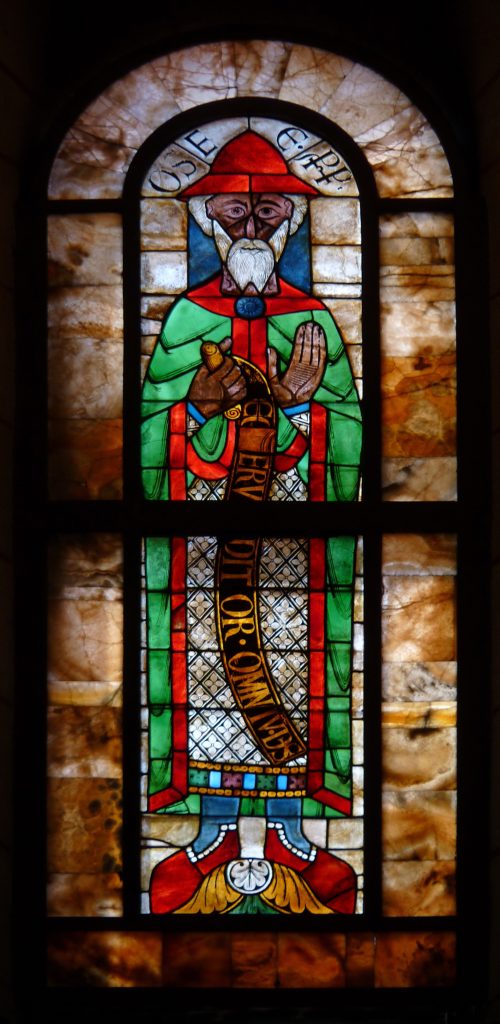
The following is a stained glass window of Hosea in the Augsburg Cathedral in Germany. It is part of the “Prophet windows of Augsburg ” from the 12th century which is assumed to be the oldest remaining set of church windows:
Photo by Hans Bernhard, hosted by Wikimedia Common under the GFDL-CC-BY-SA-all license
Stained glass is not just highly decorative, it’s a medium which has been used to express important religious messages for centuries. Literacy was not widespread in the medieval and Renaissance periods and the Church used stained glass and other artworks to teach the central beliefs of Christianity. In Gothic churches, the windows were filled with extensive narrative scenes in stained glass — like huge and colorful picture storybooks — in which worshipers could ‘read’ the stories of Christ and the saints and learn what was required for their religious salvation. (Source: Victoria and Albert Museum )
Illustration by Annie Vallotton, copyright by Donald and Patricia Griggs of Griggs Educational Service. More images can be viewed at rotation.org . For other images by Annie Vallotton on Translation Insights & Perspectives, see here.
The following is a contemporary stained glass window in the Chichester Cathedral in England:
Photo by Julian P Guffogg, hosted by Wikimedia Common under the Creative Commons Attribution-Share Alike 2.0 Generic license
Stained glass is not just highly decorative, it’s a medium which has been used to express important religious messages for centuries. Literacy was not widespread in the medieval and Renaissance periods and the Church used stained glass and other artworks to teach the central beliefs of Christianity. In Gothic churches, the windows were filled with extensive narrative scenes in stained glass — like huge and colorful picture storybooks — in which worshipers could ‘read’ the stories of Christ and the saints and learn what was required for their religious salvation. (Source: Victoria and Albert Museum )
The following is a stained glass window depicting Methuselah, ca. 12th century in the Canterbury Cathedral in Kent, England:
Photo by Robert Scarth, hosted by Wikimedia Commons under a Creative Commons Attribution-Share Alike 2.0 Generic license
Stained glass is not just highly decorative, it’s a medium which has been used to express important religious messages for centuries. Literacy was not widespread in the medieval and Renaissance periods and the Church used stained glass and other artworks to teach the central beliefs of Christianity. In Gothic churches, the windows were filled with extensive narrative scenes in stained glass — like huge and colorful picture storybooks — in which worshipers could ‘read’ the stories of Christ and the saints and learn what was required for their religious salvation. (Source: Victoria and Albert Museum )