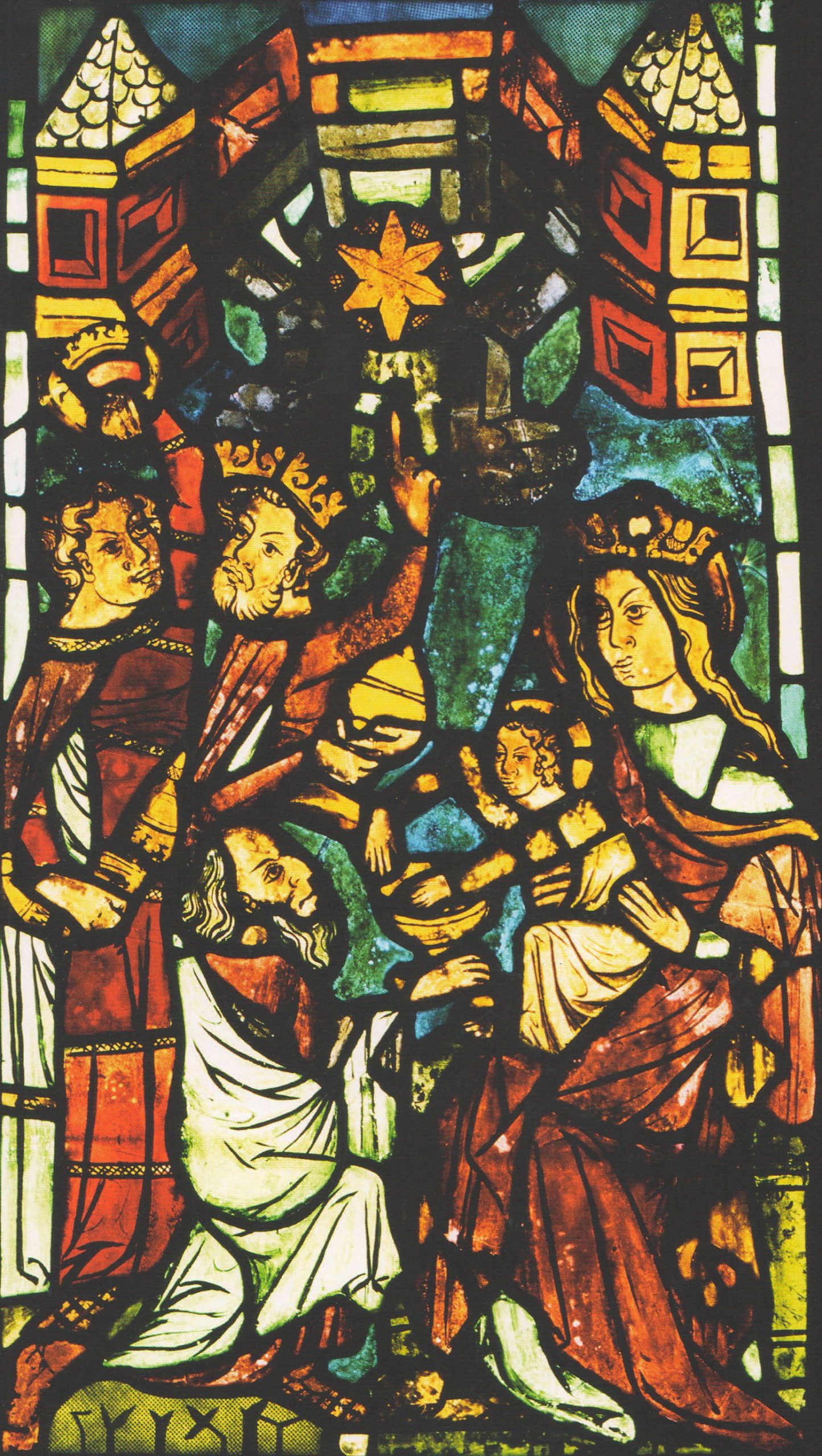
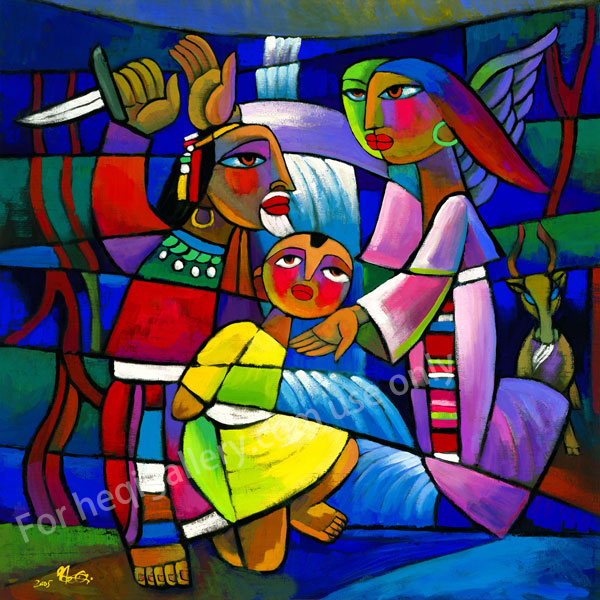
Pentecost

Hand colored stencil print on washi by Sadao Watanabe (1969).

Image taken with permission from the SadaoHanga Catalogue where you can find many more images and information about Sadao Watanabe. For other images of Sadao Watanabe art works in TIPs, see here.

The following is the image “Pentecost” by Sister Marie Claire , SMMI (1937–2018) from Bengaluru, India:

Taken from the Global Christian Worship blog.

Following is a 1973 painting of the JESUS MAFA project, a response to New Testament readings from the Lectionary by a Christian community in Cameroon, Africa. Each of the readings was selected and adapted to dramatic interpretation by the community members. Photographs of their interpretations were made, and these were then transcribed to paintings:
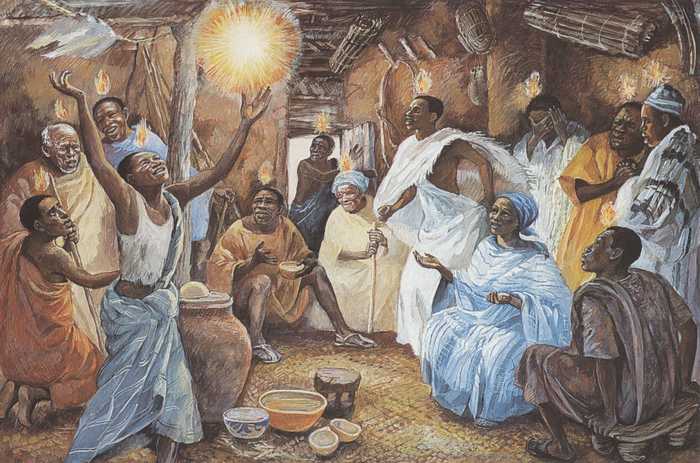
The exuberant expression of joy in this depiction represents the Acts story, including Mary and the women mentioned in Acts, Chapter 1. Pentecost was originally an ancient Hebrew time of thanksgiving celebration for the first grain harvest, as recorded in Leviticus. The new significance given to this day by the gospel writers and early Christians extends that joyful expression to the new “filling up” by the Holy Spirit.

Source: Art in the Christian Tradition , a project of the Vanderbilt Divinity Library, Nashville, TN. Image retrieved March 23, 2026. Original source: librairie-emmanuel.fr.

The following is a 2003 stained glass window by Ronald Kraut from the Our Lady Of Pentecost Church, Quezon City, Philippines:
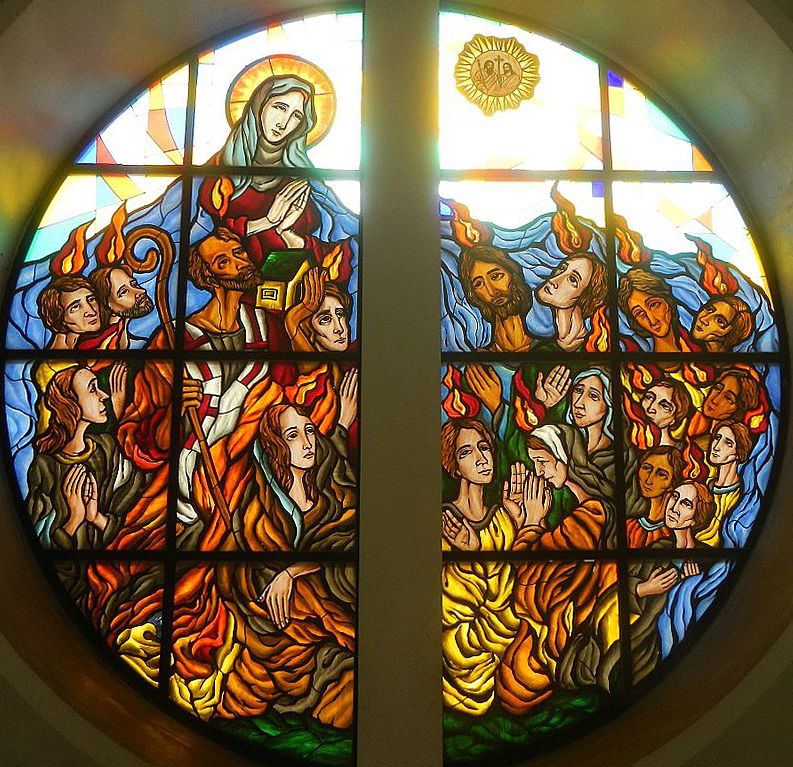
Source: Art in the Christian Tradition , a project of the Vanderbilt University Divinity Library, Nashville, TN. Original source: Wikimedia

Stained glass is not just highly decorative, it’s a medium which has been used to express important religious messages for centuries. Literacy was not widespread in the medieval and Renaissance periods and the Church used stained glass and other artworks to teach the central beliefs of Christianity. In Gothic churches, the windows were filled with extensive narrative scenes in stained glass — like huge and colorful picture storybooks — in which worshipers could ‘read’ the stories of Christ and the saints and learn what was required for their religious salvation. (Source: Victoria and Albert Museum )

Jacob and the angel

Hand colored stencil print on washi by Sadao Watanabe (1970).

Image taken with permission from the SadaoHanga Catalogue where you can find many more images and information about Sadao Watanabe. For other images of Sadao Watanabe art works in TIPs, see here.

The following artwork is part of a series of 56 paintings on biblical themes by Kazakh artist Nelly Bube (born 1949):

Copyright by Norwegian Bible Society , used with permission.

For other images of Nelly Bube in TIPs, see here.

The following is a stained glass window in the Sacred Heart Cathedral in Chiang Mai, Thailand:

Photo by Jost Zetzsche

Stained glass is not just highly decorative, it’s a medium which has been used to express important religious messages for centuries. Literacy was not widespread in the medieval and Renaissance periods and the Church used stained glass and other artworks to teach the central beliefs of Christianity. In Gothic churches, the windows were filled with extensive narrative scenes in stained glass — like huge and colorful picture storybooks — in which worshipers could ‘read’ the stories of Christ and the saints and learn what was required for their religious salvation. (Source: Victoria and Albert Museum )

Philip and the Ethiopian

Hand colored stencil print on momigami by Sadao Watanabe (1989).

Image taken with permission from the SadaoHanga Catalogue where you can find many more images and information about Sadao Watanabe. For other images of Sadao Watanabe art works in TIPs, see here.

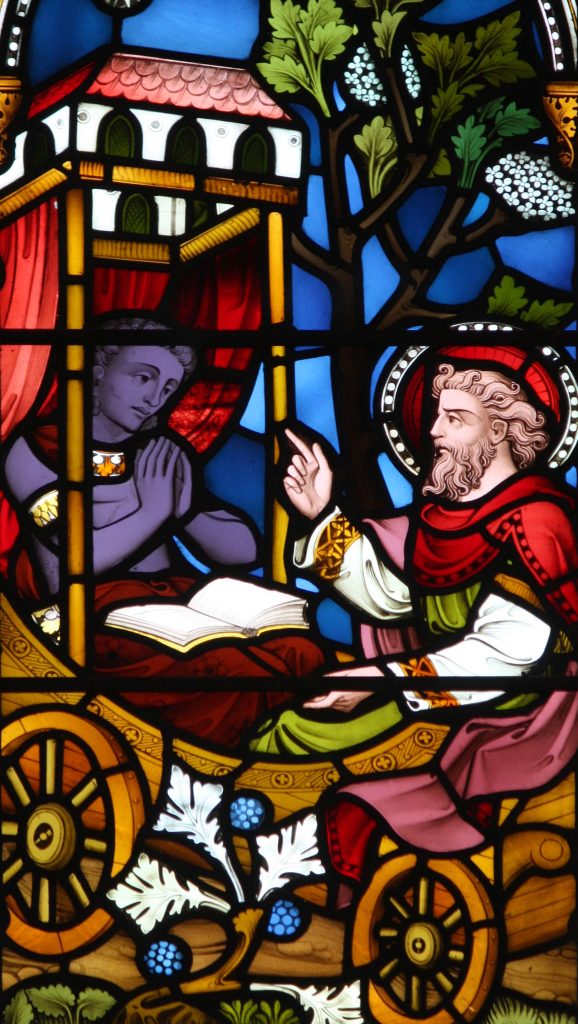
The following is a stained glass window from the Exeter College Chapel in Oxford:

Source: Art in the Christian Tradition , a project of the Vanderbilt University Divinity Library, Nashville, TN. Original source: photograph taken by Father Lawrence Lew, O.P., available on Flickr

Stained glass is not just highly decorative, it’s a medium which has been used to express important religious messages for centuries. Literacy was not widespread in the medieval and Renaissance periods and the Church used stained glass and other artworks to teach the central beliefs of Christianity. In Gothic churches, the windows were filled with extensive narrative scenes in stained glass — like huge and colorful picture storybooks — in which worshipers could ‘read’ the stories of Christ and the saints and learn what was required for their religious salvation. (Source: Victoria and Albert Museum )

The good shepherd

Hand colored stencil print on washi by Sadao Watanabe (1975).

Image taken with permission from the SadaoHanga Catalogue where you can find many more images and information about Sadao Watanabe.

For other images of Sadao Watanabe art works in TIPs, see here.

The following is a stained glass window from 1906 and made by R. T. Giles & Co. of Minneapolis for the First Presbyterian Church, Salt Lake City, Utah :

Photo by NateBergin, hosted by Wikimedia Commons under a Creative Commons Attribution 4.0 International license

Stained glass is not just highly decorative, it’s a medium which has been used to express important religious messages for centuries. Literacy was not widespread in the medieval and Renaissance periods and the Church used stained glass and other artworks to teach the central beliefs of Christianity. In Gothic churches, the windows were filled with extensive narrative scenes in stained glass — like huge and colorful picture storybooks — in which worshipers could ‘read’ the stories of Christ and the saints and learn what was required for their religious salvation. (Source: Victoria and Albert Museum )
Adoration of the magi (image)

Hand colored stencil print on washi by Sadao Watanabe (1994).

Image taken with permission from the SadaoHanga Catalogue where you can find many more images and information about Sadao Watanabe. For other images of Sadao Watanabe art works in TIPs, see here.

Following is a painting by He Qi (“Adoration of the Magi”):

He Qi © 2021 All Rights Reserved.

Image taken from He Qi Art . For purchasing prints of this and other artworks by He Qi go to heqiart.com . For other images of He Qi art works in TIPs, see here.

Following is a painting by Kim Ki-chang (1913-2001):

Kim Ki-chang (pen name: Unbo) had been deaf and partially mute since the age of 7. He painted a series of 30 paintings for the “Life of Christ” cycle in 1952 during the Korean War. Kim portrayed Jesus as a seonbi / 선비, or a Joseon Period (1392-1910) gentleman scholar, wearing a gat / 갓 (hat) and dopo / 도포 (robe). For other images of Kim Ki-chang art works in TIPs, see here.

The following is a stained glass window from the Three choir windows in the Marienkirche, Frankfurt (Oder), Germany, of the 14th century, depicting God calling out to Adam who is hiding:

Source: Der gläserne Schatz: Die Bilderbibel der St. Marienkirche in Frankfurt (Oder), Neuer Berlin Verlag, 2005, copyright for this image: Brandenburgisches Landesamt für Denkmalpflege und Archäologisches Landesmuseum

Stained glass is not just highly decorative, it’s a medium which has been used to express important religious messages for centuries. Literacy was not widespread in the medieval and Renaissance periods and the Church used stained glass and other artworks to teach the central beliefs of Christianity. In Gothic churches, the windows were filled with extensive narrative scenes in stained glass — like huge and colorful picture storybooks — in which worshipers could ‘read’ the stories of Christ and the saints and learn what was required for their religious salvation. (Source: Victoria and Albert Museum )

Ascension of Elijah

Hand colored stencil print on washi by Sadao Watanabe (1977).

Image taken with permission from the SadaoHanga Catalogue where you can find many more images and information about Sadao Watanabe. For other images of Sadao Watanabe art works in TIPs, see here.

The following is a stained glass window depicting Elijah by Endre Odon Hevezi and Gyula Bajo from 1965 for the Debre Libanos Monastery, Oromia, Ethiopia:

Photo by Timothy A. Gonsalves, hosted by Wikimedia Commons under a Creative Commons Attribution-Share Alike 4.0 International license

Stained glass is not just highly decorative, it’s a medium which has been used to express important religious messages for centuries. Literacy was not widespread in the medieval and Renaissance periods and the Church used stained glass and other artworks to teach the central beliefs of Christianity. In Gothic churches, the windows were filled with extensive narrative scenes in stained glass — like huge and colorful picture storybooks — in which worshipers could ‘read’ the stories of Christ and the saints and learn what was required for their religious salvation. (Source: Victoria and Albert Museum )

He Drove Out the Humans

This is a contemporary tempera/gouache on leather painting by an unknown Ethiopian artist. Source: Sacred Art Pilgrim website .

The following is a stained glass window in the Sacred Heart Cathedral in Chiang Mai, Thailand, depicting Adam and Eve being banished from Eden:

Photo by Jost Zetzsche

Stained glass is not just highly decorative, it’s a medium which has been used to express important religious messages for centuries. Literacy was not widespread in the medieval and Renaissance periods and the Church used stained glass and other artworks to teach the central beliefs of Christianity. In Gothic churches, the windows were filled with extensive narrative scenes in stained glass — like huge and colorful picture storybooks — in which worshipers could ‘read’ the stories of Christ and the saints and learn what was required for their religious salvation. (Source: Victoria and Albert Museum )

Sacrifice of Isaac

Image taken from an Armenian Gospel Book of 1455 in the Khizan style. (Source: Evans 2018, p. 206)

The following is a contemporary painting by He Qi:

He Qi © 2021 All Rights Reserved.

Image taken from He Qi Art . For purchasing prints of this and other artworks by He Qi go to heqiart.com . For other images of He Qi art works in TIPs, see here.

Following is an artwork by Sister Marie Claire , SMMI (1937–2018) from Bengaluru, India.

For more information about images by Sister Marie Claire and ways to purchase them as lithographs, see here . For other images of Sister Marie Claire paintings in TIPs, see here.

The following is a stained glass window from the Three choir windows in the Marienkirche, Frankfurt (Oder), Germany, of the 14th century:

Source: Der gläserne Schatz: Die Bilderbibel der St. Marienkirche in Frankfurt (Oder), Neuer Berlin Verlag, 2005, copyright for this image: Brandenburgisches Landesamt für Denkmalpflege und Archäologisches Landesmuseum

Stained glass is not just highly decorative, it’s a medium which has been used to express important religious messages for centuries. Literacy was not widespread in the medieval and Renaissance periods and the Church used stained glass and other artworks to teach the central beliefs of Christianity. In Gothic churches, the windows were filled with extensive narrative scenes in stained glass — like huge and colorful picture storybooks — in which worshipers could ‘read’ the stories of Christ and the saints and learn what was required for their religious salvation. (Source: Victoria and Albert Museum )

See also other stained glass windows from the Marienkirche in Frankfurt.