Introduction to Deuteronomy (Christian Community Bible)

(The Catholic Christian Community Bible [first English edition 1997, other translations into Indonesian, Chinese, Cebuano, Chavacano, French, Ilonggo, Korean, Quechuan, Spanish, and Tagalog] “for the Christian Communities of the Third World” uses the following introduction.)
Deuteronomy means second law. It was so named because this law is recorded in the Bible after all the laws found in the books of Leviticus and Numbers. Nevertheless, it was partly written before those books. It was the first attempt at unifying commands and customs in order to give Israel the Law in which it would find life.

When Deuteronomy was edited in the 7th century before Christ, more than five hundred years had passed since Moses’ encounter with God. The land of Canaan had been conquered, the Kingdom of David and Solomon had been established, then, divided. The largest and most prosperous area to the north, called the Kingdom of Israel, had ceased to exist and the same destiny was, at that time, threatening the Kingdom of Judah, the southern province.

It was then that this Law of Yahweh became known, a law which revealed to the people the cause of their defeats and which offered them an opportunity for salvation. Left and forgotten in the Temple during the persecution of Manasseh, its discovery in 622 (2 K 22) was at the root of Josiah’s reform.

Moses and Deuteronomy

Deuteronomy was welcomed by the people of Israel and their shepherds as the word of God and the teaching of Moses, but the authors were priests and prophets who summarized in these pages the experience the Israelites had acquired throughout their history.

As happens in other books of the Bible, the authors of Deuteronomy placed on the lips of Moses the very discourses they themselves wanted to address to their people. In a fictitious way they imagine that, before his death, Moses foresaw the tragic fate awaiting his people. They attribute to Moses the warnings and the laws which could still save Israel. Deuteronomy, in fact, uses the preaching of the prophets concerning justice and love: it is the first effort ever made in the world to establish a responsible and fraternal society.

Love of God and the promised land

Moses had ordered the conquest of the land of Canaan. Deuteronomy says that, since this land is a gift from God, Israel must obey the Law in order to keep the land. Moses had spoken only of serving God. Deuteronomy now makes known the great laws of the love of God.

God is the one who loves first. God does not give his love indiscriminately to everyone, but loves especially those whom he chooses to serve him (Dt 7:6-8). And the proof that he has chosen Israel is found in the supernatural interventions of God in their favor, when he took them out of Egypt (Dt 4:32-40).

Israel must respond to God with love from the heart (which was not found in the ten commandments). See Dt 6:1-9.

The Israelites must preserve solidarity; they must be able to love and forgive each other (Dt 15). They must also be united around the only Temple in Jerusalem (Dt 12).

The way to love God is to love him faithfully (Dt 13).

Down below are the introductions in the Mandarin Chinese, Tagalog, Cebuano, and Spanish editions.
Translation: Mandarin Chinese

申命纪的意思是第二套法律。继肋未纪和户籍纪的法律之后,圣经中出现了申命纪中的法律条文。称此书为申命纪,也就是重申前命的意思。但在史实上,申命纪的成书时间比另外两本要早得多。申命纪首次尝试了如何使以色列人的传统和习俗得到统一,以便给民族提供赋有生命的法律。

大约在公元前七世纪,人们编撰了申命纪,梅瑟会见天主后又过了五百年的时间。其间以色列人征服了迦南。达味和所罗门王国经历了辉煌的繁荣后,江山一分为二。此书写成时,北部最大最富庶的地区以色列王国已灭亡,同样的命运正威胁着南部的犹大王国。

正是在这种情形下,雅威的法律传扬开来,为了能帮助民众认识失败的原因,珍视获救的机会。在默纳舍迫害时期,这套法律被遗忘在圣殿。人们在前622年(列下22章)发现并找回了这套法律,它便成为约史雅改革的基础。

梅瑟和申命纪

以色列的民众和他们的领袖真心诚意地接受了申命纪的法律,把书中的内容看成是直接来自天主的圣言,是梅瑟的教诲。事实上申命纪的作者是司祭和先知,他们把以色列民众在历史上的经历加以总结,写下了这本书。

如同圣经中其它的书,此书的作者把他们自己想要对人民说的话,借梅瑟之口表达出来。作者用文学表达的方式,设想出梅瑟死后他对民众悲惨结局的预示。他们将那些依旧可拯救以色列的誓言和法律通通归到梅瑟的名下。事实上,申命纪记载了先知们在正义和爱的主题上,对民众的教诲。这或许是人类最早的、对友爱社会、责任感及手足之情的倡导。

天主的爱和许诺之地

梅瑟下过要征服迦南地的命令。申命纪中说,既然这块土地是天主的礼物,为了保有这块土地,以色列民众就必须遵守天主的律法。

梅瑟谈到奉献于天主,申命纪是宣布天主之爱的法律。

是天主先爱了我们。天主以不同的方式,不同的情怀爱着他创造的每一个人,爱与爱的方式虽有不同,性质却是一样的。天主特别钟爱那些被选来侍奉他的人(申7:6)。以色列必须衷心地以爱回报天主(十诫中却没有提及),见申6:1-9。以色列人必须保持团结,要学会怎样彼此相爱和原谅(申15)。他们还必须团结在耶路撒冷的唯一圣殿周围(申12)。

Translation: Tagalog

Pangalawang Batas ang ibig sabihin ng Deuteronomio. Ganito ang itinawag dito dahil sa pagkakalagay nito sa ating Biblia pagkatapos ng kabuuan ng mga batas na nasa mga aklat ng Levitico at Mga Bilang. Subalit unang isinulat ang Deuteronomio kaysa mga ito. Para pag isahin ang mga utos at mga kaugalian ang unang layunin nito at para ibigay sa Israel ang Batas na katatagpuan nito ng buhay.

At nang inedit ang Deuteronomio, sa ika-7 dantaon bago dumating si Kristo, higit sa limandaang taon na ang lumipas mula nang makipagtagpo si Moises sa Diyos. Nasakop na ang lupain ng Kanaan, naitatag na ang Kaharian nina David at Solomon at pagkatapos ay nahati.

Bumagsak na ang mas malaki at mas masaganang probinsya sa hilaga na tinatawag na Kaharian ng Israel. At gayon ding kapalaran ang nagbabanta nang mga taong iyon sa Kaharian ng Juda na probinsya sa timog.
Noon ipinagbigay-alam ang Batas na ito ni Yawe. Inilantad nito sa kanyang bayan ang dahilan ng kanilang mga pagkatalo at iniaalok ang isang pagkakataon para maligtas. Matagal na itong nalimutan sa Templo sa panahon ng pag-uusig ni Manases. Ngunit ang pagkatuklas dito sa taong 622 (2 H 22) ang siyang pinakaugat ng reporma ni Yosias.

Si Moises at ang Deuteronomio

Tinanggap ng bayan ng Israel at ng kanilang mga pastol ang Deuteronomio bilang salita ng Diyos at aral ni Moises, pero ang mga pari at ang mga propeta naman ang sumulat nito. Binuod nila sa mga pahinang ito ang kanilang karanasan sa kabuuan ng kanilang kasaysayan.

Tulad sa iba pang mga libro sa Biblia, inilagay sa bibig ni Moises ng mga sumulat ng Deuteronomio ang mga diskursong gusto nila mismong sabihin sa kanilang bayan. Gawa-gawa lamang ang pagsasalaysay nila na bago mamatay ay nakinikinita na ni Moises ang masaklap na kapalarang naghihintay sa kanyang bayan. Sinasabi nilang sa kanya galing ang mga babala at mga batas na pupuwede pang magligtas sa Israel. Sa totoo'y ginagamit ng Deuteronomio ang pangangaral ng mga propeta tungkol sa katarungan at pag-ibig: ito ang kauna-unahang pagsisikap na ginawa sa daigdig para bumuo ng isang lipunang may pagkakaisa't pagka kapatiran.

Translation: Cebuano

Ang Deuteronomio ikaduhang balaod. Gigamit kining ngalana, kay ang maong balaod nahimutang man sa Biblia human sa mga balaod sa Levitico ug Mga Numero. Apan bisan pa ini, kining basahona unang nasulat sa nahisgotang duha ka basahon. Ang una ning lakang paghiusa sa kasugoan ug mga kostumbre sa Israel aron pinaagi sa Balaod makaplagan ang tinuod nga kinabuhi.

Dihang gihashasan ang Deuteronomio sa ikapitong siglo sa wala pa si Cristo, milabay na nig kapin sa 500 ka tuig sukad sa talagsaong kasinatian ni Moises uban sa Diyos. Ang yuta sa Canaan gibuntog nila ug natukod ang gingharian ni David ug Solomon unya, nabahin ni. Ang labing dako ug mauswagong dapit sa amihanan ginganlag Gingharian sa Israel nga nailog sa langyawng nasod. Sa maong panahon nag-atubang sa samang hulga ang gingharian sa habagatan, ang Gingharian sa Juda.

Ining panahona nasinati sa katawhan ang Balaod ni Yahweh nga nagpadayag sa hinungdan sa ilang kaparotan ug nagtanyag og kahigayonan sa kaluwasan. Nalimtan kining basahona sa Templo panahon sa panglutos ni Manases ug nakaplagan sa tuig 622 BC (2 H 22), sa paghimo ni Hari Osias og dagkong kabag-ohan.

Si Moises ug ang Deuteronomio

Ang Deuteronomio gidawat sa katawhan sa Israel ug sa ilang kadagkoan isip pulong sa Diyos ug pagtulon-an ni Moises. Apan gisulat ni sa mga pari ug propeta agig sumada sa kasinatian nila sa tibuok kasaysayan.

Sama sa nahitabo sa ubang basahon sa Biblia, gibutang sa tagsulat sa Deuteronomio sa baba ni Moises ang wali nila sa katawhan. Nagmugna silag paagi sa paghanduraw nga sa wala pa mamatay nakakita na si Moises sa masulub-ong dangatan sa katawhan. Gihimo nila nga maiya ni Moises ang mga pasidaan ug balaod nga makaluwas sa Israel. Apan sa pagkatinuod ang Deuteronomio nagamit sa mga wali sa mga propeta mahitungod sa hustisya ug gugma: ang unang paningkamot sa kalibotan pagtukod og katilingban nga dunay inigsoonay.

Ang Gugma sa Diyos ug ang Yuta sa saad

Nagmando si Moises sa pagbuntog sa yuta sa Canaan. Gihisgotan sa Deuteronomio nga kay gasa man sa Diyos kining yutaa, tumanon sa Israel ang Balaod aron mailaha ang yuta.

Naghisgot pod si Moises sa pag-alagad sa Diyos samtang ang Deutoronomio nagpadayag sa mga importanting balaod sa paghigugma sa Diyos.
Unang nahigugma nato ang Diyos. Way gipihig ang iyang gugma. Apan makadawat sa talagsaong gugma ang gitawag sa pag-alagad sa Diyos (Dt 7:6-8). Ang pagluwas Niya sa katawhan sa Ehipto dakong kamatuoran sa dako niyang gugma sa Israel, gugma nga nagmatuod sa diyosnong pagpangilabot nga labaw pa sa kinaiyahan (Dt 4:32-40).

Busa, kinahanglang tubagon sa Israel ang Diyos pinaagi sa gugma nga nagsukad sa kailadman (balaod ni nga wala masakop sa 10 ka sugo) (Basaha ang Dt 6:1-9).

Ampingan sa Israel ang pag-inunongay; maghigugmaay ug magpasayloay sila (Dt 15), ug magkahiusa sa mao rang Templo sa Jerusalem (Dt 12).

Ang hustong pamaagi sa paghigugma sa Diyos mao ang paghimo ini nga matinud-anon (Dt 13).

Translation: Spanish

Deuteronomio significa “Segunda Ley”, y fue llamado así por estar ubicado en la Biblia después del conjunto de leyes que ocupan los libros del Levítico y de los Números. Sin embargo, fue escrito antes que éstos. Fue el primer intento para unificar mandamientos y costumbres y dar a Israel la Ley en que encontraría la vida.

La primera redacción del Deuteronomio tuvo lugar cuando ya habían transcurrido más de quinientos años desde el encuentro de Moisés con Dios. La tierra de Canaán había sido conquistada, el reino de David y Salomón se había levantado y, luego, dividido y debilitado. La provincia más grande y próspera, la del norte, llamada Reino de Israel, había dejado de existir, y la misma suerte amenazaba al Reino de Judá, la provincia del sur, en aquellos años del siglo VII antes de Cristo.

Fue entonces cuando llegó a ser pública esta Ley de Yavé, que denunciaba a su pueblo la causa de sus reveses y le ofrecía una oportunidad para salvarse. Olvidada en el Templo durante la persecución de Manasés, su descubrimiento, en el año 622 (2Re 22,1), originó la reforma de Josías.

En forma ficticia, el autor atribuye a Moisés las advertencias y las leyes que se leen en el presente libro. Ubica en las estepas de Moab, al otro lado del Jordán, los acontecimientos que ahí se leen. Es entonces cuando Moisés, poco antes de su muerte, da a Israel las leyes que pueden salvarlo.

El amor de Dios y la tierra de las promesas

Moisés había exigido la conquista de la tierra de Canaán. Ya eran dueños de ella y trataban de hacer buena figura entre los grandes de su tiempo. Dotados de un poder central, con un ejército, con templos y un clero respetado, pagaban un tributo a su Dios, pero en realidad, habían vuelto a ser como los demás pueblos.

Moisés había hablado de servir sólo a Yavé. El Deuteronomio, ahora, recuerda insistentemente a Israel que Yavé lo ha amado y escogido. Israel es ahora el pueblo al que Yavé ha concedido su alianza, y debe responderle con amor de corazón. Ver Dt 6,1.

Amor a Dios, bien es cierto, pero también amor al prójimo. El libro quiere fortalecer la unidad del pueblo, y muestra cómo el amor de Dios a su pueblo le exige crear una sociedad solidaria y fraternal.

Las principales divisiones del libro, pues, serán las siguientes:

1. Mirada retrospectiva y llamada de atención: capítulos 1,1—4,43.

2. Síntesis de los hechos narrados en el Éxodo y los Números: capítulos 4,44—11,32.

El autor insiste en la importancia del amor para comprender la ley de Dios.

3. Preceptos que corrigen y revisan las legislaciones anteriores: capítulos 12—28.

4. Un epílogo reúne textos de carácter exhortativo: capítulos: 29—34.

El libro concluye con la muerte de Moisés y el nuevo liderazgo de Josué.

Introduction to Numbers (Christian Community Bible)

(The Catholic Christian Community Bible [first English edition 1997, other translations into Indonesian, Chinese, Cebuano, Chavacano, French, Ilonggo, Korean, Quechuan, Spanish, and Tagalog] “for the Christian Communities of the Third World” uses the following introduction.)

Exodus presents the Israelites leaving Egypt for the desert. The next book, Leviticus, presented itself as a body of laws given by Moses in the desert. The book of Numbers, in turn, shows the Israelites wandering through the deserts of Sinai. In this journey the people gather experiences that will guide them in the future.

This book is called “Numbers” because it begins and ends with a census of the Israelites.

Many readers will find this book frustrating because it seems to ignore what is historically plausible. Likewise, many pages devoted to the laws and customs of Israel will appear as dry and dated as the chapters of Leviticus that precede this book.

Therefore, it helps to understand, from the beginning, that this book superimposes two histories. On one hand, we are dealing with ancient traditions found especially in chapters 11-14 and 20-25. At times, certain events of Exodus are related again in a different form. The book assumes that on Sinai, immediately after the great revelation to Moses and the story of the golden calf, God gave all the laws that are mentioned in Leviticus. Following that, the book situates all the events that it relates: all that we are going to read was supposed to have taken place in the course of the following year, during the crossing of the desert of Paran or upon arriving at the oasis of Kadesh.

The chapters we have just mentioned do contain ancient traditions. However, like Leviticus, most of the book was written in the priestly circles of Jerusalem, after the Israelites returned from the Exile, namely, around seven hundred years after Moses. The purpose of these priests was to justify the religious and social structure that they intended to establish in Israel in order to make of Israel the people consecrated to the worship of the one God.

All the initiatives attributed to Moses are meant for the Jews, back from the Exile. Thus, the authors depicted the setting in which they lived on the basis of the people before them: the hundred or so families of the Exodus became a people of six hundred thousand men, plus their wives, children and their cattle. The small wooden ark, that was carried on a donkey, became the center of a portable sanctuary, almost as impressive as the Jerusalem Temple and the priests with their rubrics always occupy center stage. When the account was written, Israel was just a quiet province within the Persian Empire: all the more reason to flatter their imagination and to build up Moses’ companions into a formidable, aggressive and conquering army at the service of the one God.

As with Leviticus, we have to say the following: those who accept this way of rewriting history will find the Word of the Holy God at every instant; the call to holiness is not just a personal matter but it conditions the entire life of the people of God. For God, Christians are holy people who have broken away from the ideal that liberal societies have about free humans who only seek the fulfillment of their desires or whims in this world. Before the God who called them to follow the path of Christ, human beings are totally at the service of a mission, so are couples who become families and the Christian community totally turned toward evangelization.

Down below are the introductions in the Mandarin Chinese, Tagalog, Cebuano, and Spanish editions.

Translation: Mandarin Chinese

本卷称为《户籍纪》,在本书的开首便交待了希伯来人口普查的情况。正像《肋未纪》引言中叙述的:本卷书中谈到的人口普查,希伯来人经历的事件和雅威对梅瑟的指示等,都是一种著述法律的方式。后来的以色列司祭整理编辑了这本书。

这并非说这本书没有任何历史依据:沙漠中的艰辛时光及后来由此而来的以色列传统便是这本书的历史温床。特别是在书中11-14和21-25章,不同的表达方式重复叙述了同一个故事:《出谷纪》。

《户籍纪》记载了天主的子民离开埃及后,穿越沙漠的长途跋涉行程。在那漫漫无期的旅程中,民众积累了大量特殊而宝贵的经验,这一切都为他们后来意义深重的历史做了准备和铺垫。

Translation: Tagalog

Tinatawag na "Mga Bilang" ang librong ito dahil nagsisimula ito sa mga bilang ng isang senso ng bayang Hebreo. Para rin dito ang sinasabi sa introduksyon sa Levitico: ang mga senso, mga pangyayari at mga deklarasyon ni Yawe kay Moises ay isang paraan lamang ng paglalahad sa mga batas na tinipon o inedit ng mga pari ng Israel pagkatapos ng panahon ni Moises.

Pero hindi gawa-gawa lamang ang lahat ng nasa kasaysayang ito: batay ito sa matatandang tradisyong may kinalaman sa panahon ng pananatili sa disyerto. Makikita ang mga ito partikular sa mga Kabanata 11-14 at 20-25 na umuulit nang ilang beses sa mga pangyayari sa Exodo sa ibang kaanyuan. Pagkatapos ng paglabas sa Ehipto, inilalahad ang aklat ng Mga Bilang bilang isang martsa ng bayan ng Diyos patawid sa disyerto. Sa pagmamartsang ito, nag-iipon ang bayan ng mga karanasang kikintal sa buong hinaharap nito.

Translation: Cebuano

Gitawag nig “Mga Numero,” kay nagsugod man sa paglista (mga numero) sa usa ka senso sa katawhang Hebreo. Susama sa nahisgotan na sa Pasiuna sa Levitico: Ang senso, ang panghitabo ug Pamahayag sa Diyos kang Moises pamaagi pagpadayag sa mga balaod nga gihiusa ug gihashasan sa mga pari sa Israel.

Ang mga ulohan 11-14 ug 20-25 hinuon angayng lainon og tan-aw. Makita dinhi ang nagkalainlaing tradisyon ug ang karaan kaayong mga saysay nga nahinumdoman sa didto pa sila sa kamingawan; mohingpit ni sa mabasa sa Exodo.

Translation: Spanish

Este libro se llama los “Números” porque comienza y acaba con un censo de los israelitas. Desconcertará a muchos lectores porque al parecer hace caso omiso de la veracidad histórica. Es conveniente pues tener claro desde un comienzo que este libro sobrepone dos historias.

Los Números se ubican a continuación del Éxodo y el Levítico. Suponen que en el Sinaí, inmediatamenåte después de la gran revelación a Moisés y de la historia del ternero de oro, Dios entregó todas las leyes a que se refiere el Levítico. Los hechos que nos cuentan habrían sucedido en el transcurso del año siguiente, durante la travesía del desierto de Parán o cuando llegaron al oasis de Cadés. Así es como los Números retoman antiguas tradiciones que se encontrarán muy especialmente en los capítulos 11-14 y 20-25 y que a veces repiten bajo una forma diferente algunos acontecimientos del Éxodo.

Pero, si bien es cierto que los capítulos que acabamos de indicar conservan elementos muy antiguos, lo esencial del libro fue redactado en los medios sacerdotales de Jerusalén en la misma época que el libro del Levítico, es decir, al regreso del exilio, unos setecientos años después de Moisés. El objetivo principal de esos sacerdotes era darle una legitimidad a toda la estructura religiosa y social de Israel como pueblo consagrado al culto del Dios único.

Todas las iniciativas que se atribuyen a Moisés van dirigidas en realidad a la comunidad judía de los tiempos posteriores al exilio, y los autores van a pintar el cuadro en que aquél se mueve a escala del pueblo que tienen bajo sus ojos: unos cientos de familias del Exodo se han transformado en un pueblo de seiscientos mil hombres adultos, sin contar sus mujeres, hijos y ganado. La pequeña arca de madera que se transportaba a lomo de burro es en ese momento el centro de un santuario portátil casi tan impresionante como el templo de Jerusalén, y los sacerdotes con sus ceremonias ocupan continuamente el centro de la escena. El relato fue escrito en una época en que Israel no era más que una modesta provincia del imperio persa: razón demás para estimular su imaginación y transformar a los compañeros de Moisés en un ejército formidable, agresivo y conquistador al servicio del Dios único.

Introduction to Leviticus (Christian Community Bible)

(The Catholic Christian Community Bible [first English edition 1997, other translations into Indonesian, Chinese, Cebuano, Chavacano, French, Ilonggo, Korean, Quechuan, Spanish, and Tagalog] “for the Christian Communities of the Third World” uses the following introduction.)

Leviticus is in the middle of the five books making up “the Law,” the heart of the Old Testament. It gets its name from the fact that it focuses especially in the ministry of the Levite priests, and the core of the book is the law of holiness. This tells us what God demands of the people who are privileged to belong to him, both in terms of their worship and of their daily lives.

This is enough for us to situate the book. We will better understand these laws and liturgical regulations, which are characteristic of ancient times, if we are willing to remember that holiness –- in the biblical sense, is just as real for us now. Holiness is one of the keys to knowing God and it helps us to understand our special vocation as a holy people. We can never overstate the fact that God embraces all of creation in his love, that God is present in it and in the lives of peoples, that God is very close to us “in secret” (Mt 6:6). Neither should we forget that God is “holy,” that is to say, totally distinct from creation and that his mysterious personality is incredibly beyond anything we can imagine. If God has called us to believe in his Only Son, our mission cannot be confused with any of the paths of wisdom that humankind has ever known: God has chosen us for his own “amazing and mysterious” work. Today though we are no longer bound by the countless liturgical or sociological precepts of the Law, these pages tell us again that we have been set apart in order to serve as leaven.

The spirit of the Law never changed after the revelation made to Moses, and became its foundation. However, many developments and adaptations did take place. The “Mosaic books,” as they are called, reach us in the state in which they were fixed by the Jewish priests of the fifth century before Jesus, at the time of the return from the Exile.

Previously, the influence of the prophets made itself felt. They were asking for a more dynamic faith, an awareness of the demands of justice inscribed in the Covenant and a struggle against alienating foreign influences. They were also speaking about preparing the future. But after the Babylonian captivity, Israel’s need to affirm its identity in order to face up to the trials of the nation, brought about a conservative trend that would become increasingly stronger in the course of time. Thus, many Jews went back to a religious conservatism made of rituals and traditions that Jesus would severely condemn (Mt 23).

These laws form part of the Scriptures and therefore they are the word of God. But they are words of God addressed to a people who had not yet received Christ. If we receive these words, it does not mean we should put them into practice just as they are since we have passed the first stage of human and religious formation of the Old Testament. In his letters, Paul attacks those who did not want to go beyond the customs and feasts of the Jews (Col 2:16), as well as those who primarily saw God’s word as laws to be observed (Gal 3:1-7). On the other hand, Jesus invites us not to lose anything of the spirit that inspired these laws (Mt 5:17-19).

Down below are the introductions in the Mandarin Chinese, Tagalog, Cebuano, and Spanish editions.
Translation: Mandarin Chinese

肋未纪是组成“梅瑟五书”的中心,是旧约的基础。它的名字来自承担司祭之职的肋未支派,本书的宗旨是神圣的律法,它告诉我们至圣的天主怎样要求有幸作祂子民的以色列人,在日常生活中要遵守的规范。

对这些繁杂的律法条目,现今的我们要比前人更能理解它们。圣经所说的圣洁,对任何时代的任何人都是有效的。它是打开通往认知天主的大门的钥匙之一,它也帮助我们懂得什么是作为神圣子民的特殊圣召。

我们从不过分渲染天主无边无际的大爱:祂爱每个受造物;祂临在于我们近旁;祂和我们“秘密相聚”(玛6:6),因为祂是“圣的”,是与我们完全不同的“另一位”,祂的神秘性远远超越我们能想像的范围。祂召叫我们信祂唯一的圣子,于是,我们的使命与人类的智慧所能达到的范畴(chóu)之间有了天壤之别:天主亲选我们,这一事实令人震惊,并充满神秘。即使今天的我们与律法书中的千百条礼仪戒律相去甚远,但此书仍一遍遍告诉我们:我们之所以被拣选,是因为我们要成为世上的盐,人间的酵母。

天主显现,授予梅瑟戒律。之后,律法的精神始终未变,只是有了相应的发展,使之与各种情况相适应。比如:“梅瑟五书”,是公元前五世纪的犹太司祭们从流放地归来后编写而成的。

先前,先知的言语起到很大的作用。他们要人们怀着活泼的信仰,要时刻牢记盟约中对正义的要求,要坚决抵抗外来的各种影响,还讲到要为未来做准备。

但历经流放至巴比伦后,另外一种要求变得更加迫切:面对民族受到的考验,人们需要肯定他们的身份,于是在以色列诞生了保守主义的思潮,并随着岁月的流逝而加强。许多犹太人固守一种宗教礼仪的传统,致使耶稣严厉地指责他们(玛23)。

这些法律是圣经的一部分,因此是天主的圣言。这是天主对那些还未认识基督的先古民族说的话,那时他们的信德根基还没有牢固,信德尚未成熟。但对于今天的我们来说,这些法律就不再有法律的权威性,我们亦不必像古犹太人那样对此奉行不渝;因为我们已经超越了旧约中人情和宗教形成的初级阶段。保禄在他的信中提到了那些顽固地坚守犹太人习俗和祭典的人(格后16)和那些只关心天主圣言的法律是否被忠诚地执行的人(迦3:1-7)。

Translation: Tagalog

Sa mabilis na pagbasa ng ilang pahina ng Levitico, waring narito ang relihiyon ng Israel na binubuo ng sanlibong utos na idinikta ng Diyos kay Moises. Pero pakiwari lamang ito. Hindi nabago ang pananampalataya ng Israel kay Yawe, pero pumukaw ito o naghatid ng palagiang ebolusyon ng mga sistemang panrelihiyon.

Mga kaugalian lamang at mga paniniwala ng kanilang mga ninuno ang tanging pinanghahawakan ng mga Hebreo: walang pari ni mga santuwaryo ni mga banal na aklat. Si Moises ba ang nagtakda ng ilang utos na panrelihiyon? Malamang, pero tiyak na ipinalagay na siya ang nagtakda sa lahat ng utos na nasa aklat na ito.

Pagdating ng mga tribo sa Kanaan, nagkaroon sila ng kulto, sa paggaya nila, humigit kumulang, sa mga ginagawa ng mga Kananeo sa kanilang mga templo. Sumunod ang panahon ng mga hari. Inorganisa ng mga inapo ni David ang mga pari sa paligid ng Templo ng Jerusalem.

Ilan sa kanila ang nag-ingat sa kadalisayan ng kulto, o nagtakda ng liturhiya. Malapit ang pagkakaugnay ng relihiyon sa kaayusang panlipunan at kultura; kaya na nga ipinaubaya sa mga pari, halimbawa, ang pagsusuri sa ketong.
Isang katunayan ang impluwensiya ng mga propeta. Humihingi sila ng mas aktibong pananampalataya, kamalayan sa mahirap na hinihingi ng katarungan na nakaukit sa Tipan, pakikibaka sa mapangwatak na impluwensiya ng dayuhan. Nagsasalita sila tungkol sa paghahanda para sa hinaharap.

Ang pari at ang propeta ang nagpasigla sa pag-asa ng Israel. Walang dudang ito ang dahilan kung bakit ang mga batas pambayan at panrelihiyon nito ay nakaranas ng mas malaking ebolusyon kaysa mga batas ng ibang bansa. Pero pagkatapos ng pagkabihag sa Babilonia, kinailangan ng Israel na panindigan ang kanyang pagkakakilanlan para harapin ang kapakanang pambansa. Dahil dito, nagkaroon sa Israel ng konserbatibong kalakaran na palakas nang palakas sa paglipas ng mga dantaon. Kumakapit sa nakaraan ang mga tao at nakakalimutan nila ang kasalukuyan. Pinipili ng maraming Judio na sumandig sa konserbatismong panrelihiyon na binubuo ng mga ritwal at tradisyon, at ito ang mahigpit na tutuligsain ni Jesus (Mt 23).

Bahagi ng Kasulatan ang mga batas na ito at, samakatwid, Salita ng Diyos. Oo, pero mga salita ng Diyos na sinasabi sa isang bayang hindi pa nakikilala ang Kristo at hindi pa nararating ang panahon ng malago at mabungang pananampalataya. Kaya hindi natin maaaring tanggapin ang mga batas na ito at isagawa tulad ng sa panahong iyon, sapagkat lampas na tayo sa unang yugto ng paghubog na pantao at panrelihiyon - ang Matandang Tipan. Sa mga sulat ni Pablo, hinaharap niya ang mga gustong manangan sa mga kaugalian at kapistahang Judio (Col 2:16), pati ang mga tumitingin muna sa mga batas na dapat tupdin bago sa anupaman sa Salita ng Diyos.

Pero inaanyayahan tayo ni Jesus na huwag iwala ang anuman sa espiritu na nagbibigay-buhay sa Batas na ito (Mt 5:17-19).

Translation: Cebuano

Sa 40 na ka adlaw si Jesus, gihalad siya sa Templo “sumala sa Balaod ni Moises.” Naghalad sila alang niya og “usa ka parisan nga tukmo sumala sa nasulat sa Balaod.”

Daghan pa ang pananglitan nga nagpakita nga si Jesus natawo sa katawhan nga nakatukod og lig-ong tinoohan. May mga pangulo na sila, tulumanon, pangilin ug daghang balansayon ug kostumbre nga gitoohan nila nga makapahimuot sa Diyos.

Sama sa mga karaang katilingban, ang tinoohan sa Israel nalambigit pag-ayo sa panggamhanan ug kultura (ang kaparian ray gitugtan paghiling sa sanlahon). Mao ni ang hinungdan nga konserbatibo kining mga katilingbana – supak sa bisag unsang kausaban. Nagtoo sila nga gihan-ay sa Diyos ang ilang gipuy-an busa, dili angayng usbon. Sukwahi sa ubang nasod, ang mga pari ug propeta sa Israel nasayod nga ang kasaysayan nagpadayon paglambo ug kanunayng naghimog kausaban. Hinunoa, gipalambo pod nila ang mga balaod sa tinoohan ug estado. Apan sa panahon ni Jesus lig-on na ang pagkagamot sa mga konserbatibo nga nakatukmod ni Jesus sa pagsaway ug pagpanghimaraot sa tinoohan nga kutob ra sa pagpatuman sa naandang balansayon ug tulumanon. Mipatin-aw sab si Pablo nga kining balaora ug tulumanona angayng bansayon sa mga Judio lang, dili sa katawhan nga lahig rasa bisan sa pagkakabig nila kang Cristo.

Ang mga lagda ug balaod mabasa gihapon sa Biblia ug makutloan og mga pagtulon-an:

– Makita nato nga sulod sa kapid-an ka siglo, nagtudlo ang Diyos sa iyang katawhan ginamit ang kaugalingong kultura. Angayng timan-an nga ang ilang balaod wala isulti kanila sa Diyos gikan sa langit; gimugna ni sa kaparian, ang tinugyanan sa relihiyosong pamatasan sa katawhan.
– Kining mga balaora ug balansayona bisag kinaraan ug layo ra sa atong kultura ug kasinatian, kon basahon uban sa pagtoo, makutloan gihapog bag-ong kaamgohan sa gisugo kanato sa Diyos.

Kadaghanan sa balaod sa Biblia makita sa Levitico, sa Mga Numero ug sa Deuteronomio. Gitawag nig Levitico kay mga balaod man ni nga angayng mahibaw-an sa mga pari gikan sa tribu ni Levi. Gibansay ni ug gitudlo ug may tulo ka dagkong bahin:

– Mga Balaod sa mga halad-sinunog, ulohan 1-8;
– Mga Balaod sa putli o hugaw sumala sa ritwal, ulohan 11-15; ug
– Ang Balaod sa kabalaan, ulohan 17-26.

Translation: Spanish

El Levítico está en el centro de los cinco libros que conforman la «Ley», el corazón del Antiguo Testamento; debe su nombre al hecho de que se explaya muy especialmente sobre el ministerio de los sacerdotes levitas. Lo medular del libro es la Ley de Santidad, la cual nos dice lo que el Dios Santo exige de su pueblo que tiene el honor de pertenecerle, tanto con respecto al culto como a su vida diaria.

Esto basta para situarlo. Y también mostraremos más comprensión para estas leyes y reglas litúrgicas, propias de tiempos pasados, si recordamos que la santidad -- en el sentido en que la entiende la Biblia -- es siempre actual para nosotros. Es una de las claves del conocimiento de Dios y nos ayuda a comprender nuestra vocación como pueblo santo.

Nunca se dirá demasiado que Dios abraza con su amor a toda su creación, que está en ella presente al igual que en la vida de los pueblos y que está muy cerca de nosotros «en el secreto» (Mt 6,6). Pero tampoco hay que olvidar que él es «santo», es decir, totalmente distinto a su creación, y que su personalidad misteriosa está terriblemente por encima de todo lo que podemos imaginar. Y nuestra misión, si hemos sido llamados a creer en su Hijo único, no puede confundirse con ninguno de los caminos de sabiduría que han conocido los hombres: Dios nos eligió para su obra «tan sorprendente y misteriosa».

Aunque actualmente ya no estamos obligados a los numerosos preceptos litúrgicos o sociólogicos de la Ley, estas páginas, sin embargo, nos recordarán que fuimos separados para que seamos fermento.

El espíritu de la Ley no ha cambiado después de la revelación hecha a Moisés, la que fue su fundamento. Pero ha habido, eso sí, muchas evoluciones y adaptaciones. Los «libros de Moisés», como se los llama, han llegado hasta nosotros en el estado en que fueron fijados por los sacerdotes judíos del siglo V antes de Cristo, luego de su regreso del Destierro.

En tiempos anteriores la influencia de los profetas se había hecho sentir. Pedían una fe más dinámica, una toma de conciencia de las exigencias de justicia que estaban inscritas en la Alianza, una lucha contra las influencias extranjeras alienantes. Hablaban de tiempos futuros que se debían preparar. Pero después del cautiverio en Babilonia, la necesidad de afirmar su identidad para hacer frente a las pruebas nacionales, dio lugar en Israel a una corriente conservadora que se fue consolidando cada vez. Muchos judíos se replegaron entonces en un conservantismo religioso hecho de ritos y tradiciones, las que Jesús iba a condenar severamente (Mt 23).

Pablo en sus cartas culpa a los que querían seguir con las costumbres y fiestas de los judíos (Col 2,16) y también a los que en primer lugar ven en la palabra de Dios leyes que hay que observar (Gál 3,1-7). Pero Jesús nos invita a no perder el espíritu que inspiró esas leyes (Mt 5, 17-19).

El Levítico contiene tres grandes partes:

-- Ley de los sacrificios, caps. 1-8.
-- Ley referente a lo puro y lo impuro, caps. 11-15.
-- Ley de la santidad, caps. 17-26.

Introduction to Exodus (Christian Community Bible)

(The Catholic Christian Community Bible [first English edition 1997, other translations into Indonesian, Chinese, Cebuano, Chavacano, French, Ilonggo, Korean, Quechuan, Spanish, and Tagalog] “for the Christian Communities of the Third World” uses the following introduction.)

Exodus is the escape from Egypt. It is God’s great exploit in the Old Testament: setting out from a place of slavery to go towards the promised land. God frees his people “with great power, a strong hand and an outstretched arm” which means striking with mighty blows, and opening for them a way through the sea.

Exodus is the heart of the Old Testament and makes it fully relevant in presenting to us a God who frees humankind. This book has given the Jewish religion and later Christian faith a first orientation making them different from all other religions. God does not primarily come in order to be respected or to indicate spiritual paths but rather to choose a people who will allow him to act at the heart of human history. God reveals himself to Moses because he wants to create a nation for himself and it will be Israel.

The Gospels and Christians did recognize in Jesus another Moses who launches a new venture, and in this book they will try to discover symbols of what they are living in the Church: crossing the Red Sea is baptism, the rock from which the spring of water gushes forth is Christ; the Covenant on Sinai anticipates the New Covenant.

In any case we must not forget how the first experience and the significant event all began. The Exodus is first and foremost the liberation of slaves and it is the choosing by God of the Israelites, a genuine liberation which concerns the whole human reality, individual and social. God frees those he wants for himself and Christian liberty will be far removed from what western culture understands by that word.

Exodus and History

The narrations of Exodus abound in beautiful stories but are quite different from what we would have observed had we been there at the time. Great frescoes have been painted, but we would like to know what history would say of them.

All is situated around the year 1240 B.C. a little more than five centuries after Abraham. In the 15th century before Christ, the Egyptians had been conquered by invaders from Canaan who allowed entry into their country to numerous nomads from the desert (see history of Joseph). After two centuries the Egyptians managed to restore their own kings and from that point on the nomads were treated with far less consideration; many fl ed to avoid taxes or enforced labor. Some were banished (Ex 12:31); others escaped under the darkness of night (Ex 12:38).

It is in this context that Exodus is situated. A nomadic group pursued by an Egyptian army detachment is saved by God through an extraordinary intervention. The Israelites saw the Egyptians lying dead on the seashore (Ex 14:30). Moses, a prophet, led the fugitives and interpreted for them this event: Yahweh, the only God, had chosen them to be his people. Moses and his followers were to remain a long time in the oasis of Sinai, and it was there that Moses would give them Yahweh’s law.

History then is found in Exodus, but Exodus relates much more and it is there that history in its modern meaning may not agree with it. For this book is not the work of one author, but rather the result of a long evolution and has been marked by the different ways of recording history in ancient times.

We have mentioned one of these ways in the commentary on Chapter 35 of Genesis: history listened to in groups that passed on orally the past story of their clan. In this way one family has been made up with Moses, his father-in-law Jethro (or Reuel), Aaron, brother of Moses, and Miriam, sister of Aaron and prophetess. There is the memory of links established between Moses and leaders or prophets of other clans. In the same way Mount Sinai has been identified in this account with Mount Horeb and the Mount of God. These were separate holy places, certain traditions of which have been confused. More about this will be discussed later.

Very different is the way history is recorded by the Jewish priests who have given this book its definitive form at the time of the Babylonian Exile. They developed old memories in order to assert, not what had been, but the way the people of Israel should see its past and understand itself. In doing this they showed their contemporaries a way of being the people of God and bearers of history. From there comes the vision of an immense nation already formed, organized, which has its Sanctuary in the desert, its priests, and its foundries that will produce the golden calf. This formidable nation walks as one people, nourished by manna for forty years. It receives its laws which in fact will only be observed five or six centuries later. This entire nation leaves Egypt armed to conquer the Promised Land.

The Living God of the Exodus

So here we are, facing a double history, one of science and one which has formed the conscience of Israel and of Christians. The first shows us how God in fact became part of the greater history. It tells us that his action has been very discreet and we discover his very patient pedagogy. The second helps us realize who we are and what we can fully become in Christ.

However we must not totally separate the two as if all the narration of Exodus was no more than fiction. Let us read a few pages: never would they have been written, and never would they have put weight on the conscience of a nation if they were not a true witness; witness of those who were with Moses and whose experiences were surely exceptional. Otherwise never would there have been either the prophets or the Gospel; witness of those priests or prophets who later would write them, for they too had an experience of the living God, the ‘Savior of Israel’ and because of this they have passed on to us the fire that was lit on Sinai.

Down below are the introductions in the Mandarin Chinese, Tagalog, Cebuano, and Spanish editions.
Translation: Mandarin Chinese

出谷纪:引言

《出谷纪》叙述了犹太人自埃及的解救和回归。这是天主的一次伟大的作为:把以色列人从奴役之地解放至许诺之土。天主以“伟大的力量、强健的臂膀和援救的手”,在海中打开一条生命之路,使祂的子民重获了自由。

《出谷纪》是旧约的中心。这部交响曲般的叙事故事占据着重要的地位,因为这本书向我们展示了一位解救子民的天主。《出谷纪》在整个人类历史中已成为各种“争取人性自由故事”的典范,这包括个人和社会方面的,它打破了专制政权为了搞偶像崇拜所运用的一切迷惑人心的手段。这种迷惑有两方面的可能:一方面是把领袖神化,另一方面是把群众变成禽兽不如的奴隶。然而,获得真正的解放只有一个条件,就是必须肯定解救的主导角色应该归于雅威,否则,这只会变成另一种新的专制政权。因为历史告诉我们,一旦解救者取得权位,把所有功劳归己,他就很容易把自己提升至一个至高无上的地位,为了维持这个状况,他不得不建立一个专统政权,把人民踩至脚下,践踏蹂躏。

在《出谷纪》中,天主的显现绝不是为了增添人类的恐惧感。天主倾听被压迫者的哭喊,并给予他们信心,唤醒他们追求彻底自由的渴望,并且为他们培养出一位宽容大度的领导者。《出谷纪》是人类寻获真正自由解救的典型故事。回忆一下当时的历史情况,能帮助我们进一步理解天主使祂的子民重获自由的深刻意义。

历史情况

从亚伯郎的时代以来,又过了五百年。这期间曾有亚洲的入侵者占据过埃及。无数的沙漠居民随之而至(见若瑟的故事)。后来埃及重新立了自己的国王,对待那些游牧民族就没有那么宽厚了,因而有许多人为了逃避税役和苦役而流亡。有些人遭到放逐(12:31),有些人则利用夜幕低垂的掩护,逃亡他乡异地(12:38)。

其中有一批逃亡者,受到埃及骑兵的追逐,却得到了天主出乎意料、非比寻常的帮助和护佑:以色列人亲眼见了漂浮在海边的埃及人尸体(出14:30)。能使“横渡红海”这个奇迹具有历史意义的,就在于流亡的领袖乃是天主的先知:梅瑟。他把天主这项作为的用意解释给他的族人:雅威,唯一全能的天主,选中了以色列做祂的子民,把他们从埃及的奴役生活中解救出来,让他们在众多民族中成为一支受祝福的神圣民族。梅瑟和他的民众在西乃绿洲中过了好一段时光。在西乃,梅瑟将雅威的法律,即基本的诫律颁布给了他的民众:

雅威,这位善妒的天主,不允许以色列保留任何传统的神,他们必须全心全意地侍奉雅威。

雅威超越了人类对祂的定义,不允许人们用任何形象来代表祂。“你不可造出天主的形象。”

雅威已将征服迦南的使命给了以色列。

于是天主子民悠长的历史以《出谷纪》拉开了序幕。这最初的奇特经历为后来的一系列事迹做了铺路,最后终于使救世主的来临成为可能。

《出谷纪》这部书

像《创世纪》一样,《出谷纪》也并非出自一人之手。

一些游牧民族,为天主的大能做了亲自的见证。在往后的二百年中,他们一如既往地生活着。他们不知道怎样读书或写字,他们就用口述代代相传着天主解救自己民族的美丽故事。

逃离埃及持续了很长一段时间,后来他们回到巴勒斯坦一带,重新和留在那里的其他民族联合起来。然而,他们用自己特有的方式,来传达赞颂着天主施予他们的神奇妙工。有的部落强调这段,有的又强调另一节往事,还依着他们游牧的生活习俗来加以添饰,所以各个支族保留各自的传说:仍然以口述传统的原则方法。后来,这些游牧民族渐渐定居下来,便有专司记录的人把流传的故事记载下来,这些故事中充满天主的仁爱和关切。

最初的记载就成了“原始史料”。从巴比伦流亡归来后,多位作者就选取这些最初的史料,写成今日的《出谷纪》。然而综观这一切,最重要的是犹太民族依旧记得他们祖先和天主的第一次相遇,并发现了他们的天主是一位善心救世的天主。

Translation: Tagalog

Exodo Introduksyon

Ang Exodo ang paglabas mula sa Ehipto. Sa Biblia, ito ang dakilang gawa ng Diyos: ang paglabas mula sa bayan ng pagkaalipin tungo sa lupang pangako. Pinalalaya ng Diyos ang kanyang bayan “nang may malakas na kamay at nakaunat na bisig” sa pagbubukas ng daan sa dagat.

Ang Exodo ang pinakapuso ng Matandang Tipan, at ang paglalahad nito sa atin ng isang Diyos na nagpapalaya sa mga tao ang siyang nagbibigay-kabuluhan dito. Paano ngayon maipaliliwanag ang sinasabi ng napakaraming di-sumasampalataya: “Likha ng takot ang mga diyos”? At idinagdag pa ni Lenin sa kanyang librong “Sosyalismo at Relihiyon”: “Nagtuturo ng pasensya at ng maluwag na pagtanggap ang relihiyon na nagpapatulog sa pangangako ng makalangit na gantimpala sa mga buong buhay na nagpapagal sa paghihirap.”
Pero hindi gayon. Sa Exodo, hindi dumarating ang Diyos para maghasik ng takot kundi pinakikinggan niya ang daing ng bayang api, binibigyan ito ng pagtitiwala, ginigising ang pag-asa sa tunay at ganap na pagpapalaya, at nagpapalitaw ng isang butihing lider. Ang Exodo ang pinakamodelo ng lahat ng tunay na pagpapalaya sa tao.

Para maintindihan ang paglayang ito ng bayan ng Diyos, kailangang alalahanin natin ang pangkasaysayang kalagayan ng panahong iyon.

Mga Bagay-bagay tungkol sa Kasaysayan

Limang dantaon na ang lumipas mula sa panahon ni Abraham. Nagapi minsan ang mga Ehipsiyo ng mga sumalakay rito galing Asia at kasama ng mga itong pumasok ang maraming nomad ng disyerto (tingnan ang istorya ni Jose). Nang maibalik nila sa trono ang kanilang mga hari, minata nila ang mga nomad na ito kaya marami sa mga ito ang tumakas para makaiwas sa mga buwis at sapilitang patrabaho. Ilan sa kanila ang pinalayas (Ex 12:31), at ang iba nama’y tumakas sa dilim ng gabi (Ex 12:38).

Isa sa mga grupong ito na hinabol ng isang pulutong ng mga karwahe ng mga Ehipsiyo ang pinangalagaan ng isang ekstraordinaryong pagkilos ng Diyos: nakita ng mga Israelita ang mga Ehipsiyong patay sa dalampasigan (14:30). Nagkakaroon ng tunay na kahulugan ang milagrong ito ng pagtawid sa Dagat sapagkat si Moises na propeta ng Diyos ang siyang namumuno sa mga takas. Wala sanang mababago sa kasaysayan itong pagpapahayag ng Kalinga ng Diyos kung walang propeta roon – si Moises – para ipaliwanag ang pangyayari: pinili ng kaisa-isahang Diyos na si Yawe ang Israel para maging bayan niya at inilabas ito mula sa pagkaalipin sa Ehipto para gawing bayang banal sa gitna ng iba pang mga bayan.

Ang Exodo o Paglabas mula sa Ehipto ang simula ng kasaysayan ng Bayan ng Diyos.

Matagal-tagal ding nanatili sa mga oasis ng Sinai si Moises at ang kanyang mga kasama. Doon itinadhana ni Moises ang Batas ni Yawe at ang mga saligang kautusan nito:

– Hindi ipinahihintulot ni Yaweng Diyos na Seloso na panatiliin ng Israel ang alinman sa mga diyos nito ayon sa tradisyon kundi siya lamang ang dapat nilang paglingkuran at wala nang iba.
– Sobra-sobra ang kahigtan ni Yawe sa mga ideang gawa ng tao tungkol sa kanya, kaya hindi ipinahihintulot na ilarawan siya sa anumang bagay: huwag kang gagawa ng mga larawan ng Diyos.
– Ipinagkakatiwala ni Yawe sa Israel ang misyong sakupin ang lupain ng Kanaan.

Sa Exodo lamang magsisimula ang mahabang kasaysayan ng Bayan ng Diyos. Binubuksan ng panimulang karanasang ito ang daan para sa iba pang mga karanasan na sasapit sa pinakasukdulan nito balang araw sa pagdating ng Tagapagligtas.

Ang Libro ng Exodo

Gaya rin ng Genesis, ang aklat na ito ay hindi gawa ng “isang” awtor. Sikapin nating unawain kung anong nangyari sa pagitan ng paglaya mula sa Ehipto at sa huling pagsulat tungkol sa mga pangyayari gaya ng nababasa natin sa ating mga biblia sa ilalim ng pamagat na Exodo.

Mga nomad ang mga saksi ng pakikisangkot ng Diyos. Mananatili sila sa ganitong pamumuhay sa loob ng dalawang dantaon pa. Hindi sila marunong bumasa ni sumulat. Sa pamamagitan ng pagbigkas nila isinalin sa sali’t salinlahi ang alaala ng kanilang paglaya.

Pagkatapos ng mahabang pandarayuhan, muli silang sumasama sa ibang mga tribung hindi umalis sa Palestina, at isinasalaysay nila sa kanilang sariling paraan ang mga kahanga-hangang ginawa ng Diyos para sa kanila. May kanya-kanyang paraan ang bawat angkan sa pagbibigay-diin sa isa o iba pang alaala at sa pagdadagdag dito tulad ng ginagawa ng mga nagkukuwento; ganito ang tuntunin ng tradisyong sinasalita. Pagkatapos, maninirahan sila sa mga bayan at lungsod, at sisimulan ng mga manunulat na gawing permanente ang mga salaysay kung saan nakikita ng bawat isa ang pagmamagandang-loob ng Diyos.

Ang mga unang pagsulat na ito ang magiging “mga pinagmumulan” na pagkukunan ng mga huling manunulat pagkabalik nila mula sa pagkaalipin sa Babilonia.

Ngunit sa mahabang pagsulong na ito, ang natatampok sa lahat ay ang pagmamahal ng isang buong bayan sa alaala ng kanilang unang pakikipagtagpo sa “Diyos na nagliligtas”.

Translation: Cebuano

Kalingkawasan sa Ehipto ang Exodo. Alang sa Biblia katingalahan ni nga buhat sa Diyos: ang kalingkawasan sa yuta sa kaulipnan ngadto sa yuta sa saad. Ang Diyos naglingkawas sa iyang katawhan “sa dakong kusog ug sa kamot nga gamhanan” sa pagbukas niyag agianan sa dagat.

Ang Exodo kasingkasing o dugukan sa Daang Kasabotan. Makahuloganon ni, kay gipakita dinhi ang Diyos nga naglingkawas sa katawhan, sukwahi sa giingon sa way pagtoo nga “ang kahadlok momugnag mga diosdios.” Gani si Lenin sa basahon: Socialism and Religion (Sosyalismo ug Relihiyon) mipuno nga ang relihiyon “nagtudlog pailob, pagdawat sa kasakitan ug pag-antos sa kinabuhi. Ug nagpakatulog nila aron molaom lang sila sa langitnong ganti.”
Apan dili ni tinuod. Sa Exodo, wala moanhi ang Diyos aron pagtisok og kahadlok. Naminaw siya sa tuaw sa dinaugdaog ug giulipon aron paghatag og pagsalig, aron pagpukaw sa paglaom alang sa matuod ug linangkob nga kalingkawasan, ug aron pagpagula alang nila og manggihatagong mga pangulo. Ang Exodo sumbanan sa matuod nga tawhanong kagawasan.
Aron masabot ang kalingkawasan sa katawhan sa Diyos, kinahanglang mobalik-lantaw ta sa makasaysayanong kahimtang adtong panahona.

Mga Makasaysayanong Kasayoran

Human sa 500 ka tuig gikan ni Abraham, ang mga Ehiptohanon nabuntog ug gidominar sa pundok sa katawhan gikan sa Asia. Gidala nila ang daghang tribu gikan sa kamingawan (tan-awa ang sugilanon ni Jose). Sa nakaangkon nag balik sa gahom ang mga Ehiptohanon pinaagi sa kaugalingong hari, giulipon nila ang maong mga tribu, ug daghan ini mikagiw aron paglikay sa buhis ug sa pinugos nga trabaho. May gipalayas (Ex 12:31); ang uban miikyas sa kagabhion. (Ex 12:38).

Usa ini nga gigukod sa nagkarwaheng mga Ehiptohanon, gipanalipdan sa katingalahang pagpangilabot sa Diyos: Unya nakita sa mga Israelita ang mga patayng lawas sa baybayon (Ex 14:30). Ang milagro sa paglabang sa Pulang Dagat nahimo tungod sa nangulo sa nangikyas gikan sa Ehipto, si Moises, ang propeta sa Diyos. Gihubad niya kining Diyosnong buhat: Si Yahweh, ang bugtong Diyos, nagpili sa Israel nga maiyang katawhan, ug nagpagawas nila sa kaulipnan sa Ehipto aron pagbalaan nila taliwala sa ubang katawhan.
Ang Exodo, o ang Kalingkawasan sa Ehipto, sinugdan sa kasaysayan sa Katawhan sa Diyos. Si Moises ug ang iyang katawhan nagdugay sa mga tuboran sa Sinai. Didto gihatagan sila ni Moises sa Balaod ni Yahweh uban sa kasugoan: Si Yahweh Diyos nga nagdili sa Israel pagsimba sa mga diosdios; hinunoa, si Yahweh lang ang ilang alagaran.
– Si Yahweh, nga labaw sa bisag unsang mahunahunaan sa tawo, dili buot nga buhatan og bisan unsang imahen o larawan: “Ayaw pagbuhat og kinulit nga mga diosdios…”
– Si Yahweh naghatag nilag misyon pagpanag-iya sa yuta sa Canaan alang sa Israel.

Ang taas nga kasaysayan sa katawhan sa Diyos nagsugod sa Exodo. Kining unang kasinatian nakapaposibli sa ubang kasinatian nga mahatagan lag katumanan sa pag-abot na sa Manluluwas.

Ang Exodo

Ang Exodo gisulat sa tagsulat sa Genesis. Tan-awa ang pasiuna sa Genesis mahitungod sa mga Yahwista, Elohista ug mga Pari.

Angay ba natong toohan nga ang tanang hitabo sumala gyod sa gisaysay sa Exodo? Una sa tanan, tan-awon nato ang pipila ka punto. Ang karaang magsusulat (gitawag og Yahwista sa mga batid sa Biblia) nagsulat sa kasaysayan pinasikad sa nagkalainlaing dokumento nga bililhon sa kasaysayan, bisag may higayon nga ang panghitabo gihulagway pinaagig balak. Ang ubang magsusulat hinuon naggamit sa kagawasan paghan-ay sa istorya ug ang unang gitagad mao ang pagkutlog bag-ong mensahe gikan sa karaang hitabo nga gipili sa Diyos aron pagtudlo ug paglingkawas sa Israel.

Kon mao na, dili ba diay makasaysayanon ang mabasa sa Exodo? Duha ka butang ang sigurado. Una, dili angayng isipon nga insakto ang paghulagway sa situwasyon kondili, pagpahinumdom sa katawhang Hebreo sa gitipigang kasaysayan. Human molabay ang daghang siglo, gipaningkamotan nila pagdiskobre sa kahulogan sa ilang padulngan isip katilingban. Apan sa laing bahin, kining paghulagwaya nga mahimong gipahaom lang o gisayon nga sabton o kaha gihimong mito, salamin sa mga timawa ug dinaugdaog. Dinhi mahibaw-an nila ang mga problema ug mahukman ang ilang paningkamot sa pagpadulong sa tinuod nga kagawasan.

Sa tibuok dagan sa kasaysayan gisublisubli sa mga tagsulat sa Biblia paghisgot ang panghitabo sa Exodo, sa katuyoan nga mapakita kanunay sa paagi sa katawhan giunsa sa Diyos paggiya nila ngadto sa bag-ong kalingkawasan (Is 43:16-19). Sa samang paagi malantaw nato sa Exodo ang unang paghulagway sa pagpakigbisog karon sa Katawhan sa Diyos, ang Simbahan, batok sa panglutos, panaugdaog, pagkabuta; sa kabangis, kahakog, ug kahadlok.

Translation: Spanish

Éxodo es la salida de Egipto, que en la Biblia es la gran hazaña de Dios: la salida del país de la esclavitud en camino hacia la tierra prometida. Dios libera a su pueblo «con gran poder, mano fuerte y brazo extendido», abriéndole un camino en el mar.

El Éxodo es como el corazón del Antiguo Testamento y le da su significado específico al presentar a Dios liberando a los hombres. Este libro ha dado a la religión judía, y después también a la fe cristiana, esa primera orientación que las hizo diferentes de todas las demás. Dios no viene principalmente para exigir que se le respete o para trazar caminos espiritua¬les, sino para escoger, preparar y guiar a un pueblo a través del cual actuará en el corazón de la historia humana.

Los Evangelios primero y los cristianos después reconocerán en Jesús al nuevo Moisés de una nueva partida, y buscarán en este libro las figuras de todo lo que se vive en la Iglesia. ¿El paso del mar? Es el bautismo. ¿La roca de la que mana la fuente? Es Cristo. Y la alianza del Sinaí prepara la Nueva Alianza.
Pero no por eso debemos olvidar el punto de partida. El Éxodo és ante todo la libera¬ción de los esclavos y la elección del pueblo de Israel. Es una liberación auténtica que alcanza a toda la realidad humana, individual y social: Dios libera a los que quiere tomar para sí, y la libertad cristiana estará muy lejos de lo que la cultura occidental entiende con esta palabra.

El Éxodo y la historia

Los relatos del Éxodo abundan en hermosas historias que quedan muy lejos de lo que habríamos contemplado si hubiéramos estado allí presentes. Ante las escenas grandiosas que en él se pintan, nos gustaría saber qué puede decir realmente la historia al respecto.

Todo se enmarca alrededor del año 1240 antes de Cristo, unos cinco siglos después de Abrahán. En el siglo XV antes de Cristo los egipcios habían sido derrotados por invasores venidos de Canaán, pues habían permitido que gran cantidad de nómadas del desierto entraran y se establecieran en el país (ver la historia de José). Al restablecer los egipcios sus pro¬pios reyes, esos nómadas son tratados con muy poca consideración y muchos de ellos tie¬nen que huir para evitar impuestos o trabajos forzados. Unos son expulsados (como en Éx 12,31), otros se fugan aprovechando la noche (como en 12,38).

En este contexto se desarrollan los acontecimientos del Éxodo. Uno de estos grupos, perseguido por un destacamento, de carros egipcios, es protegido por una intervención extraordinaria de Dios: los israelitas vieron a los egipcios muertos a la orilla del mar (14,30). Un profeta, Moisés, guía de estos fugitivos, interpretó para ellos el acontecimiento: Yavé, único Dios, los había escogido para que fueran su pueblo. Moisés y los suyos permanecieron bastante tiempo en los oasis del Sinaí, y allí Moisés les dio la Ley de Yavé.
El libro del Éxodo

Esta historia está en el Éxodo, pero el Éxodo nana también muchas cosas más que no son historia en el sentido moderno de la palabra. Este libro no es la obra de un autor sino más bien el resultado de una larga evolución, y en él se juntan formas muy diversas de entender la historia, propias de aquellos tiempos.

Se encuentra por ejemplo esa clase de historia de la que se habla en el cap. 35 del Génesis y transmitida oralmente en los diversos clanes de nómadas. Así fueron reunidos en una misma familia Moisés, su suegro Jetró, Aarón «hermano de Moisés» y Miriam «la profetisa, hermana de Aarón», y que no eran más que la expresión de los lazos que unían a Moisés con jefes o profetas de otros clanes. Asimismo se ha identificado el Monte Sinaí con el Monte Horeb y el «Monte de Dios», que probablemente eran lugares sagrados diversos cuyas tradiciones se confundieron.

Muy diferente fue el propósito de los sacerdotes judíos, quienes dieron a este libro su forma definitiva en tiempos del exilio a Babilonia. Al desarrollar las tradiciones antiguas no pretendieron narrar la historia de lo que había sucedido, sino más bien hacer presente la visión que el pueblo de Israel debía mantener de su pasado. De este modo trataban de enseñar a sus contemporáneos cómo ellos mismos tenían que seguir siendo el pueblo de Dios y el fermento de la historia. A esos sacerdotes judíos se debe la presentación de los israelitas como un pueblo inmenso ya formado y organizado que sale armado de Egipto para dirigirse a conquistar la Tierra prometida, que tiene un Santuario incluso en el desierto, con sacerdotes y talleres en los que se fundirá el becerro de oro. Ese pueblo inmenso mar¬cha como un solo hombre, es alimentado con el maná durante cuarenta años, y recibe leyes que tan sólo serán observadas algunos siglos más tarde.

El Dios verdadero del Éxodo

Estamos pues confrontados con dos historias: la científica y la que ha formado la conciencia de Israel y del pueblo cristiano. La primera reconoce que allí Dios ha entrado en la Histona; su acción ha sido muy discreta y en esto descubrimos su pedagogía: Dios es muy paciente. La otra nos enseña quiénes somos y solamente la entenderán bien quienes han acogido a Cristo.

Con todo sería un error oponer la una a la otra, como si todo el relato del Éxodo fuera puro cuento. Bastará leer algunas páginas para entender que no habrían sido escritas y no habrían tenido peso alguno en la conciencia de un pueblo si no fueran verdaderos testimonios. Son el testimonio de quienes estuvieron con Moisés y que sin lugar a duda hicieron experiencias excepcionales. Son el testimonio de quienes las escribieron a lo largo de los siglos, ya fueran sacerdotes o profetas, y que también tuvieron una profunda experiencia del Dios Vivo, el libertador de Israel, y a consecuencia de ella nos transmitieron, el fuego del Sinaí.

Introduction to Genesis (Christian Community Bible)

(The Catholic Christian Community Bible [first English edition 1997, other translations into Indonesian, Chinese, Cebuano, Chavacano, French, Ilonggo, Korean, Quechuan, Spanish, and Tagalog] “for the Christian Communities of the Third World” uses the following introduction.)

The more we move on in life the more interested we become in tracing our roots: where did our ancestors live? How did our parents come to know each other? Who influenced us in our first decisions? All people likewise have tried to reconstruct their past. No doubt they want to save it from oblivion, but more especially they hope to find in the past a confirmation of what they themselves believed. Relating their history surrounding them, has a way of affirming their own identity among the many nations, both great and small.

That is what we find in Genesis-a book that was gradually formed through several centuries. It finally took a definitive form in the fifth century B.C. when the Jewish people, having returned from the Babylonian captivity fixed forever the expression of their faith.

Genesis means beginning. We will not look so much at it as a document on the origins of the universe or of a sin committed by our first ancestors. Rather, from the first pages, we shall find through images all that is important for us.

The book has three parts. Chapters 1-11 attempt to span vast periods of time from the beginning of creation up to the first “ancestors of the faith” whose names have been remembered, the first of whom is Abraham.

The second part recalls the life of the nomadic clans who believed in a God who was near and compassionate, the “God of their ancestors.” This history (or these stories) take place in the land of Canaan at a time in which the Israelite people did not yet exist (between the 18th and 15th century before Christ). It shows how faith in God’s promises-promises he never fails to fulfill-is the soul of all our religious quest and is the subject of Chapters 12-38.

A third part, the history of Joseph, throws a first light on the meaning of our life and the tragedies that are the threads in the weaving of human existence. Human beings need a Savior and salvation comes first through those whom they have persecuted and rejected.

Who Wrote the Book of Genesis?

There was not one author, but several. The people of Israel were formed through time by the gathering of nomadic tribes, which neither knew how to read nor write. They brought along with them the memories of their forbears and the signs God realized among them; these memories were verbally transmitted.

When these tribes settled in Palestine, they slowly entered into a new culture of writing. Scribes surrounding the king wrote the laws and the beliefs of the nation. During Solomon’s reign (tenth century B.C.) an unknown writer often called “the yahwist” wrote a first history of God’s people. In doing so he freely used Babylonian literature and its poetry about the first couple and the Flood. The author used a part but deeply transformed them, so that these stories, as comparisons, would express God’s plans for his creation.

Later this old account was supplemented with others coming from different traditions. As a result, we sometimes find repetitions.

Much later, when the Jews returned from Exile in Babylon (5th century before Christ), their priests added many paragraphs (…). The priests were the authors of the poem about creation in seven days, where Genesis and the Bible itself begin.

Down below are the introductions in the Mandarin Chinese, Tagalog, Cebuano, and Spanish editions.

Translation: Mandarin Chinese

创世纪:引言

年龄的增长常会激起我们“寻根”的渴望:“我们的祖先居于何处?父母的故里有什么样的文化传统?我们生活的重大决策受什么影响?”我们忆起过去是为了牢记过去的经验,但重要的是回忆过去能使我们今天确信不疑的信条得以证实,回顾历史能使我们从众多的大小民族中确认自己的身份。

这也正是我们将在《创世纪》中读到的。这本书经过几世纪的点点积累,到公元前五世纪正式成书,那时犹太人已经从流放之地归来,那次流放在他们的信仰表达上留下了永远的烙印。

创世纪的意思是“开始”。这本书记录的不是宇宙的起源或始祖父母犯下的“罪过”,从书的最初几页开始,我们将读到对生活最重要的启示。

《创世纪》是犹太人对自己民族起源的回顾,其目的有两个:一是从历史经验中确认自己的身份,以区别于当时周遭其他大小民族;二是回顾先祖与雅威的关系,从而揭示自己与其救主那种不断显现、不断发展的关系,这也是天主“启示”的过程。

本书收集了犹太人自己的传统和邻近国家如:埃及和巴比伦的其他类似文献(传说、诗篇和谚语等等),他们将这些材料经过修订和去芜存菁,来表明雅威与他们的正确关系。

这个启示的讯息可以帮助我们去修正、净化和贯通中国传统上有关宗教的观念,如天、上帝、太极、道、鬼神等等,以及宇宙的开始和人类与神灵的关系(盘古与女娲的传说,阴阳五行说,对神灵和鬼怪的通俗信仰,圣王和盛世等……)。

《创世纪》分三部分:

前编: 太古史(1至11章):囊括一段漫长岁月,从万物的初创直到先祖的信德时代,这里记下了许多名字,第一位先祖是亚伯郎。

中编:圣祖史(12至36章):从第十二章起充满了对以色列祖先的回忆,他们已经有了对一位可亲近、可依靠的天主,也就是对他们“祖先的天主”的信仰。本来这些崇拜与故事就流传在迦南的土地上,那时以色列这支民族尚未诞生呢(在公元前十八至十五世纪之间)!而对族长的回忆首先提到亚伯郎及其子孙。他们居于帐篷,没有固定土地,是与羊群、驴子为伍的游牧民族,逐水草而居。虽然城乡居民瞧不起他们,然而正是透过他们,显示了天主如何用跟亚伯郎和雅各伯的许诺来完成他救赎人类的伟大工程。

后编:若瑟小史(37至50章):若瑟的事迹为我们人类生存意义的悲剧展现了一线曙光。人类需要一位“救主”;而且,人得先历经迫害,备受冷漠隔离的痛苦之后,才能获得随后而来的救恩。

谁写了《创世纪》?

本书由多位作者写成。切莫忘记,在圣经中提到的各邦民族都因追逐水草的生活方式,慢慢地、零零星星地聚成庞大的民族。他们不会读写,因而靠口述代代相传的方式,维持着他们的传统。

约公元前十一世纪左右,这些部族逐渐集中在巴勒斯坦地区并定居下来,渐渐进入拥有文字的新文化。史学家把发生在诸邦君王及其幕僚部属的大小事件都记录下来,同时也描述了他们当时的法律和邦国内的民间信仰。在所罗门时代(公元前十世纪),有位无名的作者,人们通常称他的作品为雅威典的作品,写下了天主子民的第一部历史。他用伊甸园的故事做历史的开端。此人可能也是撒慕尔上下两部书的作者,书中叙述了有关达味王的故事。

关于亚伯郎这个人物的塑造,雅威典自由选用了许多以前代代口传的故事和传说。就《创世纪》第一部分而言,这并非确切的史实。作者利用了更早的巴比伦文学素材,特别是巴比伦的诗歌,其中提到过始祖夫妇、失乐园、洪水……等等。作者虽使用了这些诗歌素材,却赋予他们完全不同的意义。这些故事在雅威典的笔下,承担了不同的使命和目的,以比拟的手法来揭开天主创造万物和救赎人类大业的计划。这些记载中又有其他的故事和传说插入,因而有些段落是重复的。

到了公元前五世纪,犹太人从巴比伦流放归来后,司祭们又在已成就的《创世纪》书中加了许多新段落。这些司祭写下了七日创造工程的伟大诗篇,为《创世纪》拉开了序幕,也可说是整部圣经的前奏曲。

Translation: Tagalog

INTRODUKSYON SA GENESIS

Mga Simula ang kahulugan ng Genesis. Hindi ibig sabihi’y ito ang pinakamatandang aklat ng Biblia, kundi sa aklat na ito inilalahad sa atin ang tungkol sa mga ninuno ng bayang Israel: kabanata 12-50. Binibigyan din tayo ng panimulang pananaw sa gawang pagliligtas ng Diyos sa mundo: kabanata 1-11.

Kabanata 12-50

Sa kabanata 12 nagsisimula ang pag-alaala sa mga Patriyarka o mga ninuno ng Israel. Nasa simula ng Banal na Kasaysayang ito na magpapabago sa mundo ang pamilyang sumasampalataya: si Abraham at ang kanyang mga anak. Mga nomad sila o mga taong walang sariling lupa at sa mga tolda lamang nakatira. Kasama nila ang kanilang mga tupa at mga asno, at laging naghahanap ng balon at pastulan para sa kanilang mga kawan. Ang mga nomad na ito na hinahamak ng mga tagalunsod at taganayon ang tumanggap sa pangakong Lupa at Pagpapala para sa lahat ng tao sa daigdig.

Kabanata 1-11

Isinulat ang mga unang kabanata ng Genesis para ituro sa atin ang kahulugan ng kasaysayan at ng mundong ating ginagalawan. Para saan ang sanlibutan? Ano ang tao? Para saan ang kamatayan? Hindi ito naglalahad ng kasaysayan ayon sa modernong pagkaunawa dahil hindi ito paglalarawan ng mga pangyayari at bagay-bagay na pangkasaysayan. Gayunpaman, ipinahihiwatig ng mga kuwentong ito na ang sangkatauhan ay saklaw ng iisang karanasan sa pagdanas nila ng presensya ng Diyos. Sina Adan, Eva, Noe ay ang sangkatauhan ng kahapon at ngayon: patuloy pa nating isinasabuhay ang kanilang dula.

Sino ang sumulat ng Genesis?

Hindi lamang isang manunulat kundi marami. Sa panahon ni Haring Solomon (ikasampung dantaon bago dumating si Kristo), isang di-kilalang manunulat na tinawag na Yawista ang sumulat ng unang kasaysayan ng Bayan ng Diyos na nagsimula sa kuwento ng Paraiso. Maaaring siya rin ang sumulat sa malaking bahagi ng kasaysayan ni David sa mga aklat ni Samuel.

Para makasulat tungkol kay Abraham, ginamit niya ang maraming alaala at mga alamat na bukambibig na ipinapasa ng mga Israelita sa mga sali’t salinlahi. Para sa unang bahagi ng Genesis na hindi naman talagang naglalahad ng kasaysayan, ginamit niya ang literatura ng Babilonia. Maraming dantaon nang may mga tula ang mga ito tungkol sa unang mag-asawa, nawalang paraiso, ang baha… Ginamit niya ang ilan sa mga ito pero kanya ring lubos na binago upang maipahayag ng mga istoryang ito bilang paghahambing ang mga plano ng Diyos sa kanyang sangnilikha.

Sa ika-9 na dantaon bago dumating si Kristo, isa pang manunulat na tinatawag namang Eloista ang sumulat sa mga alaala ng mga Patriyarka at ni Moises. Madalas niyang inuulit ang isinalaysay na ng Yawista sa naiibang paraan. Pagkatapos ay pinag-isa ang dalawang istoryang ito; may mga pagkakataong pinaghahalo ang mga pangungusap mula sa dalawang awtor kapag parehong pangyayari ang kanilang ikinukuwento.

Nang bumalik ang mga Judio mula sa Pagkatapon sa Babilonia pagkaraan ng mahabang panahon (ika-5 dantaon bago dumating si Kristo), maraming talata ang idinagdag ng kanilang mga pari na inilalagay naman natin dito nang pahilig. Sila ang sumulat sa tula ng pitong araw na paglikha, na siyang simula ng Genesis at ng buong Biblia.

Translation: Cebuano

Pasiuna sa Genesis

Nagkahulogan ang Genesis og Sinugdan, ug naghisgot sa katigulangan sa katawhan sa Israel: mga ulohan 12-50. Mabasa sab dinhi ang unang panglantaw sa plano sa Diyos sa pagluwas sa kalibotan: mga ulohan 1-11.

Mga Ulohan 12-50

Ang ulohan 12 nagsugod sa kaagi sa mga Patriarka, ang katigulangan sa Israel. Ang sinugdan ining Balaang Kasaysayan (nga mobag-o sa kalibotan), ang pamilya sa mga magtotoo: si Abraham ug ang mga anak niyang lalaki. Kay wala may kaugalingong yuta, walay permanenting kapuy-an gawas sa hinimo nilang mga tolda. Uban nila ang mga karnero ug asno, ug kanunayng nangitag mga atabay ug dapit nga kasibsiban sa kahayopan. Kay mga langyaw man, gitamay sila sa mga lumolupyo sa syudad ug kalungsoran. Apan sa tanang kanasoran sa kalibotan silay nakadawat sa yuta sa Saad ug Panalangin.

Mga Ulohan 1-11

Ang unang mga ulohan sa Genesis gisulat aron pagtudlo sa kahulogan sa kasaysayan ug sa kalibotan nga atong gipuy-an. Nganong dunay mga binuhat? Unsa man ang tawo? Nganong mamatay man siya? Kining bahina dili kasaysayan sumala sa atong pagsabot ini karon, kay wala ni ibasi sa tinuod nga panghitabo sa konkretong katawhan. Mga istorya ni ug sambingay nga nagdalag buhing mensahe sa pagtoo. Si Adan, si Eva, si Noe…mga tawo sa nangaging panahon ug sa ato karon.

Kinsay nagsulat sa Genesis?

Dili usa ra ka tawo ang tagsulat ini kondili, daghan. Sa panahon ni Hari Solomon (10 ka siglo sa wala pa si Cristo) ang wala mailhi nga tagsulat, apan kasagaran gitawag nga Yahwista, maoy nagsulat sa unang sugilanon sa katawhan sa Diyos ug gipasiunhan sa istorya sa Paraiso. Siguro nga siya ra poy nagsulat sa halos tanang istorya ni David sa mga basahon sa “Samuel”.

Sa pagsulat bahin ni Abraham, gigamit niya ang daghang handomanan ug kasugiran nga gipasapasa sa mga Israelita sa lainlaing kaliwatan. Alang sa unang bahin sa Genesis nga wala maghambin og kasaysayan, iyang gigamit ang mga istorya sa kaniadto, sa karaang Babilonia, nga may nabantog nga mga balak nga naghisgot sa unang magtiayon, sa paraiso, sa dakong lunop, ug ubp. Gikutlo sa tagsulat ang daghang bahin ini, apan gipangusab aron magpadayag nig lawom nga mensahe sa plano sa Diyos alang sa kalibotan.

Sa ikasiyam ka siglo sa wala pa si Cristo, dunay laing tagsulat nga gitawag og Elohista, ang nagsulat sa kasaysayan sa mga patriarka ug ni Moises. May mga higayon nga gisubli niya ang gisaysay na sa Yahwista, apan sa lahing pagkasulti. Dayon, gihiusa ang duha ug gisagol, labi na ang mga tudling nga naghisgot sa mao rang tema.

Sa ulahi nang panahon, sa nabalik na ang mga Judio gikan sa Pagkabihag sa Babilonia (5 ka siglo sa wala pa si Cristo), ang ilang mga Pari midugang og daghang parapo nga mailhan nato sa mga “italics.” Mga pari ang nagsulat sa balak sa pito ka adlaw nga pagmugna sa kalibotan - sinugdan sa Genesis ug sa tibuok Biblia.

Translation: Spanish

Cuanto más se avanza en la vida, más crece el interés por descubrir las propias raíces: ¿dónde vivían nuestros antepasados? ¿Cómo se conocieron nuestros padres? ¿Qué inspiró nuestras primeras decisiones? Todos los pueblos han tratado de reconstruir su pasado; ciertamente querían salvarlo del olvido, pero mucho más anhelaban encontrar en ese pasado la confirmación de tantas cosas en las que creían. Narrar su historia equivalía a afirmar la propia identidad en medio de los otros pueblos grandes o pequeños que los rodeaban.

Y esto precisamente es lo que está en el corazón del Génesis. En varias épocas, a lo largo de la historia, el pueblo de Dios sintió la necesidad de recuperar su pasado y de expresar cuál había sido desde los orígenes el plan de Dios que lo había escogido.

Génesis quiere decir “Origen”; pero no hay que buscar en los primeros capítulos un documento científico sobre los orígenes del universo o sobre un pecado que habría cometido el primer hombre; en cambio sí nos toparemos desde las primeras páginas, en forma de imágenes, con todo lo que es muy importante para nosotros.

Recorriendo el Génesis

El libro del Génesis tiene tres partes principales:

Los capítulos del 1 al 11 tratan de establecer un nexo a lo largo de los enormes períodos de tiempo que transcurrieron desde la creación hasta los primeros “padres de la fe”, cuyos nombres quedaron en la memoria, empezando por supuesto por Abraham. Personajes de leyenda como Caín, Lamec, Henoc, Noé, protagonizan las grandes experiencias de la humanidad. Las “genealogías” (5,1; 10,1; 11,10) nos llevan desde la primera pareja (Adán y Eva) hasta la nueva familia escogida por Dios (Abraham y Sara).

La segunda sección presenta en dos partes las historias de los antepasados de las tribus que formarían un día el pueblo de Israel. Los capítulos 12-14 se refieren a Abraham; los capítulos 25-36 a Isaac y Jacob: eran personajes nómadas que ya creían en un Dios cercano y en el que se podía confiar, el “Dios de mi padre”. Estas historias, que se ubican entre los siglos 18 y 15 antes de Cristo, nos muestran cómo Dios ya había preparado su obra de salvación.

La tercera parte, la historia de José, proyecta luz sobre las tragedias que entretejen la existencia humana. Los seres humanos necesitan un salvador, y la salvación les vendrá justamente por intermedio de aquellos que han perseguido y rechazado.

¿Quién escribió el Génesis? Los primeros autores

El pueblo de la Biblia se fue constituyendo poco a poco por la aglomeración de tribus nómadas que no sabían leer ni conocían la escritura. Llevaban consigo el recuerdo de sus antepasados y el recuerdo de signos o señales que Dios había realizado en su favor y sus tradiciones se transmitían oralmente. Al establecerse esas tribus en Palestina, poco a poco fueron creando una nueva cultura: entorno al rey los escribas iban fijando por escrito las leyes y las creencias del reino. Y así en el siglo X antes de Cristo, un escritor desconocido, comúnmente llamado el yavista, se propuso redactar una historia del pueblo de Dios, mostrando cómo el plan de Dios se había desarrollado desde los orígenes hasta la monarquía gloriosa de David y de Salomón, en que según parecía, se habían cumplido las promesas de Dios a Abraham.

Puso por escrito los recuerdos y leyendas referentes a Abraham y su familia que los israelitas se habían transmitido de padres a hijos. Para hablar de tiempos anteriores utilizó en parte la literatura de los Babilonios y sus poemas referentes a la primera pareja y al Diluvio, pero los transformó profundamente para que expresaran la visión del mundo que procedía de su fe.

Este relato fue completado posteriormente con otras tradiciones, repitiéndose a veces los mismos hechos, que son fácilmente identificables porque nombran a Dios (en hebreo Elohim), mientras que el primer relato habla de Yavé, el nombre revelado a Moisés. Por eso se habla de relatos eloístas y yavistas.

La obra de los sacerdotes

Esta primera obra, que data del tiempo de los reyes, no se ha conservado tal cual. En el siglo V, al conocer el pueblo judío la gran prueba de la destrucción del reino y del destierro de Babilonia, los sacerdotes añadieron muchos párrafos, que en el texto ponemos en letra cursiva. A ellos se debe en especial el poema de la creación en siete días con el que empieza el Génesis, y en cierto sentido toda la Biblia.

En los momentos críticos que vivía Israel a raíz de la desaparición del reino del Sur junto con todas sus instituciones, la figura de Dios y la fe en él estaban seriamente en peligro de desaparecer; mientras que la religión de los nuevos amos del mundo amenazaba con suplantar en la mente de los israelitas la religión y la fe yavista, pues hacían ver la debilidad y falsedad de Yavé, incapaz de defender a su rey, su ciudad y su templo, lugar de habitación.

Como reacción un grupo de sacerdotes, siguiendo la enseñanza del profeta Ezequiel, se dio a la tarea de levantar al pueblo de sus ruinas. Comenzaron de nuevo a reflexionar sobre los orígenes del pueblo y la especial predilección de Dios con ellos; sobre la alianza con sus padres, sus promesas y su paciencia histórica. Trataban así de levantar los ánimos del resto creyente de Israel, transmitiéndoles la idea de la fidelidad de Dios, que aunque castiga no abandona.

A esta época corresponde el sentido y mensaje que hay detrás no sólo del libro del Génesis, sino de todo el Pentateuco en su configuración actual. Tras esta reordenación, los capítulos 1-11 del Génesis hacen las veces de portada, de prólogo a la historia de los orígenes de Israel. Ubican en la historia del mundo el plan de Dios que quiere salvar a la humanidad y su fidelidad eterna frente a la infidelidad de los hombres, como aparece en la historia de la primera pareja y de las siguientes generaciones.

Del Génesis al Apocalipsis

En la nota sobre La Escritura, al final del libro, recordamos que la colección y el reconocimiento oficial de los setenta y tres libros de la Biblia fueron en muchos casos fruto de circunstancias casuales. Sin embargo la familiaridad con el libro sagrado nos enseña con el tiempo que, por ser la Biblia el sacramento de la Palabra de Dios, no faltó la guía del Espíritu. La lectura cristiana del Génesis, tal como lo leyeron los apóstoles y los evangelistas, mostrará que el misterio de Cristo ya se expresaba en él. También habrá que acercar este primer libro al último de toda la Biblia, el Apocalipsis, donde se revela plenamente el plan del Dios que salva y que sus promesas desde Adán hasta Abraham se cumplen más allá de todo lo que se podía esperar.

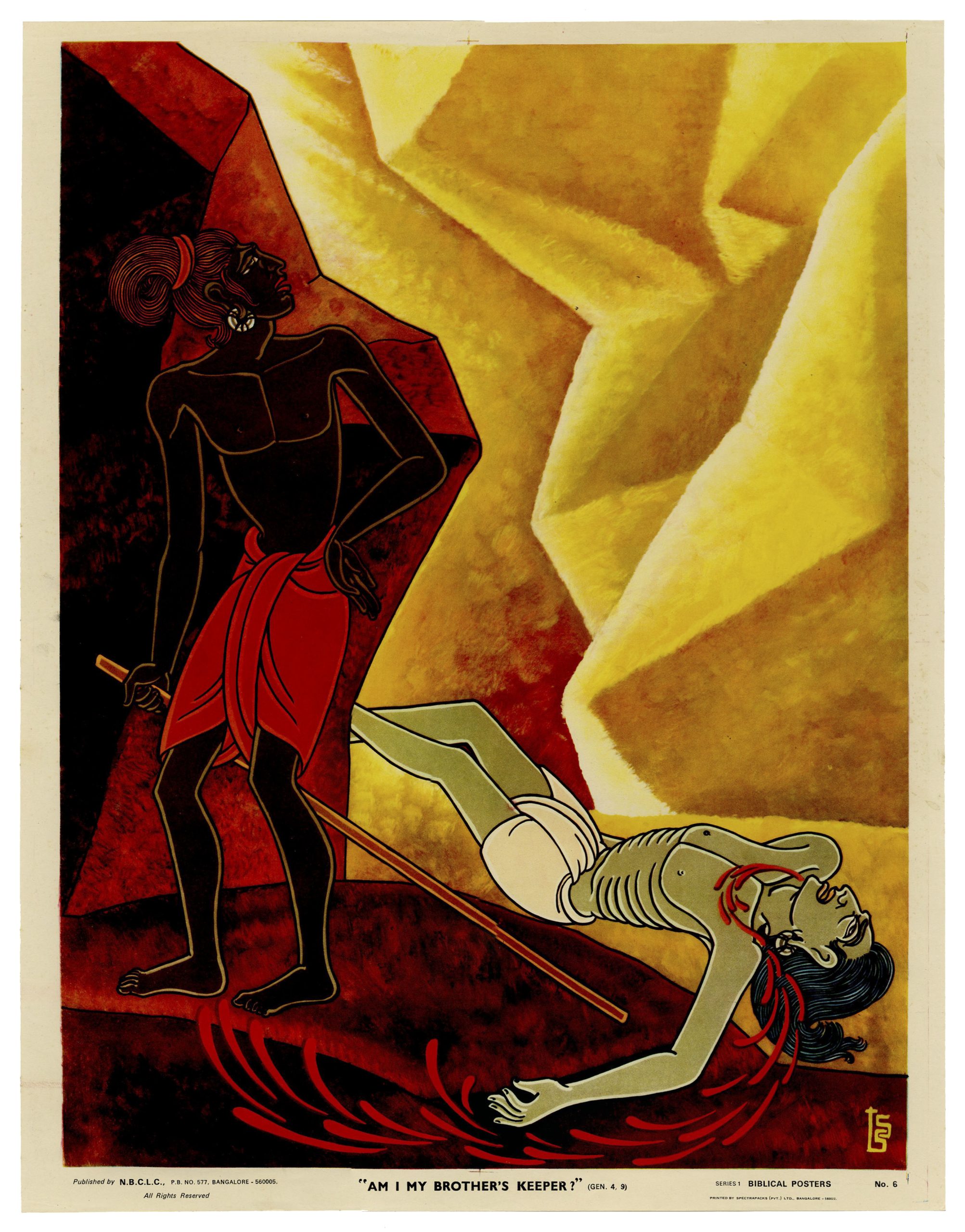
Am I My Brother's Keeper

Artwork by Sister Marie Claire , SMMI (1937–2018) from Bengaluru, India.

For more information about images by Sister Marie Claire and ways to purchase them as lithographs, see here .

For other images of Sister Marie Claire paintings in TIPs, see here.

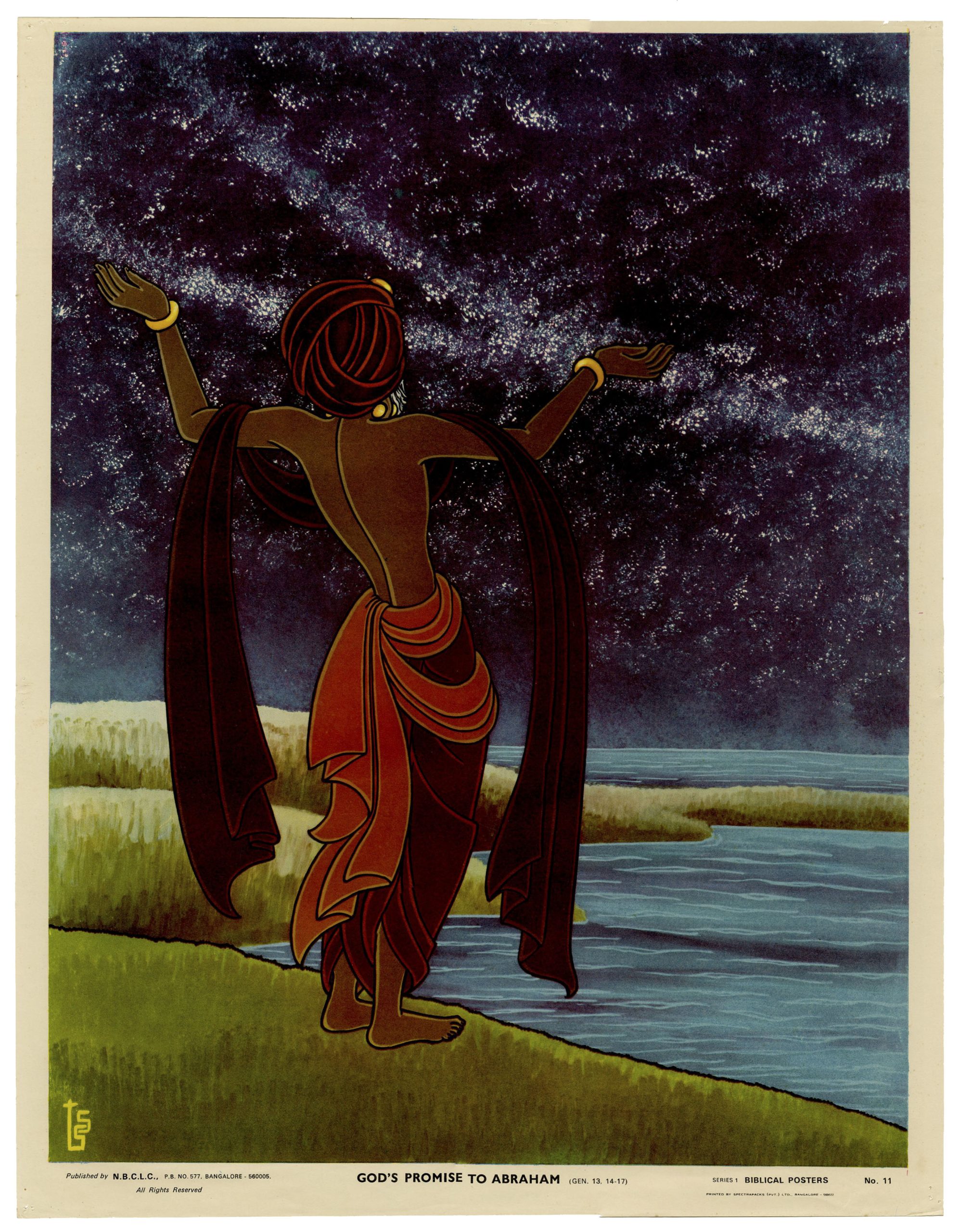
God's Promise to Abraham

Artwork by Sister Marie Claire , SMMI (1937–2018) from Bengaluru, India.

For more information about images by Sister Marie Claire and ways to purchase them as lithographs, see here .

For other images of Sister Marie Claire paintings in TIPs, see here.