
Introduction to the Gospel according to Mark (Pioneer Bible Translators)

(Pioneer Bible Translators and The Word for the World use the following introduction in many of their translation projects around the world.)

The Gospel according to Mark is one of four books in the New Testament that describe the life of Jesus Christ. Each one of them is called a “gospel,” which means “good news.” They were written after Jesus’ death by Matthew, Mark, Luke, and John. The Gospel according to Mark is the shortest of the four gospels. It is also believed to have been written first of all the gospels sometime around 60 years after the birth of Christ. Many scholars believe that it was written in Rome with the purpose of encouraging Roman Christians there.

Mark, also known as John Mark, was a companion to the Apostle Paul and Barnabas but his reputation was hurt when he abandoned their missionary journey (Acts 13:13). Later Mark traveled again with Barnabas (Acts 15:3739). Mark was also recognized as a close friend of Peter (1 Peter 5:13). In the Gospel, Mark focuses on discipleship and Jesus’ teaching on the end times.

Outline:

1. Mark introduces the book in chapter 1:1-13.
2. Then Mark describes the ministry of Jesus while he was in Galilee in chapter 1:14-8:21.
3. Next he tells about Jesus’ trip to Jerusalem (8:22-10:52).
4. Mark finishes by writing about Jesus’ time in Jerusalem, including his death and resurrection (11:1-16:8).

This work is owned by Pioneer Bible Translators International and The World for the World International and licensed under a Creative Commons Attribution 3.0 Unported License .

Translation: French

Introduction à l’évangile selon Marc

L’évangile selon Marc est un des quatre livres du Nouveau Testament qui décrivent la vie de Jésus-Christ. Chacun s’appelle un « évangile », ce qui veut dire « bonne nouvelle ». Ils ont été écrits après la mort de Jésus par Mathieu, Marc, Luc et Jean. L’évangile selon Marc est le plus court des quatre évangiles. Il est supposé avoir été écrit en premier de tous les évangiles environ 60 années après la naissance de Christ. De nombreux experts croient qu’il a été écrit à Rome dans le but d’y encourager les chrétiens de Rome.

Marc, connu aussi comme Jean Marc, était un compagnon de l’apôtre Paul et de Barnabas mais sa réputation s’est ternie lorsqu’il a abandonné leur voyage missionnaire (Actes 13 :13). Plus tard Marc a de nouveau voyagé avec Barnabas (Actes 15 :37-39). Marc a été reconnu aussi comme un proche ami de Pierre (1 Pierre 5 :13). Dans l’évangile Marc met l’accent sur le rôle de disciple et sur l’enseignement de Jésus sur les temps de la fin.

Résumé

1. Marc introduit le livre dans le chapitre 1 :1-13.
2. Marc décrit ensuite le ministère de Jésus quand il était en Galilée dans le chapitre 1 :14-8 :21.
3. Il raconte ensuite le voyage de Jésus à Jérusalem (8 :22-10 :52).
4. Marc termine en écrivant du séjour de Jésus à Jérusalem, compris sa mort et sa résurrection (11 :1-16 :8).

Translation: Swahili

Utangulizi wa Injili kama ilivyoandikwa na Marko

Injili kama ilivyoandikwa na Marko ni moja ya vitabu vinne katika Agano Jipya vinavyoelezea maisha ya Yesu Kristo. Kila kimoja cha vitabu hivyo kinaitwa “injili,” neno lenye maana ya “habari njema.” Vitabu hivi viliandikwa baada ya kifo cha Yesu na Mathayo, Marko, Luka, na Yohana. Injili kama ilivyoandikwa na Marko ndiyo kitabu kilicho kifupi zaidi ya injili hizo nne. Inaaminika pia kwamba hiyo ndiyo injili iliyoandikwa kabla ya nyingine zote, na iliandikwa wakati fulani kati ya mwaka 60 baada ya kuzaliwa Yesu Kristo. Wasomi wengi wanaamini kwamba injili hii iliandikwa katika mji wa Roma kwa kusudi la kuwatia moyo Wakristo waliokuwepo huko.

Huyu Marko ambaye pia anajulikana kama Yohana Marko alikuwa ni mfuasi wa Mtume Paulo na Barnaba, lakini sifa yake ikachafuliwa alipojiondoa katika safari yao ya kitume (Matendo 13:13). Baadaye Marko alisafiri tena na Barnaba (Matendo 15:37-39). Marko pia alitambuliwa kama rafiki wa karibu wa Petro (1 Petro 5:13). Ndani ya injili hii, Marko anaweka msisitizo katika mambo yanayohusu kuwa mwanafunzi wa Yesu, na mafundisho ya Yesu yanayohusu nyakati za mwisho.

Muhtasari

1. Marko anakitambulisha kitabu katika sura 1:1-13.
2. Halafu Marko anaielezea huduma ya Yesu wakati alipokuwa Galilaya katika sura 1:14-8:21.
3. Kisha anaelezea safari ya Yesu kuelekea Yerusalemu (8:22-10:52).
4. Marko anamaliza kwa kuandika juu ya siku za Yesu katika Yerusalemu, ikiwa ni pamoja na kifo na kufufuka kwake (11:1-16:8).

Introduction to Mark (Christian Community Bible)

(The Catholic Christian Community Bible [first English edition 1997, other translations into Indonesian, Chinese, Cebuano, Chavacano, French, Ilonggo, Korean, Quechuan, Spanish, and Tagalog] “for the Christian Communities of the Third World” uses the following introduction.)
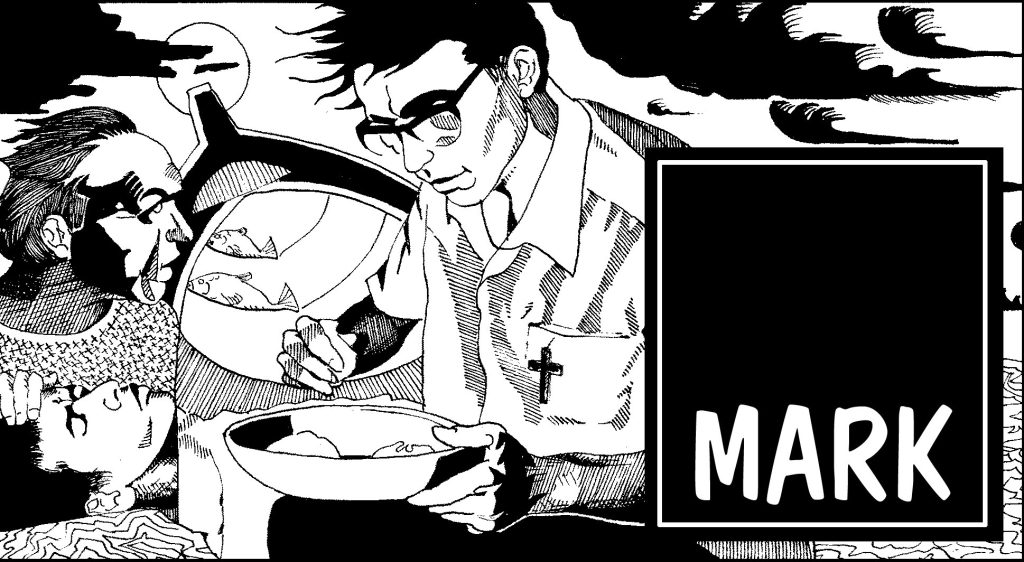
Since the end of the first century or at the beginning of the second century after Christ, there were texts stating that the second Gospel was the work of Mark. He had accompanied Peter to Rome where he also met Paul and he faithfully put Peter’s teaching into writing.

Any reader comparing this gospel with those of Matthew and Luke will see immediately Mark does not say anything about the birth of Jesus and the years he spent in Nazareth. If we look carefully at the last paragraph of the gospel (Mk 16:9-20), we will be surprised to see that Mark’s early text concluded with the discovery of the empty tomb and it did not mention the appearances of the risen Jesus. In other words, Mark’s gospel seem to be stripped of its beginning and normal end.

However, this is not the case. Mark gave his work the same perimeters that the apostles had assigned to the first documents that determined the catechesis of the Church. Believers were not told all that they would have liked to know but they were given the essence of what Jesus had said and done (Acts 1:21-22).

The Gospel of Mark consists of two parts. Each one of them starts with a divine manifestation: in the first one, it is the word of God at Jesus’ baptism by John and in the second one, it is the Transfiguration. The first part of the Gospel unfolds in Galilee, the province of Jesus and the second one takes us to Judea and Jerusalem, the heart of the Jewish nation. These two parts are like the two sides of the same adventure. The first part shows us the power and the newness of Jesus: the impact of his teachings on the crowds. Then disillusionment sets in and we have the second part. The crowds are no longer following as Jesus refuses to be what they wanted him to be. Finally, we have his death on the cross that seems to cancel his entire mission.

When Jesus died on the cross, the Roman officer admitted that the crucified one was truly the Son of God (Mk 15:39). And this is all that Mark says. It is now up to the evangelizer to give witness to the resurrection and proclaim Jesus Christ as savior, beginning with the scandal of the cross.

Down below are the introductions in the Mandarin Chinese, Tagalog, Cebuano, and Spanish editions.

Translation: Mandarin Chinese

无论哪一位读者都会发现:马尔谷福音比其他几部都要短。有关这点,请参看新约介绍。读者们还发现:马尔谷福音没有提到耶稣的诞生,也没提他在纳匝肋生活的日子。如果读者继续读下去(16:9-20),会更加惊奇地看到:马尔谷的原文中没有写到复活的耶稣的显现,而是在写到坟墓空了时,猛然停笔。读者觉得这部福音书像是被删减过似的。

然而这都无关紧要。像其他几部福音书一样,马尔谷福音也是在口头叙述的传统中诞生的,有关纳匝肋的耶稣的事情,通过口耳相传,渐渐地被白纸黑字地记录下来。这些片段性的文章从一个团体传到另一个团体,它并没有详述人们想要知道的细节,而是给了大家一个基础——我们以此为起点,传播信仰讯息,这些讯息都是跟随耶稣的宗徒们的见证。《宗徒大事录》给我们指出了一个出发点,比如在1:21-22中,伯多禄就有类似的见证,说到代替犹达斯的人选:“所以,必须从这些自主耶稣在我们中来往的所有时期内,从若翰给他施洗开始直到他被举扬升天为止,始终都和我们在一起的人当中选出一位,与我们一起为耶稣的复活作见证。”

马尔谷是怎样将传统陈述和宗徒们的见证紧密联系在一起的呢?他的福音书包括两部分,每一部分都以神圣的显现为开始,第一部分:若翰给耶稣施洗时,来自空中的神圣话语;第二部分:耶稣显圣容。福音的第一部分在加里利地区展开,是耶稣所在的省区;第二部分在犹大和耶路撒冷展开,犹太民族的心脏和圣经历史的中心。马尔谷福音的两部分犹如一座山峰的两个坡面,第一个坡面是上坡面,展现了耶稣的力量:他的教导、所行的奇迹,震惊和警醒了人们以及他的对手;人们便把对默西亚的期盼寄托在他身上。接着是第二个坡面,下坡面:人们不再跟随耶稣;耶稣拒绝成为人们想像中的救世主(犹太人的君王);在世间的权威下,耶稣显得那样无助无力,最后,在十字架上的死亡似乎埋葬了他的使命。

我们可以说,马尔谷福音不只是为了大力展现天主圣子的伟力,它更是为了突出看似葬于墓穴的人类的大盼望。在福音的结尾处,凡怀着信心的读者都会惊讶万分,就像耶稣同时代的许多人,还有那些没有最终跟随他到底的人们一样,他们会问:“这怎么可能?天主怎能允许这个人被钉上十字架?”就在这一引起公愤的事件发生后不久,在五旬节时,伯多禄开始宣告复活的基督了(宗2:23和5:30)。马尔谷在此结束了他的文书式记载,写道:罗马官员认出被钉十字架的是真正的天主子(15:39)。然后开始了作为福音作者和宗徒的见证宣讲。是他自己见证耶稣的复活;发现贯穿整个事件的线索;由十字架的羞辱,宣告救世主基督,正如伯多禄所做的一样。

Translation: Tagalog

Pasalita lamang unang inilahad ng mga apostol sa daigdig ang mensahe ni Jesus. Ipinahayag nila ang kanilang nakita at narinig sa kanya. Wala sa kanilang nakaisip magsulat ng isang “Buhay ni Jesus”. Hindi pa nga sila siguro marunong sumulat. Subalit may lumabas din sa iba’t ibang lugar na mga isinulat na mga pahayag, talinhaga at mga gawa ni Jesus.

Binuo ni Marcos na kasama nina Pedro at Pablo sa Roma ang kanyang Ebanghelyo mula sa mga salaysay na ito. At idinagdag niya rito ang maraming detalyeng alam ni Pedro tungkol kay Jesus.

Higit sa lahat, ipinakikita sa atin ng Ebanghelyo ni Marcos ang isang Jesus na kumikilos. Wala itong sinasabi tungkol sa kamusmusan ni Jesus o sa kanyang buhay sa Nazaret. Hindi rin ito naglalahad ng mahahaba niyang pagtuturo. Pero mabigat ang dating nito dahil nakikita natin si Jesus sa lahat niyang pagpapahayag bilang tunay na tao at tunay na Diyos.

Si Jesus ang Anak ng Diyos. Ito ang ipinahahayag sa huling pahina ng Ebanghelyo ng opisyal na Romanong nakasaksi sa pagkamatay ni Jesus.

Ngunit ano ang ibig sabihin ng “Anak ng Diyos”? Ang tanong na ito ang gustong sagutin ng buong Ebanghelyo ni Marcos sa pagsasalaysay ng mga kilos ni Jesus.

Translation: Cebuano

Sa pagpadayag sa mga Apostol sa mensahe ni Jesus, gigamit nila ang wali, gisangyaw ang nakita ug nadungog bahin niya. Walay nakahunahuna pagsulat sa “Kinabuhi ni Jesus”. Gani may pipila tingali nga dili makamaong mosulat. Hinuon, sa lainlaing dapit, may migula nga mga sinulat sa mga wali, sambingay ug buhat ni Jesus.

Si Marcos nga kauban ni Pedro ug Pablo sa Roma, naghipos sa iyang Ebanghelyo ining mga sinulat ug gipun-ag mga detalye bahin ni Jesus nga nadawat niya gikan ni Pedro.

Labaw sa tanan, ang Ebanghelyo ni Marcos nagpakita natog Jesus nga buhi ug aktibo. Wala ni maghisgot sa pagkahimugso ni Jesus o sa kinabuhi niya sa Nazaret. Wala sab maglakip sa tag-as niyang wali, apan gisulayan pagpakita sa kinatibuk-an og kinsa si Jesus.

...ang Anak sa Diyos. Gimatuod ni sa unang tudling sa Ebanghelyo ug sa Romanong Opisyal nga nakasaksi sa kamatayon ni Jesus nga mabasa sa ulahing bahin sa Ebanghelyo.

Apan unsay kahulogan sa Anak sa Diyos? Gisulayan ni pagtubag sa Ebanghelyo ni Marcos pinaagi sa pagsaysay sa mga buhat ni Jesus.

Translation: Spanish

Desde finales del siglo primero o comienzos del segundo después de Cristo, existen textos que afirman que el segundo Evangelio es obra de Marcos, quien acompañó a Pedro a Roma, donde también se encontró con Pablo, y que puso por escrito con fidelidad la enseñanza de Pedro.

El lector que compare este evangelio con los de Mateo y de Lucas quedará extrañado de no encontrar nada sobre el nacimiento de Jesús y sobre los años vividos en Nazaret. Y si lee el comentario de Mc 16,9, se sorprenderá al ver que el texto primitivo de Marcos se detenía en el descubrimiento de la tumba vacía. En otras palabras, recibirá la impresión de que el evangelio de Marcos está amputado de su comienzo y de su final normal.

Y sin embargo tiene sus razones. Marcos dio a su Evangelio los mismos límites que los apóstoles habían asignado a la catequesis primitiva. Los apóstoles no se proponían dar todo lo que los creyentes querían saber, sino que querían transmitir lo esencial de lo que Jesús había dicho y hecho (He 1,21-22).

Con toda probabilidad Marcos trató de armonizar dos documentos paralelos en hebreo o en arameo, que habían traducido al griego la catequesis primitiva, insertando además detalles que recordaba de la predicación de Pedro. Debe haber publicado su Evangelio después de Mateo y Lucas, en los años 65-68

El Evangelio de Marcos comprende dos partes, y cada una comienza con una manifestación divina: en la primera es la palabra divina con ocasión del Bautismo de Jesús por Juan, y en la segunda la Transfiguración. La primera parte del Evangelio se desarrolla en Galilea, la provincia de Jesús; la segunda en Judea y en Jerusalén, el corazón de la nación judía. La primera parte muestra la novedad de Jesús, el impacto de su enseñanza sobre las multitudes. Pero luego viene la desilusión, y es la segunda parte. Jesús se niega a ser lo que la gente quería que fuera, y la muchedumbre ya no lo sigue. Y para terminar, su muerte en la cruz, que parece enterrar toda su misión.

Cuando Jesús muere, el oficial romano reconoce que el crucificado era el Hijo de Dios (Mc 15,39). Marcos no va más allá y deja el lugar al evangelizador que dará su testimonio sobre la Resurrección y que proclamará a Cristo Salvador a partir del escándalo de la cruz.