(Pioneer Bible Translators and The Word for the World use the following introduction in many of their translation projects around the world.)
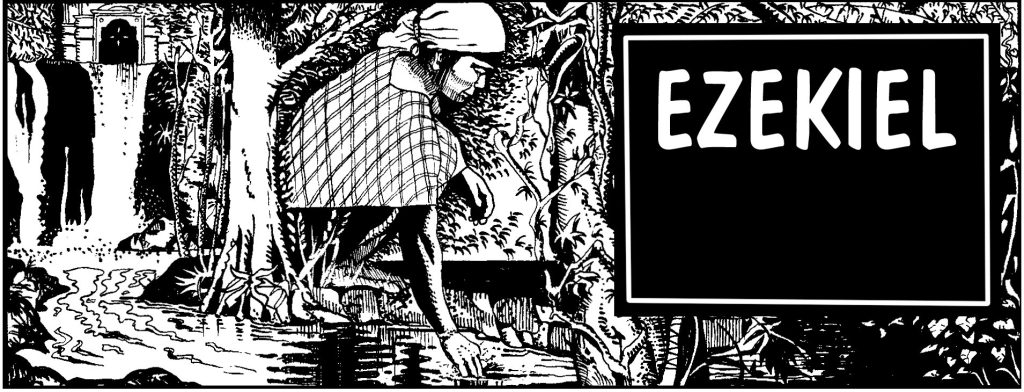
The book of Ezekiel is a book of prophecy about how Israel will be conquered and then restored. All that is known about the prophet Ezekiel comes from the book itself. His prophetic ministry lasted a total of 22 years, 7 before Jerusalem was conquered in 586 B.C. and 15 years afterwards. In response to his visions, Ezekiel was required to act out many things that would happen to Israel. One example is found in chapter 5 where the Lord told him to cut his beard and divide the hair into 3 parts (5:1) to show what would happen to Jerusalem.
The book of Ezekiel has three parts: the first part tells of God’s judgment of Israel, the second part of God’s judgement of the surrounding nations, and the third part how Israel will be restored. In all of these sections, an important theme is how these things will cause us to know God. More than 60 times Ezekiel wrote the phrase, “Then they will know that I am the Lord.” Whether God is judging or restoring his people, we can learn about him and what he desires from us.
Outline of Ezekiel:
1. Chapters 1 through 24 contains God’s judgements on Israel.
2. In chapters 25 to 32 God judges the surrounding nations.
3. In chapters 33 through 48 Ezekiel prophesies about how Israel will be restored.
Le livre d’Ezéchiel est un livre de prophéties concernant la chute d’Israël et son rétablissement. Tout ce qui est connu sur le prophète Ezéchiel vient du livre lui-même. Son ministère prophétique a duré un total de 22 années, 7 avant la chute de Jérusalem en 586 av. J-C et 15 années ensuite. En réponse à ses visions, Dieu a exigé qu’Ezéchiel interprète plusieurs choses qui arriveraient à Israël. On trouve un exemple de cela dans le chapitre 5 dans lequel Dieu lui avait dit de raser sa barbe et d’en partager les cheveux en 3 parties (5.1) montrant ce qui arriverait à Jérusalem.
Le livre d’Ezéchiel est divisé en trois parties principales : le jugement d’Israël, le jugement des nations environnantes et le rétablissement d’Israël. Dans toutes ces parties un thème principal est comment les choses nous amèneront à connaître Dieu. Plus de 60 fois Ezéchiel a écrit la phrase suivante : « Alors ils connaîtront que je suis l’Eternel ». Soit que Dieu nous juge ou qu’il nous rétablisse, nous pouvons apprendre de lui et ce qu’il désire de nous.
Résumé du livre d’Ezéchiel
1. Les chapitres 1 à 24 contiennent les jugements de Dieu sur Israël.
2. Dans les chapitres 25 à 32 Dieu juge les nations environnantes.
3. Dans les chapitres 33 à 48 Ezéchiel prophétise au sujet du rétablissement d’Israël.
Translation: Swahili
Utangulizi wa Ezekieli
Kitabu cha Ezekieli ni kitabu cha unabii juu ya jinsi Israeli itakavyoshindwa na kisha kurejeshwa. Yote ambayo yanajulikana juu ya nabii Ezekieli yanatoka kwenye kitabu chenyewe. Huduma yake ya unabii ilidumu kwa jumla ya miaka 22, Miaka 7 kabla ya Yerusalemu kutekwa mnamo mwaka 586 K.K. na miaka 15 baadaye. Kwa kujibu maono yake, Ezekieli alihitajika kuigiza mambo mengi ambayo yangetokea kwa Israeli. Mfano mmoja unapatikana katika sura ya 5 ambapo Bwana alimwambia akate ndevu zake na agawanye nywele hizo sehemu tatu (5:1) kuonyesha kile kitakachotokea kwa Yerusalemu.
Kitabu cha Ezekieli kina sehemu tatu: sehemu ya kwanza inaelezea juu ya hukumu ya Mungu kwa Israeli, sehemu ya pili ya hukumu ya Mungu kwa mataifa yaliyowazunguka, na sehemu ya tatu jinsi Israeli itakavyorejeshwa. Katika sehemu hizi zote, mada muhimu ni jinsi mambo haya yatatusababisha kumjua Mungu. Zaidi ya mara 60 Ezekieli aliandika kifungu, "Ndipo watajua kwamba mimi ndimi BWANA." Ikiwa Mungu anahukumu au anawarudisha watu wake, tunaweza kujifunza juu yake na kile anachotaka kutoka kwetu.
Muhtasari:
1. Sura ya 1 hadi 24 ina hukumu za Mungu juu ya Israeli.
2. Katika sura ya 25 hadi 32 Mungu anahukumu mataifa yanayowazunguka.
3. Katika sura ya 33 hadi 48 Ezekieli anatabiri juu ya jinsi Israeli itakavyorejeshwa.
(The Catholic Christian Community Bible [first English edition 1997, other translations into Indonesian, Chinese, Cebuano, Chavacano, French, Ilonggo, Korean, Quechuan, Spanish, and Tagalog] “for the Christian Communities of the Third World” uses the following introduction.)
When Everything Is Falling Apart
“A third of the people will die by plague and famine; another third by the sword, and I will scatter the rest everywhere; these I will also pursue and pour out my anger on them.” These are God’s words which prompted Ezekiel to announce the destruction of a holy people. Do these also apply to the present crisis in the Church?
In many countries in a short time the Church has lost its imposing facade of well-attended temples and rituals, a practicing majority, a faithful clergy who were present everywhere, the security of unquestioned faith and the universal obedience to the center: Rome. All is collapsing. Many people hoped that the renewal begun at the Council would produce quick results. Yet, every day what seemed to promise a secure future is disappearing.
Other words from Ezekiel come to mind: “I will not allow you to be a people like the rest, rather I will rule over you by force. I will gather you from among the nations and I will confront you. You will be under my authority.” Could God be calling on destructive forces? Could God be the one breaking down the human structures we believed to be the Church? Of course, something will remain, a remnant as Ezekiel puts it. That is to say, those whose faith will have been purified through trial and in whom the Holy Spirit will act with more freedom.
What was just said is enough to help us understand the value of the Book of Ezekiel for today. He was God’s witness in the final years of the kingdom of Judah, though living among those exiled in Babylon.
We will surely be surprised at the language he attributes to God. He shows God as venting his resentment and jealousy by continually threatening his people and taking delight in their predicament and agony. Would it be possible, however, to speak about love without mentioning jealousy and violence?
We also find jealousy and violence when God comes to conquer a sinful people. The husband goes looking for his unfaithful wife among her lovers and brings her back by force. Ezekiel’s excessive words must not make us forget other pages of the Bible where God expresses himself tenderly, but we cannot ignore them either, under the pretext that God is a good daddy. We may have experienced in our own flesh the misery of the sinner challenging God. Ezekiel’s role was to express the bitterness of sin and the anger of God.
The Book of Ezekiel
Ezekiel may have been a young priest taken to Chaldea with the ten thousand exiles after the first siege of Jerusalem in 598 (see 2 K 24:14). There he was called by God as he tells us (chapters 1 and 2). The first part of his book (chapters 1–24) contains his discourses predicting the total destruction of his country.
Down below are the introductions in the Mandarin Chinese, Tagalog, Cebuano, and Spanish editions.
“Ikatlong bahagi ng bayan ang mamamatay sa salot at gutom; isa pang ikatlo ang mabubuwal sa tabak; at ang malalabi nama’y pangangalatin sa lahat ng dako at uusigin ko pa rin ang mga ito at pagbubuntunan ng aking poot.” Ito ang mga salita ng Diyos na sinabi ni Ezekiel sa pagkawasak ng Bayang Banal. Magagamit din kaya ito sa kasalukuyang krisis ng Iglesya?
Sa loob ng ilang taon, nawala na sa Iglesya ang kahanga-hangang panlabas na anyo ng mga templo at mga seremonya, ang pagkarelihiyoso ng nakararami sa sambayanan, ang katapatan ng mga pari nito na nasa lahat ng dako, ang katatagan ng isang pananampalatayang di mapag-alinlanganan at ang pagsunod ng lahat sa Roma. Nabubuwag ang lahat ng ito. Maraming umaasa na magbubunga kaagad ang pagpapanibagong sinimulan ng Konsilyo. Ngunit naglalaho sa bawat araw ang waring pinakamahalagang magbibigay-katiyakan sa hinaharap.
Magugunita ang iba pang mga salita sa aklat ni Ezekiel: “Hindi ko maipahihintulot na kayo’y maging isang bayang tulad lamang ng iba; kundi sapilitan akong maghahari sa inyo. Titipunin ko kayo mula sa mga bayan at haharapin ko kayo. Sasailalim kayo ng aking kapangyarihan.” Hindi kaya tinatawag ngayon ng Diyos ang mga puwersa ng pagkawasak? Ang Diyos kaya ang nagbubuwal sa mga gawa-ng-tao na sa akala naman nati’y siyang Iglesya? May maiiwan siyempreng labi gaya ng sabi ni Ezekiel – silang ang pananampalataya’y dinalisay ng pagsubok at mas malayang magagalawan ng Espiritu ng Diyos.
Ang kasasabi ay sapat na para maintindihan ang kahalagahan sa ngayon ng aklat ni Ezekiel. Siya ang saksi ng Diyos sa mga huling taon ng kaharian ng Juda, bagamat nasa piling ng mga ipinatapon sa Babilonia.
Tiyak na magtataka tayo sa lengguwaheng iniuukol niya sa Diyos na laging nagbababala at parang nalulugod pa sa kagipitan at pagdurusa ng kanyang bayan bilang pagbibigay-daan sa kanyang galit at selos. Pero puwede kayang mangusap tungkol sa pag-ibig nang hindi binabanggit ang mga salitang selos at karahasan?
May selos at karahasan din sa pagsakop ng Diyos sa mga taong makalaman at makasalanan. Hinahanap ng asawa ang kanyang taksil na maybahay sa piling ng mga mangingibig nito at ibinabalik niya sa dahas. Ang may kalabisang pananalita ni Ezekiel ay hindi dapat makapagpalimot sa atin sa iba pang pahina ng Biblia kung saan ipinahahayag ng Diyos ang kanyang karinyo. Pero hindi rin naman natin maisasaisantabi ang mga ito sa pagdadahilang mabait na tatay ang Diyos. Maaaring naranasan na natin sa ating sariling laman ang kapighatian ng makasalanang humahamon sa Diyos: tungkulin ni Ezekiel na ibunyag na lahat ang pait ng kasalanan at ipagsigawan ang galit ng Diyos.
Ang Aklat ni Ezekiel
Malamang na isang batang pari si Ezekiel na dinalang bihag sa Kaldea kasama ng sampung libong ipinatapon makaraan ang unang paglusob sa Jerusalem sa taong 598 (tingnan ang 2 H 24:14). Doon siya tinawag ng Diyos gaya ng kanyang ikinukuwento sa atin (kab. 1 at 2).
Ang unang bahagi ng kanyang aklat (kab. 1-24) ay naglalaman ng kanyang mga pahayag na nagbabalita sa ganap na pagkawasak ng kanyang bayan.
Kasunod ng mga propesiya laban sa mga banyagang bansa (kab. 25-32), nasa ikatlong bahagi naman ng aklat ang mga pangako sa mga itinapon. Sapagkat ayaw ng Diyos na mamatay ang kanyang bayan.
May alam tayong mga lahing naglaho at mga dayuhang nakalimot sa sariling bayan sapagkat nakakita sila ng trabaho sa ibang bansa. Sa ganito rin sana mamamatay ang sambayanang Judio pagkaraan ng krisis na nagwasak sa Jerusalem. Nang nasa Babilonia sila, sa pagkakadeport sa isang mas maunlad na bansa, pinananabikan ng matatanda ang kanilang lupang tinubuan habang walang iniisip ang mga kabataan kundi samantalahin ang bago nilang kalagayan. Ngunit sa kanyang mapanghamong pagtuturo ay patuloy na hinuhubog ni Ezekiel ang konsiyensiya ng mga magsisiuwi sa Judea balang araw para itayo ang bagong kaharian ng Diyos (kab. 33-39).
Translation: Cebuano
Inigkabungkag sa Tanan
“Ang ikatulo ka bahin sa imong katawhan mamatay sa katalagman. Mamatay sila sa gutom sulod sa imong mga paril. Ang laing ikatulo mamatay sa espada gawas sa syudad. Ang kataposang bahin akong isalibay sa hangin ug gukdon ko sa akong espada nga gikuha na sa sakoban.” Kining mga pulonga sa Diyos ang gigamit ni Ezekiel sa pagpahibalo sa pagkalaglag sa balaang katawhan. Ikasulti ba ni nato bahin sa krisis sa simbahan karon?
Sa daghang kanasoran ang simbahan nawad-an sulod sa dyotayng panahon sa iyang bayhon nga makapataha, sa mga templo ug ritwal nga daghang manambong, sa kadaghanan nga nagbansay, sa kapariang masinugtanon nga naa sa tanang lugar, sa siguridad sa pagtoo nga dili ikapangutana ug sa pagtahod nga unibersal alang sa sentro, Roma. Kining tanan naghinayhinayg kalumpag. May daghang katawhan nga naglaom nga ang pagbag-o sa simbahan nga gisugdan sa konsilyo Vatikano mamunga dayon. Apan kada adlaw, ang morag nakapakitag dakong purohan sa sigurong kaugmaon, nagkawala.
Ang laing mga pulong ni Ezekiel moabot sa atong panumdoman: “Tapokon gikan sa daghan nga katawhan. Himoon tamo nga usa ka pundok gikan sa kanasoran diin kamo makatagkatag. Hatagan tamo sa yuta sa Israel.” Nagtawag ba kaha ang Diyos sa mga pwersang manglalaglag? Ang Diyos ba kaha ang naggun-ob sa mga istruktorang tawhanon nga atong gitoohan nga simbahan? Sa walay duda, duna gyoy mahibilin, ang salin sumala sa gisulti ni Ezekiel, sa ato pa, kadtong katawhan kansang pagtoo lunsayon pinaagi sa pagsulay, ug kang kinsa ang Espiritu Santo makahimo sa iyang gimbuhaton nga mas gawasnon.
Ang bag-o lang natong gisulti dili paigo aron pagtabang sa pagsabot sa bili sa libro ni Ezekiel alang karong panahona. Saksi siya sa Diyos sa kataposang katuigan sa gingharian sa Juda, bisag nagpuyo siya uban sa mga bihag didto sa Babilonia. Sigurado gyod nga mahibulong ta sa pinulongan nga iyang gibutang sa baba sa Diyos. Kay gipakita man niya nga ang Diyos mipahamtang sa iyang kasuko ug pangabugho pinaagi sa kanunay niyang paghulga sa katawhan ug sa kalipay nga iyang gipakita. Hinuon, dili ba posibli ang pagsulti mahitungod sa gugma nga dili maghisgot sa pangabugho ug kabangis?
Ato pod nga makita ang pangabugho ug kabangis diha nga ang Diyos moabot na aron pagbuntog sa makasasalang katawhan. Ang bana mangita sa mabudhiong asawa taliwala sa mga kabit nga dad-on pagbalik ginamit ang kusog. Ang sobra kaayong sinultihan ni Ezekiel kinahanglang magpahinumdom sa ubang panid sa Biblia diin ang Diyos nagpadayag sa kaugalingon sa tumang kalumo, apan dili ta makasalikway sa maong sinultihan, ubos sa pasangil nga ang Diyos maayong amahan. Tingali atong nasinati sa kaugalingon natong unod ang kaalaot sa makasasala nga naghagit sa Diyos: papel ni Ezekiel mao ang pagpadayag sa kapait sa sala ug sa kasuko sa Diyos.
Ang Ezekiel
Si Ezekiel batan-on tingling pari nga gidala sa Caldea uban sa mga 10,000 ka bihag human sa unang pagsulong sa Jerusalem sa tuig 598 (tan-awa 2 H 24:14). Didto gitawag siya sa Diyos ingon sa iyang gisulti kanato (Mga kapitulo 1 ug 2).
Ang unang bahin sa libro (kapitulo 1-24) nagdala sa mga diskurso nga nanagna sa hingpit nga pagkalaglag sa iyang nasod.
Human sa mga panagna batok sa langyawng kanasoran, naa ang ikatulong bahin sa libro, ang mga saad ngadto sa mga bihag: ang Diyos dili buot nga ang iyang katawhan mamatay.
Nasayod ta nga dunay mga rasa nga nangawala ug dunay milangyaw nga nalimot sa ilang yutang natawhan kay nakakita man sila og trabaho sa laing nasod. Niining paagiha ang katawhang Judio mawala na unta human sa krisis kanus-a ang Jerusalem nagun-ob. Samtang didto sila sa Babilonia, mga binihag sa usa ka nasod nga mas malamboon kaayo, ang gulanggulang nga katawhan nangandoy sa ilang yutang natawhan, samtang ang mga batan-on naghunahuna lang sa pagpahimulos sa bag-ong kahimtang. Apan si Ezekiel, sa iyang mahagitong pagpanudlo mipadayon pag-umol sa mga konsensya adtong katawhan nga sa usa ka adlaw mobalik sa Juda aron pagtukod sa bag-ong gingharian sa Diyos (mga kapitulo 33-39).
Translation: Spanish
A este profeta se suele recordarlo como se recuerda a la Cuaresma. Vivió y profetizó en el exilio, y si bien anunció un futuro prometedor para su pueblo arruinado, lo hizo después de haber denunciado, durante años, las falsas esperanzas a las que se aferraban sus compañeros. Dios mismo le ha impuesto largos ayunos y pruebas, además de la humillación de pertenecer a grupos marginales, en una ciudad segura de sí misma. Mientras que el “segundo Isaías” parece contemplar la tropa de los exiliados desde la altura que le inspiran sus grandes perspectivas, Ezequiel comparte la vida de un suburbio escuálido donde se enfrenta cada día a las miradas escépticas u hostiles de los exiliados
Ezequiel es sacerdote y Dios sale a su encuentro cuando tenia treinta años, la edad legal para comenzar su servicio en el templo. Como Jeremías, Ezequiel será a la vez sacerdote y profeta, lo que nos invita a no oponer demasiado estas dos funciones complementarias. El ministerio del sacerdote no se agota en el templo; el sacerdote enseña, juzga y precisa la aplicación de las leyes. El profeta, por su parte, es un carismático capaz de discernir a través de sueños, visiones y signos diversos, la palabra más actual de Dios. Los profetas que Dios ha llamado de una manera especial suelen tener su personalidad propia. Jeremías, por ejemplo, es un solitario y apenas se percibe en él al sacerdote, fuera de su primera predicación. Ezequiel, por el contrario, sigue muy preocupado acerca de lo puro y lo impuro; ejerce una actividad pastoral, y la restauración del templo constituye para él un elemento esencial del nuevo Israel.
Ezequiel ha estado entre los primeros grupos de deportados, en el 597, y toda su vida conocida la pasó en Babilonia. Algunos comentaristas han pensado que la llamada de Dios la recibió estando aun en Jerusalén y que esta llamada, que se puede leer en 2,9 - 3,9, habría sido fusionada después con la visión del capítulo 1. Se trata, sin embargo, de una hipótesis más que de una conclusión bien fundada. La gran visión del Nuevo Israel (caps. 40-48) es del 572, es decir, 25 años posterior.
La predicación de Ezequiel se ha conservado mejor que las de otros profetas bíblicos ya que se desarrolló en una comunidad viva cuya condición de exiliada en una ciudad prospera, ha protegido las enseñanzas del profeta. El hablaba a “ancianos” de los que la mayoría debían ser conocidos suyos, preocupándose de darles una formación adecuada. Sin lugar a duda, los primeros que regresaron del Exilio habían tomado su enseñanza como regla de vida y no tenían razón alguna para revisarla.
Ezequiel en nuestra historia
Tanto Ezequiel como Jeremías han dejado en la Biblia una de las más altas perspectivas desde la que contemplar la historia del pueblo de Dios. Ser infiel y rebelde parece que forma parte de la vocación de este pueblo. Es asimismo parte de la acción de Dios el destruir lo que se había construido con él, desde el momento en que el pueblo quiere instalarse en este mundo, siguiendo las huellas de los otros pueblos.
Hay períodos de la historia en que todo parece derrumbarse y sólo se ve a la muerte campeando por doquier. Es, sin embargo, en estos momentos en los que Dios alumbra una nueva etapa de su plan siempre imprevisible. Aunque es arriesgado hacer aplicaciones demasiado particularizadas a la época en que vivimos, es ahora presente, especialmente en la Iglesia Católica, la sensación de un derrumbamiento que afectaría a sectores aparentemente esenciales de la misma Iglesia, y que nos haría recordar la época en que desapareció el reino de Judá. Para muchos creyentes, el tiempo del Exilio ha comenzado ya, sea que se refieran a la Babilonia de este mundo, ciego a la verdad, o bien a la Iglesia convertida ella misma en Babilonia. En consecuencia, muchos miran por doquier, a la espera de un profeta o de un rayo de luz.
Jeremías y Ezequiel se complementan. Jeremías pertenecía al grupo de judíos que habían tenido la suerte de escapar a la deportación y sabía que nada se podía esperar de ellos. Por esta razón, desconoce la etapa siguiente, la del regreso y va directamente a lo esencial, es decir, a la alianza nueva. Ésta estará siempre más allá del mañana y más allá de las instituciones. Ezequiel, por el contrario, acompaña a los exiliados que constituirán el retoño del nuevo Israel. El profeta está bien anclado en su tarea pastoral y prepara la etapa siguiente. Con esto corre el riesgo tal vez de creer que los regresados del exilio serán mejores que sus predecesores y que se construirá un pueblo de Dios con leyes o con piedras y cemento. Esdras y Nehemías serán los herederos de Ezequiel y construirán el Judaísmo.
Jeremías se ha convertido en la gran figura del profeta perseguido, Ezequiel en cambio no tiene brillo ni belleza, y a veces desearíamos que fuera un poco menos excesivo y grosero, pero esto no puede disimular la fuerza que lo anima. El Espíritu lo llenó, igual que a Elías, de un amor celoso al Dios no reconocido.
Esto libro se divide fácilmente en seis secciones:
1. La vocación del profeta : 1,1—3,27
2. Actividad profética antes del segundo sitio de Jerusalén : 4,1—24,27
– el sitio y el juicio (4,1—8,2)
– las abominaciones en el templo (8,3—11,25)
– mentiras de los profetas y responsabilidad personal (12,1—14,23)
– los pecados acumulados de la historia de Israel (15,1—24,27).
3. Profecías contra las naciones : 25,1—32,32
4. La salvación de Israel : 33,1—37,28
5. Gog y Magog : 38,1—39,29
6. La visión del nuevo Israel : 40,1—48,30
– el nuevo templo (40,1—43,27)
– el nuevo culto (44,1—46,24)
– el nuevo Israel (47,1—48,35)

Leave a Reply
You must be logged in to post a comment.