(Pioneer Bible Translators and The Word for the World use the following introduction in many of their translation projects around the world.)
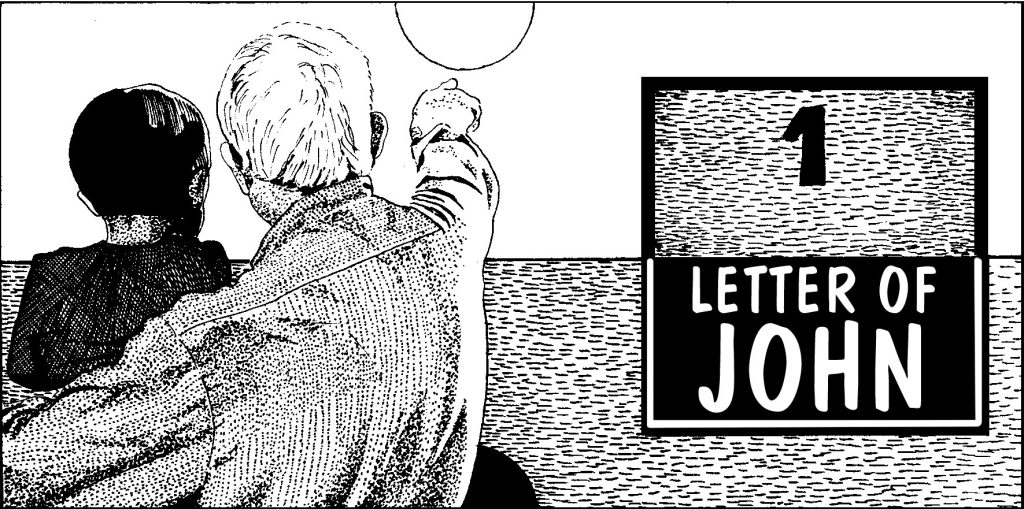
The letter of 1 John was written by the Apostle John between 50 and 100 years after the birth of Christ. John does not identify himself as the author, but the first chapter shows that he is an eyewitness to the life and resurrection of Jesus (1:1–3). The writing style in 1 John also closely resembles the writing style found in The Gospel according to John. It is believed that John wrote The Gospel according to John and the three letters 1 John, 2 John, and 3 John while living in Ephesus.
John wrote this letter to all Christians at a time when the church was having trouble from a group of people called “Gnostics.” These people believed that Jesus was completely God but that he was not really a human with a body of flesh and blood while on earth. For this reason John writes about being an eyewitness to the life of Jesus and that his own hands touched Jesus (1:1-3). John’s purpose in writing this letter was to make his joy complete (1:4), to prevent believers from sinning (1 John 2:1), to protect believers from false teaching (2:26), and to assure believers that they are saved (5:13).
Outline:
1. John introduces his letter and gives one purpose for writing it (1:1-4).
2. He then explains how God is light and that we must live as Jesus lived (1:5-3:10).
3. Next he reminds us of the command to love each other (3:11-5:12).
4. He concludes his letter in 5:13-21.
La lettre de 1 Jean a été écrite par l’apôtre Jean entre 85 et 90 ans après la naissance de Christ. Jean ne s’identifie pas comme étant son auteur, mais le premier chapitre montre qu’il a été un témoin oculaire de la vie et de la résurrection de Jésus (1 :1-3). Le style de rédaction de 1 Jean ressemble aussi beaucoup au style de rédaction qu’on trouve dans l’Evangile selon Jean. On pense que Jean a écrit l’Evangile selon Jean et les trois lettres de 1 Jean, 2 Jean et 3 Jean lorsqu’il vivait à Ephèse.
Jean a écrit cette lettre à tous les chrétiens à une période dans laquelle l’église rencontrait des difficultés de la part d’un groupe de personnes qui s’appelait « Gnostiques. » Ces personnes croyaient que Jésus était entièrement Dieu mais qu’il n’était pas vraiment un être humain avec un corps de chair et de sang lorsqu’il était sur la terre. C’est pour cette raison que Jean écrit avoir été un témoin oculaire de la vie de Jésus et qu’il avait touché Jésus avec ses propres mains (1 :1-3). Le but de Jean en écrivant cette lettre était de faire que notre joie soit complète (1 Jean 1 :4), d’empêcher les croyants de pécher ( 1 Jean 2 :1), de protéger les croyants de fausses doctrines (1 Jean 2 :26), et de rassurer les croyants qu’ils sont sauvés (5 :13).
Résumé
1. Jean introduit sa lettre et donne le but pour lequel il écrit (1 :1-4).
2. Il explique ensuite comment Dieu est lumière et que nous devons vivre comme Jésus a vécu (1 :5-3 :10).
3. Puis il nous rappelle le commandement de nous aimer les uns les autres (3 :11-5 :12).
4. Il termine sa lettre en 5 :13-21.
Translation: Swahili
Utangulizi wa kitabu cha 1 Yohana
Barua ya 1 Yohana iliandikwa na Mtume Yohana katika kipindi kati ya mwaka 85 na 90 baada ya kuzaliwa Yesu Kristo. Yohana hajitambulishi yeye mwenyewe kama mwandishi, lakini sura ya kwanza inamwonyesha yeye kama shahidi aliyejionea kwa macho yake maisha na ufufuo wa Yesu (1 Yohana 1:1-3). Pia mtindo wa uandishi unafanana sana na ule unaopatikana ndani ya Injili kama ilivyoandikwa na Yohana. Inaaminika kwamba Yohana aliiandika Injili kama ilivyoandikwa na Yohana pamoja na barua tatu, yaani 1 Yohana, 2 Yohana, na 3 Yohana wakati alipokuwa akiishi katika mji wa Efeso.
Yohana aliiandika barua hii kwa Wakristo wote katika kipindi ambacho kanisa lilikuwa linapita katika matatizo yaliyotokana na watu waliojiita “Wagnosti”. Hawa waliamini kwamba Yesu alikuwa Mungu kamili lakini hakuwa mwanadamu halisi wakati alipoishi duniani. Kwa sababu hiyo Yohana anajitaja kuwa mtu aliyeyashuhudia maisha ya Yesu kwa macho yake, na kwa mikono yake yeye mwenyewe alikuwa amemgusa Yesu (1 Yohana 1:1-3). Makusudi ya Yohana ya kuiandika barua hii yalikuwa ni kuikamilisha furaha yake yeye mwenyewe (1 Yohana 1:4), kuwazuia waumini wasitende dhambi (Yohana 2:1), kuwalinda waumini na mafundisho ya uwongo (1 Yohana 2:26), na kuwapa waumini uthibitisho wa kujua kwa hakika kwamba wameokolewa (1 Yohana 5:13).
Muhtasari:
1. Yohana anaitambulisha barua yake, pia anatoa kusudi moja la kuiandika (1 Yohana 1:1-4).
2. Kisha anafafanua jinsi Mungu alivyo nuru na kutuasa kwamba twapaswa kuishi kama Yesu alivyoishi (1 Yohana 1:5-3:10).
3. Halafu anatukumbusha kuhusu amri ya kupendana sisi kwa sisi (1 Yohana 3:11-5:12).
4. Anahitimisha barua yake katika 5:13-21.
(The Catholic Christian Community Bible [first English edition 1997, other translations into Indonesian, Chinese, Cebuano, Chavacano, French, Ilonggo, Korean, Quechuan, Spanish, and Tagalog] “for the Christian Communities of the Third World” uses the following introduction.)
This first letter of John, inseparable from his Gospel, reminds us that the Christian way is nothing less than a divinization: our own.
From all time the Christian ideal has seemed too pale or too narrow for many people. Without directly criticizing the values of Christianity and its benefits to humanity, they saw it as limiting people. We think of all those, like Marx, who affirmed that a real human liberation involves a struggle against faith. We think of those who today rely on science to widen the possibilities of life. We again think of all those who, shunning western activism, seek in oriental wisdom a way to the Absolute which they have failed to see in Christian faith.
Even for Christians, the sentimental religion springing from enthusiasm for Jesus, the good Master teaching universal love, often hides an ignorance of the ambitions of faith. For in Jesus it is God himself we want to reach, we are seekers of truth and we want to merge into this truth from which we have come.
John affirms in this first letter: If you have the Son of God you have total truth, you are on the way to authentic love and you are in communion with God himself.
However, perhaps, we are deceiving ourselves when we pretend to be in Christ.
This is why John specifies the criteria, the conditions enabling us to verify if we are truly walking in the light and living in Love:
– In Christ we recognize God himself; yet we must always remember to interiorize his actions, his mission, his way of being human.
– We believe we have been reborn from God: that does not mean that we are above his commandments, nor that we should neglect daily efforts to be worthy of him.
– Faith has renewed our knowledge of God. What matters most is to understand his love and, for that, there is no better teaching than that of the cross.
This letter of John seeks to settle many doubts and confusion concerning Christian faith. It was written when “Gnosticism” or knowledge was beginning. Gnosticism involved an elaborate system that included many elements, already present in the so-called Asian religious, namely, from the Roman province of Asia, today’s Turkey. Paul had already encountered them some thirty years before (Ephesians, Philippians, Colossians and Philemon; Paul wrote these letters while in prison) and now John was noticing the expansion of Gnosticism.
The Gospel of John had freed from all ambiguity the faith in Christ, Son of God, and divine person, born from God and having returned to God. But Gnostics were always ready to grasp onto beliefs they ran across in order to recast them into their endless tales. Gnostics tried to integrate the person of Jesus into their intellectual dialectics, their conflicts of angels and spiritual powers. According to Gnostics, Jesus did come from God although he was only a spirit. He only had a human appearance and he did not die for us. Redemption continues to be a process through which divine sparks come out of matter and what matters to them is to know the secrets of these celestial conflicts. Gnostics claimed to be spiritual and yet, while they condemned marriage, they did not see anything wrong with sexual freedom.
Therefore, it was necessary to reaffirm that Jesus was fully human; he was the Christ who had come in the flesh. Several times, the letter will refer to the sacrifice and to the blood of Jesus.
Some people think that this letter sought to correct some improper interpretations that could be given of John’s Gospel. It must have been written around the years 95–100 A.D.
Down below are the introductions in the Mandarin Chinese, Tagalog, Cebuano, and Spanish editions.
ANG UNANG LIHAM NI JUAN – na hindi maaaring ihiwalay sa kanyang Ebanghelyo – ay nagpapagunita sa atin na ang daang-Kristiyano ang daan ng ating pagtamo ng pagka-Diyos. Makatutulong ang paninindigang ito sa marami na nag-aalinlangan. Bilang halimbawa, nagpaliwanag ang isang kabataan sa unibersidad kung paano siya napabayaan ng Kristiyanong paniniwala at naging militanteng marksista: “Gusto kong ibigin ang aking mga kasama sa mas mabisang paraan.”
Sinabi naman ng isa pa: “Tinutulungan ng pananampalataya ang hindi pa nakapagtatamo ng tunay na pananaw sa mga bagay-bagay na ipinagkakaloob sa atin ng makabagong siyensiya.”
Nais ng isa pang malampasan ang mga mapanlinlang na kasiyahan sa buhay at makipag-isa sa kawalang-hanggan sa mga doktrinang silanganin.
Waring sinasabi ng tatlong halimbawang ito na gaano man kaganda at kagalang-galang ang pananampalataya, limitado ito, at mayroong nasa isang tao na hindi natutugunan ni Kristo. Sa kabaligtaran nito, pinatitibayan ni Juan sa unang liham na ito: sa pagtatamo sa Anak ng Diyos, nasa ganap kang Katotohanan, lumalakad ka sa tunay na Pag-ibig, nakikipagkaisa ka sa mismong Diyos.
Gayunman, baka natin nililinlang ang ating sarili kapag nagpapanggap tayong pinupuspos ni Kristo. At ito ang dahilan kung bakit sinasabi ni Juan kung paano natin mapatutunayan na lumalakad tayo sa kaliwanagan at namumuhay sa Pag-ibig.
– Kay Kristo ay nakikilala natin ang mismong Diyos; gayunman dapat nating laging alalahanin at isaloob ang kanyang mga gawa, ang kanyang misyon, at ang daan ng kanyang pagiging tao.
– Naniniwala tayong muli tayong isinilang mula sa Diyos: hindi iyon nangangahulugan na nakapangingibabaw tayo sa kanyang mga utos, o maaari nating kaligtaan ang pang-araw-araw na tungkulin upang maging karapat-dapat sa kanya.
– Binago ng pananampalataya ang ating kaalaman tungkol sa Diyos. Ngunit lalong mahalaga pa ang pag-unawa sa kanyang pag-ibig, at tungo riyan, wala nang hihigit pang aral kaysa aral ng krus.
Translation: Cebuano
Ang UNANG SULAT NI JUAN nga dili mabulag sa iyang Ebanghelyo nagpahinumdom nga ang Kristohanong paagi mao ang dalan sa pagkadiyosnon. Makatabang ni sa daghang nagduhaduha. Busa, pananglitan, ang usa ka batan-ong istudyanti nga gitudloan sa pagtoo mopatin-aw sa pagkamilitanti niyang Marxista sa pag-ingon: “Buot ko nga mahigugma sa akong mga kauban sa labi pang epektibong paagi.”
Ang lain moingon: “Ang pagtoo nagtabang sa wala magkupot sa tinuod nga panglantaw sa mga butang nga gihatag kanato sa modernong sensya.”
Ang lain pa gyod nangita sa dalan sa pagbuntog sa malinglahong kalingawan sa kinabuhi ug sa paagi sa pakighiusa nga walay kataposan sa mga doktrina sa Sidlakan.
Kining tulo ka pananglitan nagpasabot nga, bisag unsa kanindot ug kahalangdon, ang pagtoo dunay kinutoban, ug nga dunay butang sa tawo nga wala hingpita ni Cristo. Apan sukwahi ini, sa unang sulat, nagmatuod siya: sa Anak sa Diyos, naa ka sa hingpit nga Kamatuoran, naglakaw sa matuod nga Gugma, ug sa kahiusa tali sa Diyos mismo.
Tingalig naglingla lang ta nato kon magpatoo nga naa ta ni Cristo. Busa, giklaro dinhi ni Juan ang mga sumbanan, ang mga kondisyon nga makapamatuod kon tinuod ba ta nga naglakaw sa kahayag ug nagpuyo sa Gugma.
– Diha ni Cristo mailhan ang Diyos mismo; apan kanunay natong hinumdoman ang pagpatuhop sa iyang mga buhat, sa misyon ug sa pamaagi sa pagkatawhanon.
– Nagtoo ta nga natawo tag usab sa Ginoo: wala ni magpasabot nga labaw ta sa iyang mga sugo, o kalimtan ang paningkamot sa matag adlaw aron mahimong takos niya.
– Ang Pagtoo nagbag-o sa atong kahibawo sa Ginoo. Apan ang labing importanti mao ang pagsabot sa iyang gugma, ug anang paagiha, walay molabaw nga pagtulon-an sa gipakita sa Krus.
Translation: Spanish
Esta primera carta de Juan recuerda que el camino cristiano no es sino una divinización, la nuestra. En toda época el ideal cristiano ha parecido algo pálido o estrecho a mucha gente y, sin criticar directamente los valores del cristianismo y sus beneficios a la humanidad, les ha parecido como una limitación del hombre. Pensemos en todos aquellos que, como Marx, han sostenido que la liberación humana pasa por la lucha contra la fe, y en los que rechazando el activismo occidental, buscan en las sabidurías orientales un acceso al Absoluto que no han reconocido en la fe cristiana.
Incluso entre los cristianos la religión sentimental, basada en un entusiasmo por Jesús, oculta a menudo la ignorancia de la fe. Cabe recordarles que, en Jesús, alcanzamos a Dios mismo; estamos en busca del amor y queremos perdernos en esa Verdad de la cual procedemos. En esta carta Juan afirma: Si tienen al Hijo de Dios, tienen toda la Verdad, están en el camino del auténtico Amor y están en comunión con Dios mismo.
Esta carta de Juan pretende disipar dudas o confusiones sobre la fe que se debían al desarrollo de una religión, o si se quiere, un movimiento de pensamiento conocido en la historia como la gnosis, o conocimiento. Había en él todo un conjunto de teorías en que se habían fundido elementos de las religiones llamadas asiáticas, es decir, de la provincia romana de Asia, la actual Turquía (véanse las Cartas de la Cautividad) y ahora Juan veía el progreso de la gnosis en torno a la Iglesia de Éfeso.
La gnosis estaba siempre lista para apoderarse de las creencias religiosas y para refundirlas en sus cuentos interminables. Así trataba de integrar la persona de Jesús en sus dialécticas intelectuales, en las luchas entre el Dios malo, el del Antiguo Testamento, creador del mundo material, y el Dios bueno, padre de los espíritus. Para esa gente, cuando ya se conocían los secretos del Dios de la materia y del Dios de los espíritus, eran espirituales y estaban salvados.
Era necesario reafirmar que Jesús es el Salvador venido en la carne para destruir el pecado. Y la carta hablará más de una vez del sacrificio y de la sangre de Jesús. Frente a la irresponsabilidad moral inculcada por la gnosis, la carta demuestra que el mundo será salvado por la dinámica del amor. La revelación de Dios Amor, que distingue al cristianismo de todas las demás religiones, permite que nazca en nosotros algo eterno y divino que vencerá al mundo, sus tentaciones y su capacidad de mentir y de matar.
Esta carta, escrita por los años 95, debía acompañar al Evangelio de Juan. Se podrán reconocer tres partes:
– andar en la luz: (1,5 - 2,29).
– vivir como hijos de Dios: (3,1 - 4,6).
– Dios-Amor es fuente del amor, (4,7-21), y fuente de la fe, (5,1).

Leave a Reply
You must be logged in to post a comment.